Artwork
Isabella Clara Eugenia by Juan Pantoja de la Cruz
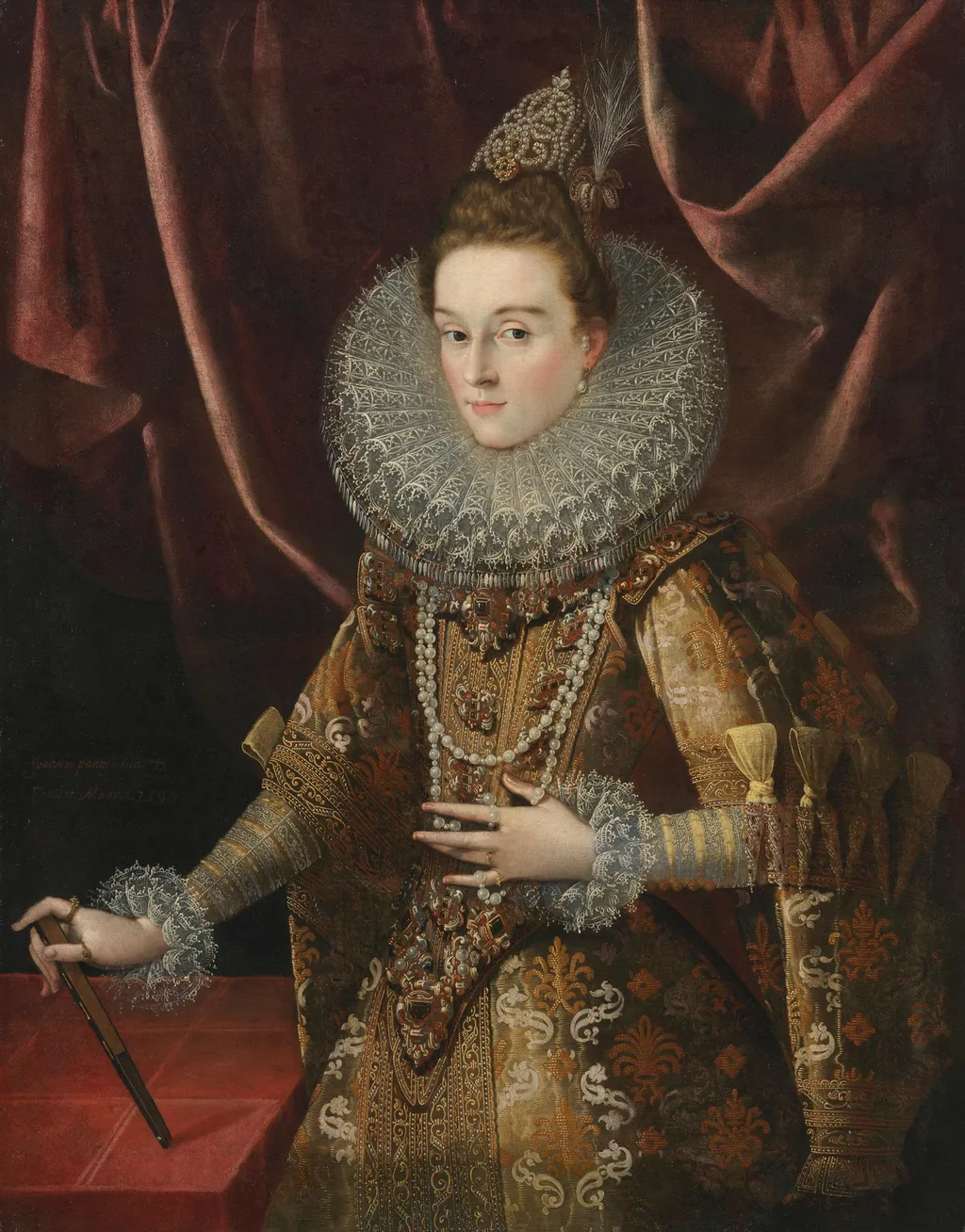
Isabella Clara Eugenia by Juan Pantoja de la Cruz is an oil painting by the Early Baroque Italian artist Juan Pantoja de la Cruz. It dates from 1600 and is held in the collection of the Bavarian State Painting Collections.
About this work
Subject & Meaning
The portrait depicts Isabella Clara Eugenia of Spain, archduchess and sovereign of the Spanish Netherlands, shown in full-length and formal attire.
The portrait depicts Isabella Clara Eugenia of Spain, archduchess and sovereign of the Spanish Netherlands, shown in full-length and formal attire. She is presented in a richly embroidered black gown with white lace collar and cuffs, conveying her high status and courtly role. The composition emphasizes her regal bearing and political authority through controlled posture and direct gaze, aligning with Habsburg dynastic portrait conventions of the period.
The sitter’s identity as Isabella Clara Eugenia is central to the iconography, underscoring her position as daughter of Philip II and co-regent with her husband, Archduke Albert. The painting likely functioned to assert Habsburg legitimacy and dynastic continuity during her rule over the Netherlands from the late sixteenth century onward.
Technique & Style
The portrait is executed in oil on canvas, a standard support for Spanish court portraiture of the late sixteenth century. The handling is precise and smooth, reflecting the artist’s training in the tradition of Alonso Sánchez Coello, with careful modeling of the sitter’s facial features and drapery. The palette is subdued yet luminous, emphasizing Isabella Clara Eugenia’s status through restrained yet rich color harmonies.
Stylistically, the work adheres to the formal conventions of Habsburg portraiture: a rigid frontal pose, an emphasis on linear definition, and a reserved demeanor that underscores dynastic authority. The composition’s clarity and the sitter’s direct gaze align with the ceremonial function typical of such effigies.
History & Provenance
The portrait of Isabella Clara Eugenia was created by Juan Pantoja de la Cruz in 1599, executed in oil on canvas. The work has been held by the Bavarian State Painting Collections and is housed at the Alte Pinakothek. Both sources confirm the 1599 inception date and the painting's current institutional ownership, though neither details an earlier provenance chain or commissioning circumstance prior to its accession by the Bavarian collection.
The portrait of Isabella Clara Eugenia by Juan Pantoja de la Cruz is held by the Bavarian State Painting Collections. It is currently located within the Alte Pinakothek in Munich. The work was created in 1599 and depicts the Spanish infanta in oil on canvas.
No specific inventory or accession numbers are provided in the available records. Furthermore, the sources do not contain information regarding a history of exhibitions for this specific painting.
Overview
Isabella Clara Eugenia is a portrait painted in oil by Juan Pantoja de la Cruz in 1600. It is an example of early Baroque portraiture and is held in the Alte Pinakothek.
Context
As a court painter, Pantoja de la Cruz was accustomed to capturing the likenesses of nobility, and this portrait reflects the conventions of Spanish court portraiture during the early Baroque period.
Own this work as a print
Artist & collection
Artist
Juan Pantoja de La Cruz (1553 – 26 October 1608) was a Spanish painter, one of the best representatives of the Spanish school of court painters.

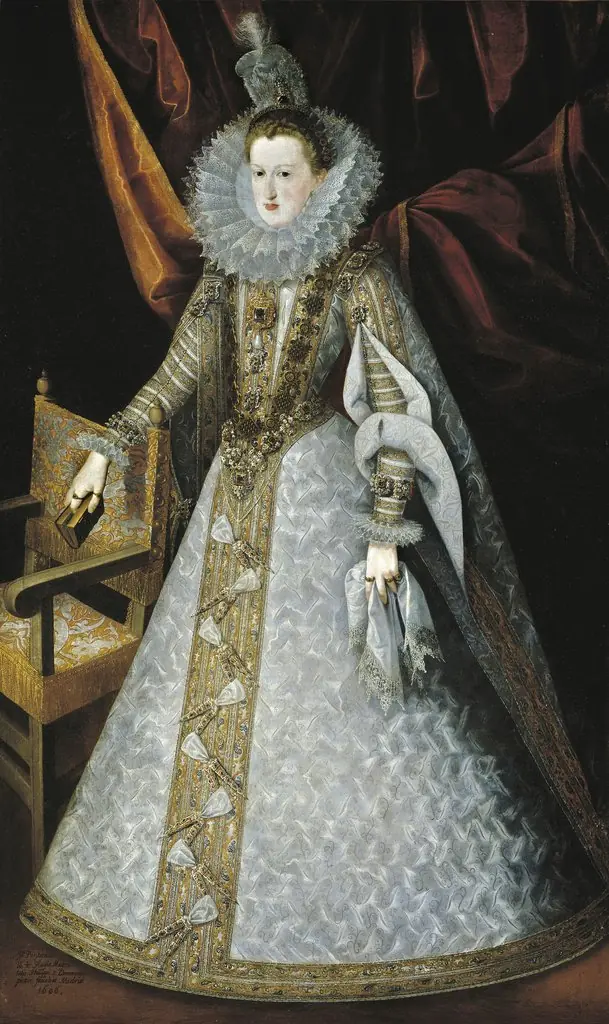
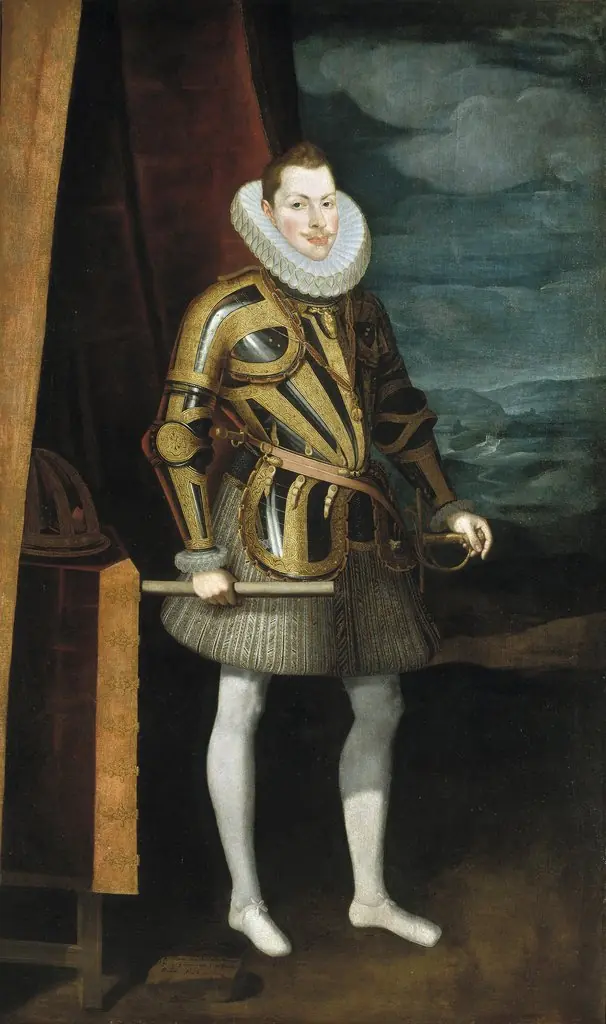
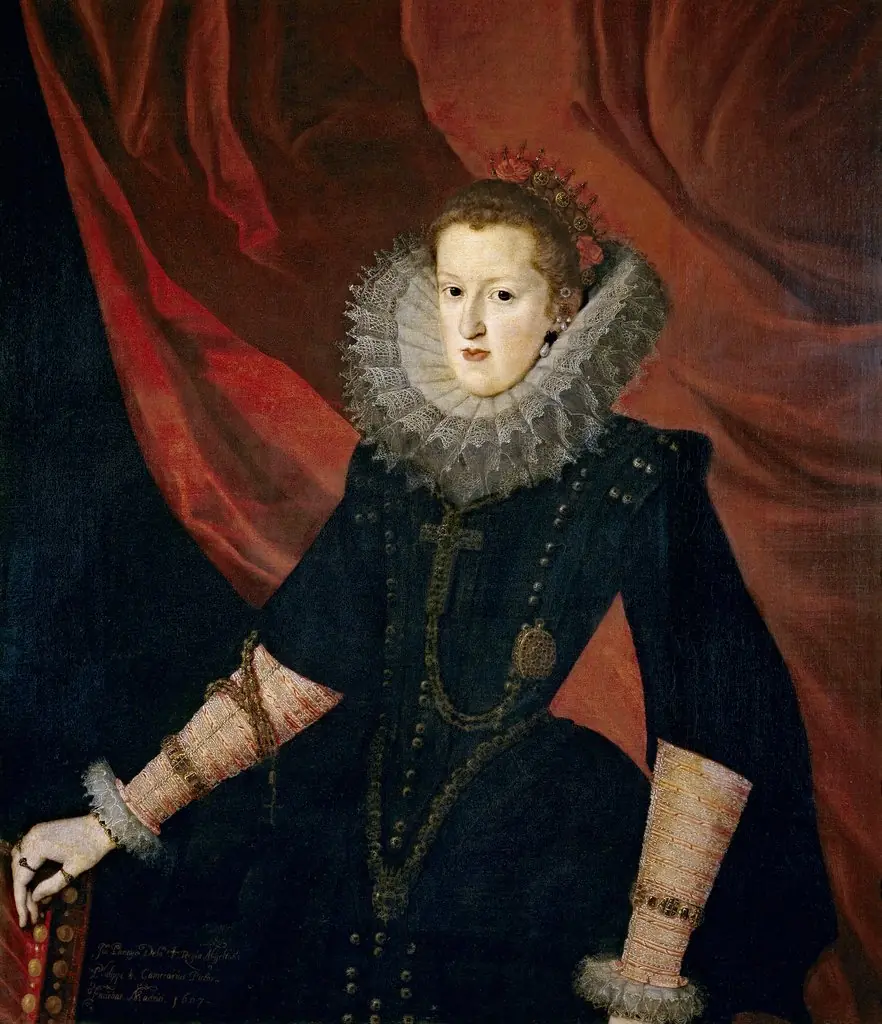
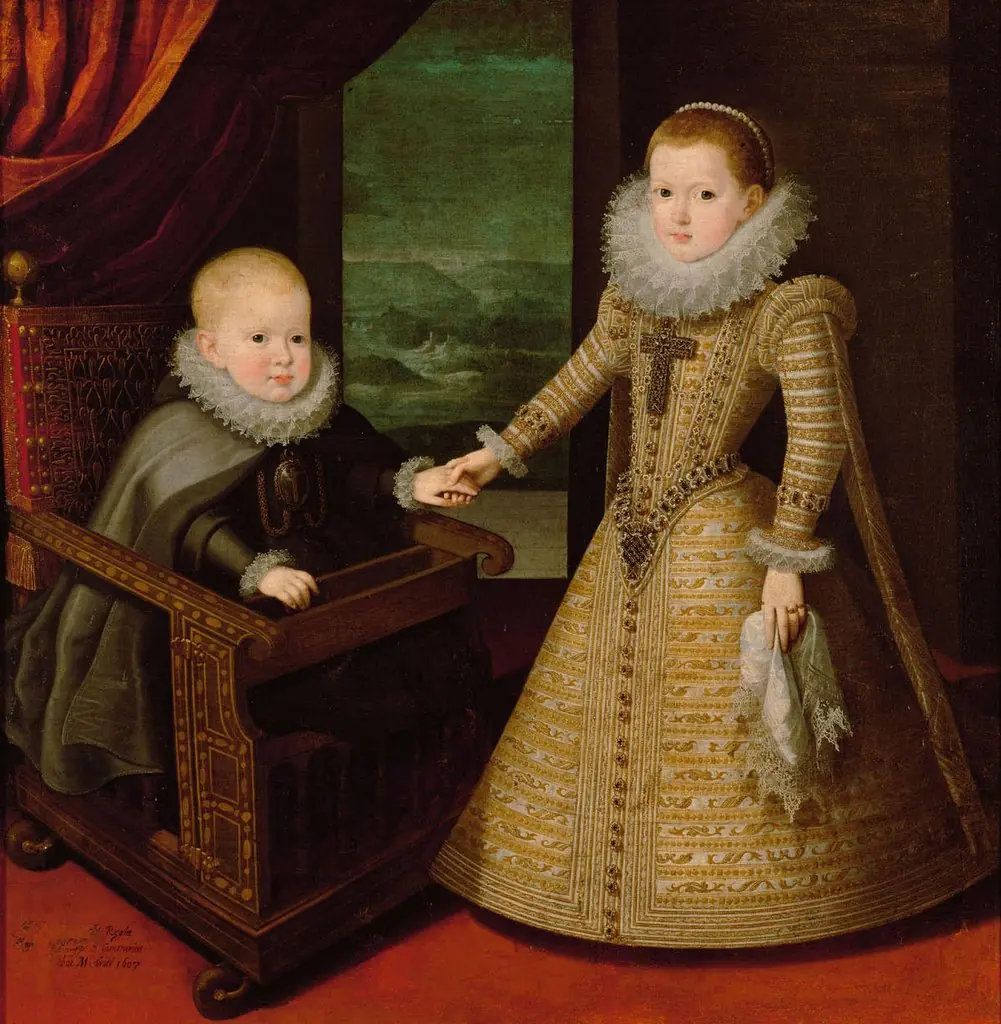
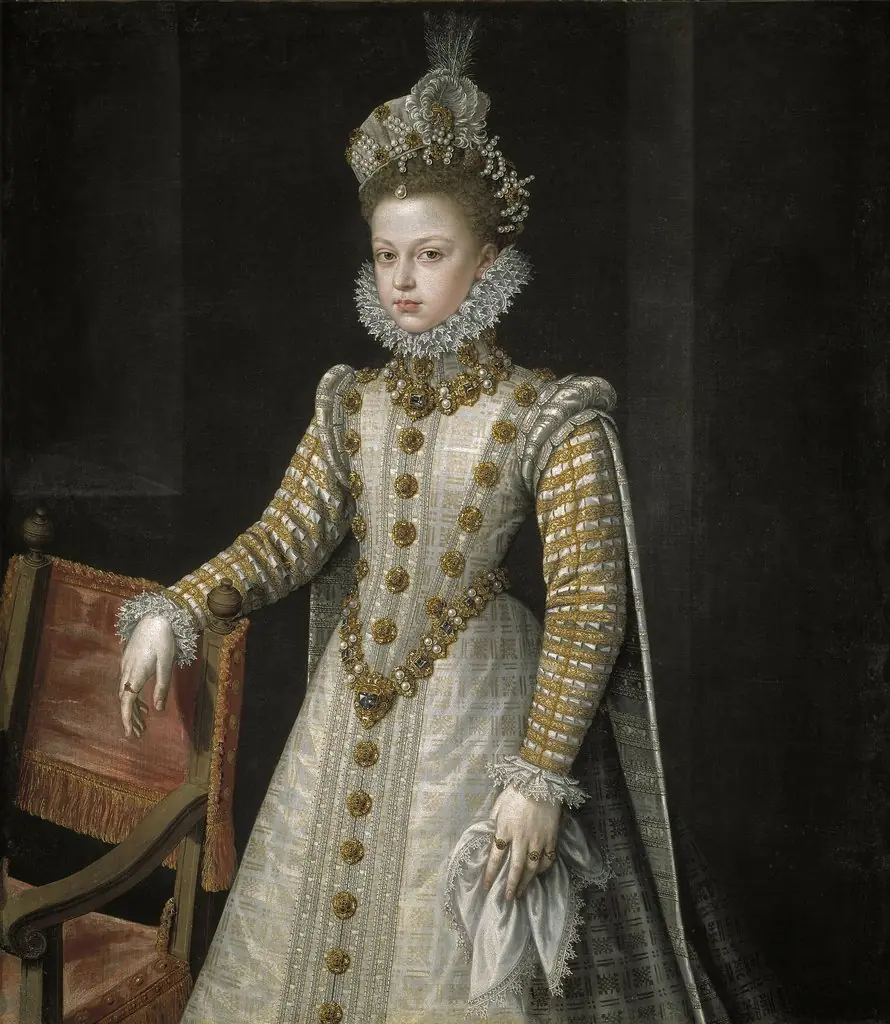 Infanta Isabel Clara Eugenia
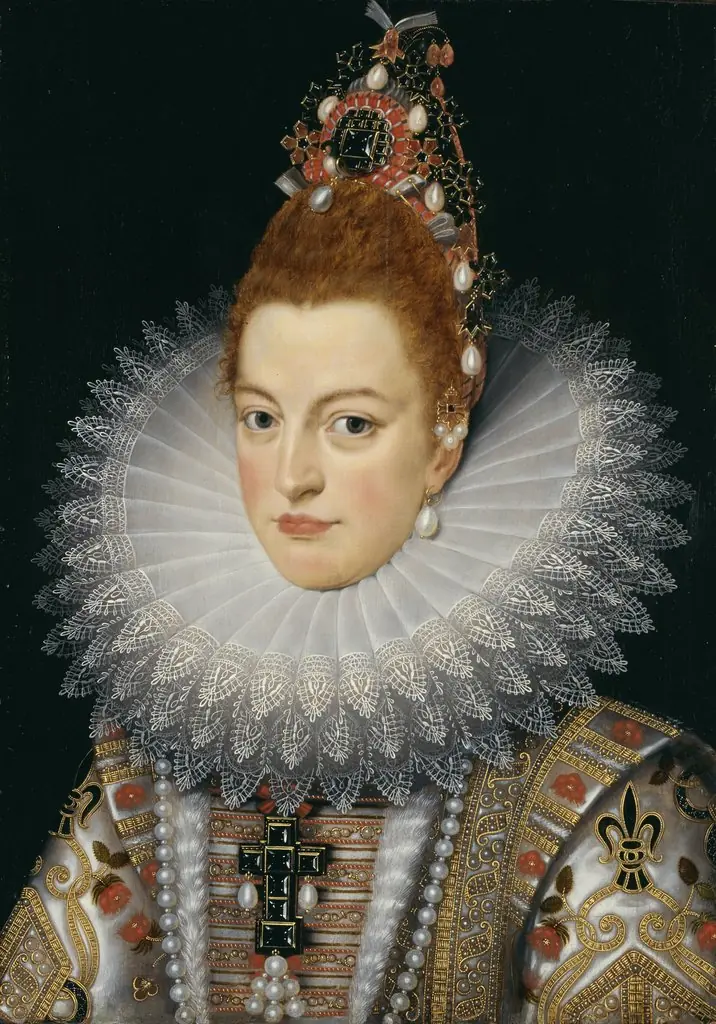 Portrait of Archduchess Isabella
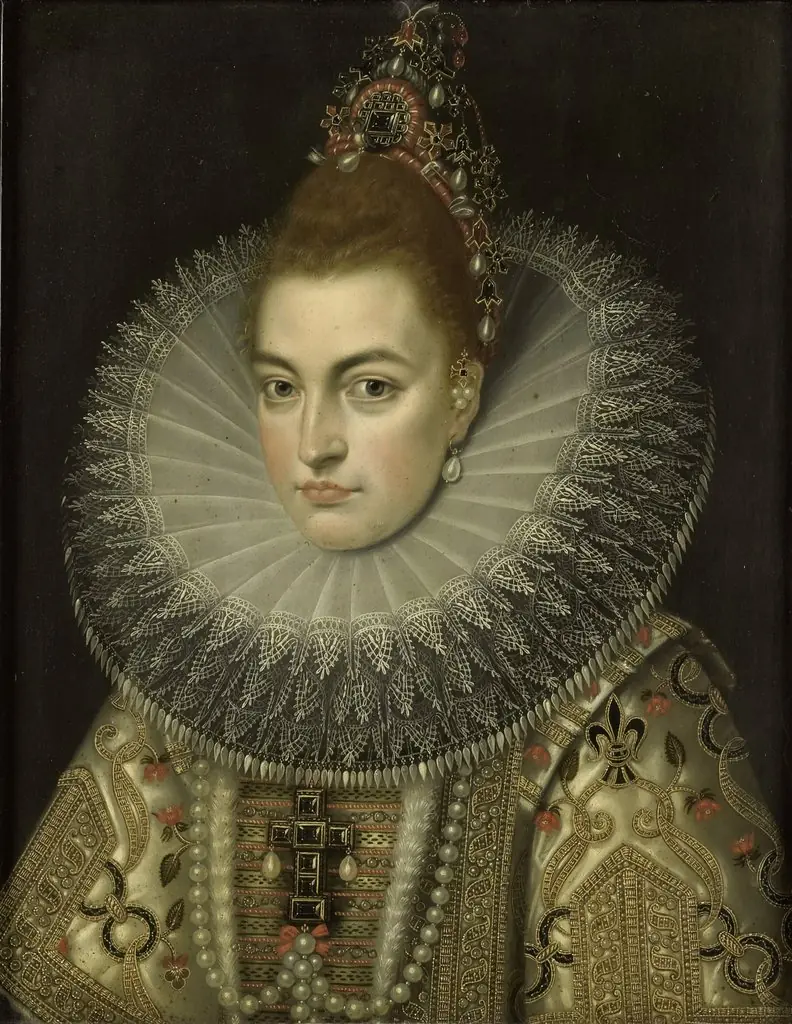 Isabella Clara Eugenia, Consort of Archduke Albert VII
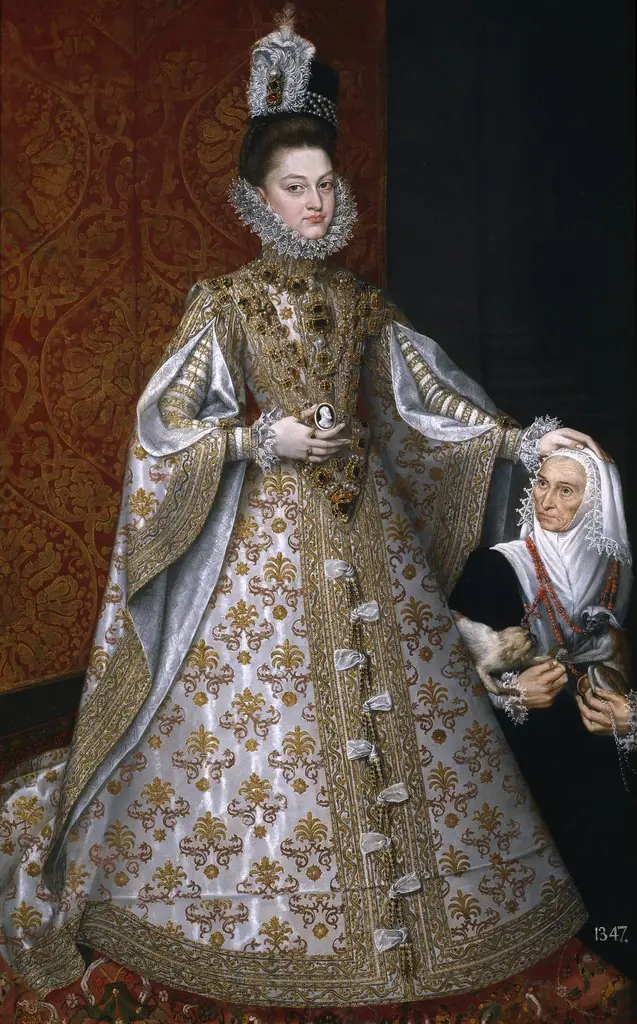 The Infanta Isabel Clara Eugenia and Magdalena Ruiz
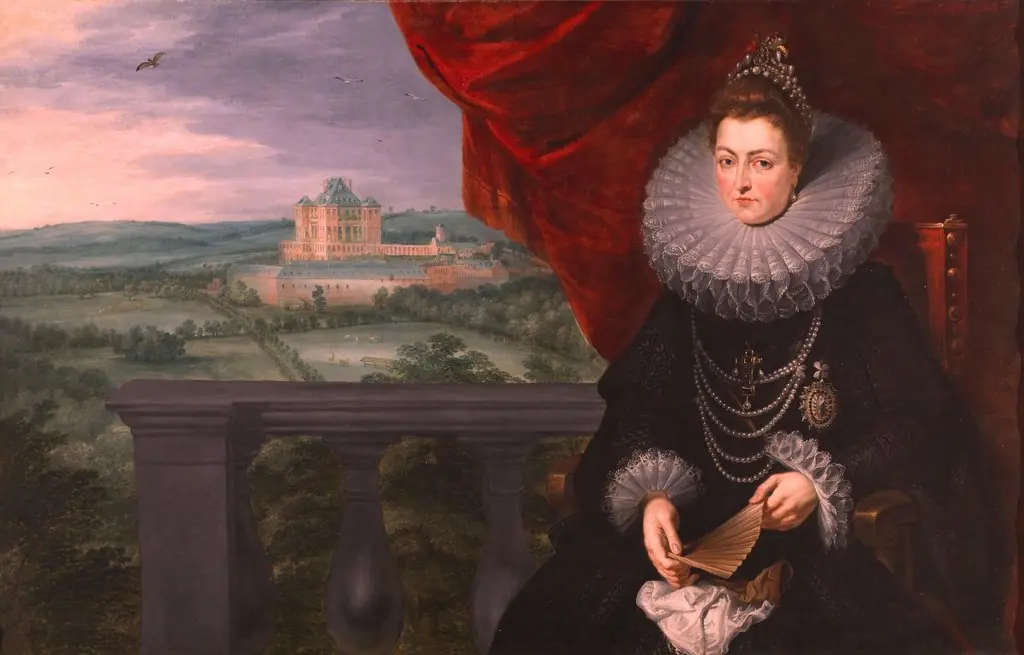 The Infanta Isabel Clara Eugenia
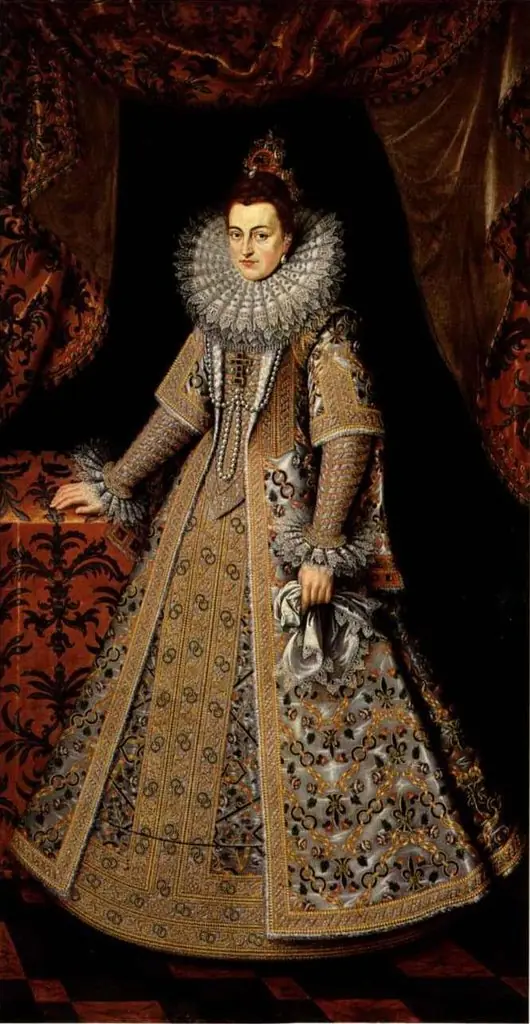 Porträt der Isabella Clara Eugenia (1566-1633)
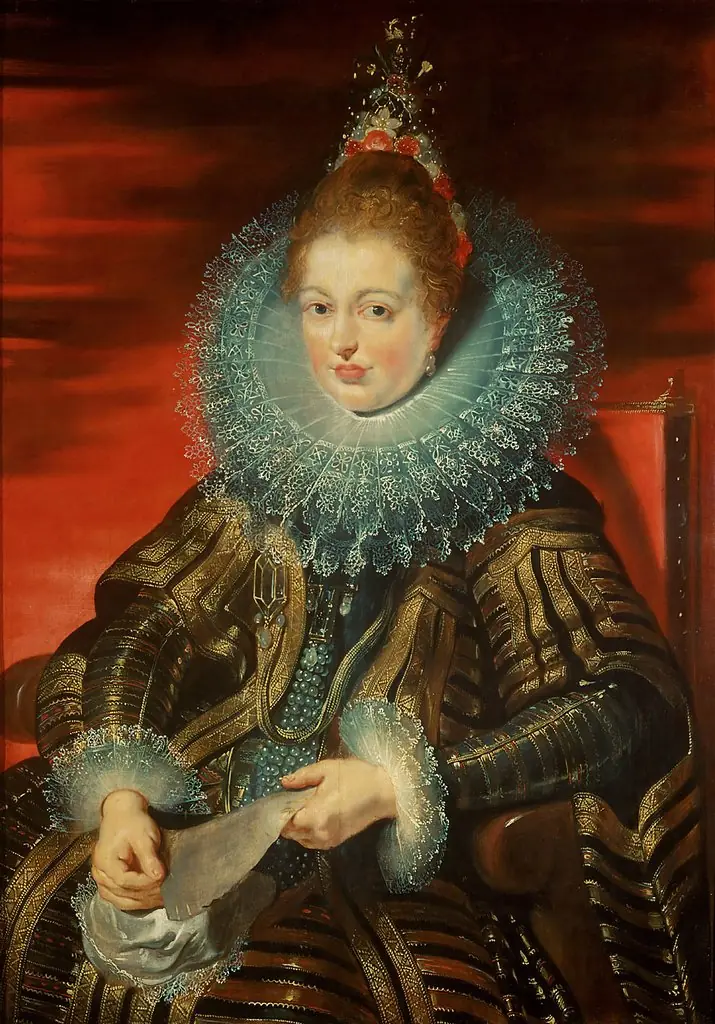 Isabella Clara Eugenia, wife of Albrecht VII
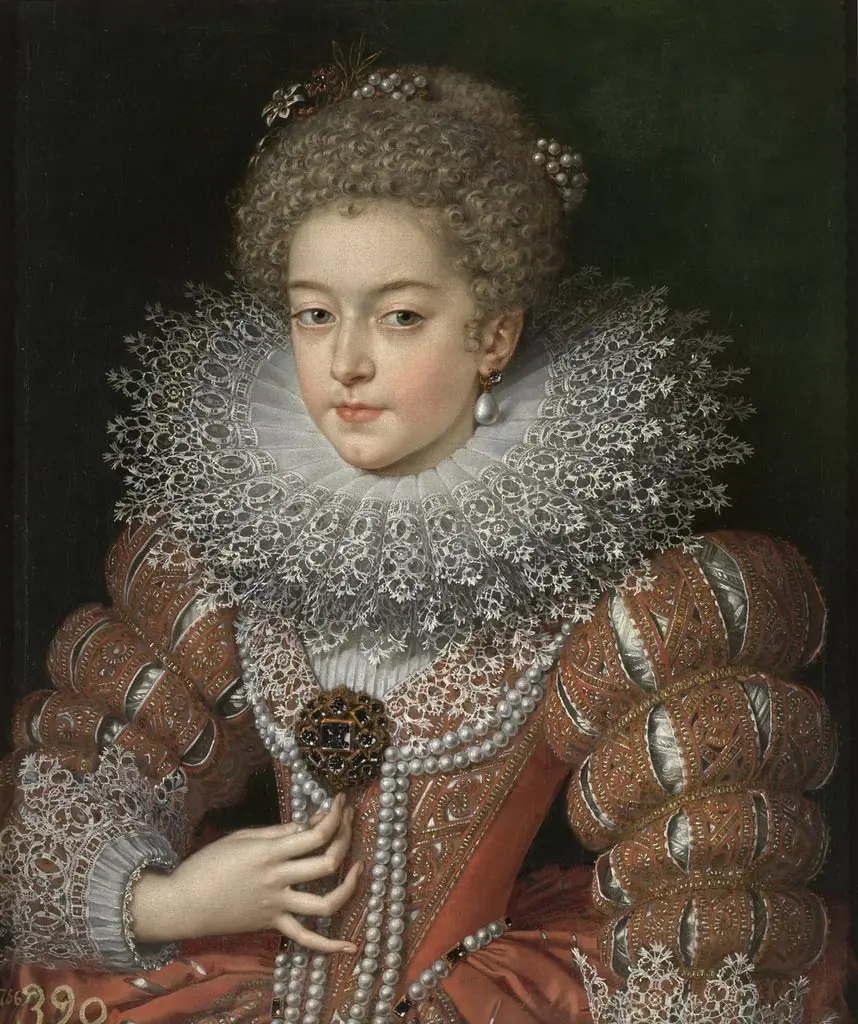 Isabella of France Queen of Spain