Artwork
Philip III
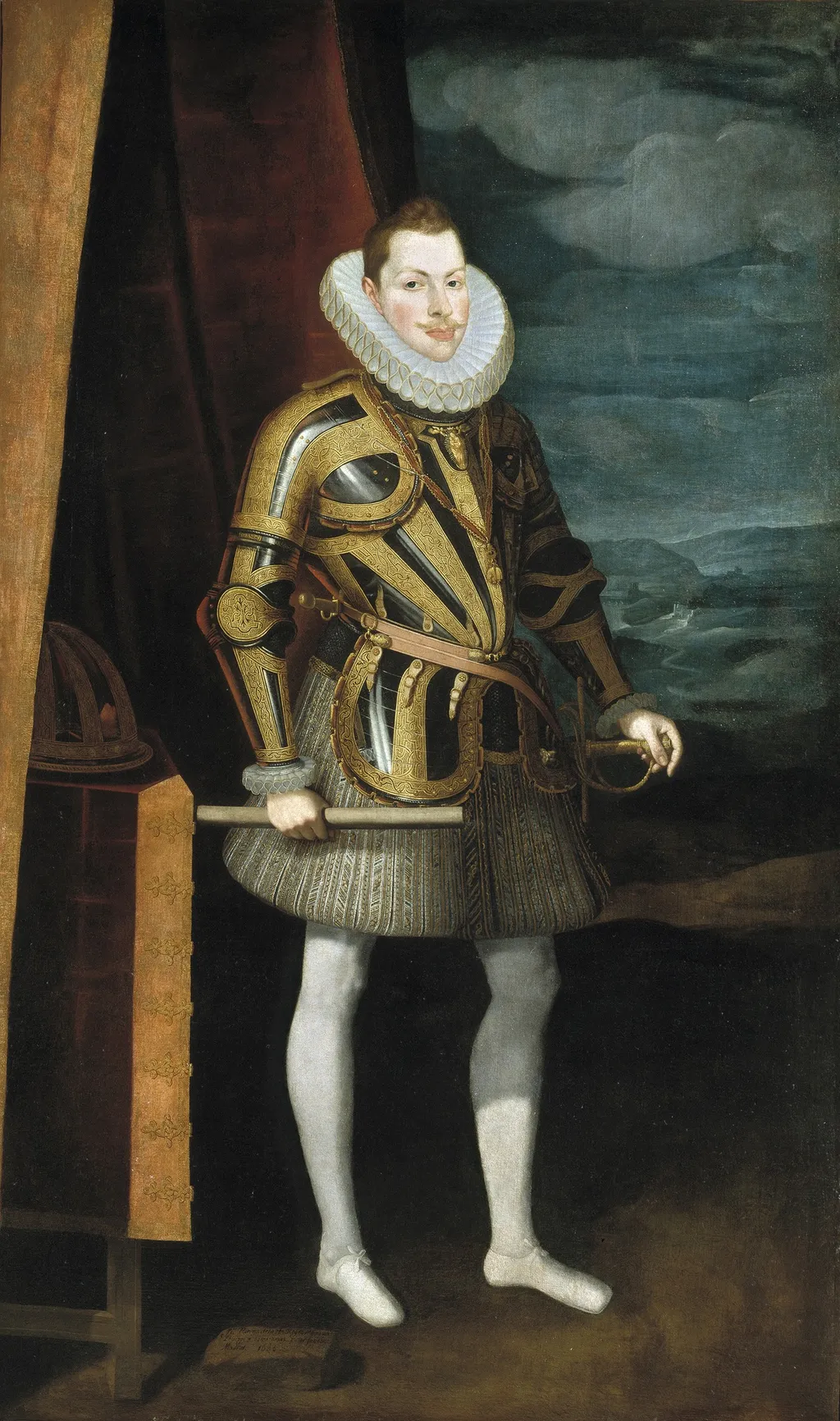
Philip III is an oil painting by the Early Baroque Italian artist Juan Pantoja de la Cruz. It dates from 1606 and is held in the collection of the Museo del Prado.
About this work
Subject & Meaning
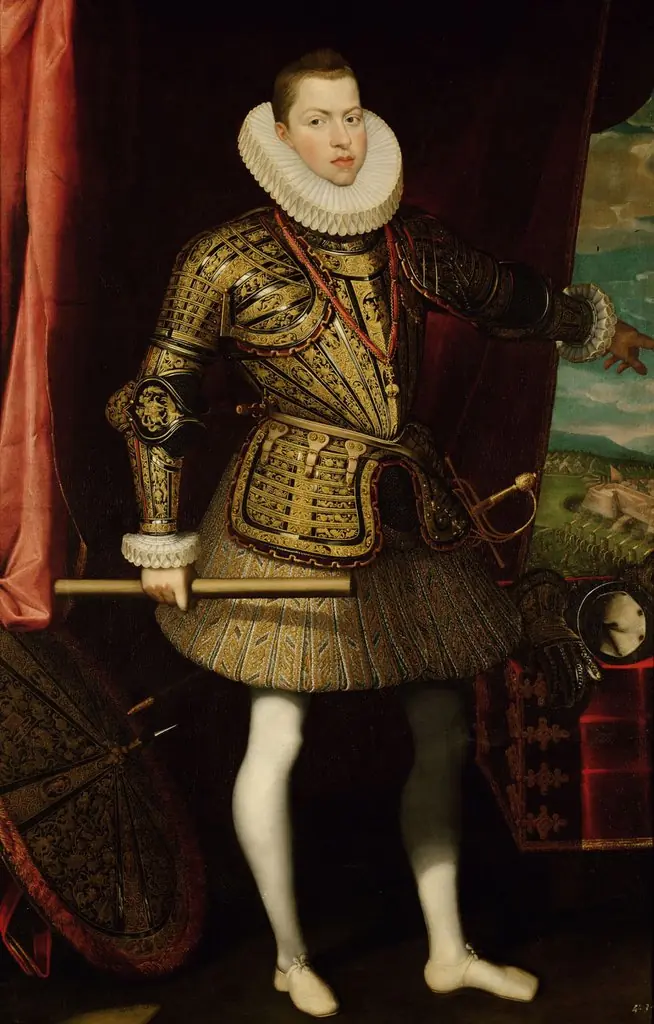
The painting is a portrait that depicts Philip III of Spain as its main subject. The monarch is shown wearing body armor, a traditional visual symbol of martial authority and royal power. Additionally, he is adorned with the Golden Fleece, an esteemed chivalric order that signifies his high sovereign rank and noble lineage.
Technique & Style
Executed in 1606 by Juan Pantoja de la Cruz, this portrait of Philip III is an oil painting on canvas.
Executed in 1606 by Juan Pantoja de la Cruz, this portrait of Philip III is an oil painting on canvas. The work measures 204 cm in height and 122 cm in width. Stylistically, the composition focuses on the monarch's regal presentation, depicting him wearing body armor and adorned with the collar of the Order of the Golden Fleece.
As a formal court portrait, the piece emphasizes the subject's status through these specific attributes and a direct, dignified representation typical of the artist's approach to royal imagery during this period.
History & Provenance
Juan Pantoja de la Cruz executed this oil-on-canvas portrait of Philip III of Spain in 1606. The work depicts the monarch wearing body armor and the collar of the Order of the Golden Fleece. Created during the early seventeenth century, the painting entered the collection of the Museo del Prado in Madrid, where it remains housed. The canvas measures 204 cm in height and 122 cm in width.
Legacy
Philip III's legacy is anchored in its status as a defining state portrait from the early Spanish Golden Age. The work, painted by Juan Pantoja de la Cruz in 1606, established a visual template for representing monarchs in ceremonial regalia, influencing court portraiture throughout the 17th century. Its composition and symbolism were widely referenced by contemporary artists seeking to convey authority through iconography such as the Golden Fleece and body armor.
The painting's inclusion in the Museo del Prado's collection since its inception has cemented its reputation as a key artifact for understanding Habsburg court culture. Scholars continue to study the work for insights into the intersection of art and political propaganda during Philip III's reign.
Overview
Created in 1606, this oil on canvas portrait by Juan Pantoja de la Cruz presents the Spanish monarch Philip III. The figure stands in a dimly lit interior, clad in elaborate black and gold armor that emphasizes his regal and martial authority. The composition is formal and restrained, characteristic of the courtly portrait tradition of early 17th‑century Spain.
Context
Executed during the early Baroque period, the portrait reflects the influence of Italian court painting while retaining a distinctly Spanish sobriety. The emphasis on armor and insignia aligns with contemporary expectations of monarchical imagery, linking the sovereign’s personal identity to the broader political and religious narratives of Habsburg Spain.
Own this work as a print
Artist & collection
Artist
Juan Pantoja de La Cruz (1553 – 26 October 1608) was a Spanish painter, one of the best representatives of the Spanish school of court painters.

 König Philipp III.(1578-1621) von Spanien, Bildnis in ganzer Figur als General der Infanterie (Im Hintergrund: Die Belagerung von Ostende 1601-1604)
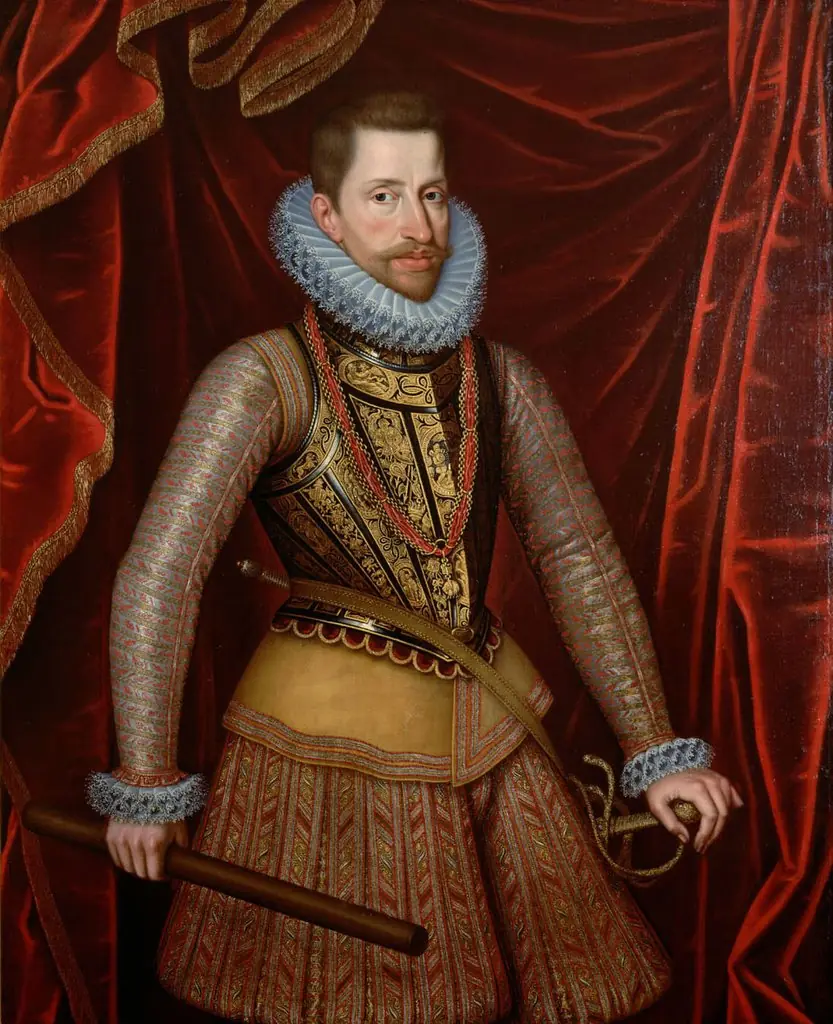 Portrait of Albrecht VII, Archduke of Austria (1559-1621)
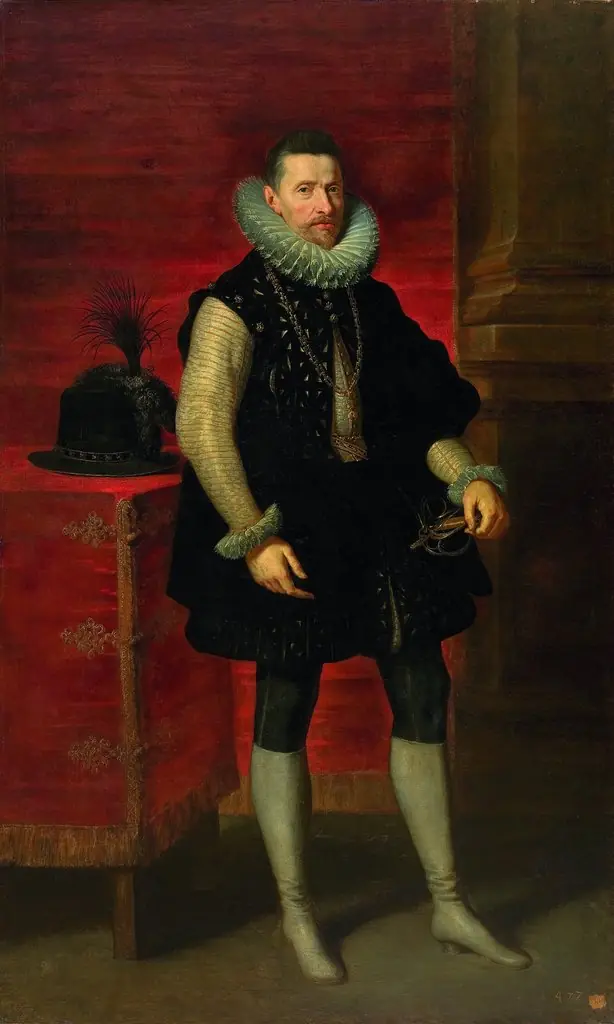 Portrait of Albert VII, Archduke of Austria
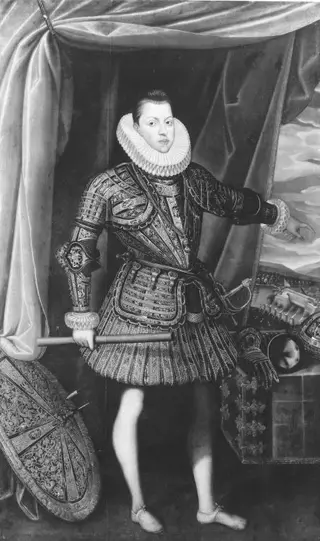 Philipp III., König von Spanien als Feldherr (Werkstatt)
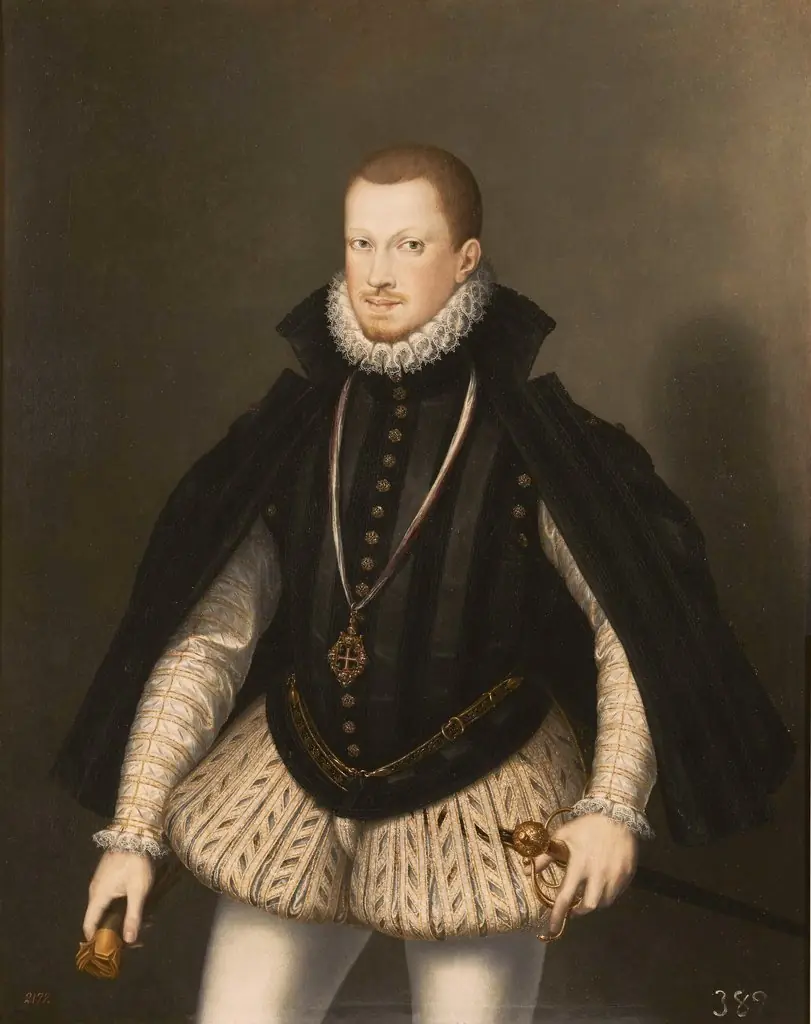 Don Sebastián rey de Portugal
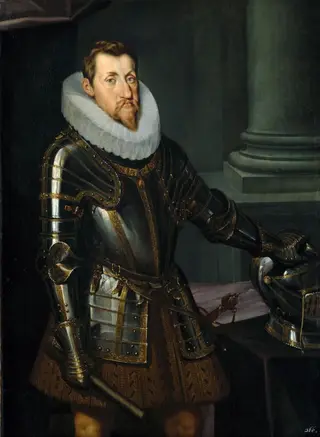 Portrait of Ferdinand II, Holy Roman Emperor (1578-1637)
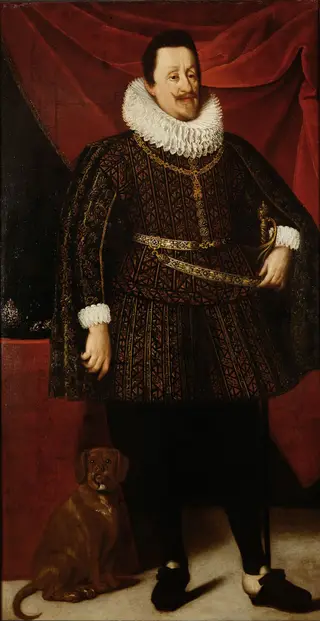 Portrait of Ferdinand II of Habsburg (1578-1637, Holy Roman Emperor
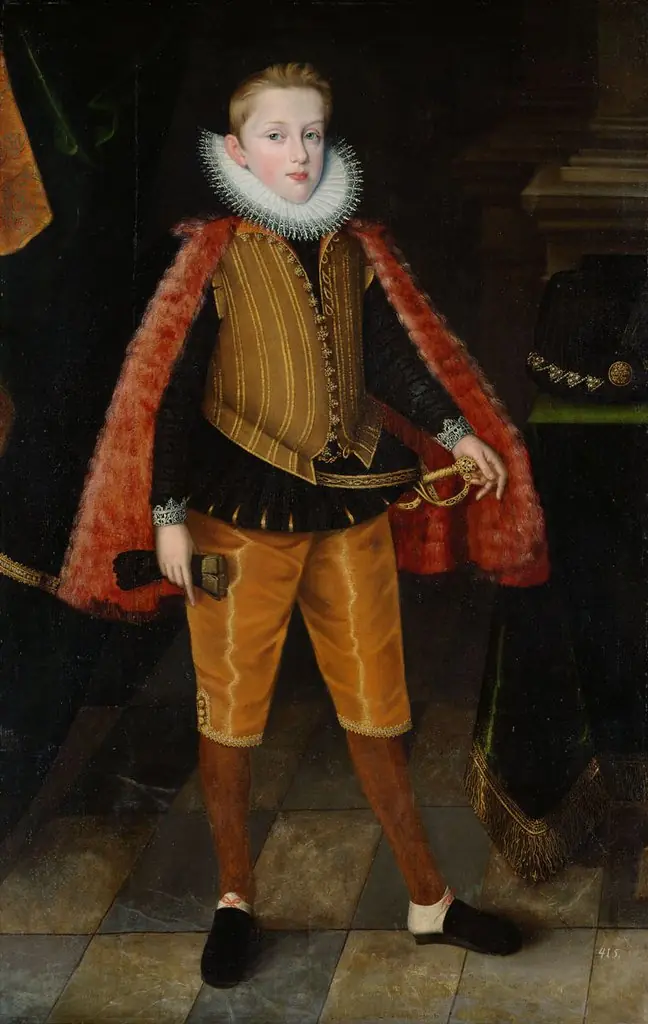 Kaiser Ferdinand II (1578-1637) at the age of 14
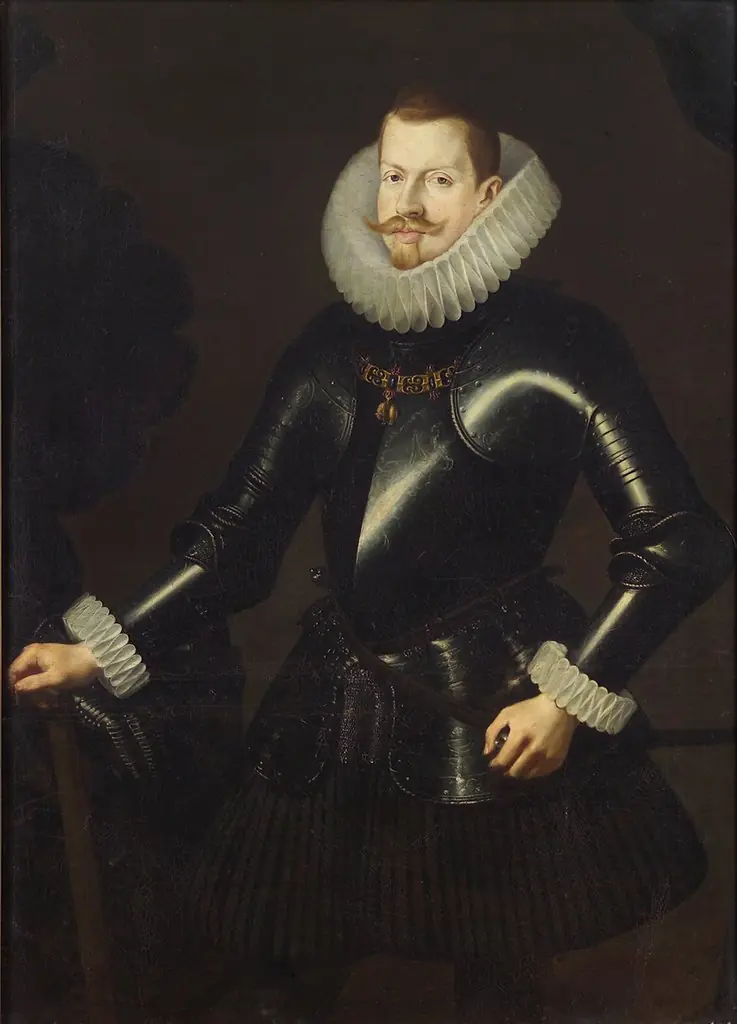 König Philipp III. von Spanien (1578-1621), Bildnis im Harnisch