Artwork
The Green Bodice
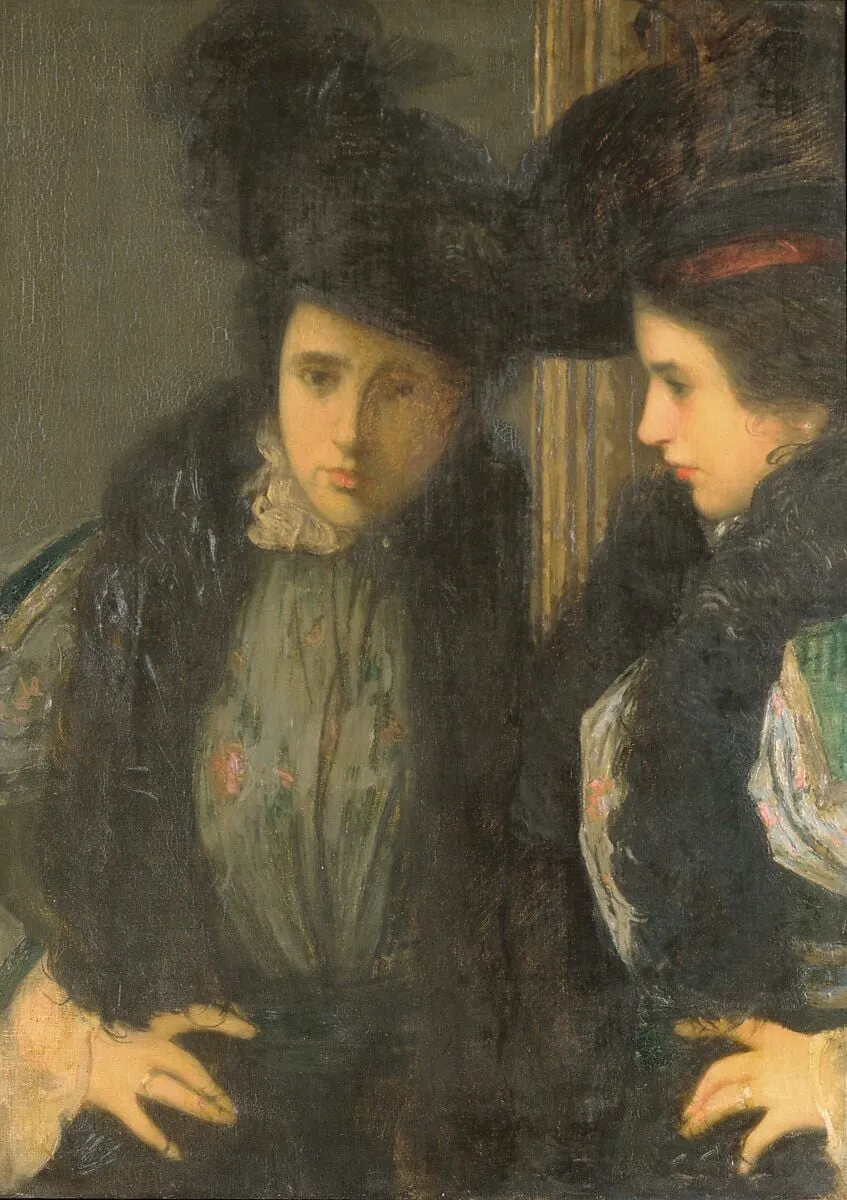
The Green Bodice is an oil painting by the American Impressionist artist Julian Alden Weir. It dates from 1898 and is held in the collection of the Metropolitan Museum of Art.
- Accession no.
- 06.1302
- Credit line
- Gift of George A. Hearn, 1906
About this work
Subject & Meaning
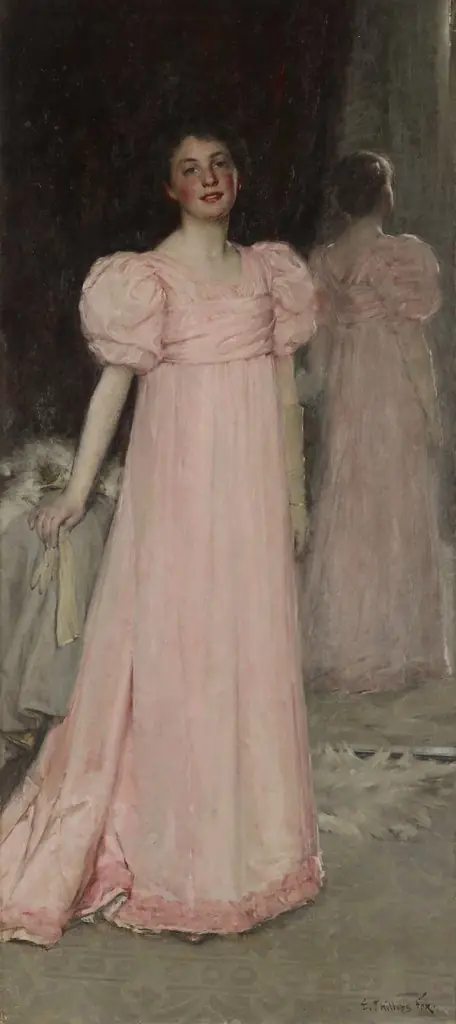
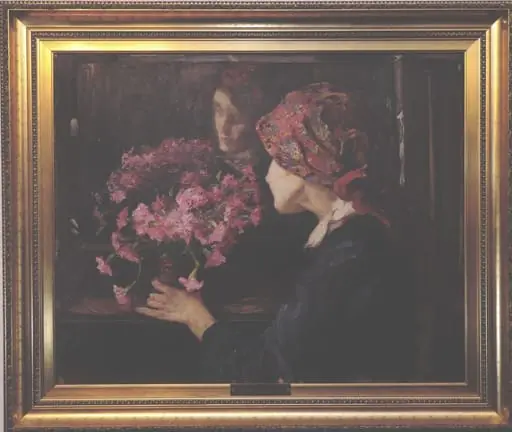
The Green Bodice, painted by Julian Alden Weir in 1898, is a portrait depicting a woman holding a mirror.
The Green Bodice, painted by Julian Alden Weir in 1898, is a portrait depicting a woman holding a mirror. While the title highlights the subject's green attire, the composition centers on the female figure. As an oil on canvas work held in the American Wing of the Metropolitan Museum of Art, the painting captures a moment of feminine presence, focusing on the sitter and her mirror without explicit narrative context beyond the immediate scene.
Technique & Style
The Green Bodice is executed in oil paint on canvas, a medium consistent with Weir's portrait practice of the late 1890s. The support measures 86.2 by 62.9 centimeters, yielding an upright, vertical format suited to a half-length figural composition. Stylistically, the work belongs to the genre of portraiture and centers on a woman posed with a mirror, a device that allowed Weir to explore reflective surfaces and the interplay of interior light.
The painting is held in the collection of the Metropolitan Museum of Art, where it is classified within the American Wing. The sources do not provide further detail on handling, brushwork, or current condition.
History & Provenance
The Green Bodice is an oil-on-canvas portrait that Julian Alden Weir painted in 1898, as recorded in the work's catalogue entry and confirmed by the Metropolitan Museum of Art's collection data. The painting depicts a woman holding a mirror. Its dimensions are 86.2 cm by 62.9 cm. Since entering the Met's collection, it has been displayed in The American Wing, where it remains part of the museum's permanent holdings.
The sources indicate that the piece was created as an independent portrait rather than as a commissioned work.
Legacy
The Green Bodice is held in The American Wing of the Metropolitan Museum of Art. Its inclusion in a major public collection has ensured its continued visibility as an example of late 19th-century American portraiture and has supported its place in the study of American Impressionism.
Overview
Julian Alden Weir's The Green Bodice (1898) is an intimate portrait depicting a woman seated at a dressing table with her back turned to the viewer. The composition relies on a mirror to reveal the sitter's face, though the reflection is partially obscured by the frame's limited size, creating a sense of privacy and introspection. Weir renders the subject's green bodice and the surrounding interior with soft, diffused light that emphasizes texture over sharp detail.
Executed in oil on canvas, the work exemplifies the artist's mature style, which blends Impressionist techniques with a focus on domestic tranquility. Painted during a period when American artists sought to elevate everyday scenes into subjects of artistic significance, the painting reflects Weir's interest in the quiet rhythms of private life. The work stands as a significant example of American Impressionism, showcasing the artist's ability to capture atmosphere and the subtle interplay of light within a confined domestic space.
Context
Created at the close of the 19th century, The Green Bodice aligns with a broader movement among American artists of the era. Many sought to imbue ordinary, domestic subjects with significance, elevating everyday scenes to the realm of fine art. Weir's portrayal of a private, unheroic moment reflects this artistic trend, challenging the conventions of grand historical or allegorical painting.
Artist & collection

Artist
Julian Alden Weir was an American impressionist painter and member of the Cos Cob Art Colony in Greenwich, Connecticut.