Artwork
The Red Bridge
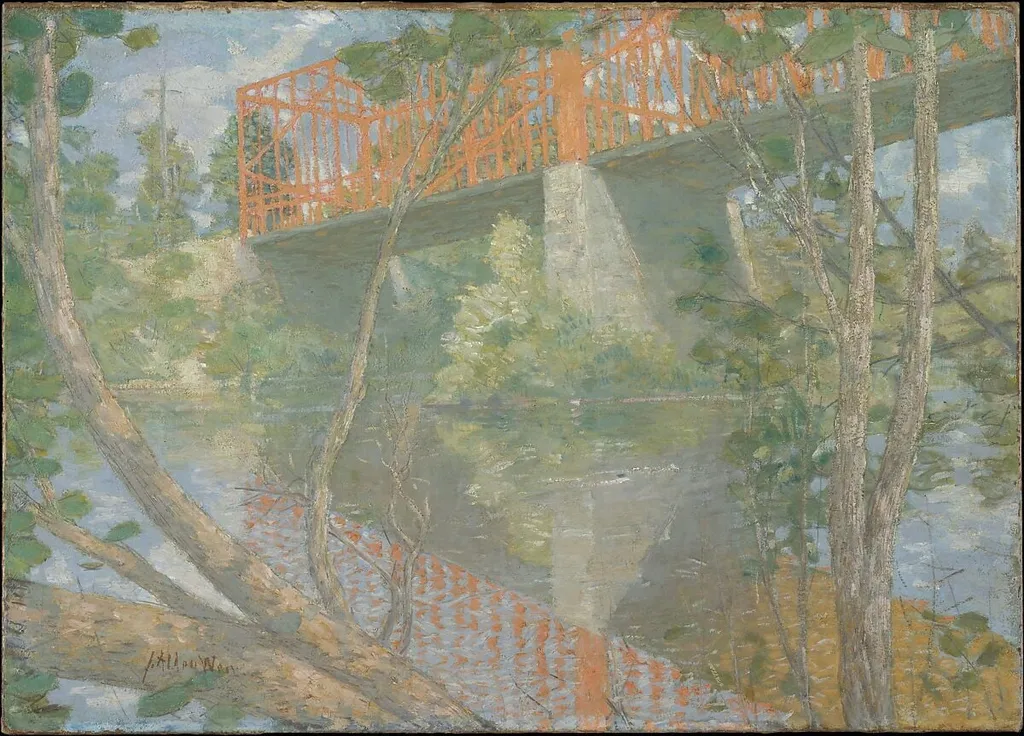
The Red Bridge is an oil painting by the American Impressionist artist Julian Alden Weir. It dates from 1895 and is held in the collection of the Metropolitan Museum of Art.
About this work
Subject & Meaning
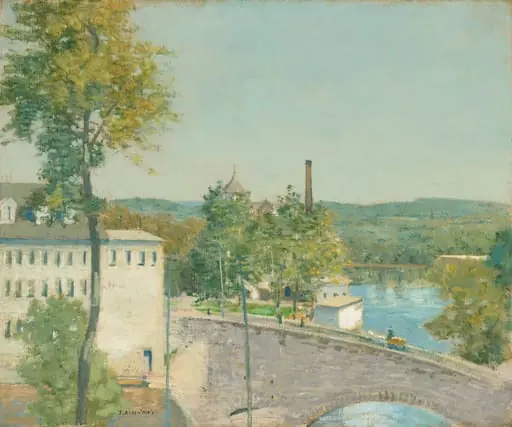
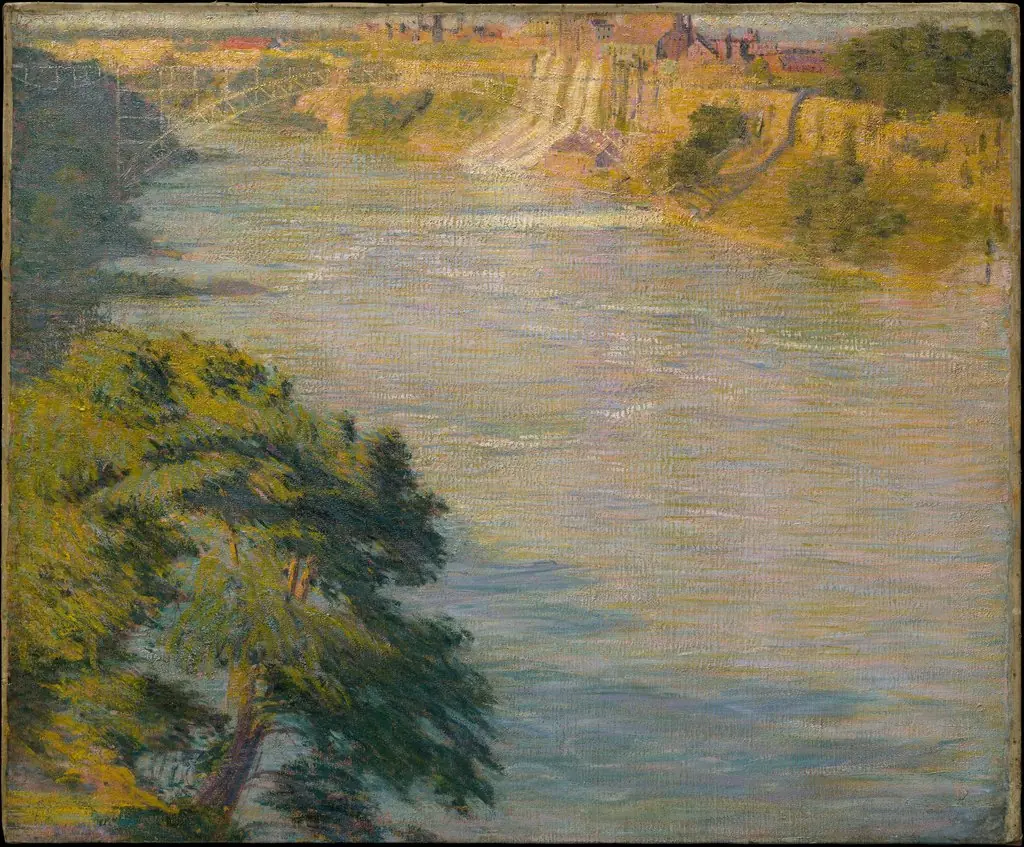
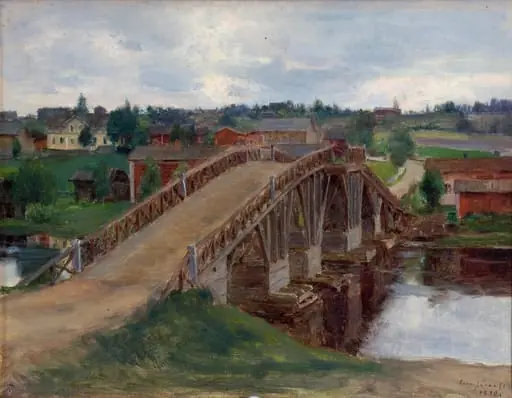
The Red Bridge depicts an iron truss bridge spanning the Shetucket River in Windham, Connecticut, flanked by trees along its banks.
The Red Bridge depicts an iron truss bridge spanning the Shetucket River in Windham, Connecticut, flanked by trees along its banks. The bridge had recently replaced a covered bridge Weir favored, and his eventual decision to paint the industrial structure marks a notable shift from his earlier distaste for such modern intrusions on the landscape. The work is recognized as one of the few American Impressionist paintings to engage directly with industrialization, juxtaposing the geometric form of contemporary engineering with the surrounding natural setting.
The composition reflects Weir's Japanese-influenced Impressionist approach, in which a man-made structure becomes the focal subject within a carefully observed rural environment rather than being subordinated to purely pastoral scenery.
Technique & Style
The Red Bridge is an oil on canvas painting executed in 1895 by Julian Alden Weir. The work measures 61.6 by 85.7 centimeters and is classified as a landscape in the American Wing of the Metropolitan Museum of Art. Stylistically, it is associated with American Impressionism, though it is more specifically noted as an example of Weir's Japanese-inspired manner of impression.
The painting is considered one of the few American Impressionist works to engage directly with the subject of industrialization, depicting a then-new iron truss bridge over the Shetucket River in Windham, Connecticut, alongside trees.
History & Provenance
The Red Bridge was created in 1895 by Julian Alden Weir, who painted the newly built iron truss bridge over the Shetucket River in Windham, Connecticut. The work, executed in oil on canvas and measuring 61.6 × 85.7 cm, was exhibited at the 1913 Armory Show and subsequently entered the Metropolitan Museum of Art's collection. Its dating to 1895 is documented in the museum's catalogue. No records indicate a specific commission or earlier private ownership prior to museum accession.
Context
The Red Bridge occupies a notable position within Julian Alden Weir's oeuvre and the broader development of American Impressionism. According to the Metropolitan Museum of Art, the painting is one of the few American Impressionist works to engage directly with industrialization, depicting a then-new iron truss bridge that had replaced a covered bridge Weir had favored. This thematic content distinguishes it from many contemporaneous American Impressionist landscapes, which more typically avoided industrial subjects.
The work has been cited as an excellent example of Weir's Japanese-inspired approach to Impressionism, reflecting his synthesis of European Impressionist technique with the compositional lessons he absorbed from Japanese prints. The painting was exhibited at the 1913 Armory Show, a landmark event in the reception of modernist art in the United States. Held in the Metropolitan Museum of Art's American Wing, the canvas remains a key reference point for scholarship on Weir's transition from his earlier skepticism toward Impressionism to his embrace of the movement.
Legacy
The Red Bridge has secured a significant reputation as a defining example of Julian Alden Weir's Japanese-inspired Impressionist style. Its legacy is anchored by its inclusion in the historic 1913 Armory Show, a pivotal moment for American modernism. The work is frequently cited for its unique depiction of industrialization, standing as one of the few American Impressionist paintings to explicitly feature a modern iron truss bridge rather than purely pastoral scenery.
Although Weir initially viewed the structure over the Shetucket River with distaste for replacing a covered bridge, the final composition transformed this industrial subject into a celebrated artistic statement. Today, its enduring importance is maintained through its permanent residence in the collection of the Metropolitan Museum of Art, where it continues to represent the transition in Weir's career and the broader American Impressionist movement.
Overview
Julian Alden Weir's 1895 oil painting, The Red Bridge, exemplifies his distinctive Impressionist approach. This work, part of the Metropolitan Museum of Art's collection, showcases a tranquil autumnal landscape. It is recognized for its unique blend of Western Impressionism with subtle Japanese aesthetic influences, a hallmark of Weir's artistic output during this period, and is considered a significant example of his style.
Artist & collection
Artist
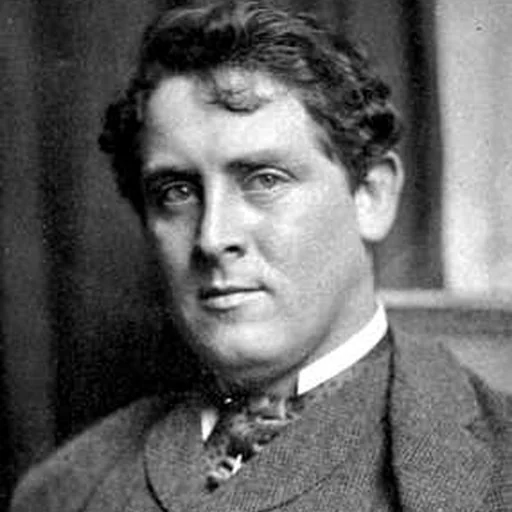
Julian Alden Weir was an American impressionist painter and member of the Cos Cob Art Colony in Greenwich, Connecticut.