Artwork
The Factory Village
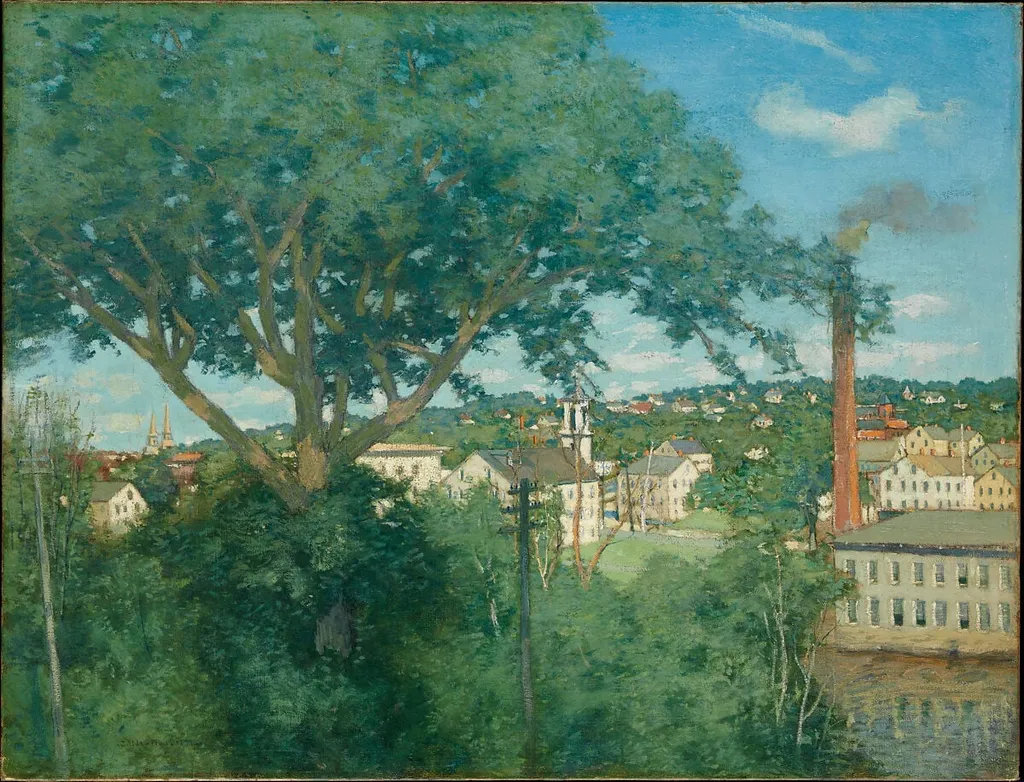
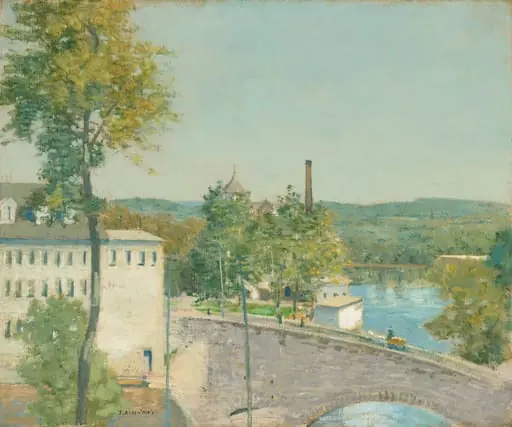
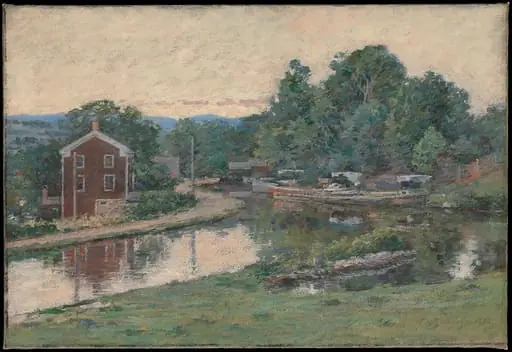
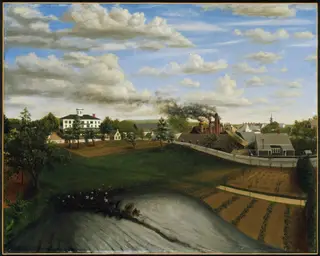
The Factory Village is an oil painting by the American Impressionist artist Julian Alden Weir. It dates from 1897 and is held in the collection of the Metropolitan Museum of Art.
About this work
A quiet village street at dusk, a red-brick factory on the left, small white houses on the right. Weir painted it in 1897, when factories were still new and strange in rural America. No people, no smoke, just soft light on brick and wood, the stillness leaving its question about progress open.
Subject & Meaning
The depicted elements, factory, tree, and village, serve as visual markers of contemporary American life, combining urban development with pastoral scenery.
The Factory Village (1897) by Julian Alden Weir is an oil‑on‑canvas landscape that shows a modest factory building alongside a solitary tree and a clustered village. The composition places industrial architecture within a rural setting, emphasizing the coexistence of manufacturing and nature at the turn of the century. As part of The American Wing’s collection at the Metropolitan Museum of Art, the work is recorded in both the museum’s catalogue and Wikidata, which note its dimensions and 1897 inception date.
The depicted elements, factory, tree, and village, serve as visual markers of contemporary American life, combining urban development with pastoral scenery.
History & Provenance
Julian Alden Weir created the oil on canvas painting The Factory Village in 1897. The work, which depicts a landscape featuring a factory, trees, and a village, entered the collection of the Metropolitan Museum of Art. While the specific date of acquisition and any prior ownership history are not detailed in the available records, the painting's inception is firmly established as 1897. It remains housed within the museum's American Wing classification.
Overview
Julian Alden Weir's 1897 oil painting, The Factory Village, captures a tranquil rural scene at dusk. The canvas depicts a red-brick factory juxtaposed with modest white homes along a quiet street. The absence of human activity or factory smoke contributes to a sense of stillness, reflecting a moment of transition in the American landscape. The work is executed in oil on canvas.
Context
Created in 1897, The Factory Village reflects a period when industrial structures were a relatively new presence in the American rural landscape. The integration of factories into previously agrarian communities presented a significant societal shift. Weir's portrayal captures this moment of change, offering a visual commentary on the evolving relationship between industry and the natural environment without explicit judgment.
Technique & Style
Weir's approach to light and atmosphere in The Factory Village aligns with elements of American Impressionism. The artist employs soft, diffused illumination to render the brickwork of the factory and the wooden facades of the houses, contributing to the painting's quiet mood. This technique emphasizes the visual textures and forms of the landscape, creating a harmonious yet reflective depiction of a changing world.
Artist & collection

Artist
Julian Alden Weir was an American impressionist painter and member of the Cos Cob Art Colony in Greenwich, Connecticut.