Artwork
Obweebetuck
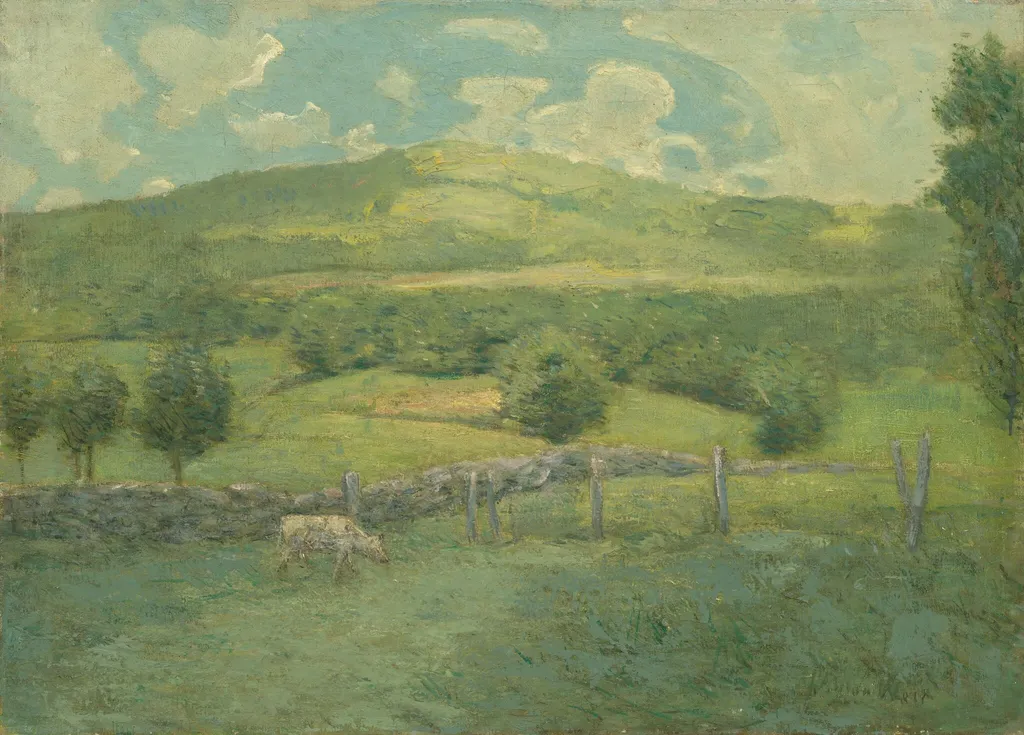
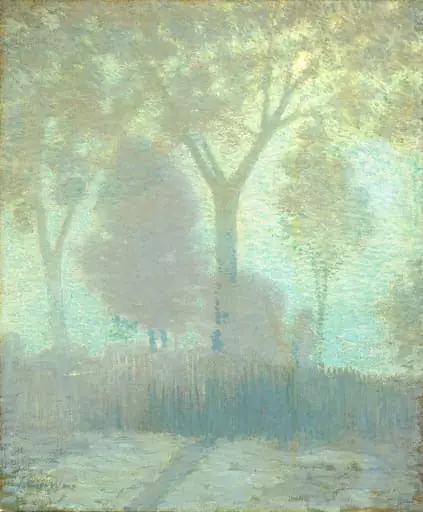
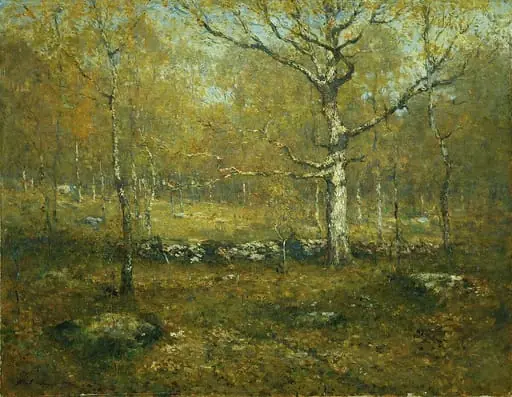
Obweebetuck is an oil painting by the American Impressionist artist Julian Alden Weir. It dates from 1908 and is held in the collection of the National Gallery of Art.
- Inscription
- Inscribed:lower right: J. Alden Weir
About this work
History & Provenance
Prior to this transfer, the work was part of the collection of the Corcoran Gallery of Art, where it arrived via bequest on January 21, 1924.
Julian Alden Weir created the oil-on-canvas painting Obweebetuck in 1908. The artist retained ownership of the work until December 1918, when it was purchased by George M. Oyster, Jr. of Washington. Following Oyster's death in 1921, the painting passed through his estate before being bequeathed on January 21, 1924, to the Corcoran Gallery of Art in Washington. The National Gallery of Art subsequently acquired the work in 2015.
The painting Obweebetuck is currently held by the National Gallery of Art in Washington, D.C., having been acquired by the institution in 2015. Prior to this transfer, the work was part of the collection of the Corcoran Gallery of Art, where it arrived via bequest on January 21, 1924. The provenance traces back to the artist, Julian Alden Weir, who sold the canvas to George M. Oyster, Jr. of Washington in December 1918.
Following Oyster's death, the piece passed through his estate to the Corcoran, which held it for nearly a century before its acquisition by the National Gallery of Art.
Context
Painted in 1908, Obweebetuck entered the collection of George M. Oyster, Jr. in December 1918, was held by his estate after his death in 1921, and was bequeathed to the Corcoran Gallery of Art in January 1924 before being acquired by the National Gallery of Art in 2015. The work is documented in the artist’s oeuvre and has been discussed in scholarship on Weir’s role in American Impressionism, situating the painting within the broader development of early 20th-century American art.
The painting’s provenance reflects early 20th-century patterns of private collecting and institutional transfer in Washington, D.C., illustrating how regional art institutions acquired works by prominent American artists. Its presence in a major national collection underscores its recognized significance within the artist’s body of work and the evolution of American modernism.
Obweebetuck is part of the National Gallery of Art’s permanent holdings, where it is studied in the context of Julian Alden Weir’s contributions to American Impressionism and his influence on subsequent generations of painters.
Overview
Julian Alden Weir’s oil on canvas, titled Obweebetuck, dates from around 1908. Executed in the artist’s Connecticut surroundings, the work captures a quiet forest scene where a solitary figure rests upon a tree stump, enveloped by the dappled light of the woods.
Subject & Meaning
The composition presents a woman in a flowing white dress, seated with her back to the viewer. Surrounded by dense trunks and a carpet of warm brown and green foliage, the figure appears contemplative, suggesting a moment of repose within nature’s secluded interior.
Technique & Style
Weir employs a looser brushstroke than his earlier realist training, applying paint thickly in places to create a tactile surface. The impasto treatment of foliage and bark adds texture, while brighter, more saturated hues convey the filtered sunlight, reflecting a broader shift among American painters toward expressive color and surface.
Own this work as a print
Artist & collection

Artist
Julian Alden Weir was an American impressionist painter and member of the Cos Cob Art Colony in Greenwich, Connecticut.