Artwork
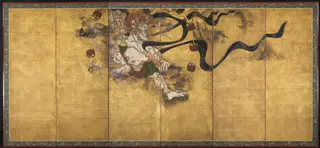
Flowers of a Hundred Worlds (Momoyogusa): God of Thunder (Raijin)
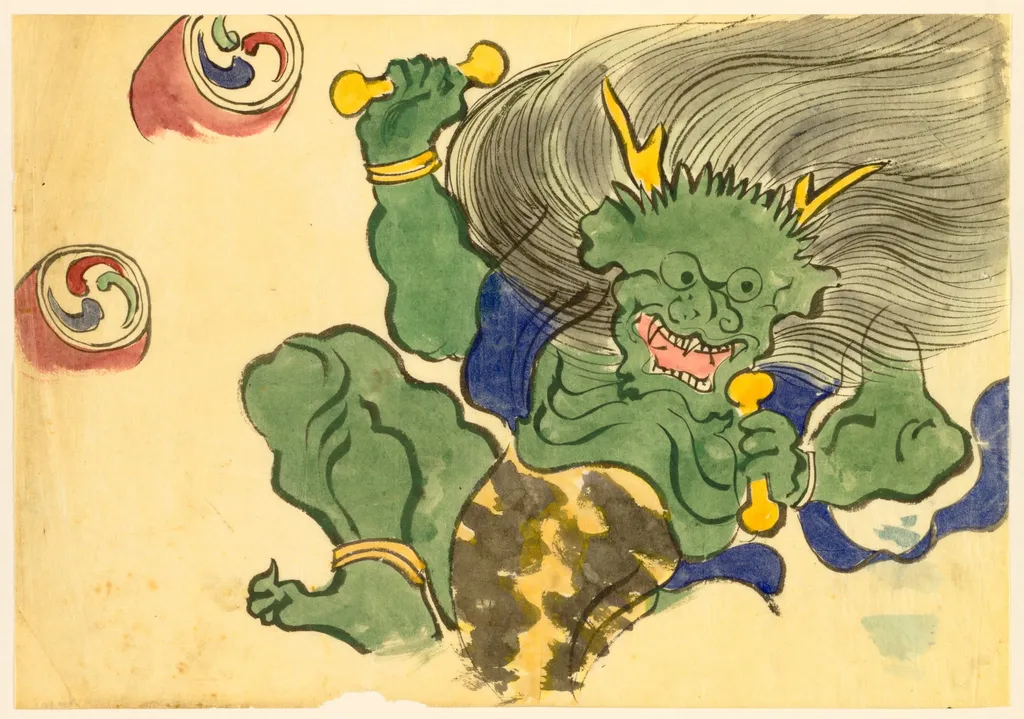
Flowers of a Hundred Worlds (Momoyogusa): God of Thunder (Raijin) is a drawing by Kamisaka Sekka. It dates from 1909 and is held in the collection of the Cleveland Museum of Art.
- Accession no.
- 1989.85.1
- Credit line
- John L. Severance Fund
About this work
Overview
The work exemplifies Sekka's synthesis of traditional Japanese decorative aesthetics with modern design sensibilities.
Flowers of a Hundred Worlds (Momoyogusa): God of Thunder (Raijin) is a 1909 work by Kamisaka Sekka, a pivotal figure in the Rinpa revival and Japanese Art Nouveau. Created during the artist's mature period, this piece depicts Raijin, the Shinto deity of thunder and lightning, integrated into a lush, stylized floral composition. The work exemplifies Sekka's synthesis of traditional Japanese decorative aesthetics with modern design sensibilities.
Unlike the finished painting, which features precise, flat areas of color and gold leaf typical of the Rinpa school, preparatory studies for this series were executed on tracing paper with ink and color. These preliminary drawings display a looser, more spontaneous handling of form, revealing the artist's iterative process before committing to the final, highly refined surface. The painting reflects Sekka's role in bridging 19th-century traditions with early 20th-century modernism, utilizing the Momoyogusa series to explore the intersection of mythological figures and natural motifs.
The composition balances the dynamic energy of the thunder god with the rhythmic patterns of surrounding flora, demonstrating the artist's mastery of decorative harmony and his influence on the development of modern Japanese graphic arts.
Subject & Meaning
The image depicts Raijin, the Japanese deity of thunder, positioned amid an arrangement of stylized flowers. By placing the god within a botanical context, Sekka juxtaposes the violent energy of storms with the delicate growth of plant life, suggesting a balance between natural forces.
Technique & Style
Sekka employed a combination of ink lines and colored washes on translucent paper, allowing the underlying sketches to remain visible. The drawing’s fluid strokes and less defined forms contrast with the tighter, more controlled lines typical of his final prints, illustrating his process of developing composition through freer experimentation.
History & Provenance
Created as part of the preparatory phase for the Flowers of a Hundred Worlds series, the study predates the completed printed works that were later disseminated in the early 20th century. The drawing remains within the artist’s archive, documenting his method of working from sketch to print.
Context
Sekka (1865–1942) was active during Japan’s Meiji and Taishō periods, a time when traditional ukiyo‑e techniques were being reinterpreted alongside Western influences. His integration of color and ink on tracing paper reflects a transitional practice that bridges hand‑drawn studies with modern printing processes.
Own this work as a print
Artist & collection
Artist
Kamisaka Sekka (神坂 雪佳; 1866–1942) was an important artistic figure in early twentieth-century Japan.

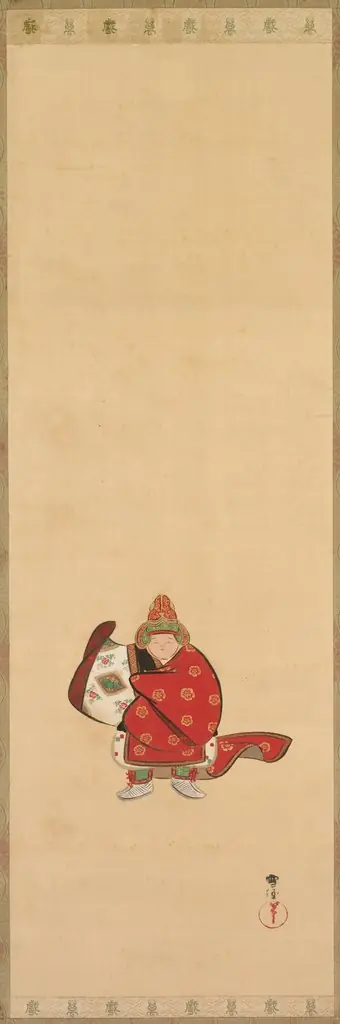 Bugaku Dancer
 Bugaku Dancer
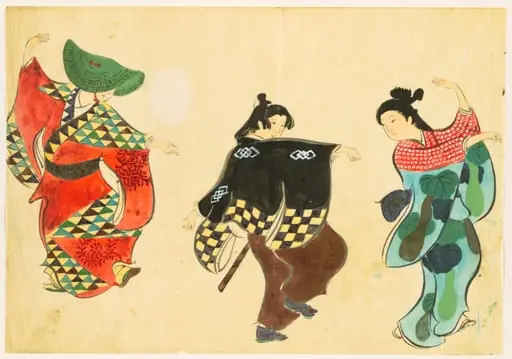 Flowers of a Hundred Worlds (Momoyogusa): Dancing (Odori)
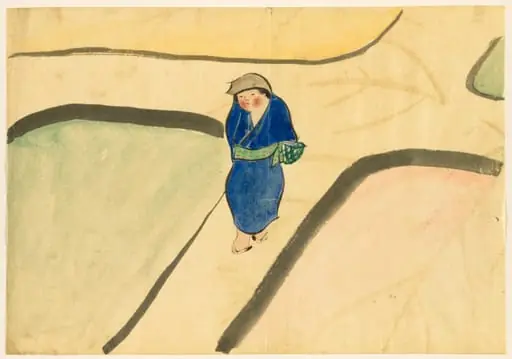 Flowers of a Hundred Worlds (Momoyogusa): Spring Field (Haru no tanomo)
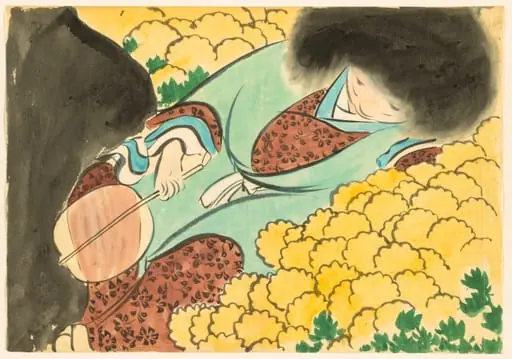 Flowers of a Hundred Worlds (Momoyogusa): Chrysanthemum Boy (Kikujidō)
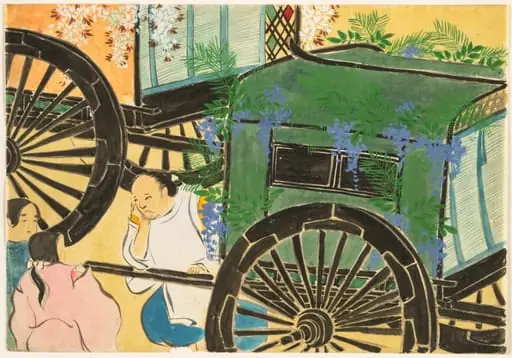 Flowers of a Hundred Worlds (Momoyogusa): Flower-draped Carts
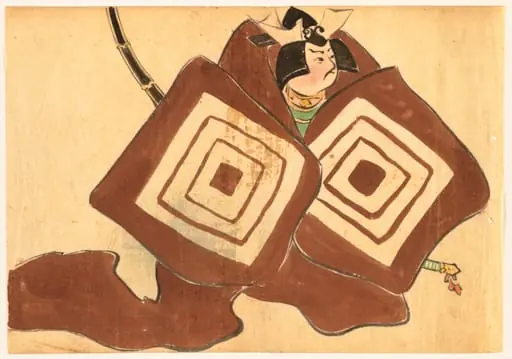 Flowers of a Hundred Worlds (Momoyogusa): Shibaraku (Shibaraku)
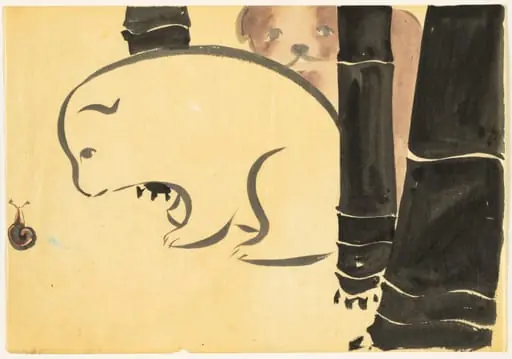 Flowers of a Hundred Worlds (Momoyogusa): Puppies (Enokoro)