Artwork
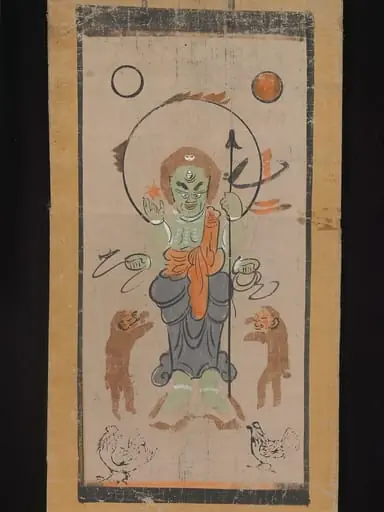
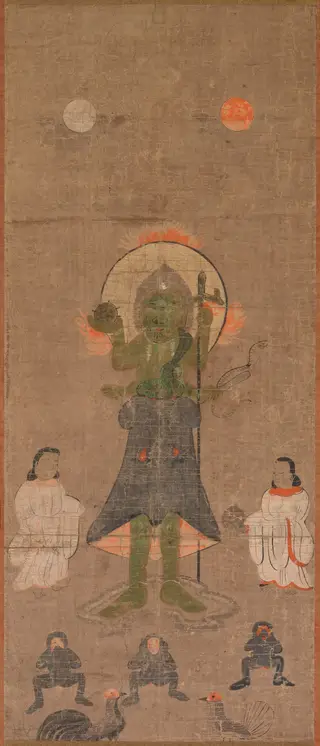
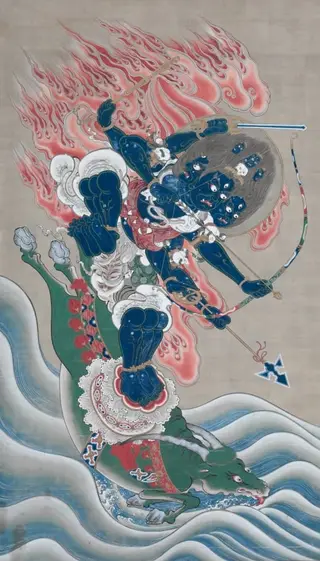
青面金剛夜叉図大津絵|Ōtsu-e of Shōmen Kongōyasha (Vajrayaksha)
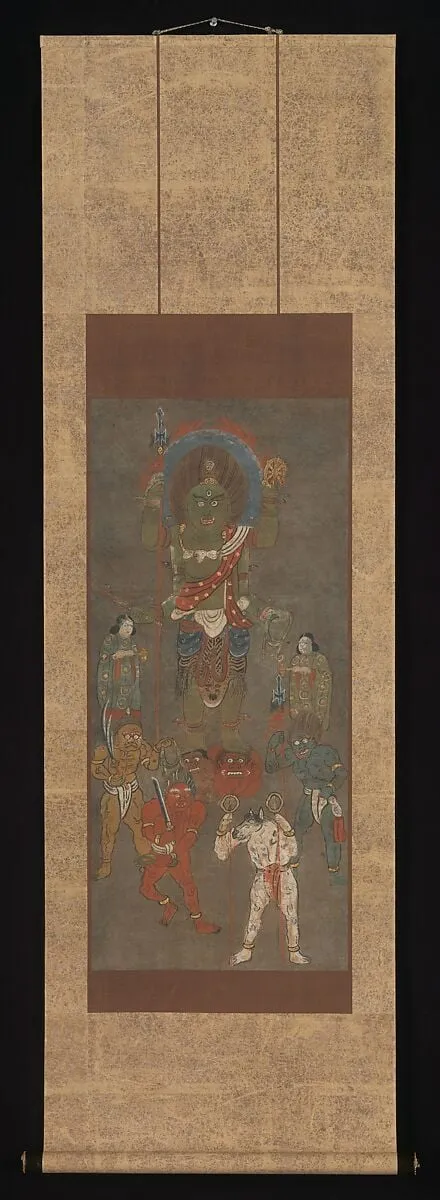
青面金剛夜叉図大津絵|Ōtsu-e of Shōmen Kongōyasha (Vajrayaksha) is an ink painting. It dates from 1600 and is held in the collection of the Metropolitan Museum of Art.
About this work
Subject & Meaning
Rendered as a hanging scroll using ink, color, and gold on paper, the figure embodies the fierce aspect of divine protection found in Japanese religious art.
The artwork depicts Shōmen Kongōyasha, a wrathful Buddhist guardian deity known as Vajrayaksha. Rendered as a hanging scroll using ink, color, and gold on paper, the figure embodies the fierce aspect of divine protection found in Japanese religious art. As an Ōtsu-e, a genre of folk painting from Japan, the piece represents a synthesis of esoteric Buddhist iconography and popular devotional imagery intended to ward off evil and grant blessings.
The work's classification as a religious painting underscores its function as a spiritual object rather than a purely aesthetic one, reflecting the beliefs of its time regarding the power of such guardian figures.
Technique & Style
The work is a hanging scroll created with ink, color, and gold pigments on paper. Executed circa 1600, it originates from Japan and exemplifies the Ōtsu-e tradition through its bold outlines, flat areas of color, and decorative gold accents. The composition features a fierce,青面金剛夜叉図大津絵|Ōtsu-e of Shōmen Kongōyasha figure rendered in a stylized manner typical of early Edo religious imagery.
Formal qualities include a flattened spatial perspective, simplified anatomical modeling, and the use of striking contrasts to convey spiritual intensity.
History & Provenance
The work is a hanging scroll painted in ink, color, and gold on paper depicting Shōmen Kongōyasha, a Vajrayaksha figure, in the Ōtsu-e style. It was created in Japan around 1600 by an anonymous artist. The piece entered the collection of the Metropolitan Museum of Art, where it remains on view.
The painting was acquired by the museum and is cataloged under accession number 1975.268.141.
The work is classified as a religious painting within the broader category of Japanese paintings.
The Ōtsu-e painting depicting Shōmen Kongōyasha is held in the collection of the Metropolitan Museum of Art. The work, created around 1600 by an unknown artist, is cataloged within the museum's holdings under the accession number 1975.268.141. While the piece is identified as part of this major New York institution's permanent collection, the available records do not list specific past exhibitions or loan history for this particular scroll.
Overview
The work is a hanging scroll painted with ink, color, and gold on paper, representing a figure known as Shōmen Kongōyasha, a deity associated with the Vajrayaksha tradition. The central figure dominates the composition, set against a vivid backdrop of greens, blues, and reds, and is framed by a halo that emphasizes its supernatural presence.
Context
Shōmen Kongōyasha is a manifestation of the vajra‑wielding protector in Buddhist practice, often invoked for protection against evil. The depiction aligns with contemporary visual conventions that emphasize the deity’s ferocity and power, reflecting the religious climate of the time.
Legacy
While not a court‑commissioned masterpiece, the scroll exemplifies the spread of Buddhist iconography into popular visual culture. Its vivid palette and accessible format contributed to the broader dissemination of protective deities in Edo‑period religious art.
Artist & collection

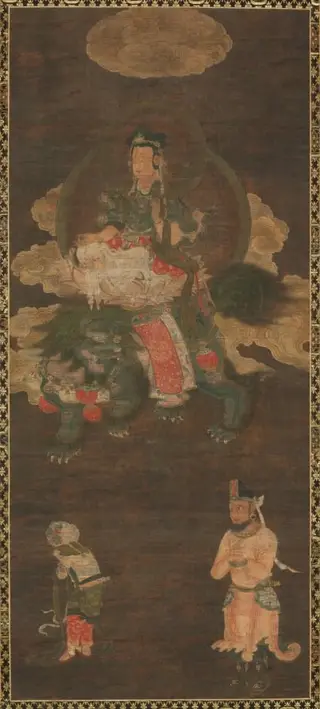 Shakyamuni Triad: Buddha Attended by Manjushri and Samantabhadra (Bodhisattva with Lion)
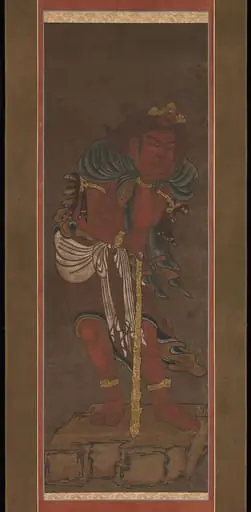 龍湫周沢写 不動明王二童子像|Fudō Myōō and Two Attendants
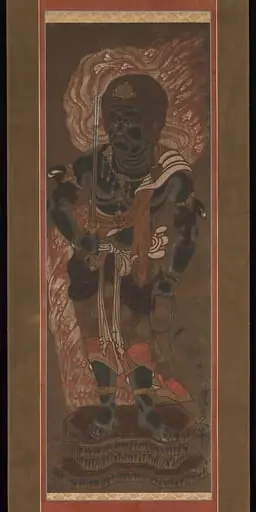 龍湫周沢写 不動明王二童子像|Fudō Myōō and Two Attendants
 Heavenly King Virudhaka
 Shomen Kongo: The Blue-Faced Kongo
 十一面観音影向図|Eleven-Headed Kannon on Mount Fudaraku
 十二天像(梵天)|One of the Twelve Devas: Bonten
 Wisdom King of Great Awe-inspiring Power (Daiitoku Myōō)