Artwork
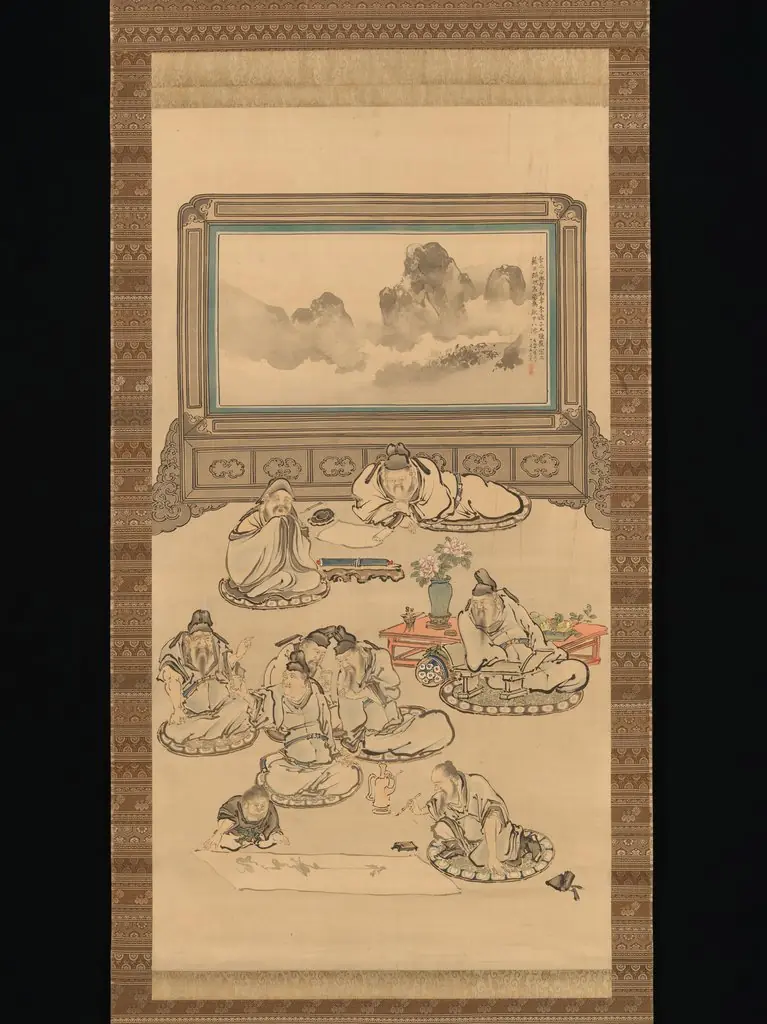
Eight Daoist Immortals
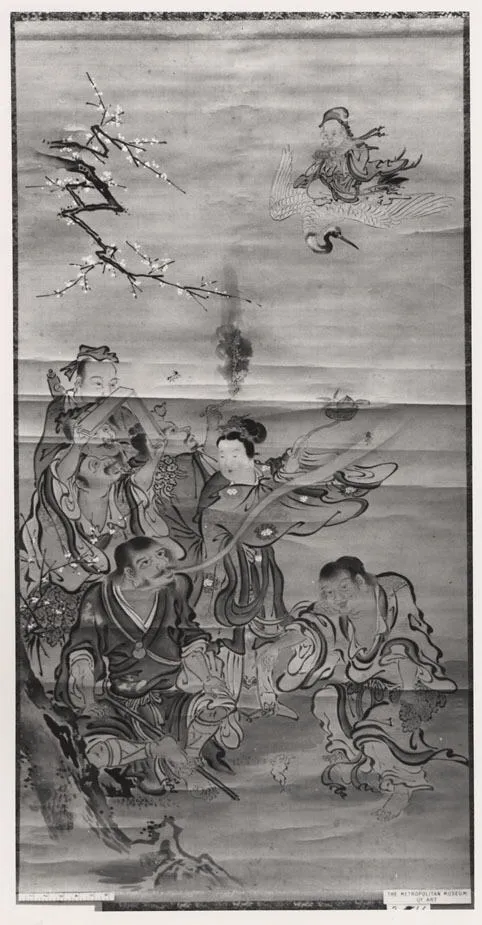
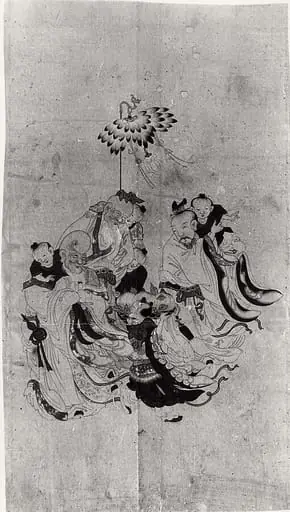
Eight Daoist Immortals is an unspecified painting by the Kanō school artist Kanō Tanshin. It dates from 1692 and is held in the collection of the Metropolitan Museum of Art.
About this work
Subject & Meaning
The work’s iconography reflects the traditional theme of the Eight Immortals, a set of legendary beings who personify the path to spiritual immortality.
The painting titled Eight Daoist Immortals, executed by Kanō Tanshin in 1683 and now housed in the Metropolitan Museum of Art, portrays a group of Daoist sages associated with the quest for transcendence. Among the figures rendered are a man, a woman, and a crane, each embodying attributes such as wisdom, purity, and longevity that are central to Daoist cosmology. The work’s iconography reflects the traditional theme of the Eight Immortals, a set of legendary beings who personify the path to spiritual immortality.
By combining human and animal forms, the composition conveys the interconnectedness of earthly virtue and celestial reward, illustrating the broader cultural significance of Daoist ideals in Edo‑period Japan.
History & Provenance
The painting titled Eight Daoist Immortals was created in 1683 by the Japanese artist Kanō Tanshin, also identified as Morimasa. Produced in Japan, the work measures 150.5 cm in height and 76.8 cm in width. The piece currently resides in the collection of the Metropolitan Museum of Art, where it is classified as a painting.
While the specific circumstances of its original commission and the detailed chain of ownership prior to its museum acquisition are not outlined in the available records, the work's inception is firmly dated to the beginning of 1683. The artwork depicts figures including a man, a woman, and a crane, consistent with its subject matter.
Overview
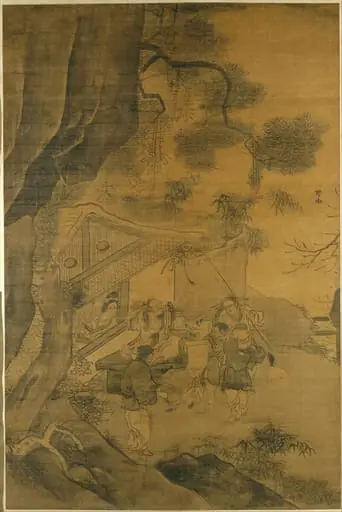
Kanō Tanshin (Morimasa), a prominent Japanese painter and head of the Kajibashi lineage within the Kanō school, completed Eight Daoist Immortals in 1692. This painting, now part of The Metropolitan Museum of Art's collection, exemplifies his distinctive approach to traditional subject matter. It depicts a gathering of figures in a tranquil natural setting, reflecting the artistic trends of its era while showcasing the artist's individual stylistic choices.
Technique & Style
Kanō Tanshin's artistic method in this work demonstrates a nuanced departure from the strict adherence to past masters that characterized much of the Kanō school. He integrated stylistic characteristics often associated with the Tosa school, resulting in a more expansive visual vocabulary. The painting's calm and harmonious aesthetic is achieved through the use of soft colors and gentle, flowing lines, contributing to its overall tranquil impression.
Artist & collection
Artist
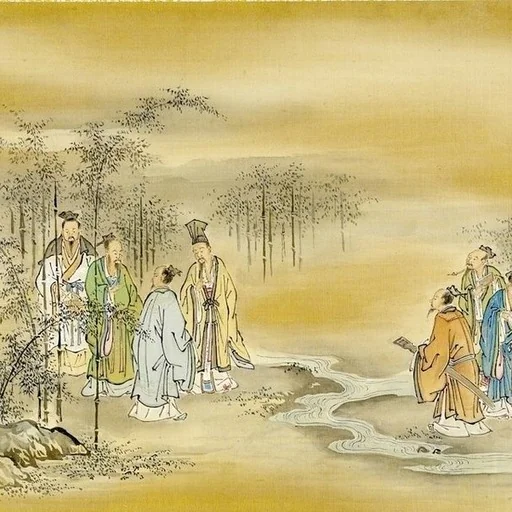
Kanō Tanshin (Morimasa) (狩野 探信; 1653–1718) was a Japanese painter. He was the son of Kanō Tan'yū by his second wife and led the Kajibashi branch of the Kanō school after 1674. Stylistically, he had a Tosa-like approach…

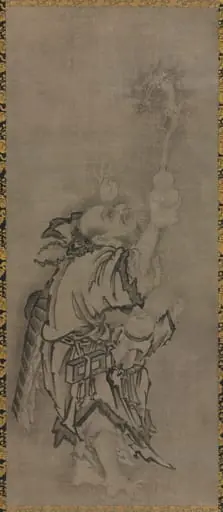
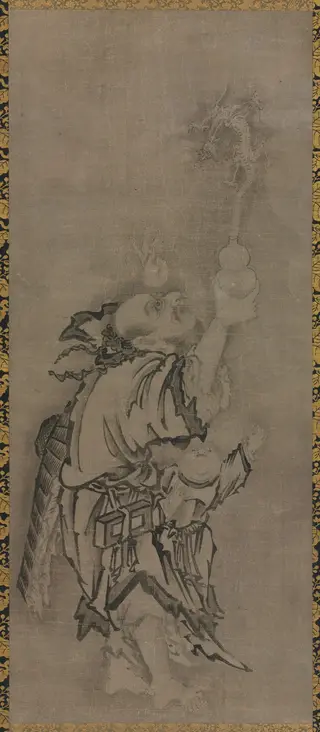
- Hotei with Daoist Immortals: Immortal with Gourd and Dragon
 Daoist Immortal
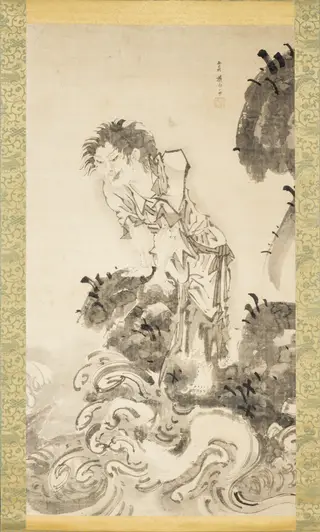
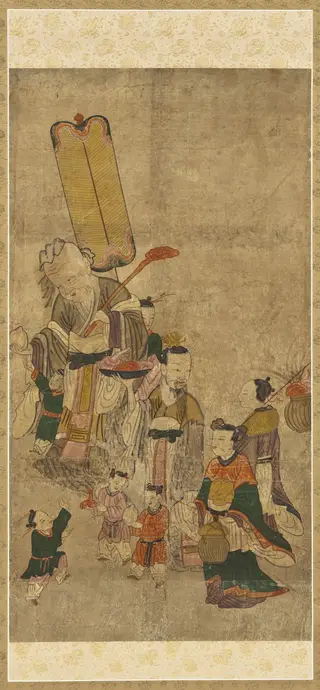 Dongfang Shuo (Tongbang Sak), one of the Eight Chinese Immortals
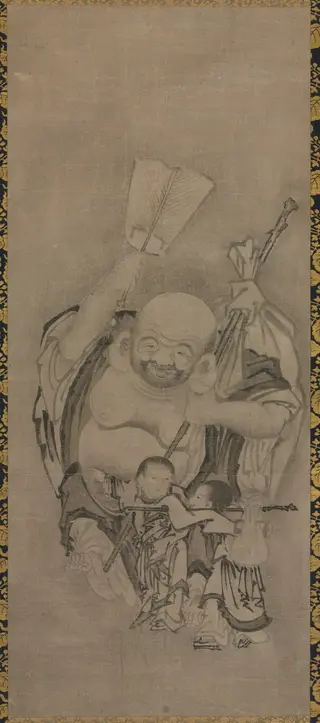 Hotei with Daoist Immortals: Hotei
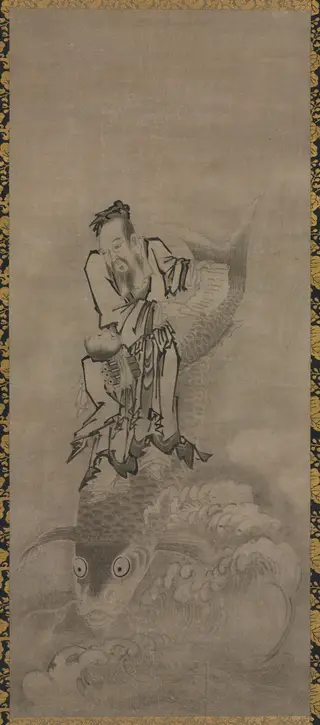 Hotei with Daoist Immortals
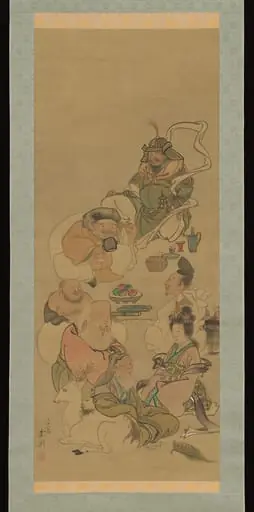 長澤蘆洲筆 七福神図|Seven Gods of Good Fortune
 The Eight Immortals of the Wine Cup
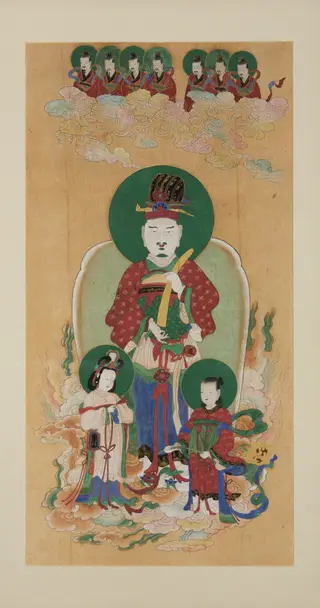 Daoist Official of Heaven with Seven Stars and Jade Maidens