Artwork
The Eight Immortals of the Wine Cup
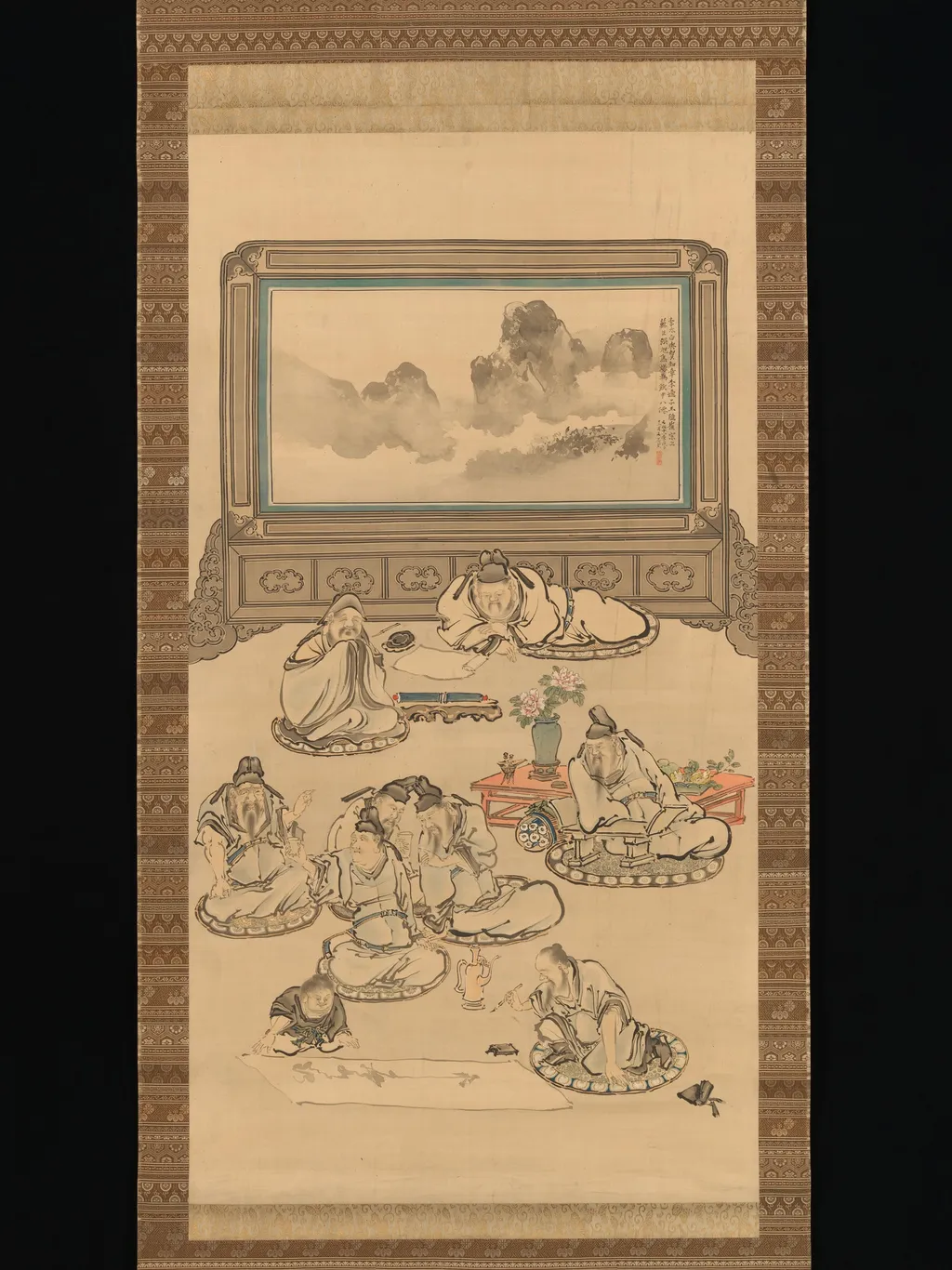
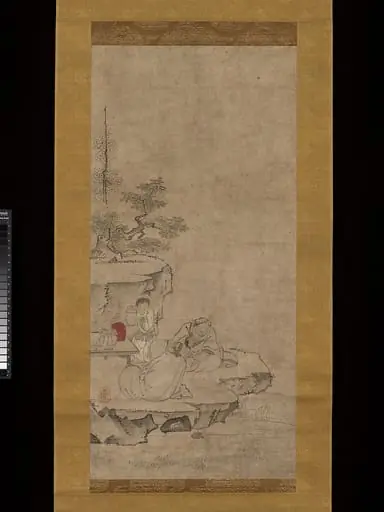
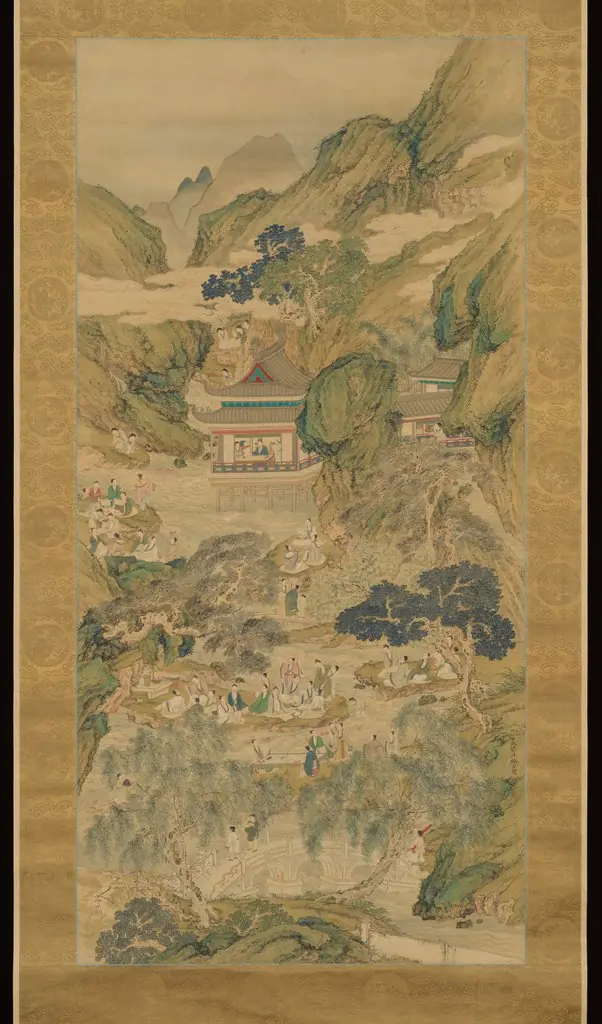
The Eight Immortals of the Wine Cup is an unspecified painting by the Nanga artist Tani Bunchō. It dates from 1828 and is held in the collection of the Metropolitan Museum of Art.
About this work
Overview
The Eight Immortals of the Wine Cup is a painting executed in 1828 by the Japanese artist Tani Bunchō. The work is part of the collection of the Metropolitan Museum of Art in New York, where it is displayed among the museum’s holdings of East Asian art.
Subject & Meaning
The composition centers on a single male figure, traditionally identified with the legendary Eight Immortals associated with wine in Chinese folklore. The portrayal emphasizes the convivial spirit of the mythic group, using the solitary figure to evoke the collective merriment of the eight legendary drinkers.
Technique & Style
Bunchō employed the brushwork and ink techniques characteristic of the late Edo period, blending delicate line with subtle washes of color. The painting reflects the scholar-artist’s affinity for classical Chinese themes, rendered in a restrained yet expressive manner that highlights the figure’s relaxed posture.
History & Provenance
Created in 1828, the painting entered the Metropolitan Museum of Art’s collection through acquisition in the twentieth century. Its provenance prior to museum ownership is not extensively documented, but the work has been recognized as a representative example of Bunchō’s engagement with Chinese literary subjects.
Own this work as a print
Artist & collection


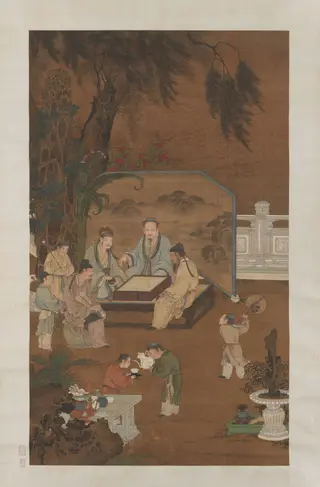 The Eighteen Scholars
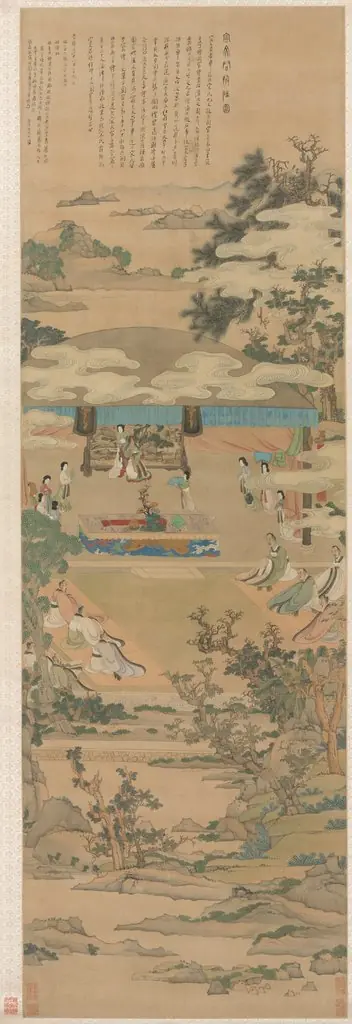 Lady Xuanwen Giving Instruction on the Rites of Zhou
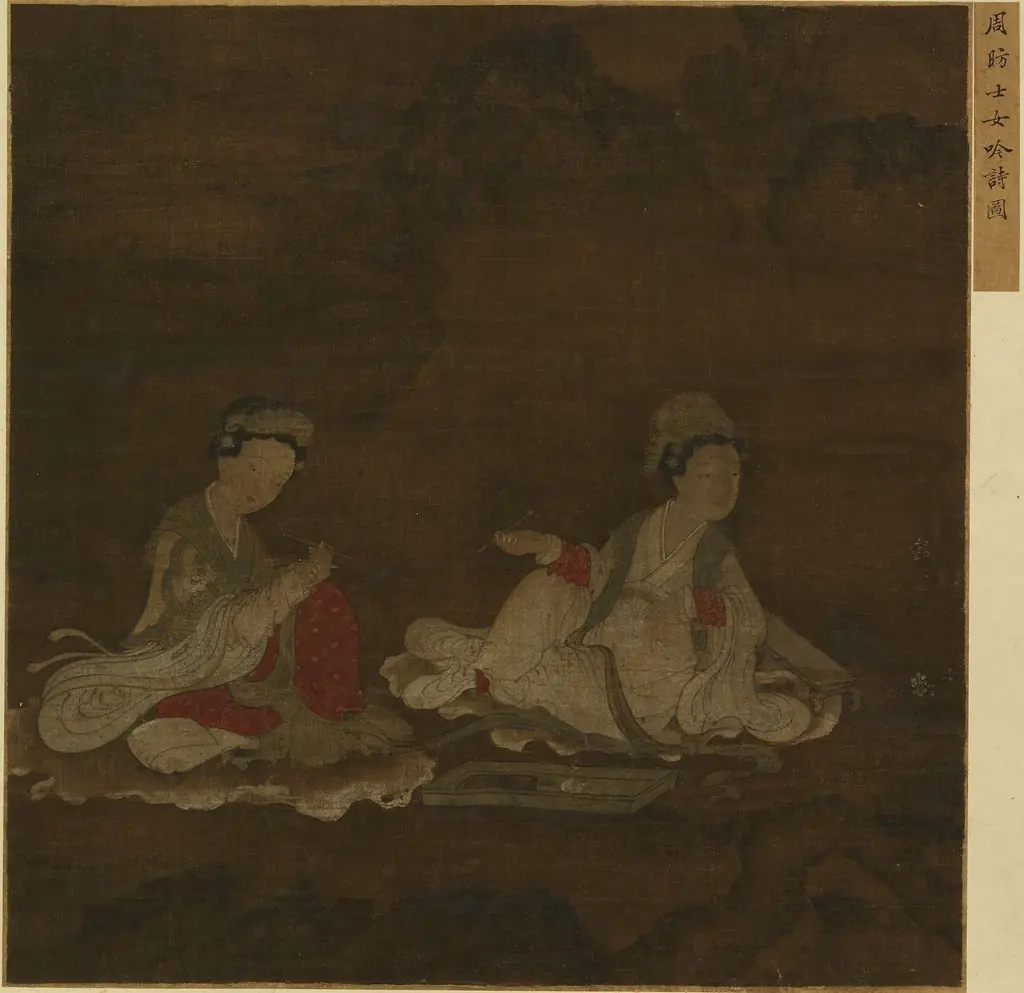 名繪集珍 冊 唐周昉士女吟詩圖
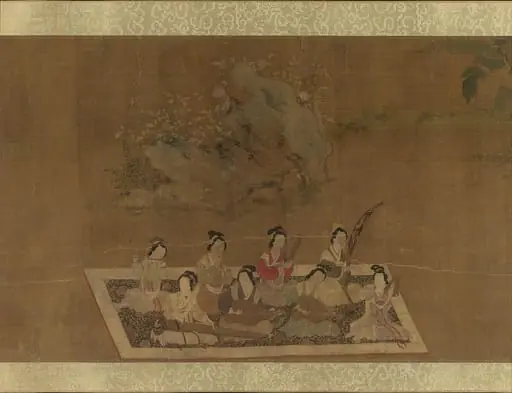 明 佚名 蘇蕙璇璣圖 卷|Lady Su Hui and Her Verse Puzzle
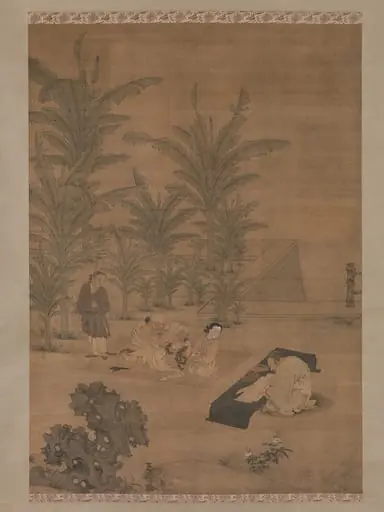 明 杜堇 伏生授經圖 軸|The Scholar Fu Sheng Transmitting the Book of Documents
 明 佚名 李公麟 偽款 白蓮社圖 卷|White Lotus Society
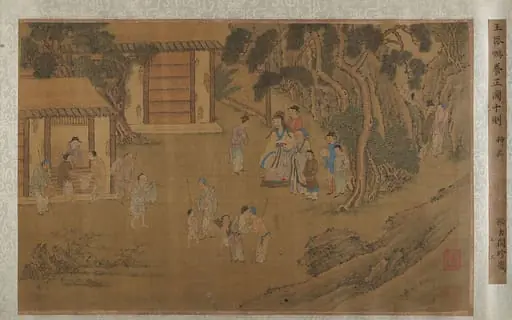 明/清 佚名 舊傳王振鵬 養正圖 卷|Family Training
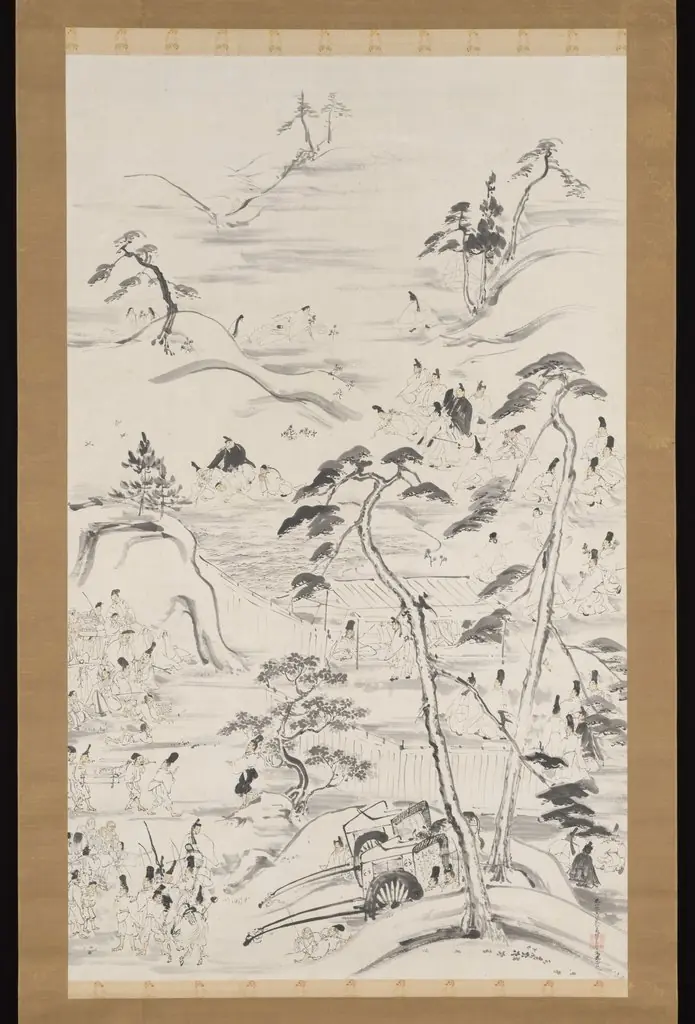 Emperor Enyū’s Outing to Funaokayama on the First Day of the Rat in the New Year
 Untitled
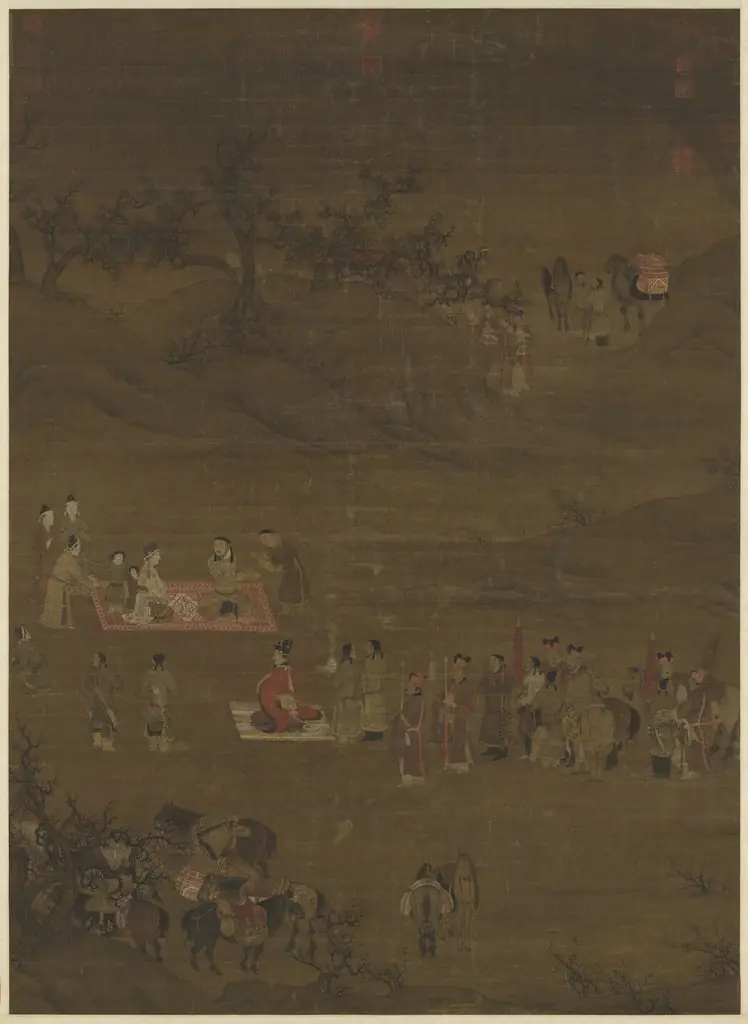 宋陳居中文姬歸漢圖軸
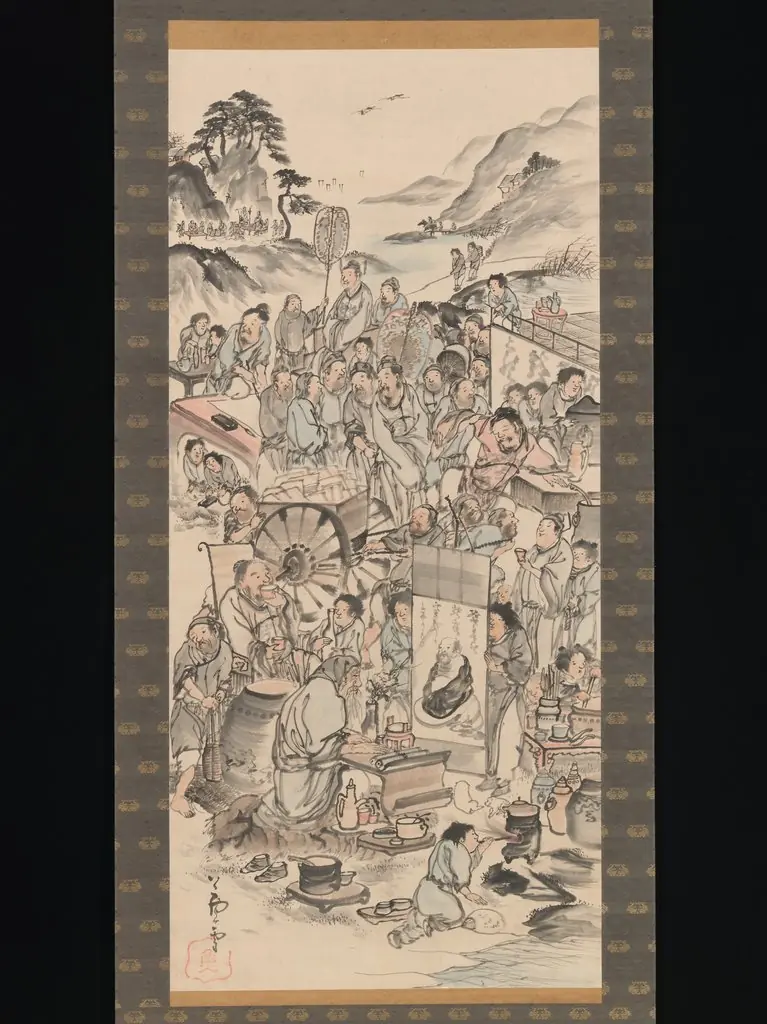
- Drinking Festival of the Eight Immortals of the Wine Cup
 Lanting Gathering in Blue and Green 青緑蘭亭脩禊図 (Seiryoku rantei shūkei zu)