Artwork
Hotei with Daoist Immortals: Immortal with Gourd and Dragon
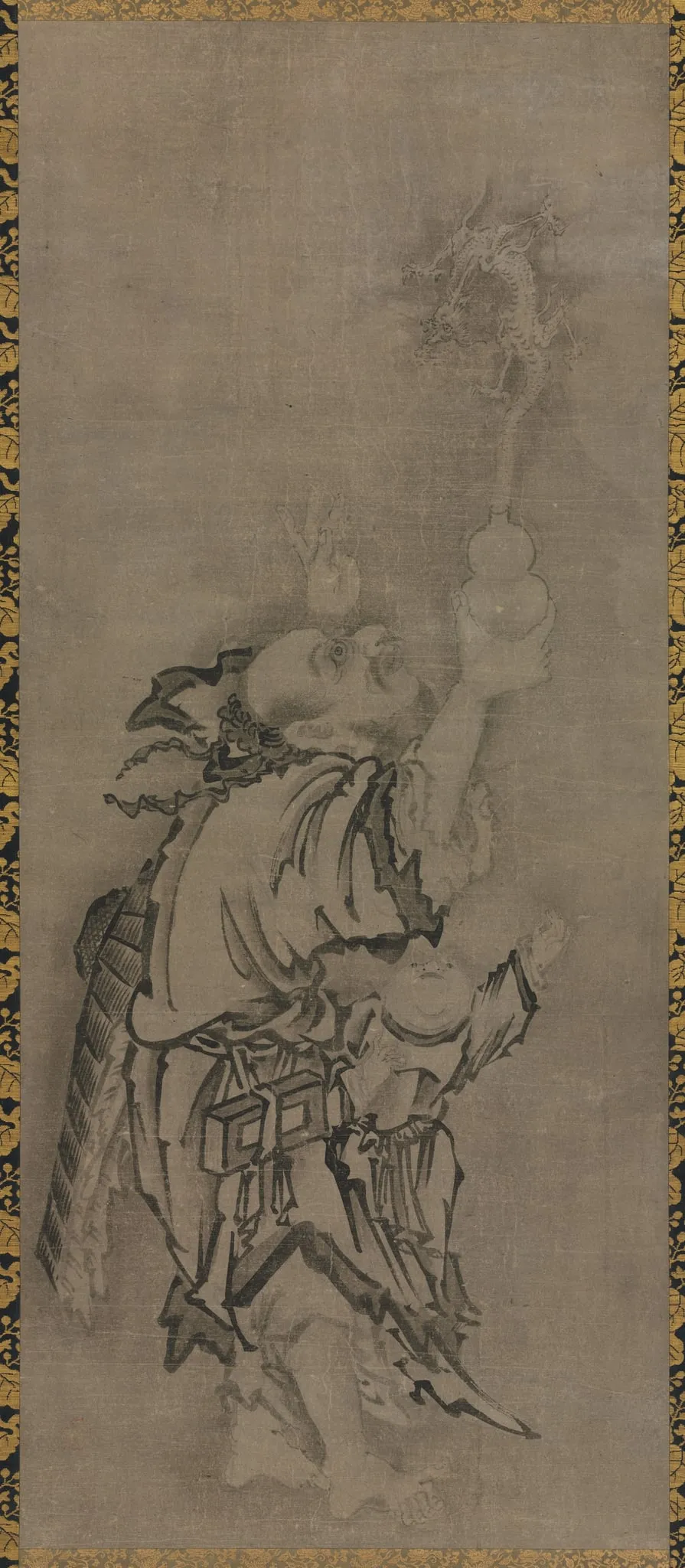
Hotei with Daoist Immortals: Immortal with Gourd and Dragon is an unspecified painting by the Baroque artist Kyūseki Tomonobu. It dates from 1696 and is held in the collection of the Cleveland Museum of Art.
- Accession no.
- 1989.8.3
- Credit line
- Mr. and Mrs. William H. Marlatt Fund
About this work
Overview
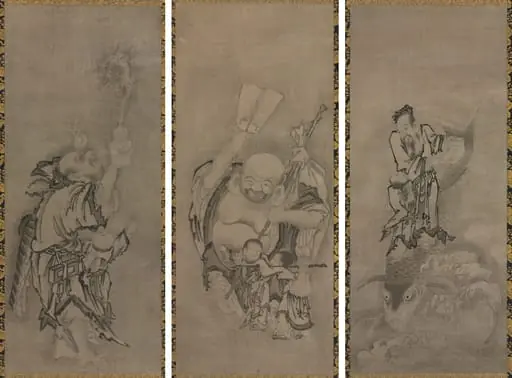
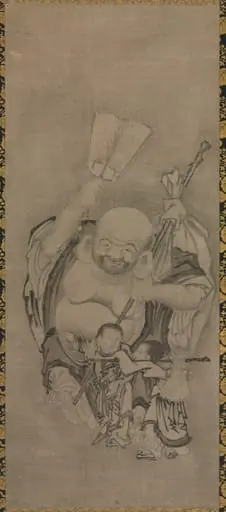
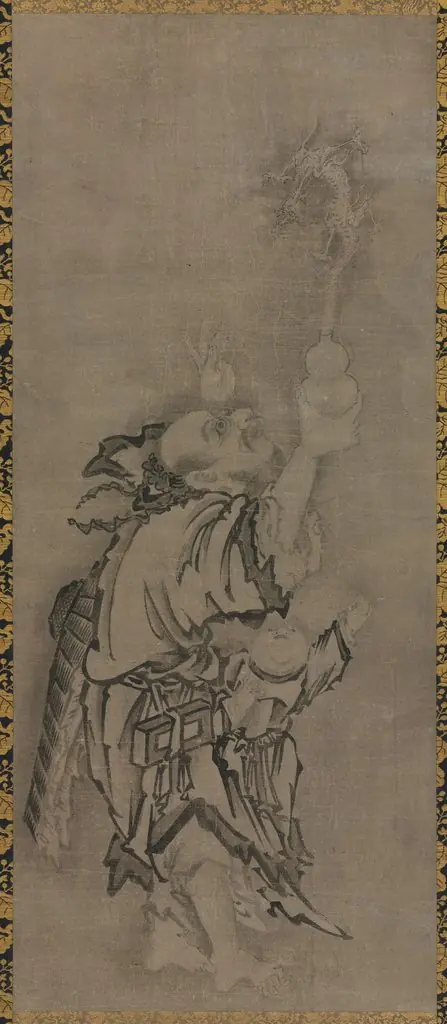
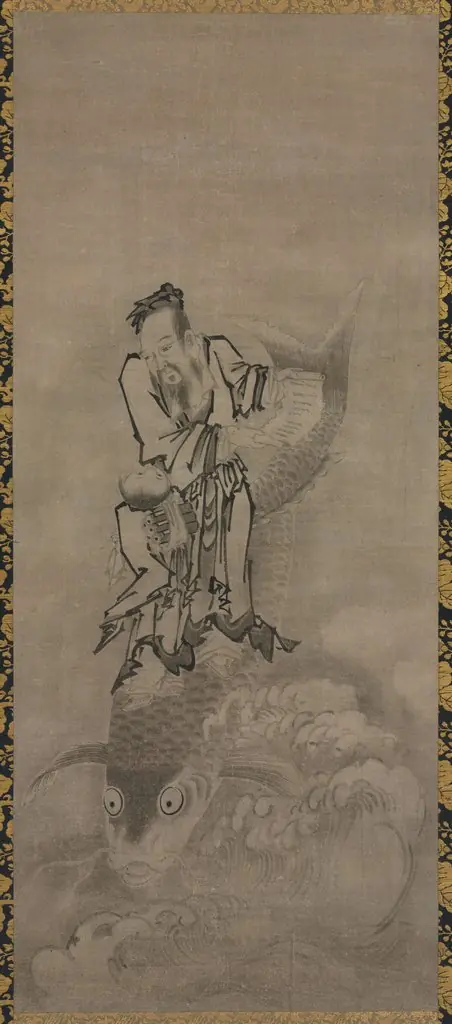
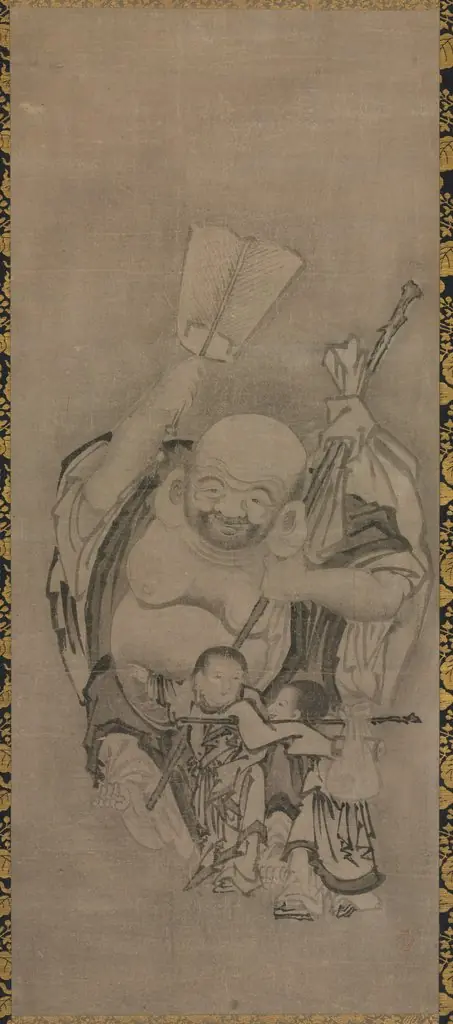
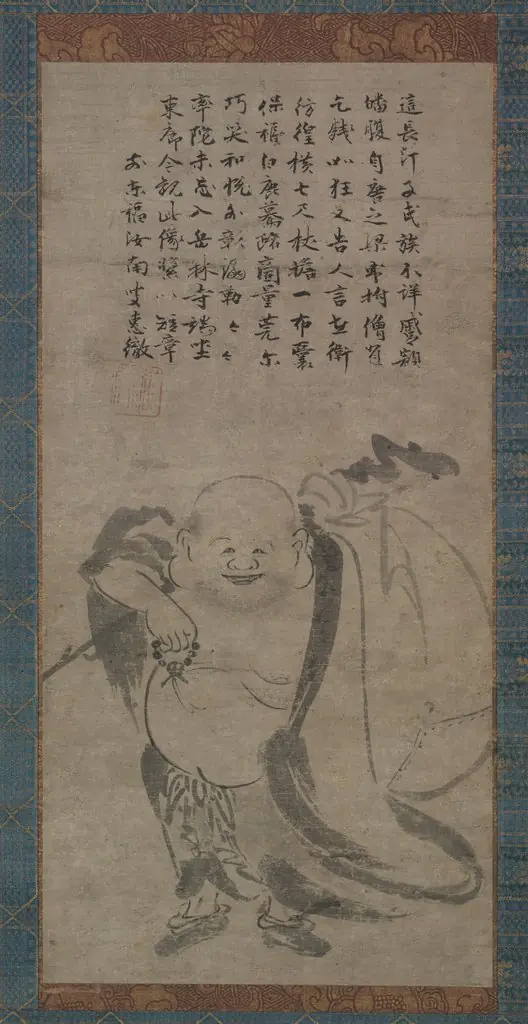
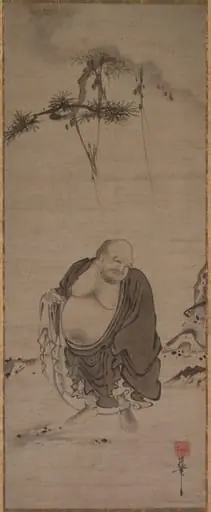
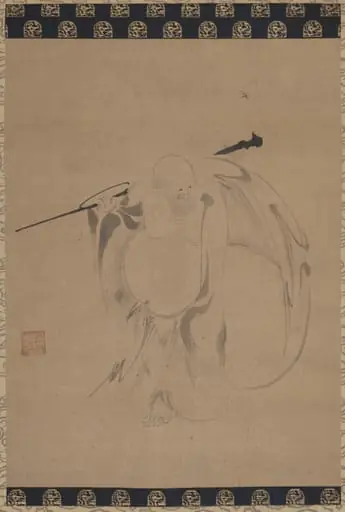
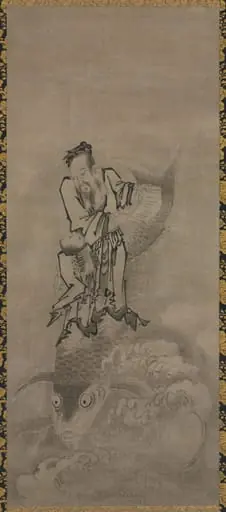
This triptych depicts Hotei, a Chan monk later venerated in Japan, flanked by two Daoist immortals, one holding a gourd, the other accompanied by a dragon.
This triptych depicts Hotei, a Chan monk later venerated in Japan, flanked by two Daoist immortals, one holding a gourd, the other accompanied by a dragon. Created as a unified set, the composition reflects the syncretic spiritual culture of medieval East Asia, where Zen and Daoist imagery coexisted without doctrinal conflict. The scrolls were restored to their original format after deteriorating mountings compromised their integrity, with no pigment added to preserve the artist’s hand.
Subject & Meaning
Hotei, portrayed with a broad smile and relaxed posture, embodies popular Japanese folk reverence for benevolence and abundance. His presence alongside Daoist figures, marked by unconventional features and symbolic attributes, suggests a cultural blending rather than competition between traditions. The gourd and dragon, both Daoist emblems of longevity and transformation, anchor the spiritual narrative, positioning Hotei not as a religious outsider but as a harmonious participant in a broader cosmology.
Technique & Style
The painting employs fine ink brushwork on paper, with subtle tonal variations defining form and texture. Hotei’s rounded features and flowing robes contrast with the sharper, more angular forms of the Daoist immortals, reflecting stylistic distinctions rooted in their respective traditions. The composition is deliberately balanced across three panels, each framed to function as part of a single visual unit, emphasizing the interconnectedness of the figures.
History & Provenance
The scrolls were likely produced in Japan during the 14th or 15th century, a period when Hotei’s image spread beyond monastic circles into popular devotion. Their original mounting had degraded over time, with cracked paper and unstable textiles threatening the integrity of the set. Upon acquisition by the museum, the triptych was identified as a cohesive ensemble requiring careful conservation to restore its intended presentation.
Context
During the Kamakura and Muromachi periods, Japanese religious life increasingly accommodated multiple traditions. Hotei’s popularity as a folk saint coincided with enduring Daoist influences from China, particularly among literati and esoteric practitioners. This triptych exemplifies how visual culture absorbed and reconciled diverse beliefs, presenting spiritual figures not as rivals but as complementary forces within a shared worldview.
Legacy
The conservation of this triptych preserved its historical authenticity without altering its original inkwork, allowing viewers to engage with the artist’s intent as it was centuries ago. Its display as a unified set reinforces the historical reality of religious pluralism in medieval Japan. The work remains a quiet testament to the fluid boundaries between institutional faith and popular devotion in East Asian art.
Artist & collection