Artwork
長澤蘆洲筆 七福神図|Seven Gods of Good Fortune
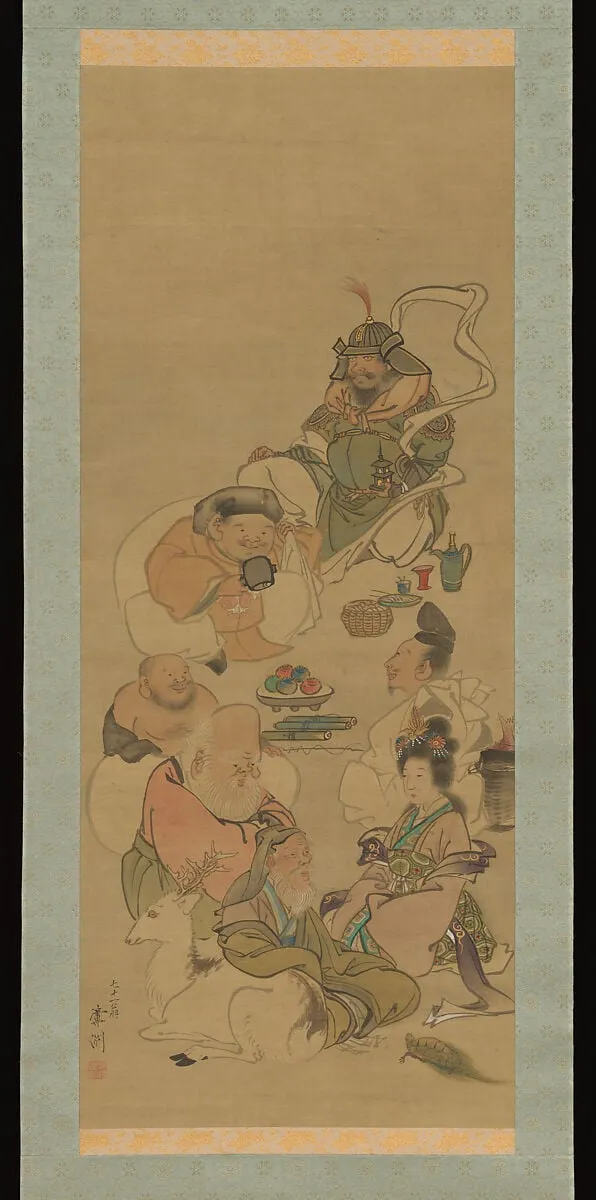
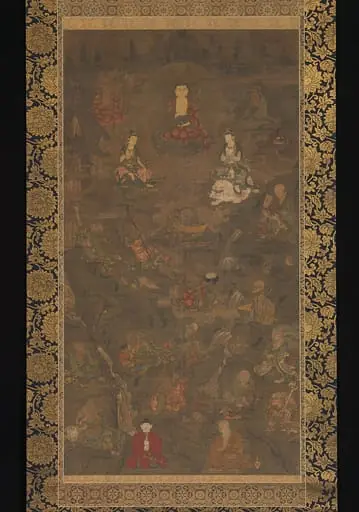
長澤蘆洲筆 七福神図|Seven Gods of Good Fortune is an ink painting by the Nihonga artist Nagasawa Roshū. It dates from 1837 and is held in the collection of the Metropolitan Museum of Art.
About this work
Technique & Style
9 cm in width, reflect the elongated proportions typical of devotional hanging scrolls, allowing the figural composition to be read from top to bottom.
The work is executed as a hanging scroll in ink and color on silk, a traditional East Asian format suited to vertical display. Its modest dimensions, approximately 88.6 cm in height and 35.9 cm in width, reflect the elongated proportions typical of devotional hanging scrolls, allowing the figural composition to be read from top to bottom. The use of silk as a support, combined with monochromatic ink and applied color, places the painting within the conventions of nineteenth-century Japanese religious painting.
The composition incorporates human figures alongside a deer, consistent with the iconography of the Seven Gods of Good Fortune (Shichifukujin).
History & Provenance
The hanging scroll titled Seven Gods of Good Fortune was created by the Japanese artist Nagasawa Roshū in 1837. Executed in ink and color on silk, the work depicts religious figures alongside a deer, a man, and a woman. While the specific commission details or the original patron are not recorded in the available documentation, the painting's creation date is firmly established as 1837.
The artwork, measuring 88.6 cm in height and 35.9 cm in width, is currently held within the collection of the Metropolitan Museum of Art in New York. Its provenance chain prior to its arrival at the museum is not detailed in the provided records, which primarily confirm its origin in Japan and its current institutional location.
Overview
This hanging scroll, titled Seven Gods of Good Fortune (長澤蘆洲筆 七福神図), was created by Nagasawa Roshū in 1837. Executed with ink and color on silk, the painting presents a lively scene featuring the popular deities of Japanese folklore. It captures a moment of collective journey for these figures, rendered with a distinctive approach to traditional iconography.
Subject & Meaning
The artwork humorously depicts all seven gods of good fortune crowded together on a small boat, each identifiable by their characteristic lucky objects, such as a hammer, a fan, or a scroll. This composition is notable given that the painting itself belongs to a larger series where each god typically had their own dedicated scroll. The inclusion of a deer in the corner serves a compositional purpose, balancing the scene rather than being part of the traditional divine assembly.
Artist & collection


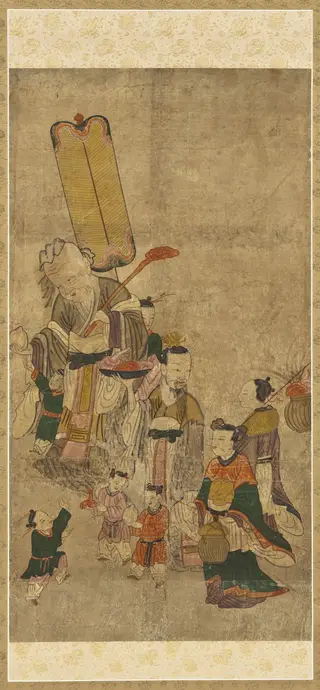 Dongfang Shuo (Tongbang Sak), one of the Eight Chinese Immortals
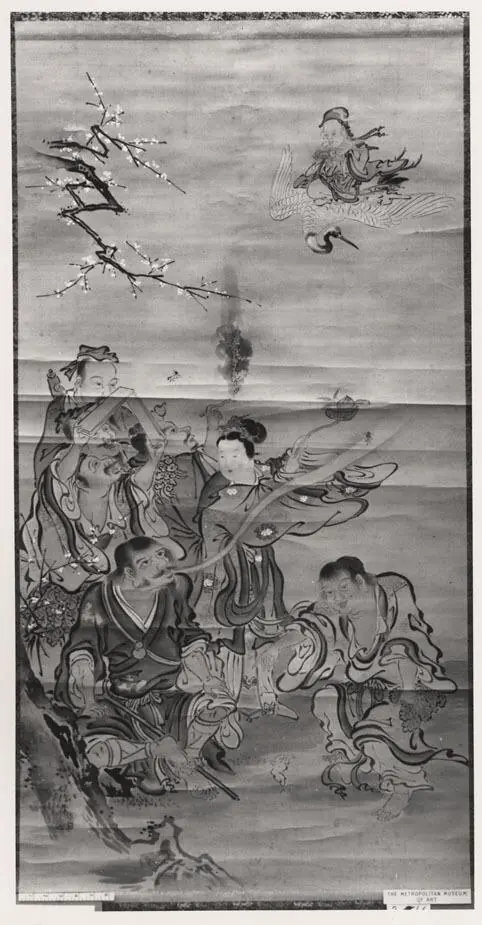 Eight Daoist Immortals
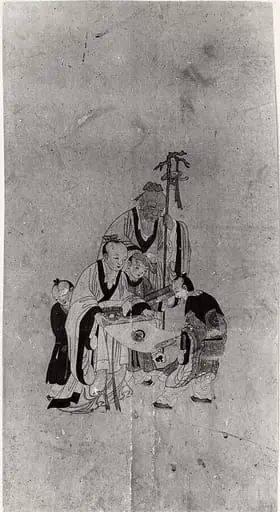 Untitled
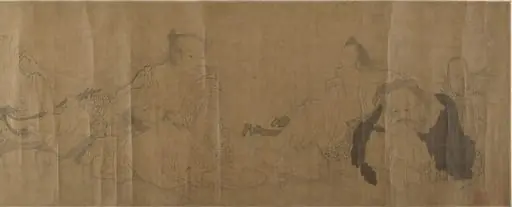 Untitled
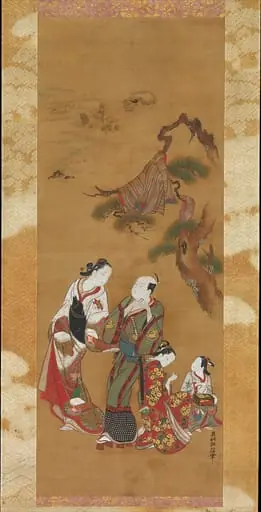 Untitled
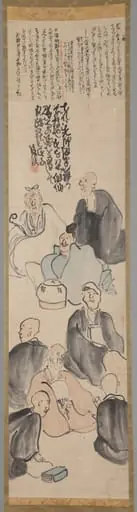 Gathering of Poetic Immortals with Poem Drafts
 明 杜堇 伏生授經圖 軸|The Scholar Fu Sheng Transmitting the Book of Documents
 明 佚名 李公麟 偽款 白蓮社圖 卷|White Lotus Society
 Painting Party
 狩野孝信筆 布袋図「拄杖擊破三千界。彌勒撫掌笑呵呵,明月清風無。」|Hotei
 Beauty Receiving a Visitor
- 壺天樂聚|Merry Gatherings in the Magic Jar