Artwork
明/清 佚名 舊傳王振鵬 養正圖 卷|Family Training
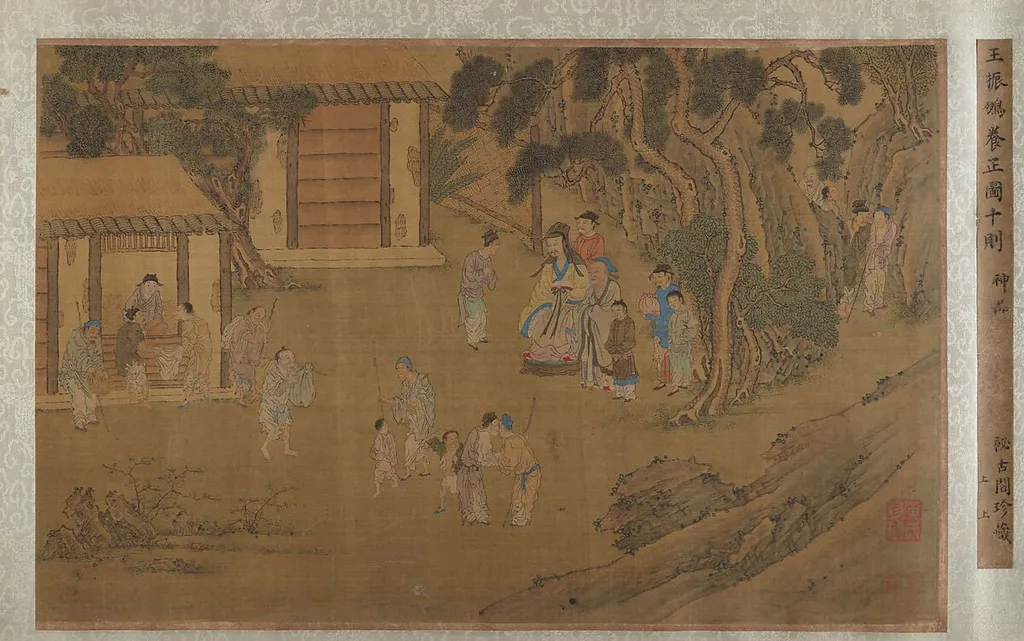
明/清 佚名 舊傳王振鵬 養正圖 卷|Family Training is an ink painting by the Baroque artist After Wang Zhenpeng. It dates from 1756 and is held in the collection of the Metropolitan Museum of Art. The handscroll titled Family Training (養正圖) comprises ten distinct panels, rendered in ink and color on silk.
About this work
A long silk handscroll of ten scenes showing a Chinese family at home: mothers teaching children, fathers reading, servants carrying trays. Made to teach Confucian values of respect, learning, and order, each panel painted in tiny brushstrokes. After Wang Zhenpeng, 1756.
Subject & Meaning
The ten‑panel format, rendered in ink and color on silk, reinforces the didactic purpose by presenting a sequential narrative of familial education.
The handscroll titled "养正图" (Family Training), dated 1756 and attributed to an anonymous follower of Wang Zhenpeng, shows a multi‑generational household in which a father instructs his child, while a mother and additional relatives observe. The composition groups child, family, man, and woman together, emphasizing a didactic scene of parental guidance and moral instruction. As a work classified under the genre “family training,” it symbolizes Confucian ideals of filial piety and the transmission of ethical conduct within the domestic sphere.
The ten‑panel format, rendered in ink and color on silk, reinforces the didactic purpose by presenting a sequential narrative of familial education.
Technique & Style
The work comprises ten panels joined to form a handscroll, rendered in ink with delicate polychrome washes on silk. This mounting method follows Qing dynasty conventions for multi‑panel narrative paintings, facilitating a sequential visual story. Fine ink lines delineate the figures, while restrained color accents provide subtle tonal variation.
The composition balances the participants, child, man, and woman, through harmonious gestures and spatial arrangement, characteristic of genre‑scene painting. Executed circa 1756 in China, the piece reflects the artistic context noted in the documentary record.
History & Provenance
The handscroll titled Family Training is dated to 1756, as indicated by its internal cataloging, and aligns with the Metropolitan Museum of Art’s record for the work. Its creation history is tied to the Ming–Qing period, with the painting attributed to an anonymous hand after Wang Zhenpeng, reflecting the period’s continuation of earlier styles. The scroll’s format, depicting a domestic scene of familial instruction, aligns with the genre’s conventions, though no direct commissioning record survives.
The work entered the Metropolitan Museum of Art’s collection, where it is currently held, though details of earlier ownership remain undocumented in the provided sources.
The handscroll titled Family Training, attributed to an anonymous artist working after Wang Zhenpeng and dated to 1756, is held in the collection of the Metropolitan Museum of Art in New York. The work, executed in ink and color on silk across ten panels, entered the museum's holdings as a painting classified under genre scenes depicting family life. While the specific accession number is not provided in the available records, the museum's documentation confirms its location within their permanent collection.
No specific exhibition history or loan records are detailed in the current sources, limiting the account to its confirmed institutional custody and cataloging status as of the provided data.
Overview
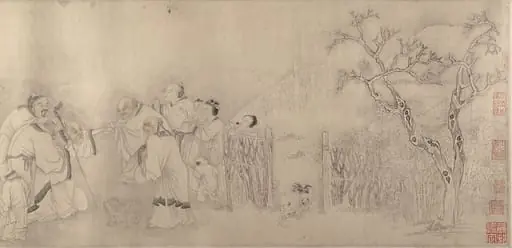
The handscroll titled Family Training (養正圖) comprises ten distinct panels, rendered in ink and color on silk. Created in 1756, this painting is attributed to an artist working in the style of Wang Zhenpeng. It presents a series of intimate domestic scenes, illustrating the daily life and interactions within a Chinese household, offering a glimpse into familial customs and education.
Artist & collection
Artist
The designation "After Wang Zhenpeng" identifies a work made in the manner of, or copied from, the Chinese painter Wang Zhenpeng rather than by his own hand.

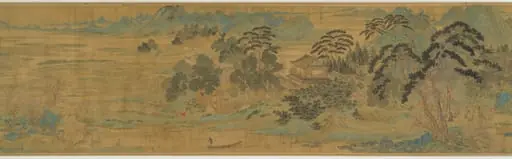 The Peach Blossom Spring 桃花源圖
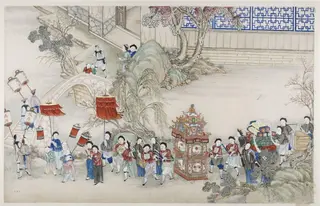 One scene of a wedding: the bride and her dowry on her way to her new home
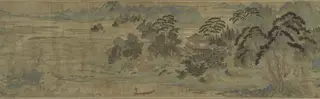 The Peach Blossom Spring
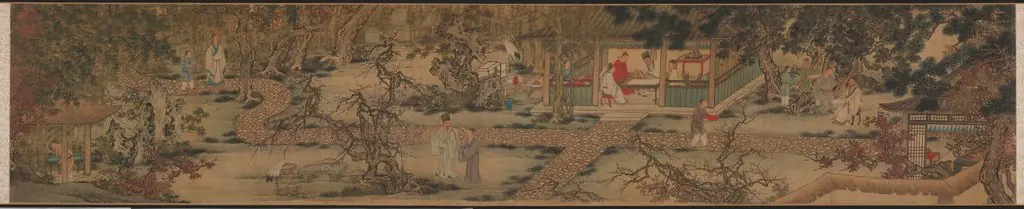 The Nine Elders of the Mountain of Fragrance
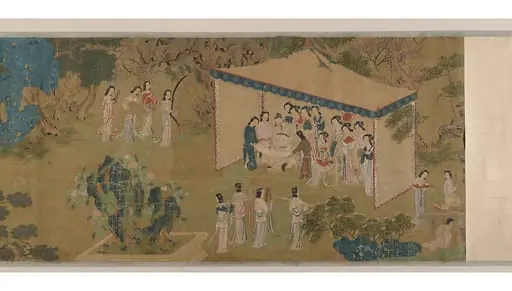 清 佚名 蘇蕙璇璣圖 卷|Lady Su Hui and Her Verse Puzzle
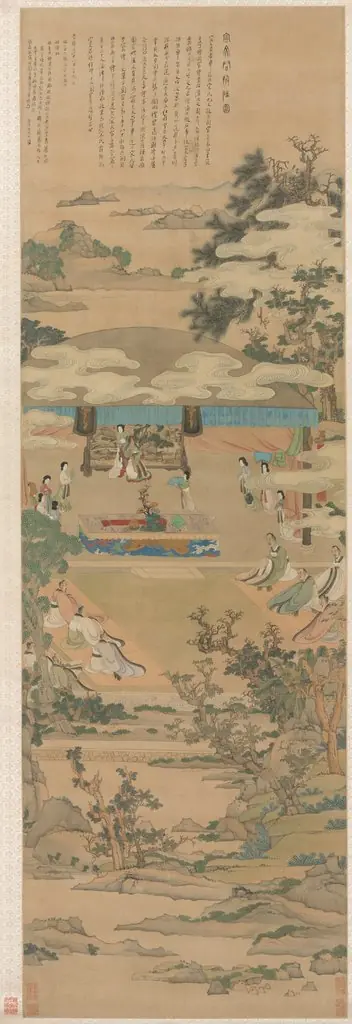 Lady Xuanwen Giving Instruction on the Rites of Zhou
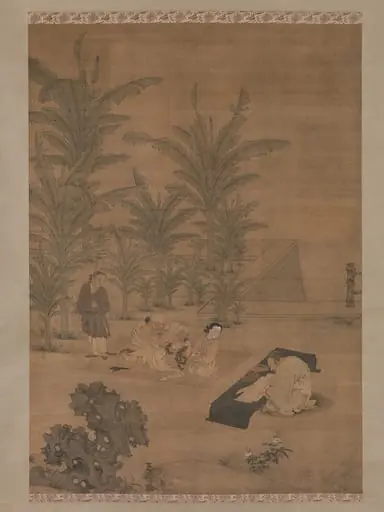 明 杜堇 伏生授經圖 軸|The Scholar Fu Sheng Transmitting the Book of Documents
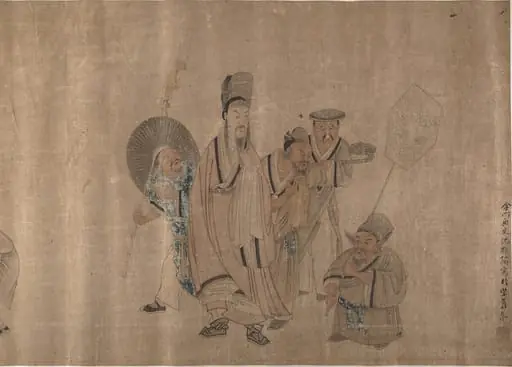 Untitled
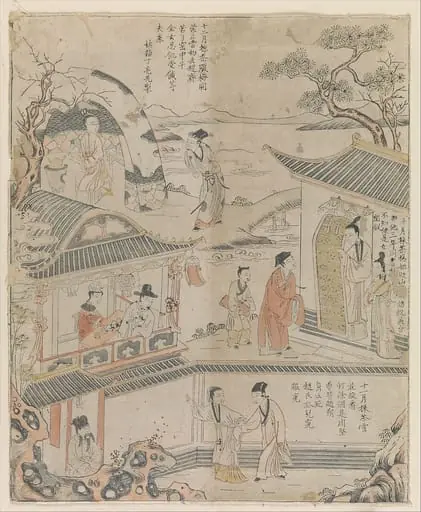 Untitled
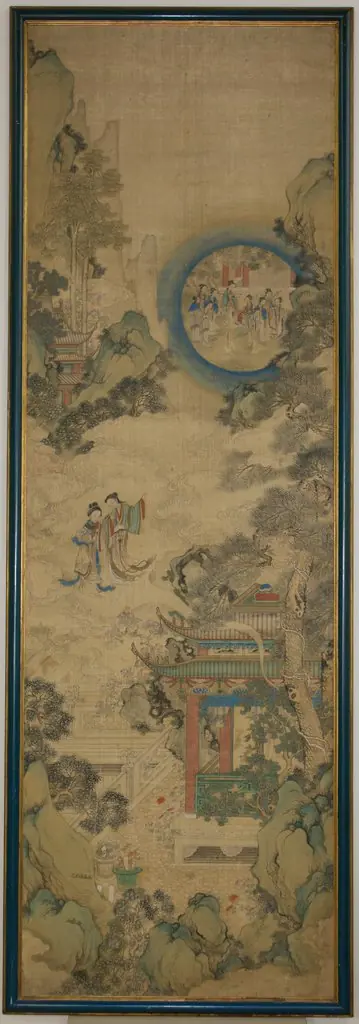 Three scenes from festivals of the twelve months
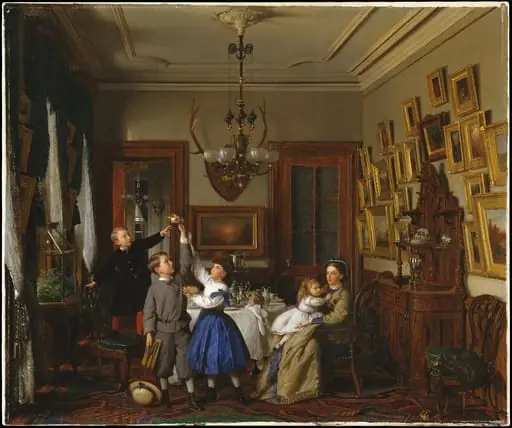 The Contest for the Bouquet: The Family of Robert Gordon in Their New York Dining-Room
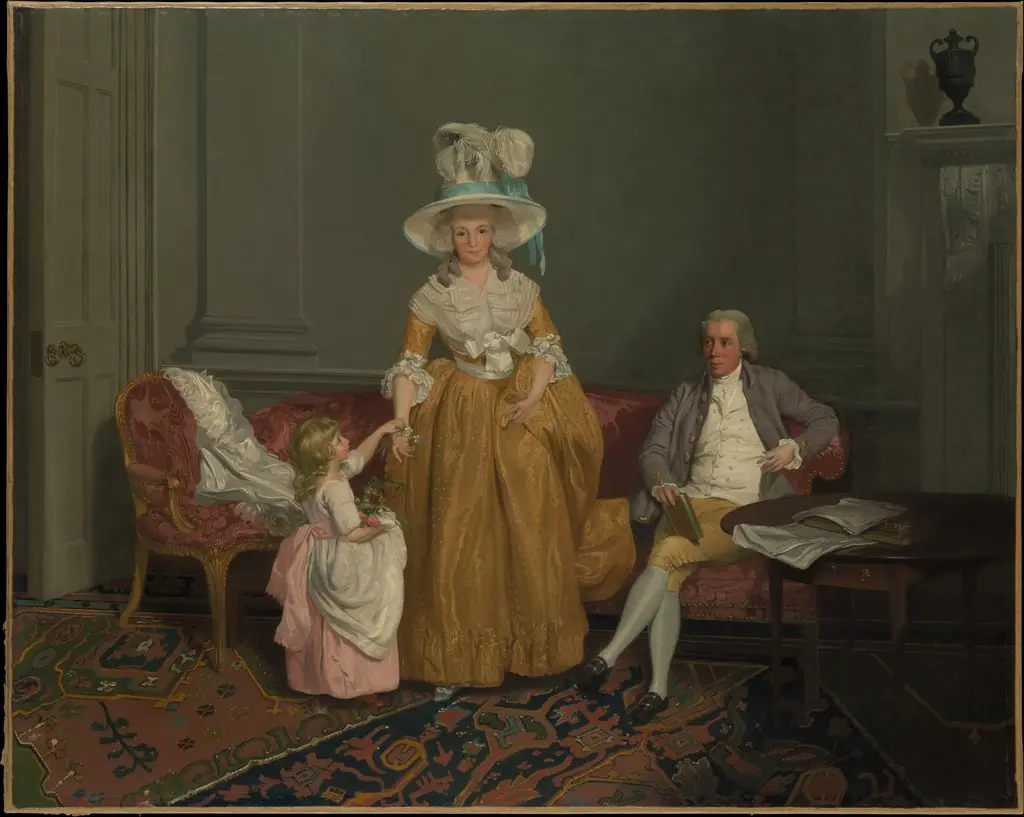 The Saithwaite Family
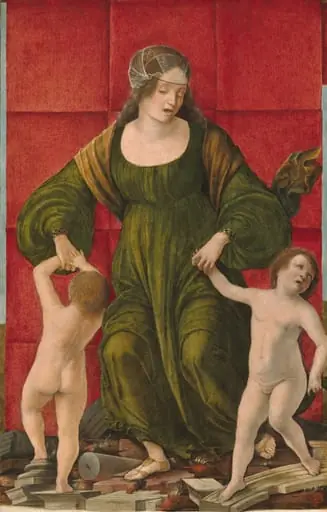 The Wife of Hasdrubal and Her Children
 Madame Georges Charpentier and her Children
 Family Group of Four on Sofa
 Family Group
 Everhard Jabach (1618–1695) and His Family
 The Family of Mr. Westfal in the Conservatory