Artwork
Court Ladies in the Imperial Palace
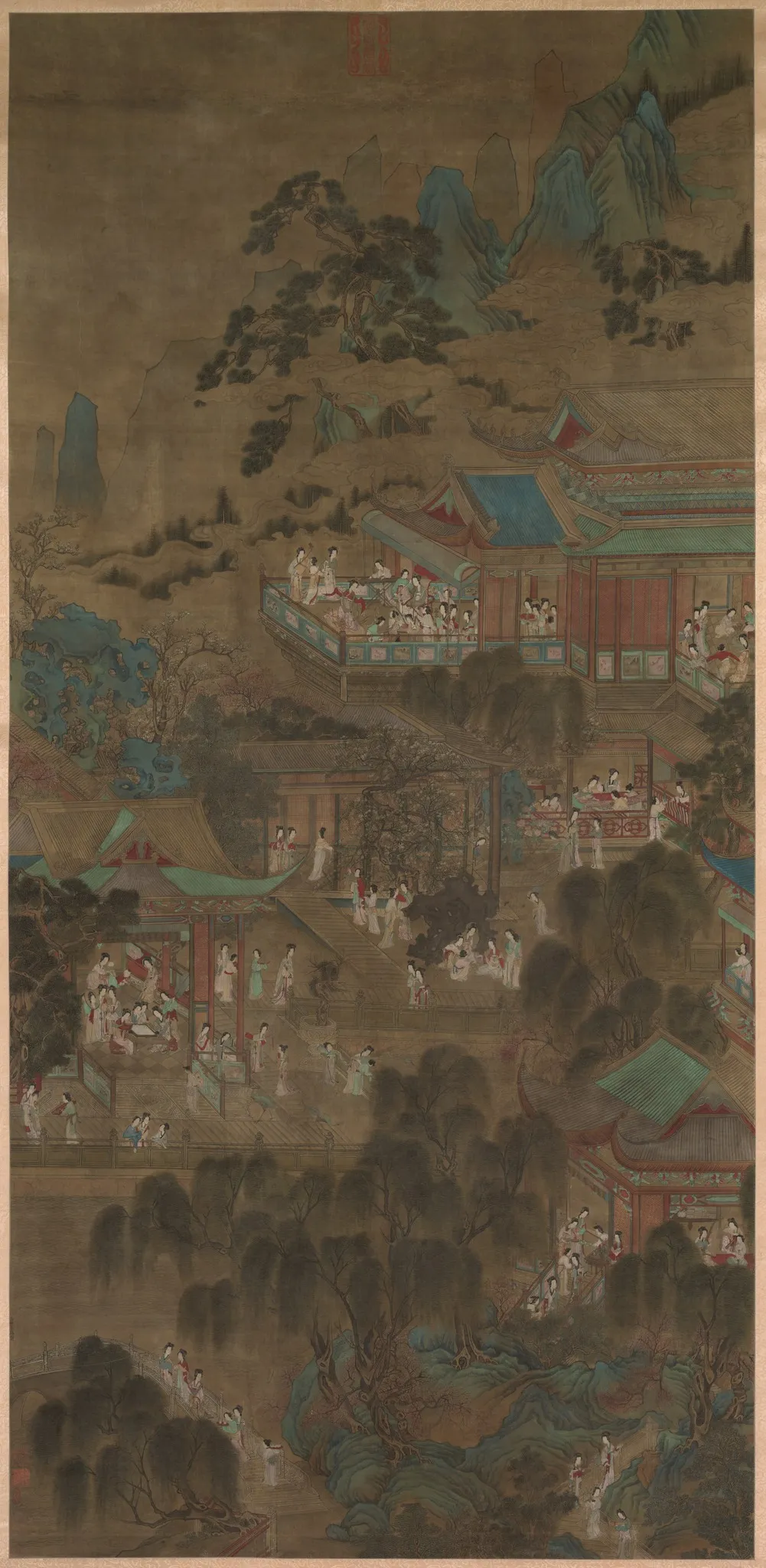
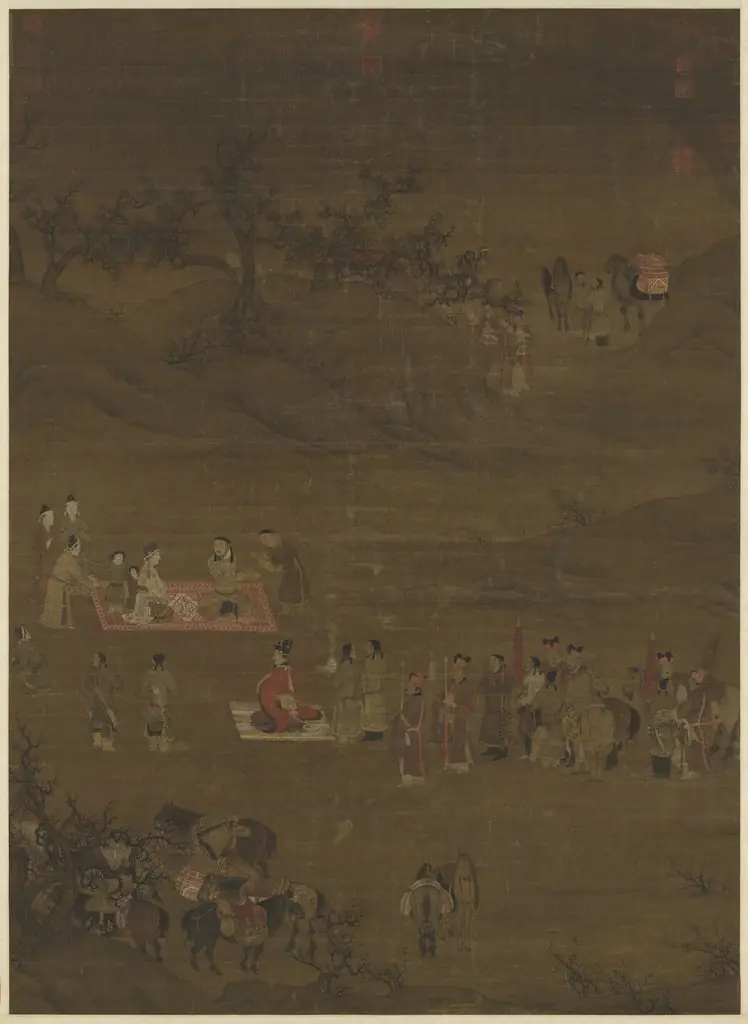
Court Ladies in the Imperial Palace is an unspecified painting. It dates from 1319 and is held in the collection of the Cleveland Museum of Art. The work depicts a bustling interior of an imperial palace, populated by numerous figures in elaborate, flowing garments.
About this work
History & Provenance
Court Ladies in the Imperial Palace is held by the Cleveland Museum of Art, where it forms part of the museum's collection of Chinese painting.
Court Ladies in the Imperial Palace is dated to 1319 and was produced in China. The work is classified as a painting and is attributed to an unknown artist. It is held in the collection of the Cleveland Museum of Art, where it is catalogued under accession number 1915.106.
No additional information about its commission, earlier ownership, or chain of custody prior to its acquisition by the Cleveland Museum of Art is documented in the available sources.
Court Ladies in the Imperial Palace is held by the Cleveland Museum of Art, where it forms part of the museum's collection of Chinese painting. The work is catalogued under the accession number 1915.106.
No exhibition history is documented in the available sources.
Legacy
The work influenced subsequent court painting traditions in East Asia, inspiring later depictions of palace life in both Chinese and Japanese art. Its composition and subject matter established a precedent for courtly genre painting, with later artists referencing its stylistic treatment of court attire and spatial arrangement. The painting's attribution to the Yuan period has reinforced scholarly discussions of 14th-century imperial aesthetics, shaping interpretations of court culture in museum collections worldwide.
The work remains a key reference point in exhibitions focused on Asian art history, including those at the Cleveland Museum of Art.
Overview
The work depicts a bustling interior of an imperial palace, populated by numerous figures in elaborate, flowing garments. Architectural elements feature sweeping, curved roofs rendered in vivid reds, greens and golds, while the surrounding landscape shows distant trees, mountains and a sky marked by dark, rolling clouds.
Subject & Meaning
The scene centers on members of a royal court moving between pavilions, some standing, others seated in small groups. Their refined attire and the orderly arrangement of the space suggest ceremonial activity, emphasizing the grandeur and hierarchical order of the imperial household.
Technique & Style
The artist employs a pronounced chiaroscuro effect, using strong contrasts of light and shadow beneath the eaves to model forms and convey depth. This handling of illumination gives the composition a lively, three‑dimensional quality, while the bright palette of the roofs accentuates the festive atmosphere.
Context
Set against a stylized natural backdrop of mountains and foliage, the painting reflects a tradition of courtly genre scenes that celebrate imperial splendor. The inclusion of swirling clouds above the palace adds a dramatic, almost theatrical element, aligning the work with broader East Asian visual conventions that blend architecture, landscape, and human activity.
Artist & collection

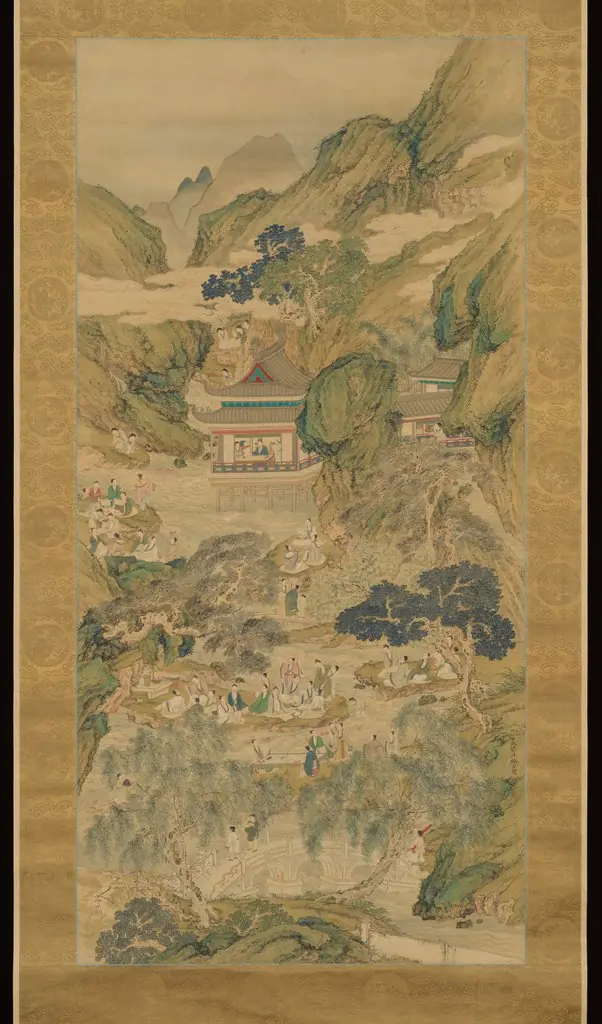 Lanting Gathering in Blue and Green 青緑蘭亭脩禊図 (Seiryoku rantei shūkei zu)
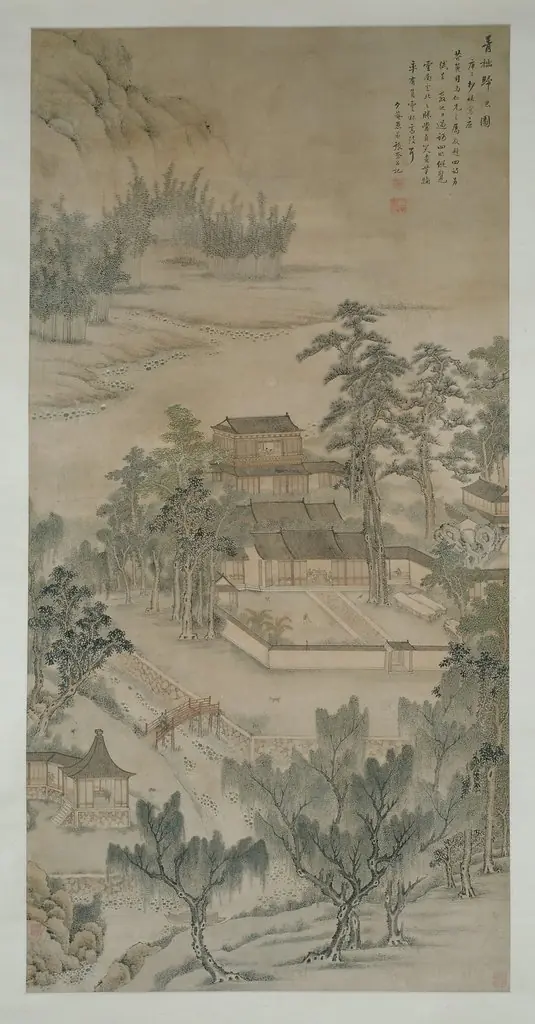 Mansion by the River
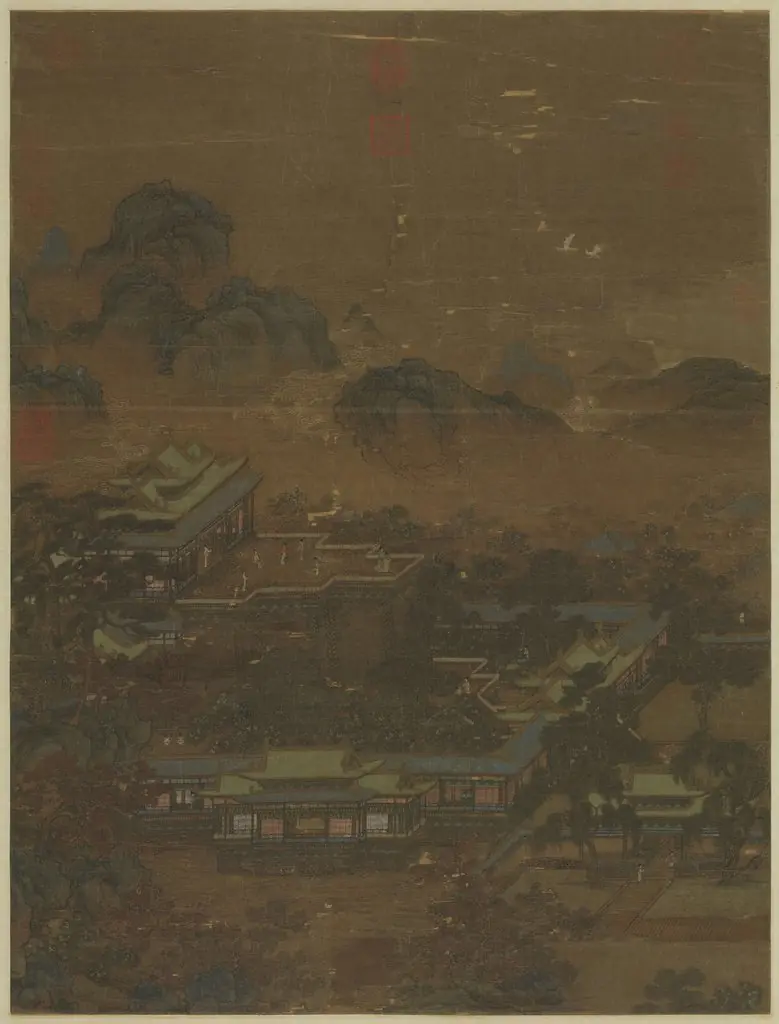 宋趙伯駒阿閣圖 軸
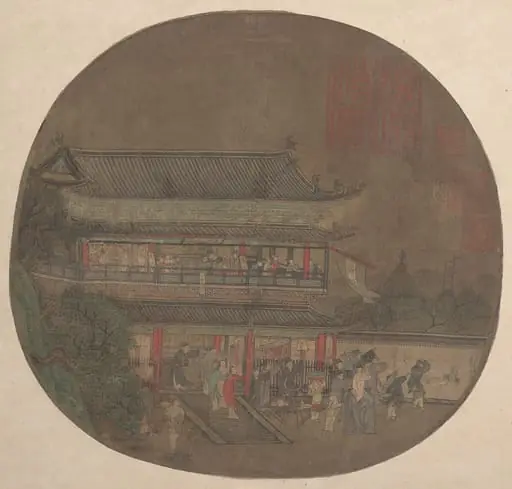 南宋/元 佚名 呂洞賓過岳陽樓圖 扇|The Immortal Lü Dongbin Appearing over the Yueyang Pavilion
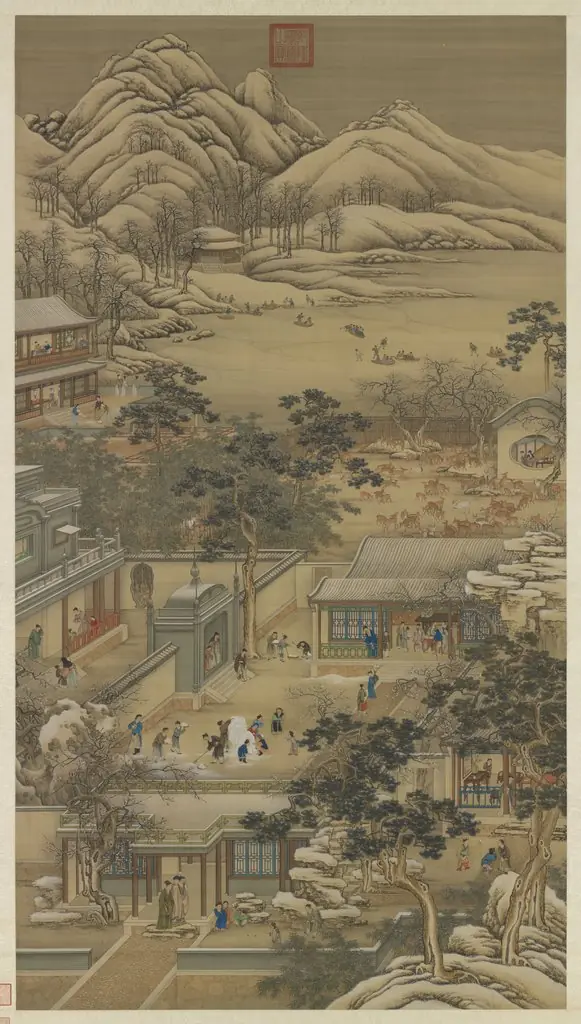 清畫院畫十二月月令圖十二月 軸
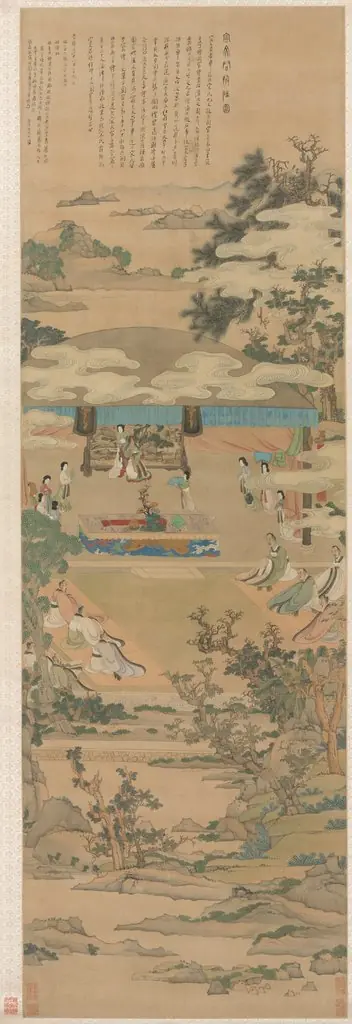 Lady Xuanwen Giving Instruction on the Rites of Zhou
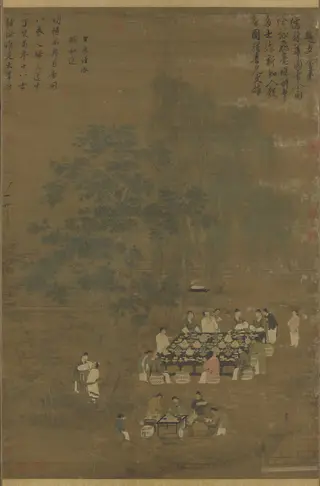 Literary Gathering
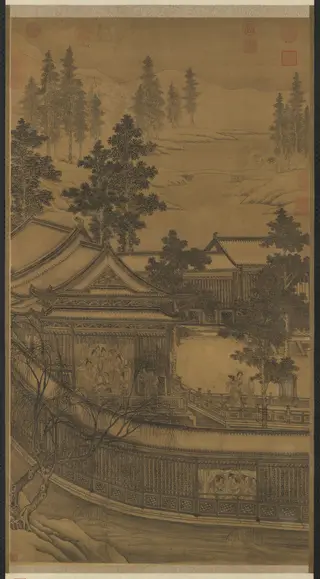 Snow Alchemy by Master Geng of the Southern Tang
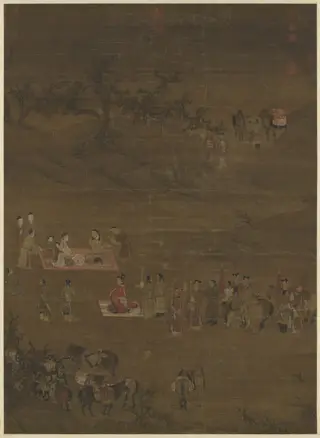 Lady Wen-chi's Return to China
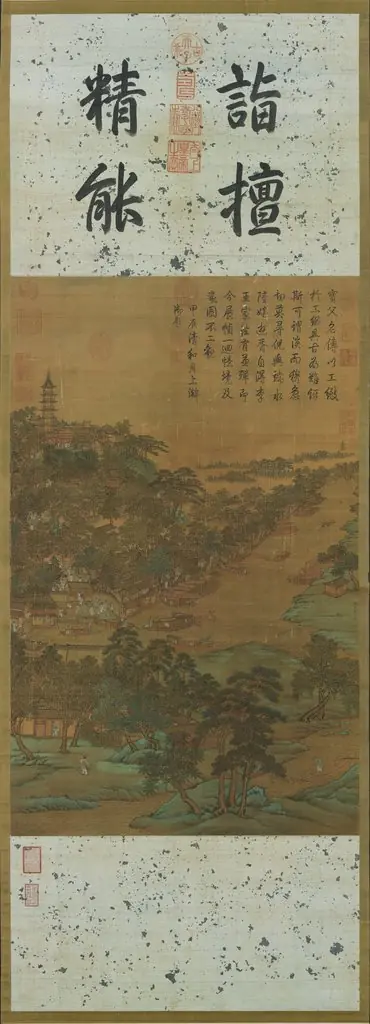 明仇英虎邱圖 軸
 宋陳居中文姬歸漢圖軸
- Court Ladies in the Imperial Palace