Artwork
Woman with Female Servant in a Palace Garden
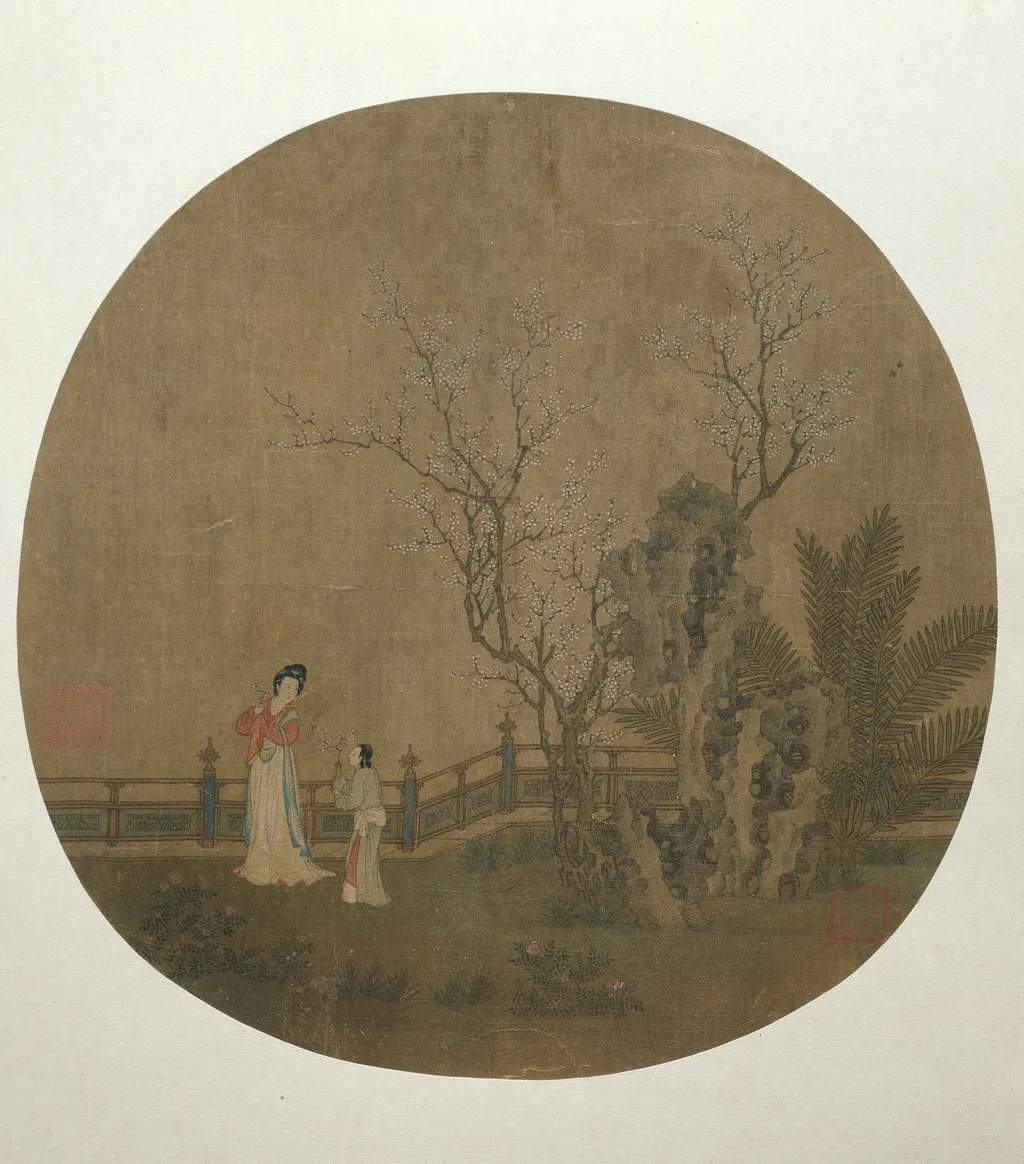
Woman with Female Servant in a Palace Garden is an unspecified painting by the Northern Renaissance artist Unknown. It dates from 1437 and is held in the collection of the Art Institute of Chicago. The work portrays two women situated in a tranquil garden.
About this work
Overview
The work portrays two women situated in a tranquil garden. The figure on the left is dressed in a long robe featuring a vivid red upper garment and a blue skirt, her hair gathered in an up‑do, while she holds a small object in her right hand. Opposite her, a woman in a plain white robe with her hair pulled back faces her companion, suggesting a quiet exchange amid the subdued foliage.
Subject & Meaning
Their interaction, set within a garden, evokes themes of companionship, domesticity, or perhaps a ritual of service within a private, cultivated space.
The composition centers on an intimate dialogue between the two female figures, highlighted by their contrasting attire and posture. The richer colors of the left figure’s clothing may denote status or role, whereas the simpler white robe of the right figure emphasizes modesty. Their interaction, set within a garden, evokes themes of companionship, domesticity, or perhaps a ritual of service within a private, cultivated space.
Technique & Style
Rendered with muted tonal values, the painting balances delicate brushwork in the foliage with more defined lines in the figures’ garments. The garden’s sparse vegetation and the prominent bare‑branched tree are depicted in restrained colors, creating a calm backdrop that allows the vibrant reds and blues of the central figure to stand out. The composition employs a modest spatial depth, guided by the stone wall on the left and the tree on the right.
Context
The scene reflects a tradition of courtly or domestic genre paintings that depict women in refined interior or garden settings. The juxtaposition of elaborate and simple dress aligns with historical conventions of distinguishing between a lady of higher rank and her attendant. The garden environment, with its orderly yet natural elements, underscores the cultivated aesthetic typical of aristocratic leisure spaces in the period’s visual culture.
Artist & collection









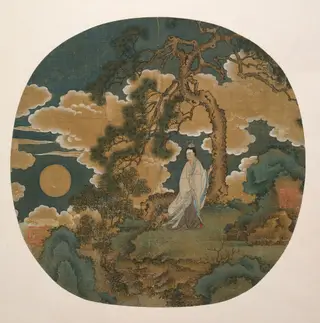 Chang E, The Moon Goddess
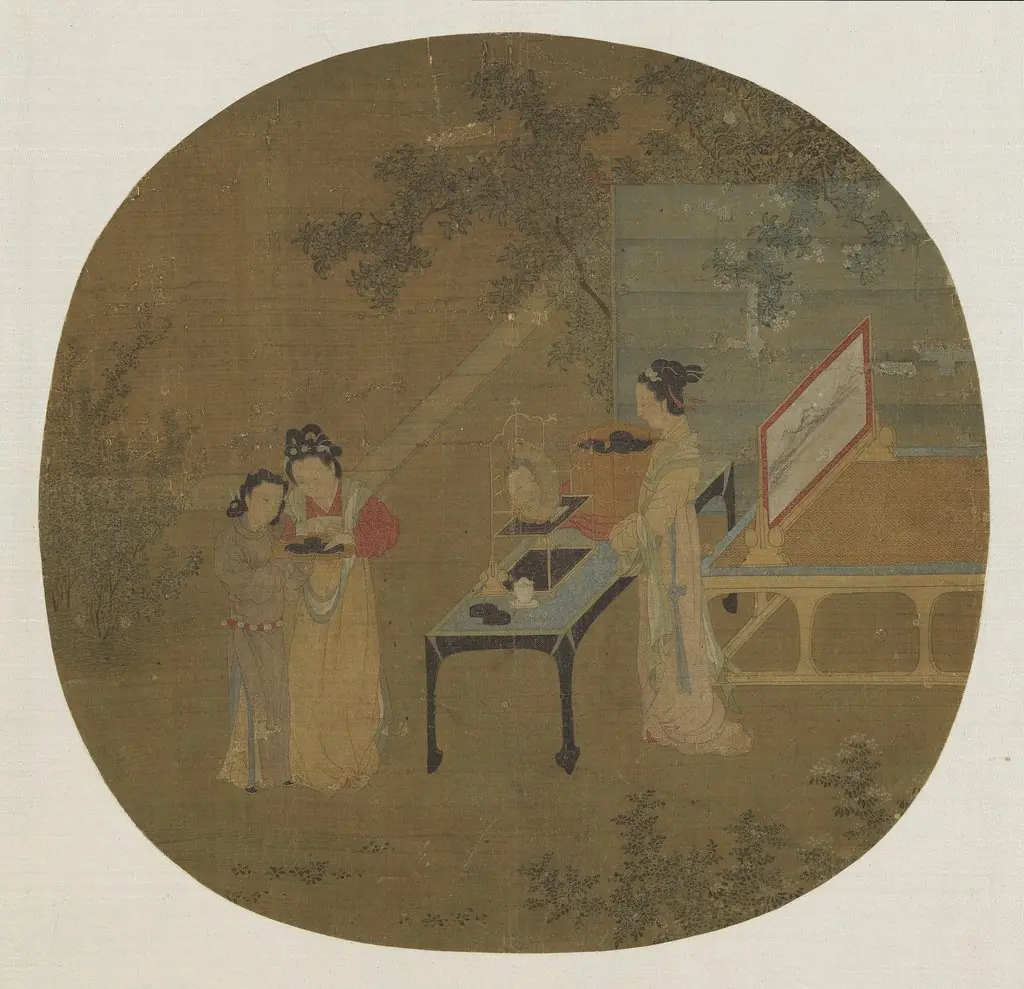 Morning Toilette in the Women's Quarters
 Landscape with Poet Tao Yuanming (365–472 CE)
 無款人物(歷代畫幅集冊)
 明 佚名 瑤臺獻壽圖 扇|Paying homage to Xiwangmu, the Queen Mother of the West
 Untitled
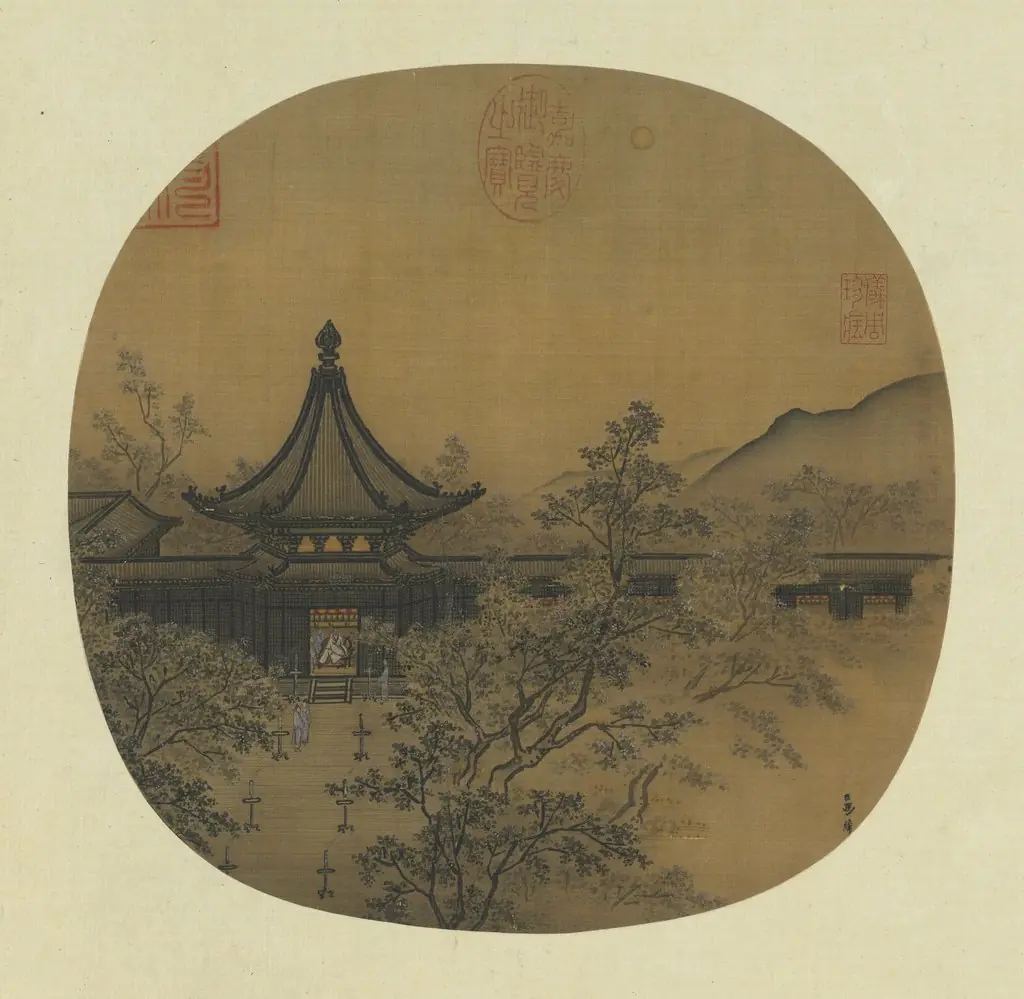 Waiting for Guests by Lamplight
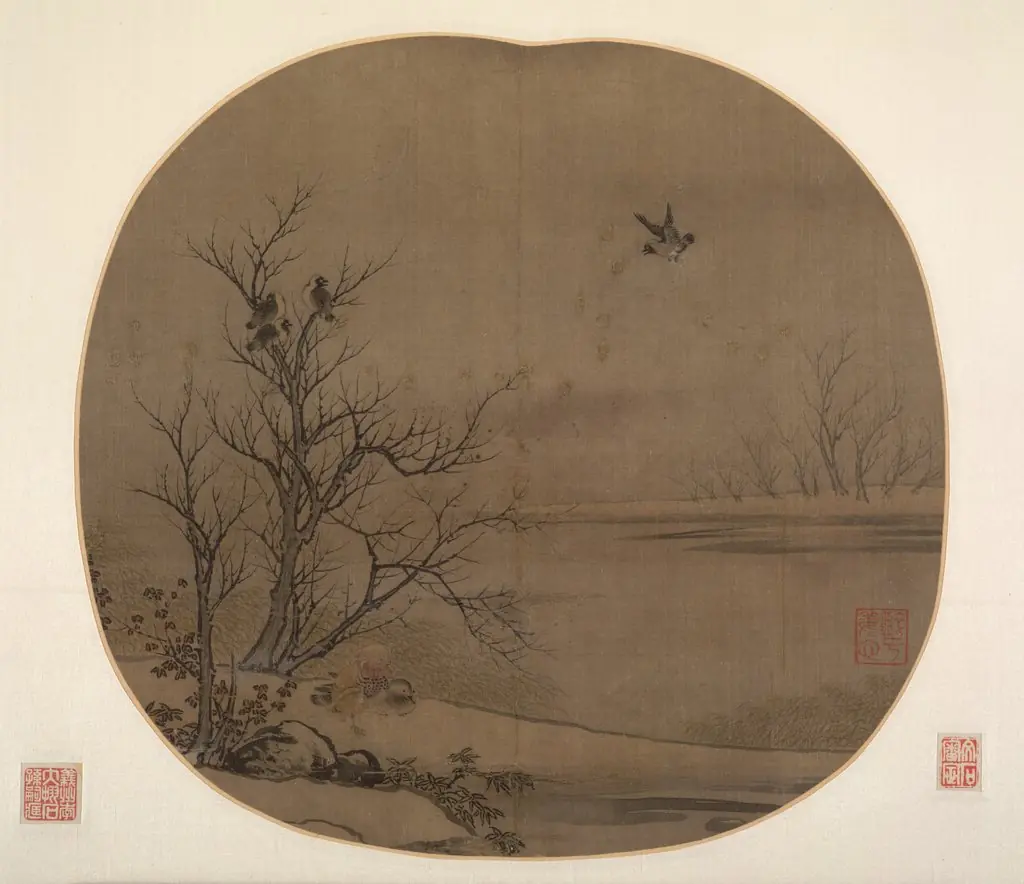 Birds and Ducks on a Snowy Islet
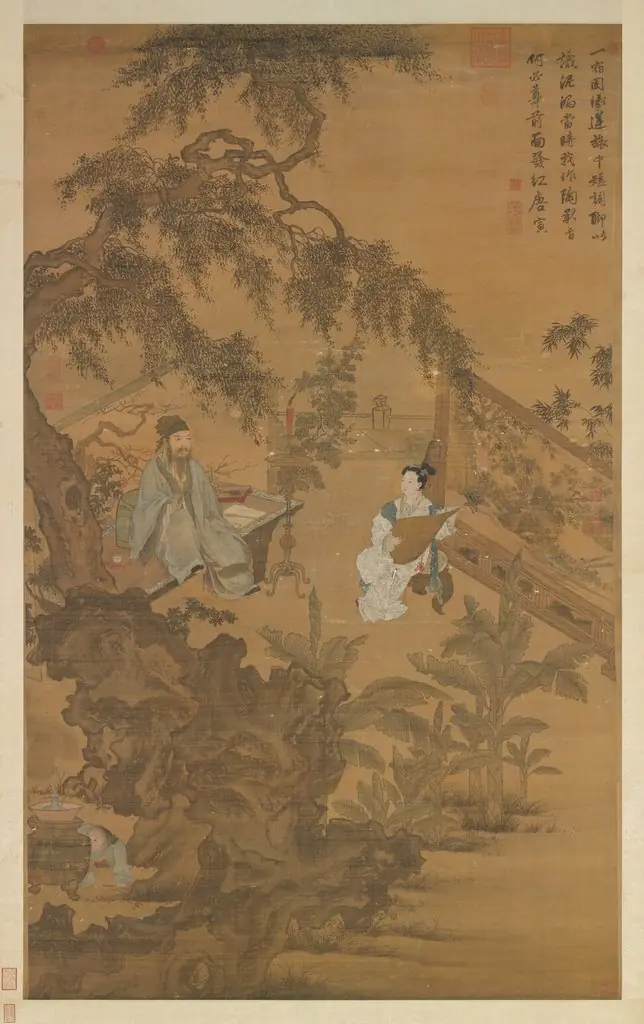 明唐寅陶穀贈詞圖 軸
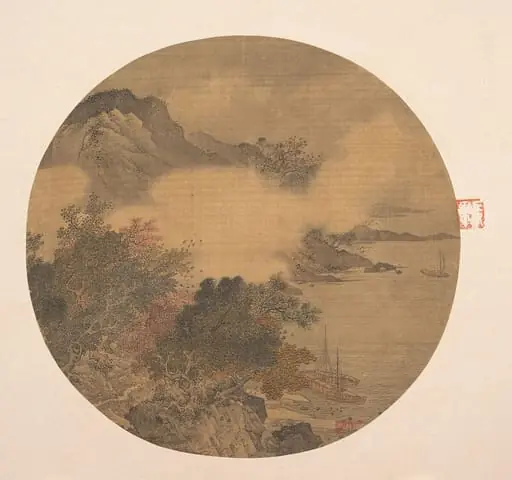 明 佚名 風雨艤舟圖 團扇|Misty Landscape
 Untitled
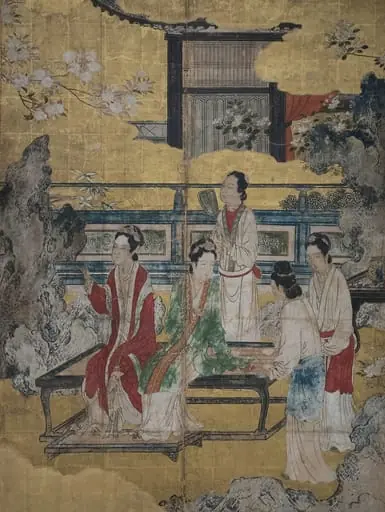
- 伝狩野永徳筆 唐美人図|Chinese Women in a Palace Garden