Artwork
The Four Accomplishments
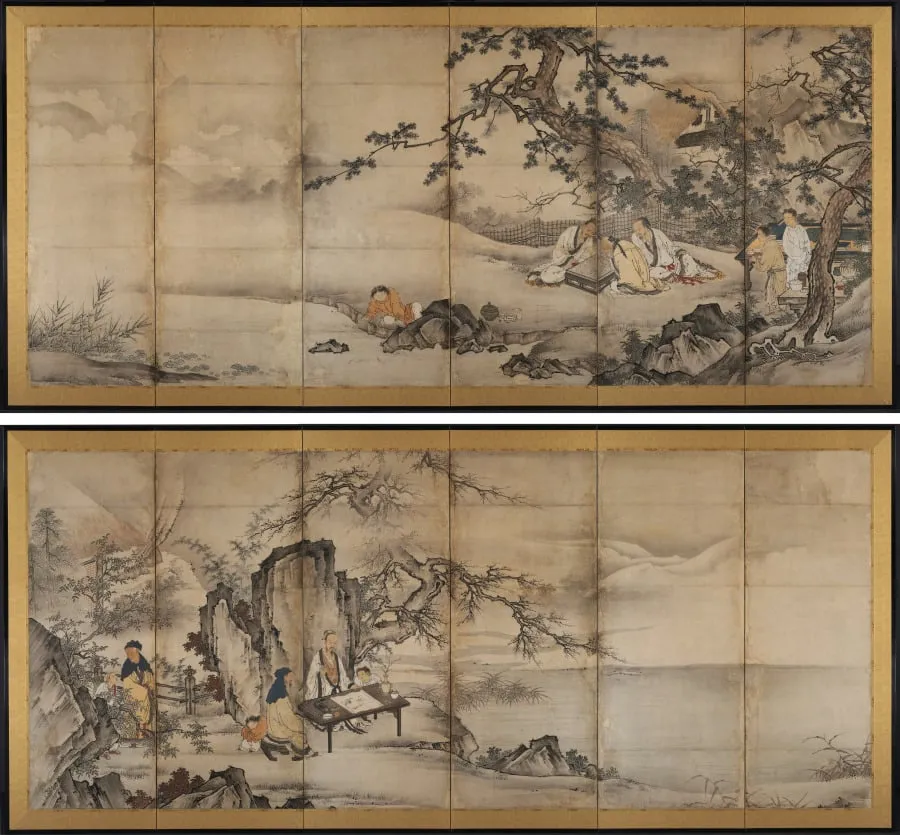
The Four Accomplishments is an unspecified painting by the Kanō school artist Kano Shōei. It is held in the collection of the Cleveland Museum of Art.
- Accession no.
- 1979.46
- Credit line
- John L. Severance Fund
About this work
The scene shows four refined pastimes, music, painting, calligraphy, and board games, that educated people in Japan admired.
You see two folding screens filled with Chinese scholars in a quiet garden. One paints, another watches two friends play Go, while a zither waits in its cloth case and books lie ready on a table.
The scene shows four refined pastimes, music, painting, calligraphy, and board games, that educated people in Japan admired. The artist used gold leaf to make the background glow, a style popular in the Momoyama period.
To see more works like this, look up japan, momoyama period (1573–1615).
Overview
The work consists of two hinged folding screens that depict a tranquil garden scene populated by a small group of well‑dressed men and their attendants. In the composition one figure is engaged in painting, another observes two companions playing the board game qi (known in Japan as Go), while a table holds a stack of books and a wrapped qin awaiting performance. The setting conveys a blend of leisure and decorum.
Subject & Meaning
The imagery gathers the four traditional pursuits prized by the educated elite: music, painting, calligraphy, and strategic board games. By presenting these activities together, the screens illustrate the ideal of a cultivated gentleman who balances artistic creation, literary study, musical appreciation, and intellectual recreation, reflecting the cultural values of the period.
Technique & Style
The artist employed a luminous gold‑leaf ground, a decorative technique favored during Japan’s Momoyama era (late 16th to early 17th century). Figures are rendered with delicate brushwork and subtle coloration, while the gold background creates a shimmering ambience that enhances the sense of refined elegance within the garden space.
History & Provenance
Created in the Momoyama period, the pair of screens were likely commissioned for a private residence or scholarly salon where the four accomplishments were actively practiced. Over time the screens entered museum collections, where they serve as a visual record of the aesthetic preferences and social ideals of the Japanese aristocracy during the transition from feudal warfare to a more cultured courtly life.
Artist & collection


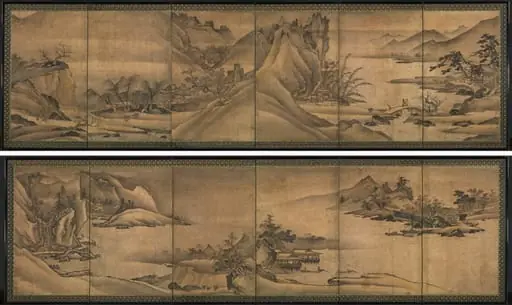 Landscape of the Four Seasons
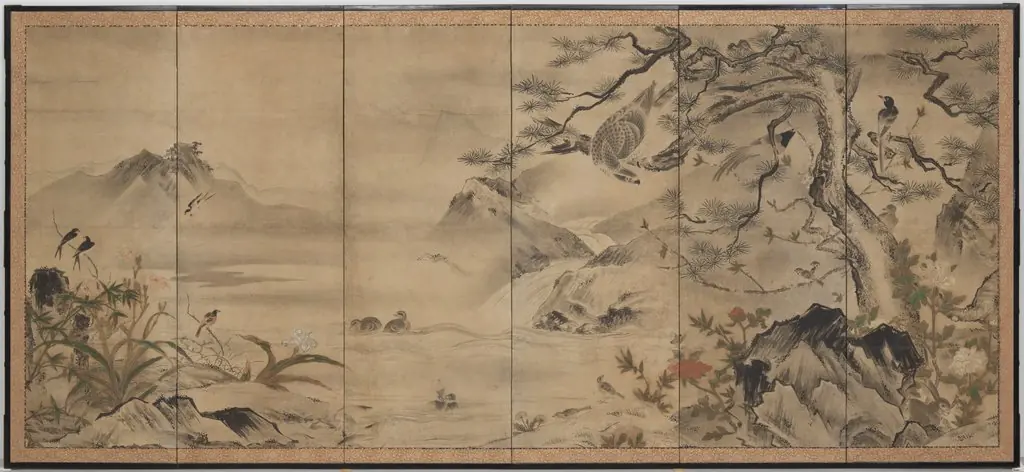 Flowers and Birds
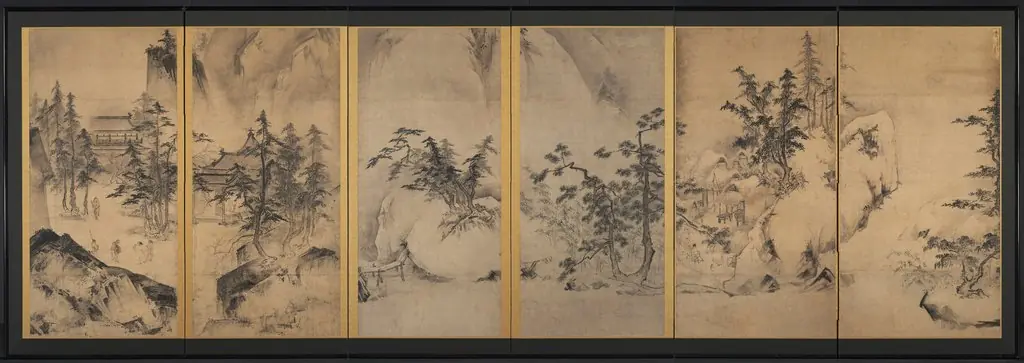 Winter and Spring Landscape
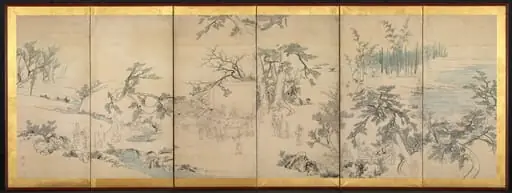 Literary Gathering in the Orchid Pavilion
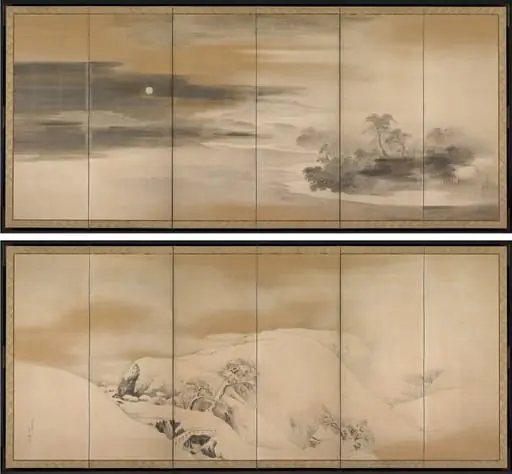 Summer Night; Winter Day
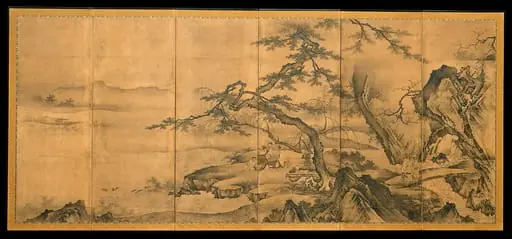 琴棋書画図屏風|The Four Accomplishments
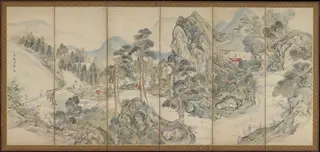 Orchid Pavilion Gathering; Autumn Harvest Festival
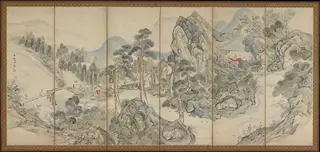 池大雅筆 蘭亭曲水図屏風 秋社図屏風|Orchid Pavilion Gathering; Autumn Harvest Festival
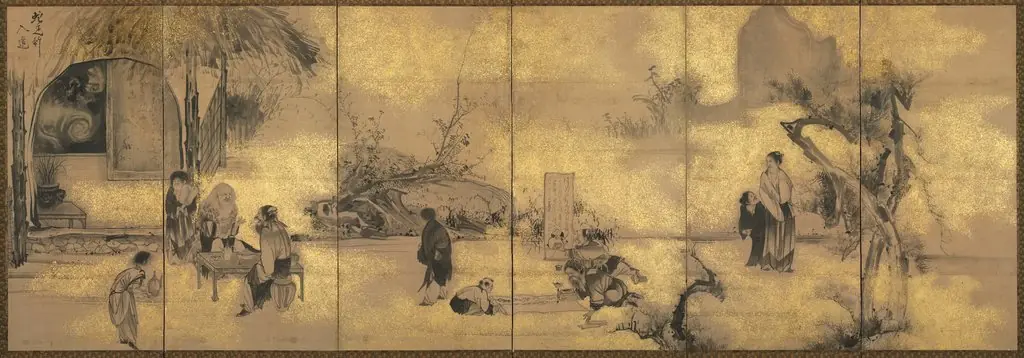 The Eight Immortals of the Wine Cup
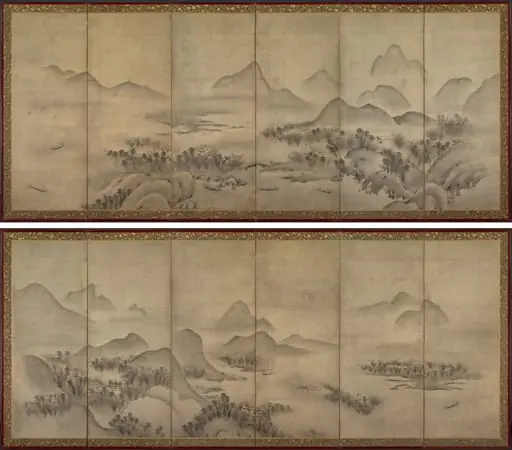 Moonlit Landscape
- Eight Views of the Xiao and Xiang Rivers
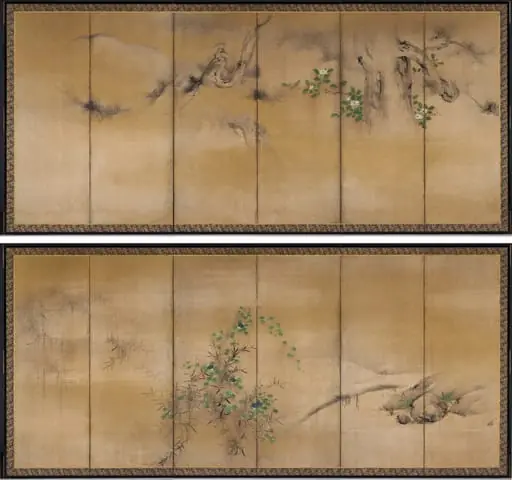 Winter and Summer Flowers