Artwork
Literary Gathering in the Orchid Pavilion
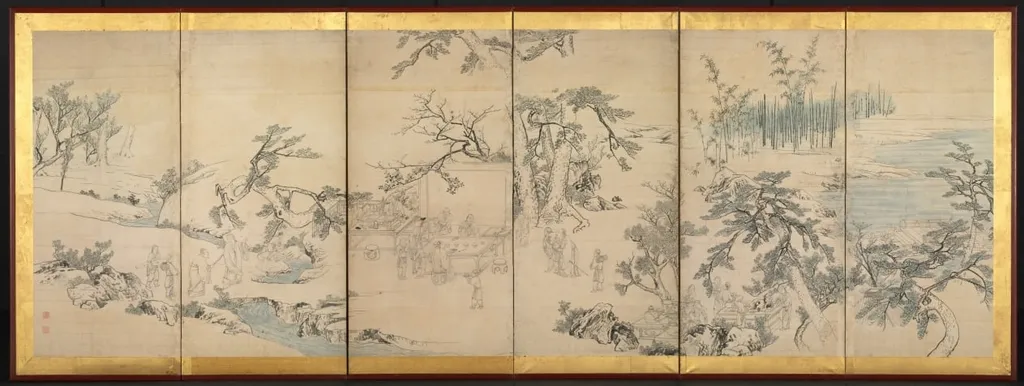
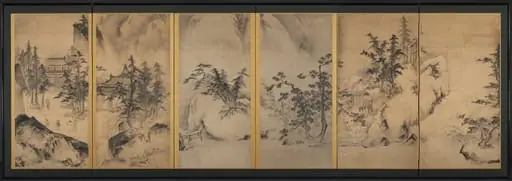
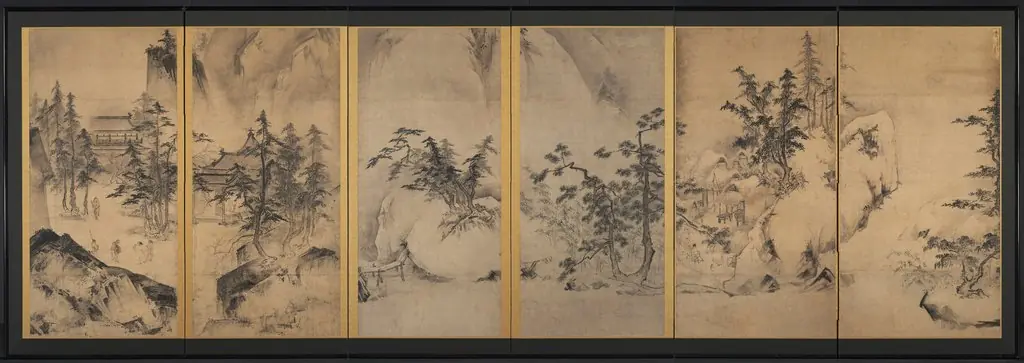
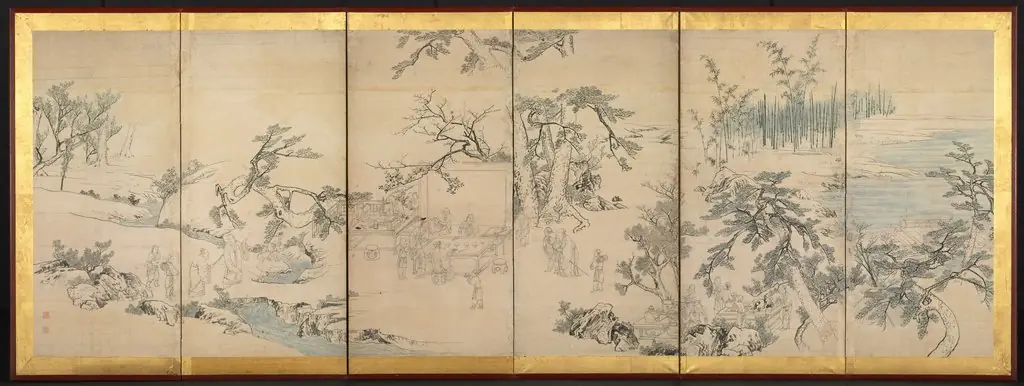
Literary Gathering in the Orchid Pavilion is an unspecified painting by the Maruyama Shijo artist Maruyama Ōkyo. It dates from 1704 and is held in the collection of the Cleveland Museum of Art.
- Accession no.
- 1977.1
- Credit line
- John L. Severance Fund
About this work
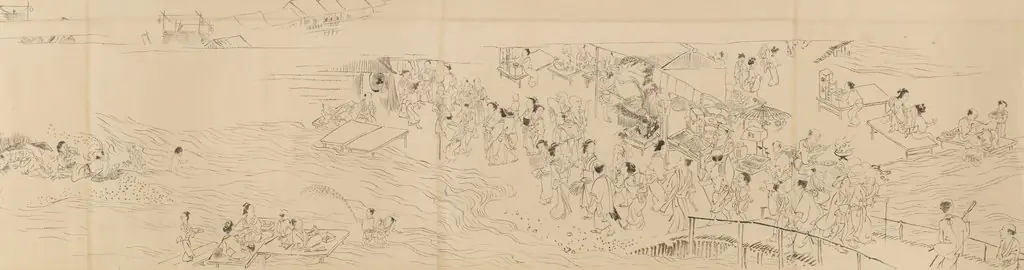
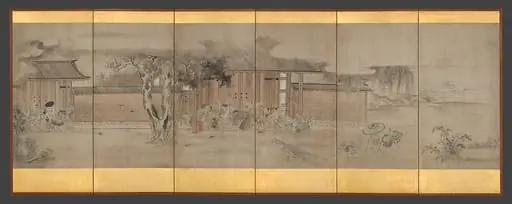
You see scholars lounging on mats under bamboo, cups floating down a tiny stream, ink stones and scrolls scattered like picnic plates.
You see scholars lounging on mats under bamboo, cups floating down a tiny stream, ink stones and scrolls scattered like picnic plates.
This scene copies a famous 300s Chinese party, but Ōkyo painted it in Japan 1,400 years later. The stream was a drinking game: whoever a cup stopped in front of had to write a poem. The party became a favorite theme for artists who wanted to look smart and cultured.
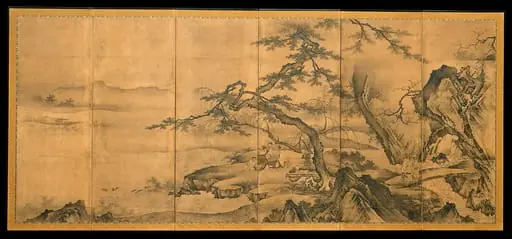
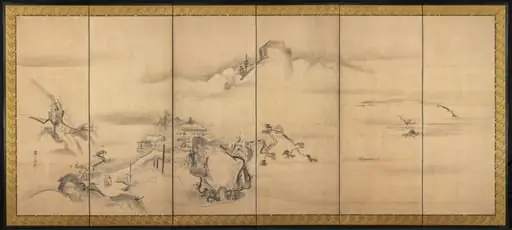
To see how other Japanese painters showed the same party, look up “japan, edo period (1615–1868).”
Overview
This painting depicts a scene from a legendary 353 CE gathering of scholars along a winding stream in the Orchid Pavilion, reimagined in Edo-period Japan by Maruyama Ōkyo. Though rooted in a Chinese historical event, the work reflects Japanese artistic sensibilities of the 18th century, rendered as a pair of folding screens. The left panel captures the quiet preparations before the event, with scholars arranging materials and settling into the landscape.
Subject & Meaning
The gathering commemorated the Spring Purification Festival, a ritual of renewal. Participants, seated along the stream, engaged in a poetic game: cups of wine, carried by the current, halted before a guest, who then composed a verse. The scene celebrates intellectual camaraderie and the fusion of nature with literary refinement, embodying ideals of cultivated leisure valued by East Asian literati across centuries.
Technique & Style
Ōkyo employed naturalistic brushwork and soft coloration to render bamboo groves, flowing water, and relaxed figures. Ink stones, scrolls, and ceramic cups are arranged with quiet precision, suggesting spontaneity without chaos. The composition balances asymmetry and spatial depth, characteristic of Edo-period screen painting, while maintaining a serene, observational tone that avoids theatricality.
History & Provenance
The original event, recorded in Wang Xizhi’s preface to the poems composed that day, became a cultural touchstone in East Asia. Ōkyo’s version, created over a millennium later, draws from Chinese literary sources transmitted through Japanese scholarly circles. The right screen, now lost, likely showed the poets in active composition, completing the narrative arc from preparation to performance.
Context
In Edo Japan, depictions of the Orchid Pavilion gathering served as visual affirmations of cultural literacy among the elite. Artists reused the theme to align themselves with classical Chinese traditions, adapting it to local aesthetics. Ōkyo’s interpretation reflects the broader Edo interest in historical reenactment, blending Chinese literary heritage with Japanese visual conventions of the time.
Legacy
The painting exemplifies how historical narratives were continually reinterpreted across East Asia. Ōkyo’s version contributed to a sustained tradition in Japanese art, where the Orchid Pavilion became a recurring motif in screens, scrolls, and ceramics. Its endurance speaks to the enduring appeal of poetry, nature, and scholarly ritual as symbols of refined identity.
Artist & collection

Artist
Maruyama Ōkyo (円山 応挙; Japanese pronunciation: , June 12, 1733 – August 31, 1795), born Maruyama Masataka, was a Japanese artist active in the late 18th century.