Artwork
Landscape of the Four Seasons
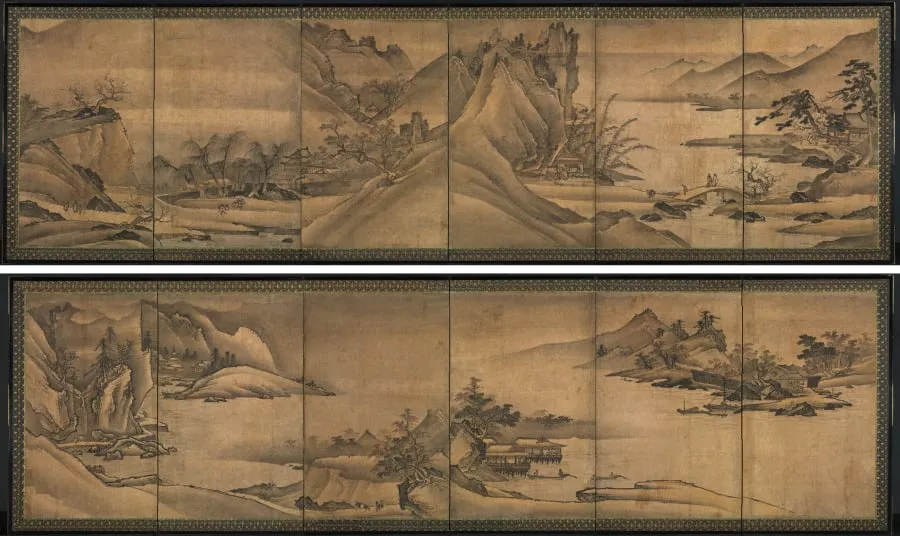
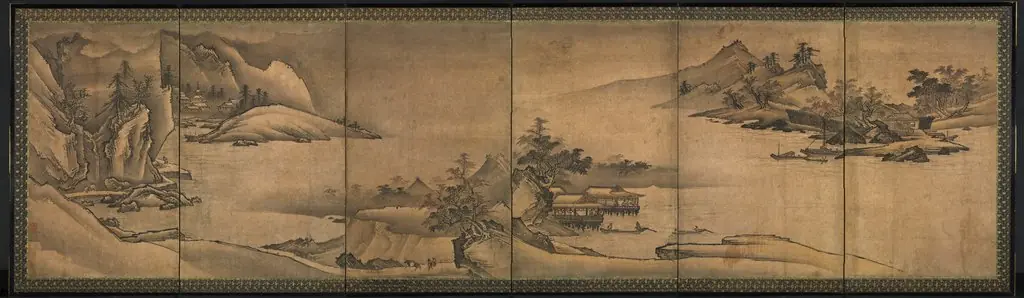
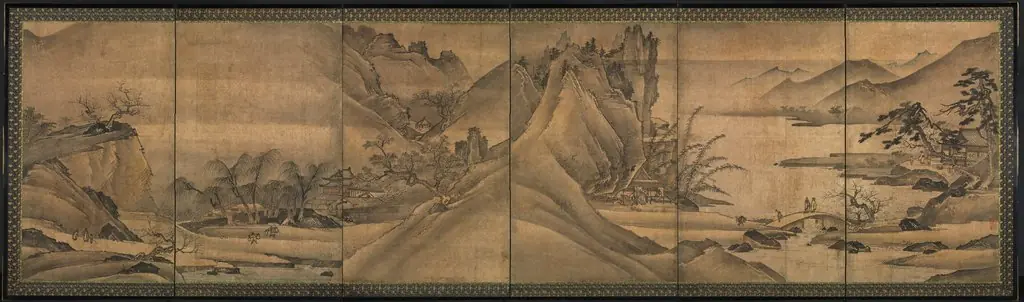
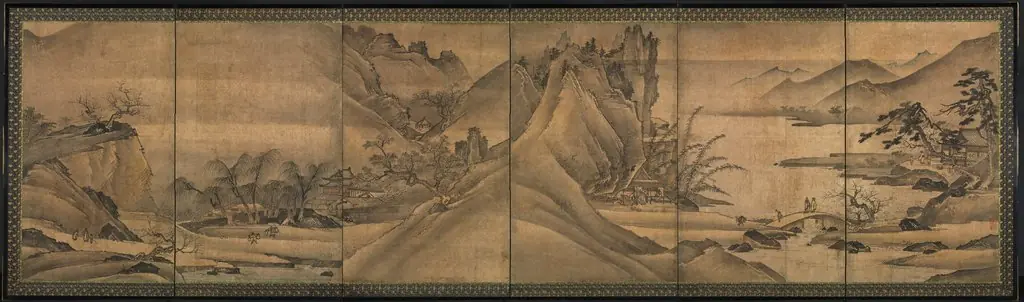
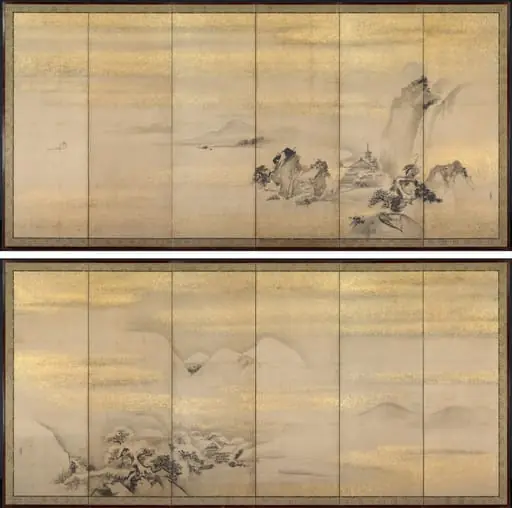
Landscape of the Four Seasons is an unspecified painting by the Korean Minhwa artist Yi Sumun. It dates from 1404 and is held in the collection of the Cleveland Museum of Art.
- Accession no.
- 1976.92
- Credit line
- John L. Severance Fund
About this work
He kept the quiet, flowing brushwork of Korean landscapes but let the seasons stretch across two whole screens, something new for the time.
You’re looking at a pair of folding screens that unroll like a scroll of the year. Tiny hills, rivers, and trees shift from spring blossoms to winter snow, all in black ink on paper.
Yi Sumun painted this after moving from Korea to Japan at twenty. He kept the quiet, flowing brushwork of Korean landscapes but let the seasons stretch across two whole screens, something new for the time.
To see how Korean painters of the Joseon dynasty shaped these quiet scenes, look up korea, joseon dynasty (1392–1910).
Overview
Landscape of the Four Seasons is a pair of folding screens painted in black ink on paper, depicting the cyclical progression of the year from right to left.
Subject & Meaning
The work illustrates the passage of the four seasons, a theme prevalent in medieval Japanese ink painting, conveying the transient nature of time through subtle changes in landscape elements such as blossoms, rivers, and snow.
Technique & Style
The screens exhibit quiet, flowing brushwork characteristic of Korean landscapes from the Joseon dynasty, adapted by Yi Sumun in a novel, expansive composition across two screens, a departure from contemporaneous practices.
History & Provenance
Created by Yi Sumun, a Korean painter who migrated to Japan in 1424 at the age of 20, this piece is his most significant work in the screen format, reflecting his artistic evolution in a new milieu.
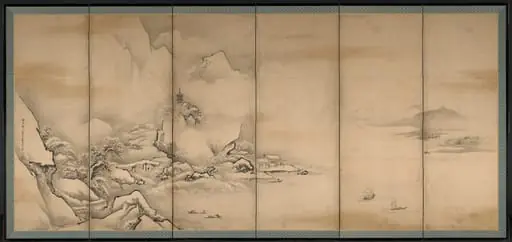
Artist & collection

- The Four Seasons
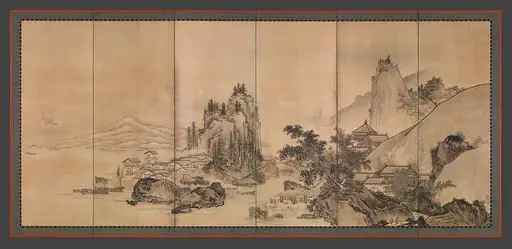 雲谷等顔筆 四季山水図屏風|Landscape of the Four Seasons
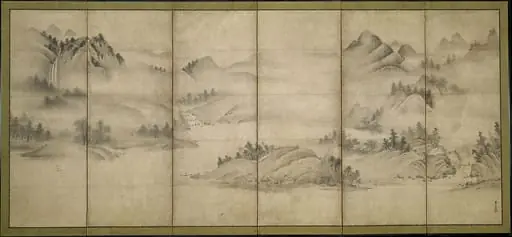 相阿弥筆 四季山水図 (瀟湘八景)|Landscape of the Four Seasons (Eight Views of the Xiao and Xiang Rivers)
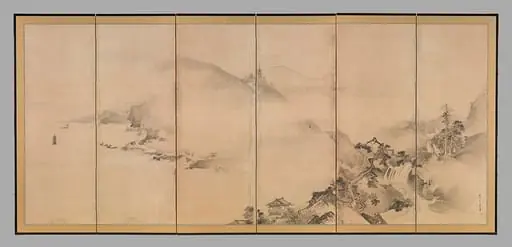 四季山水図屏風|Landscapes of the Four Seasons
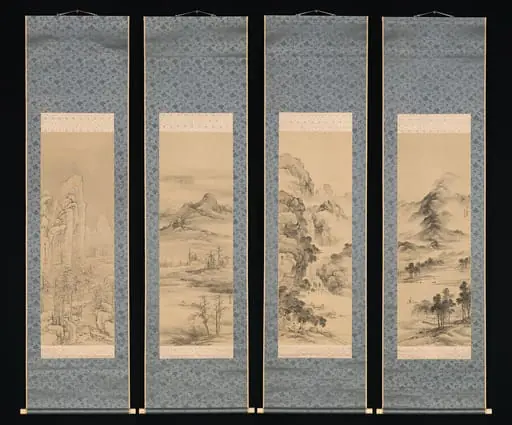 山本梅逸筆 四季山水図|Landscapes of the Four Seasons
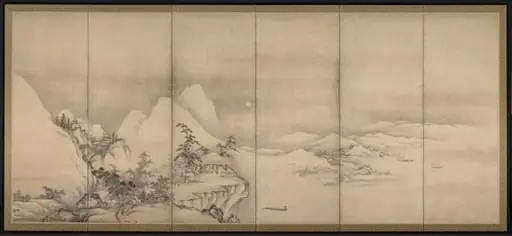 Chinese Landscape
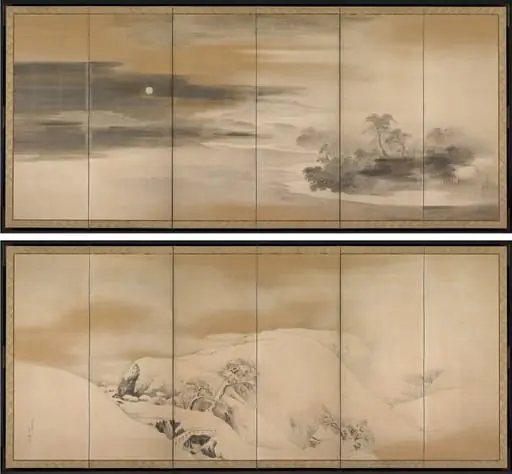 Summer Night; Winter Day
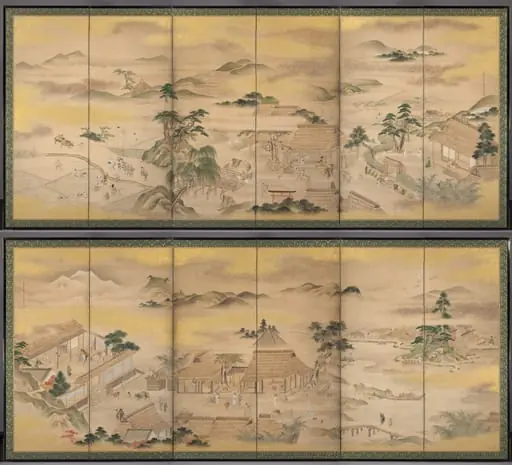 Spring and Autumn Farming
 Summer and Winter Landscapes