Artwork
Fliehende Frauen und Entführer mit Pferd
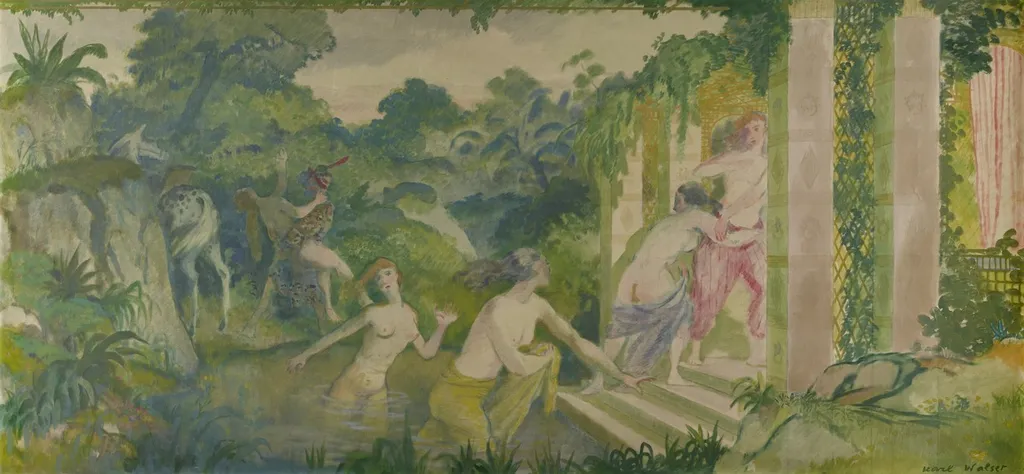
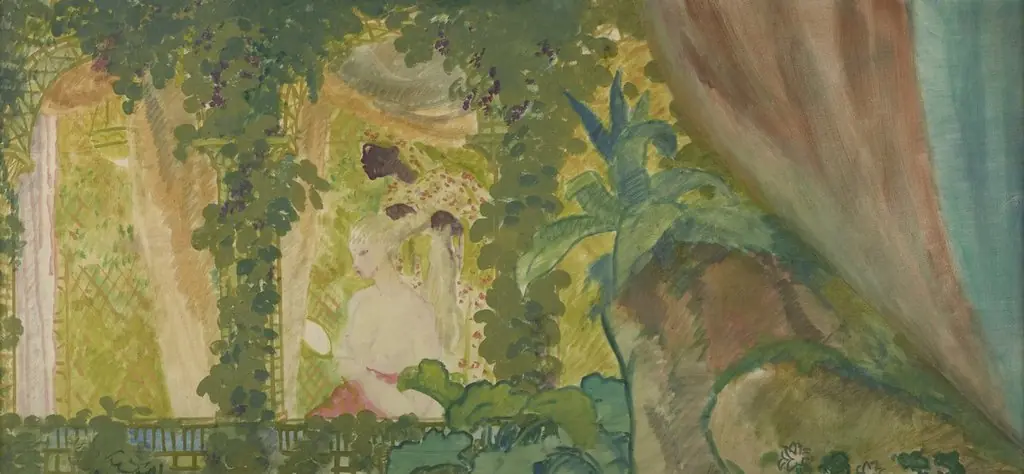
Fliehende Frauen und Entführer mit Pferd is a tempera painting by the Art Nouveau artist Karl Walser. It dates from 1911 and is held in the collection of the Kunsthaus Zürich.
About this work
Overview
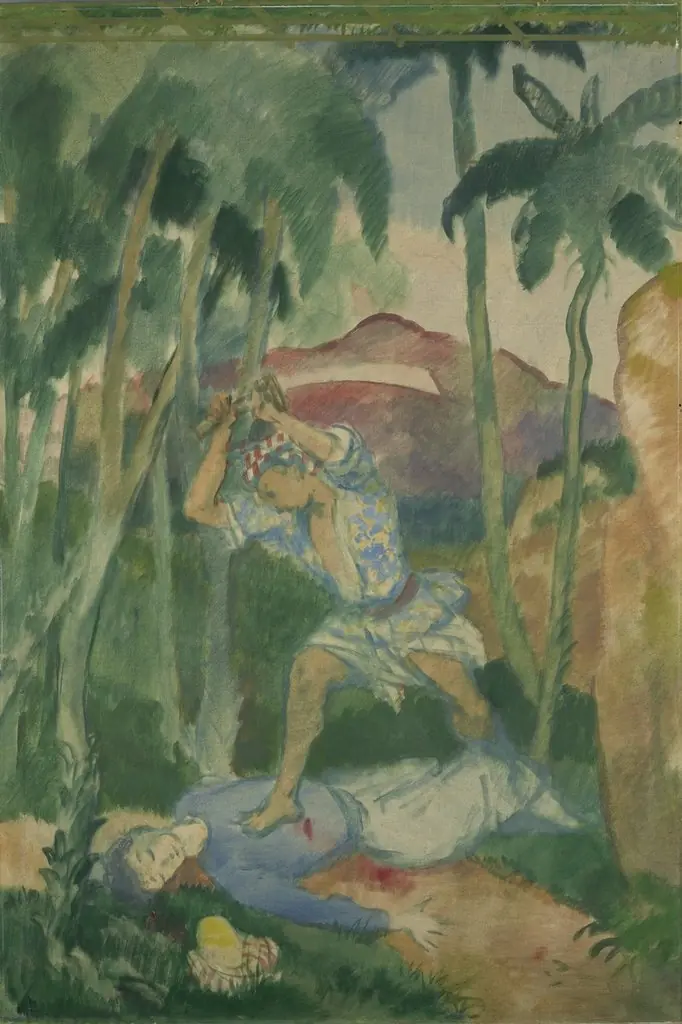
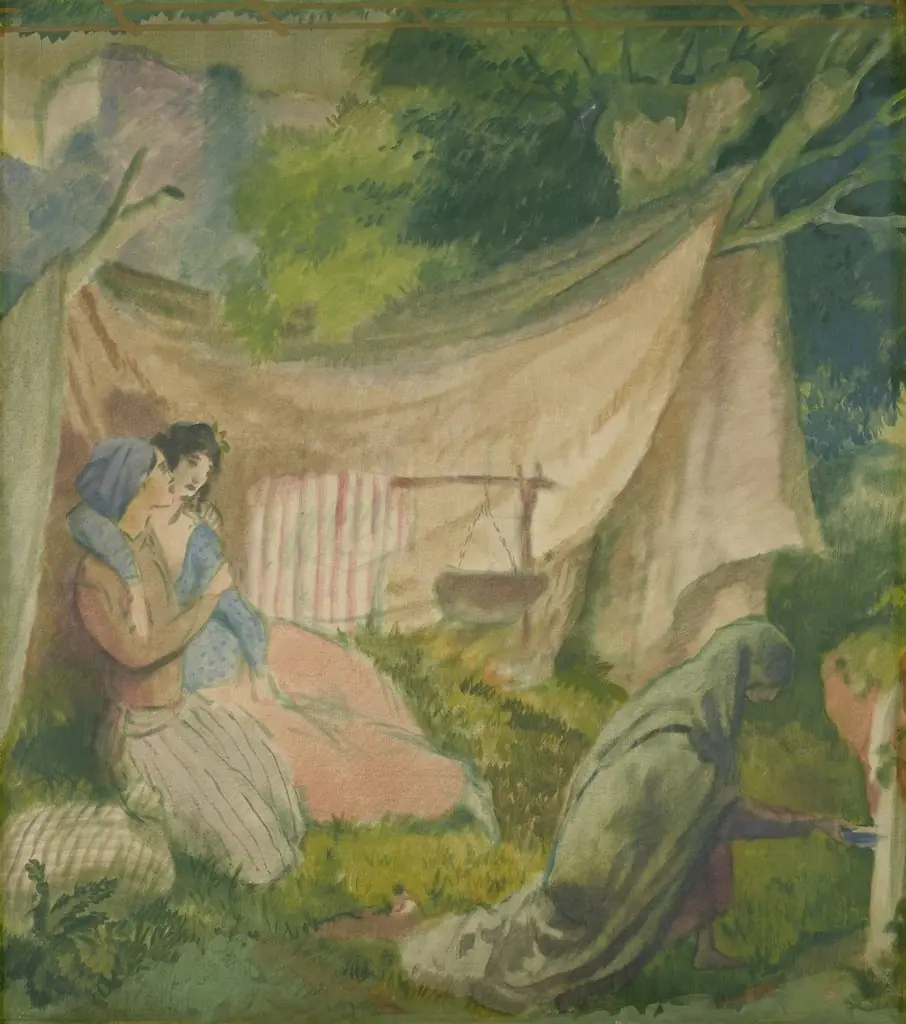
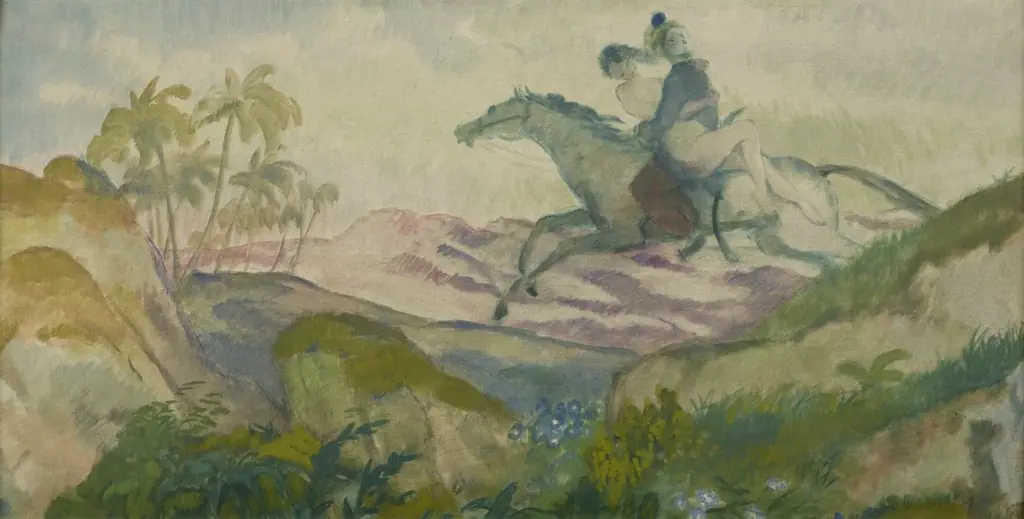
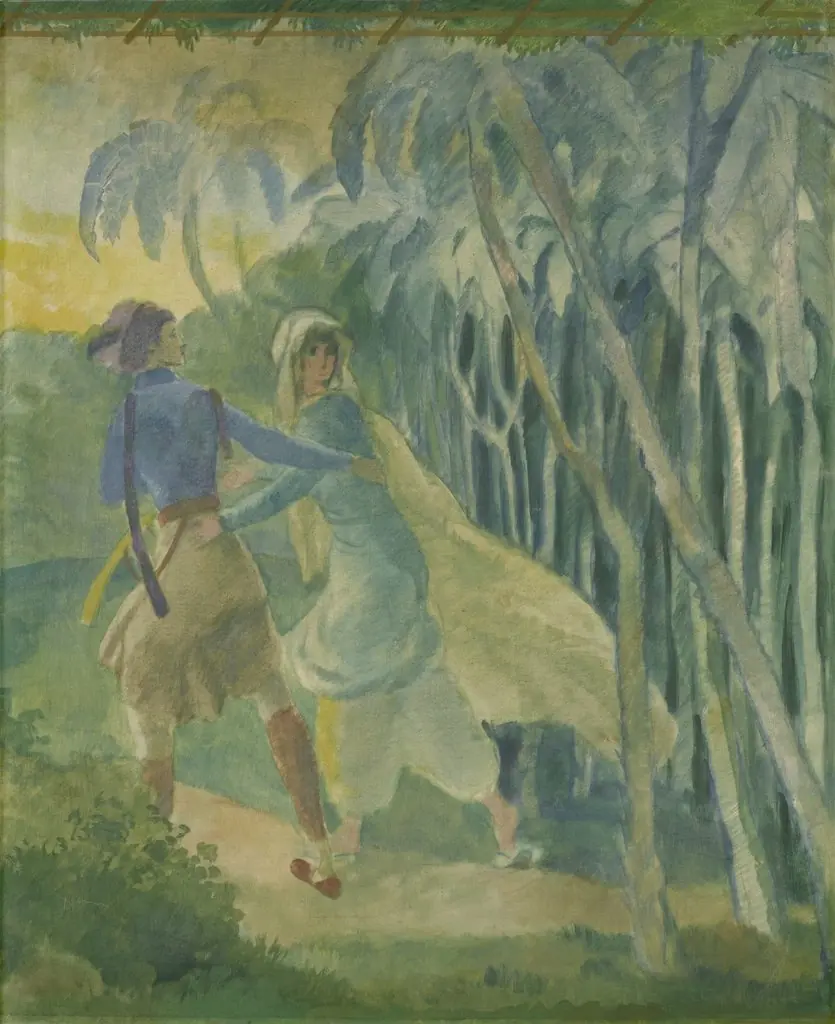
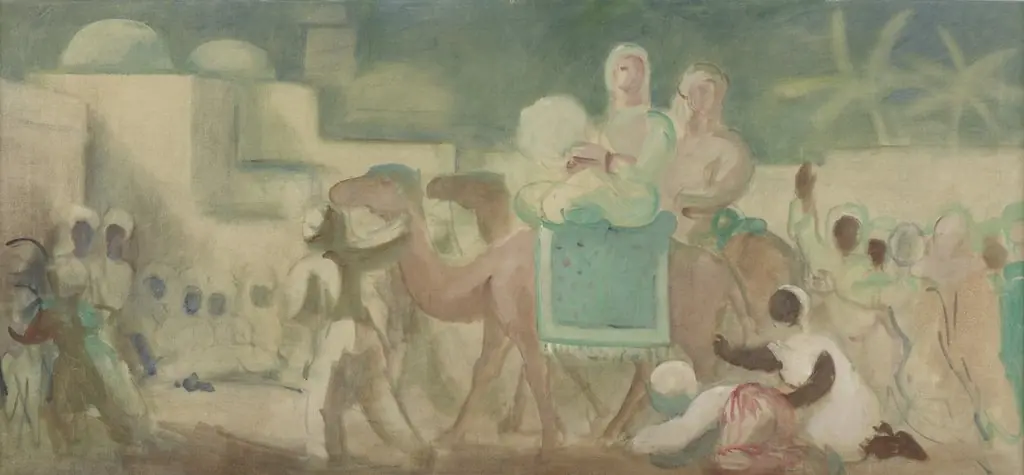
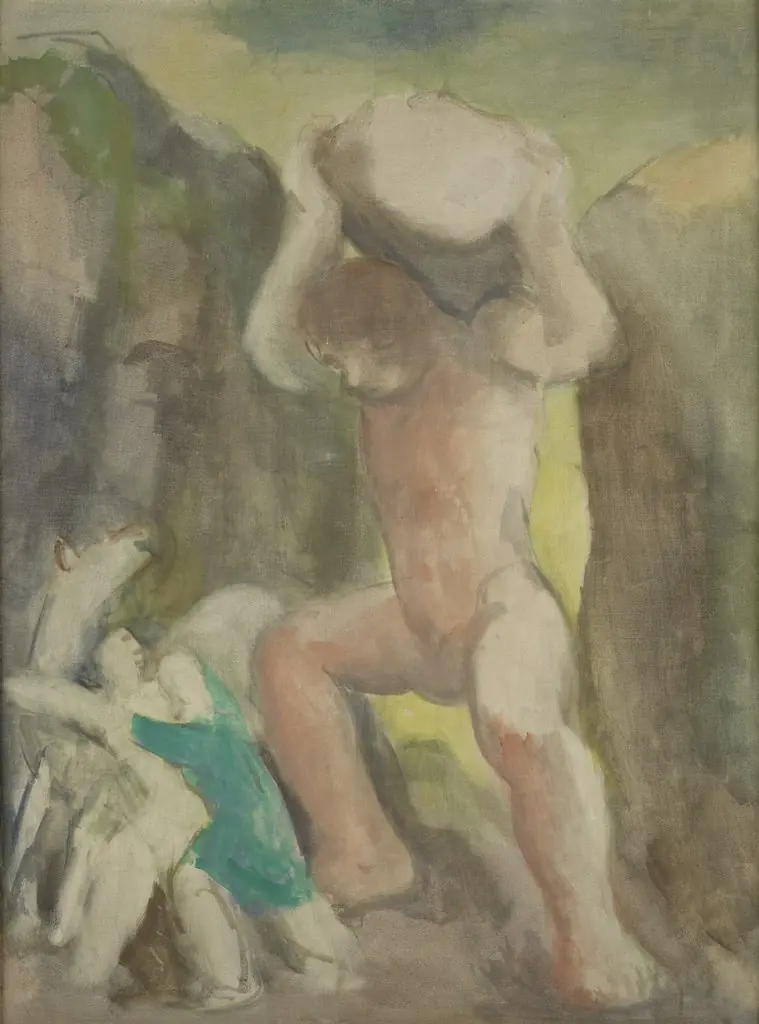
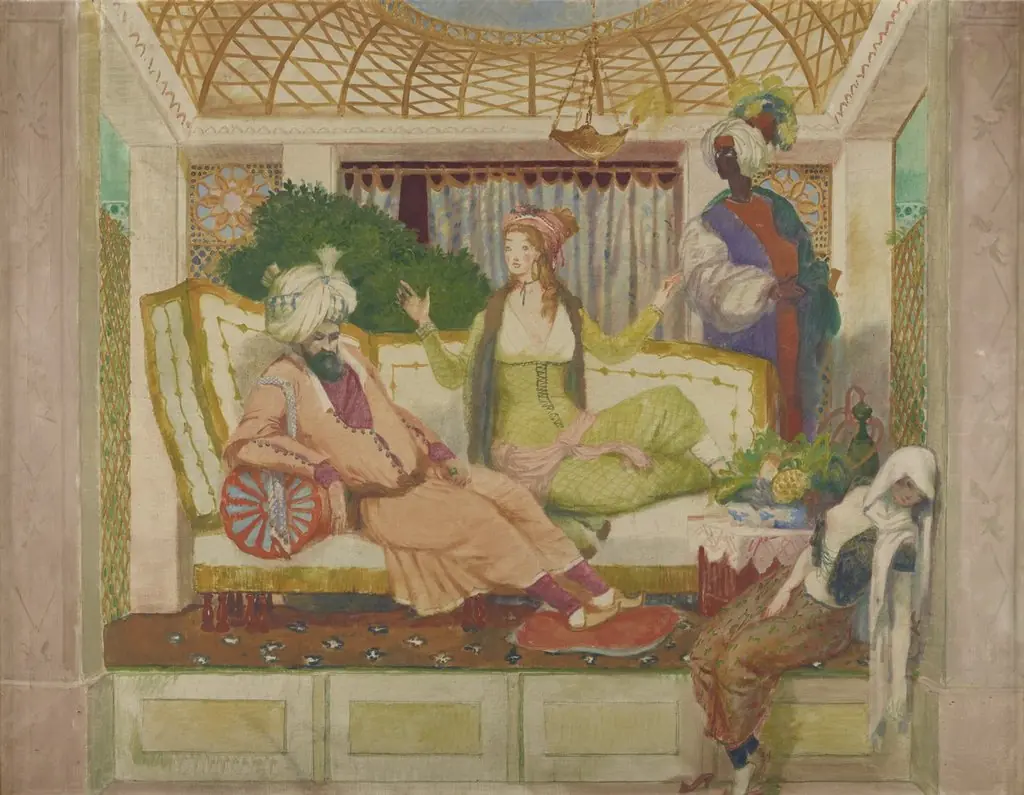
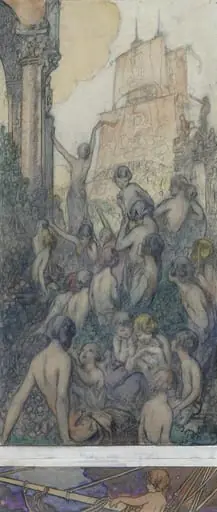
Created in 1911, Fliehende Frauen und Entführer mit Pferd is a tempera painting by Swiss artist Karl Walser. The work belongs to the Art Nouveau period and is part of the permanent collection of the Kunsthaus Zürich. It depicts a lively grouping of figures amid a verdant landscape, framed by a columned structure and punctuated by distant animals.
Subject & Meaning
The composition presents several individuals, some clothed and others nude, gathered around a classical architectural element within a lush, tree‑filled setting. The juxtaposition of fleeing women and a mounted abductor suggests a narrative of pursuit and escape, while the surrounding foliage creates a sense of natural enclosure that tempers the drama of the scene.
Technique & Style
The palette balances muted earth tones with brighter accents, enhancing depth through subtle tonal shifts.
Walser employed tempera, a medium that yields a matte surface and fine, layered coloration. The palette balances muted earth tones with brighter accents, enhancing depth through subtle tonal shifts. The handling of line and decorative motifs reflects the sinuous, ornamental qualities typical of Art Nouveau, while the overall composition hints at the expressive vigor associated with early modernist tendencies.
History & Provenance
Since its completion, the painting has remained in Switzerland, eventually entering the holdings of the Kunsthaus Zürich, where it is displayed as part of the museum’s early 20th‑century collection. The work’s acquisition reflects the institution’s commitment to representing national artists who contributed to the transition from decorative to more expressive visual languages.
Context
Karl Walser, the elder brother of writer Robert Walser, was active across several media, including illustration, stage design, and mural work. His close friendship with German Expressionist Max Beckmann left a discernible imprint on his approach, blending decorative Art Nouveau elements with a nascent expressionist intensity. The painting thus occupies a crossroads between decorative tradition and emerging modernist impulses.
Artist & collection
Artist
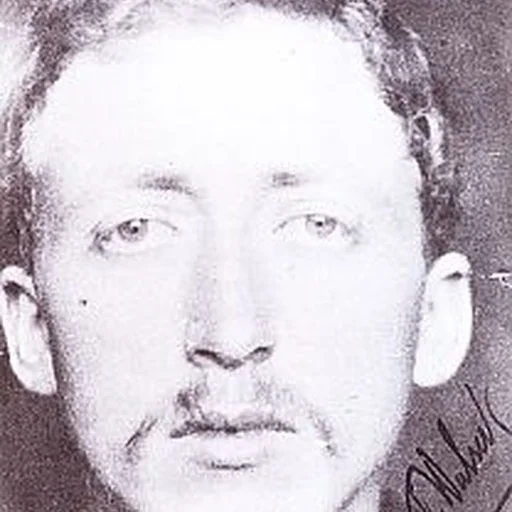
Karl Edmund Walser (April 8, 1877, Teufen - September 28, 1943, Bern) was a Swiss painter, stage designer, illustrator, muralist, and artist.