Artwork
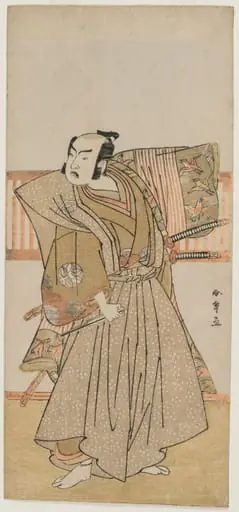
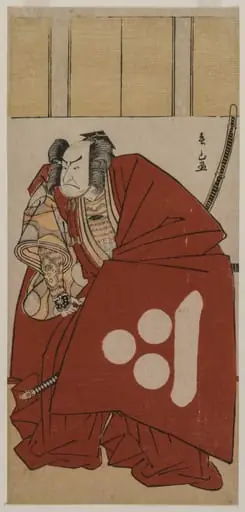
Onoe Matsusuke as Usui Sadamitsu
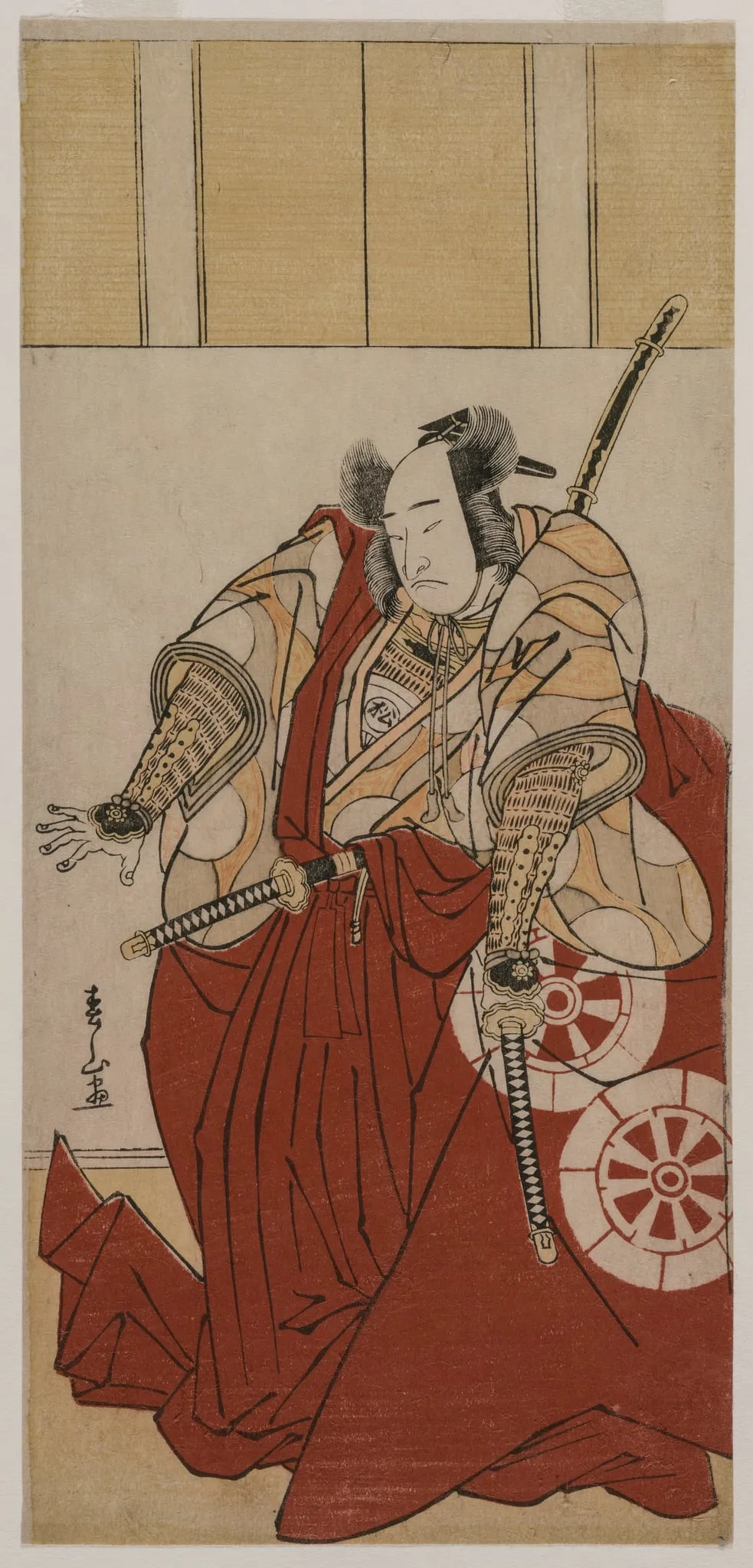
Onoe Matsusuke as Usui Sadamitsu is a print by the Romanticist artist Katsukawa Shunzan. It dates from 1781 and is held in the collection of the Cleveland Museum of Art. This print is one part of a triptych featuring three actors.
- Accession no.
- 1921.314.b
- Credit line
- Gift from J. H. Wade
About this work
Overview
This print is one part of a triptych featuring three actors. It depicts Onoe Matsusuke I as Usui Sadamitsu, one of the Four Heavenly Kings, legendary protectors of the historical figure Minamoto Yorimitsu.
Subject & Meaning
The print shows Usui Sadamitsu, identified by a house crest on his robe and a fan with the 'matsu' ideograph. He is part of a group representing the Shitennō, or Four Heavenly Kings, after Buddhist deities guarding the cardinal directions.
Technique & Style
The print is part of a triptych composition, indicating a multi-panel narrative or scene. The use of a house crest and a symbolic fan suggests a detailed, symbolic representation characteristic of Japanese ukiyo-e prints.
History & Provenance
The subject is related to Minamoto Yorimitsu, a historical figure from the early 11th century. The print is an example of ukiyo-e art, a genre that flourished in Japan from the 17th to 19th centuries.
Artist & collection

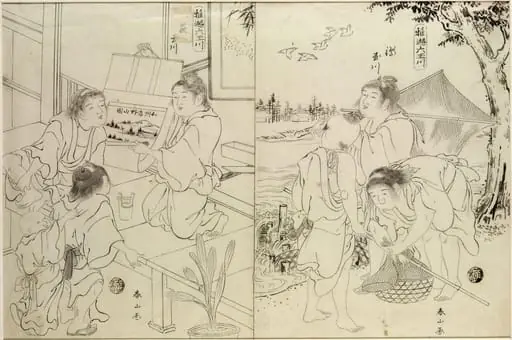 The Chidori Tama River and the Kôya Tama River
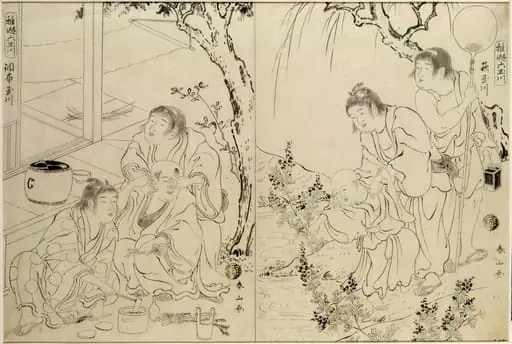 Hagi and Chofu Tamagawa
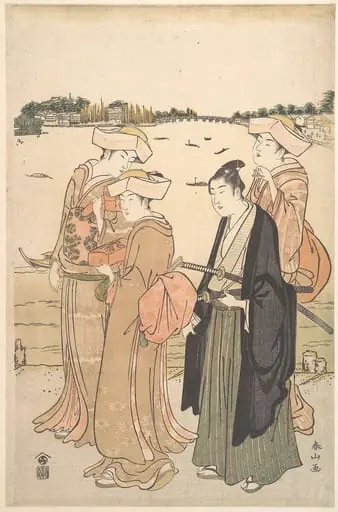 Untitled
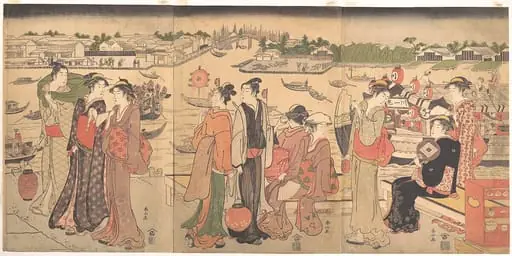 Untitled
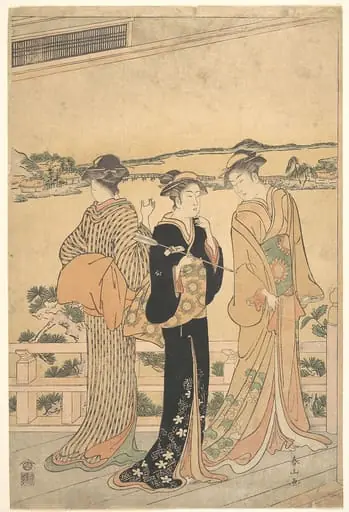 Untitled
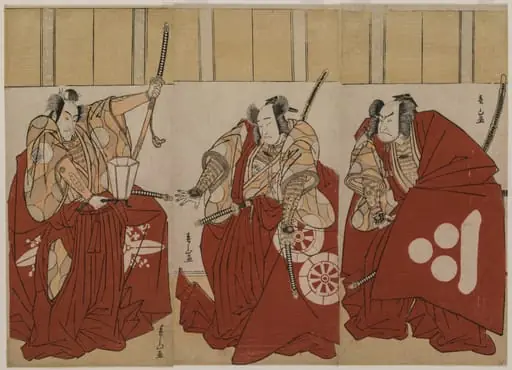 Ichikawa Monnosuke II as Urabe Suetake, Onoe Matsusuke I as Usui Sadamitsu, and Nakamura Nakazo I as Watanabe no Tsuna in “The Four Heavenly Kings Costumed as the Night Watch”
- Nakamura Nakazo I as Watanabe no Tsuna
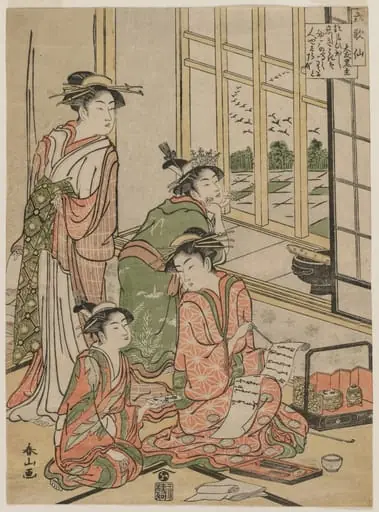 Courtesans at Leisure from the series The Six Immortal Poets