Artwork
今戸川|Imadogawa
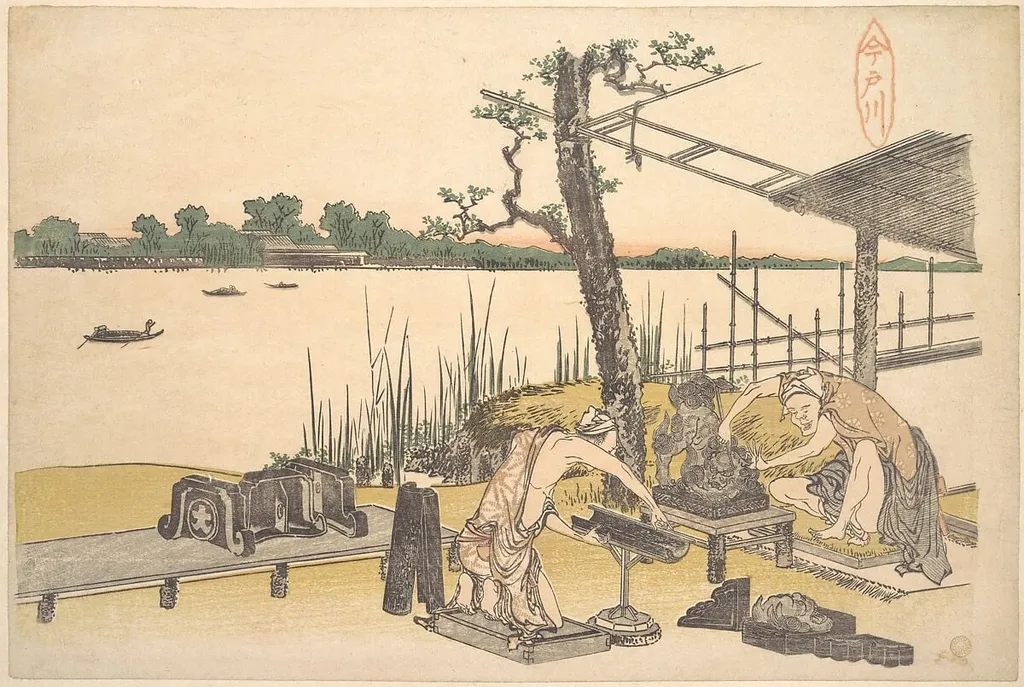
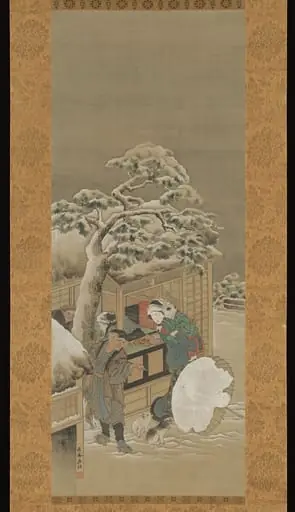
今戸川|Imadogawa is an ink print by the Japonisme artist Katsushika Hokusai. It dates from 1802 and is held in the collection of the Metropolitan Museum of Art.
About this work
Overview
Created around 1802, this woodblock print by Katsushika Hokusai depicts a quiet riverside scene. Executed in ink and color on paper, the work measures a modest size typical of ukiyo-e prints and is part of the collection of the Metropolitan Museum of Art.
Subject & Meaning
The composition centers on two women engaged in domestic labor beside a riverbank. One kneels, handling a long cloth, while the other sits at a low table surrounded by tools and a basket, suggesting textile work or washing. The surrounding reeds, solitary tree, and distant boats convey a slice of everyday life in early‑19th‑century Japan.
Technique & Style
Hokusai employs restrained line work and a muted palette, allowing the sky and water to merge into a soft, uniform background. Subtle cross‑hatching creates delicate shadows, while flat areas of color define the figures and foliage. The overall effect is one of calm simplicity, characteristic of his approach to genre scenes.
History & Provenance
The print was produced during Hokusai’s prolific period of landscape and genre imagery. It entered the Metropolitan Museum of Art’s collection through acquisition in the early 20th century, where it has been displayed as an example of Edo‑period printmaking and daily life representation.
Context
At the turn of the 19th century, ukiyo-e artists increasingly turned to scenes of ordinary labor and rural settings, reflecting a broader interest in the lives of common people. Hokusai’s depiction of women at work aligns with this trend, offering insight into gendered tasks and the visual culture of the Edo period.
Artist & collection

Artist
Katsushika Hokusai spent his life in Edo, now Tokyo, where he drew and carved prints for a living.

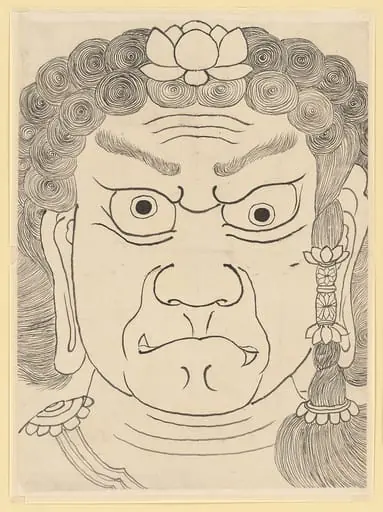
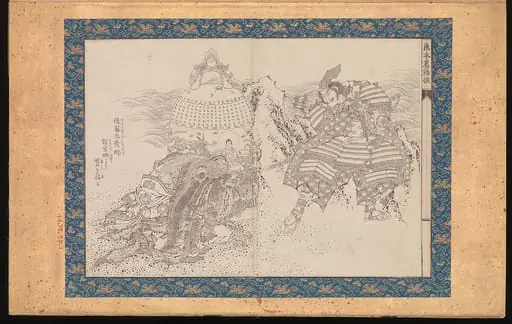
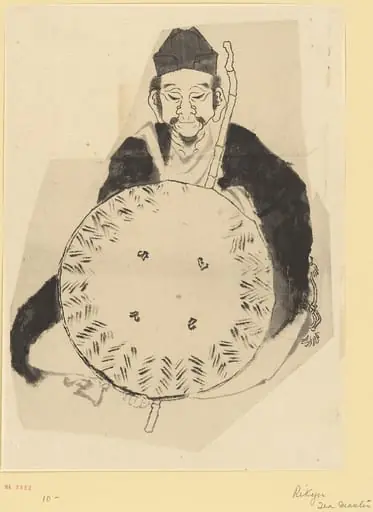
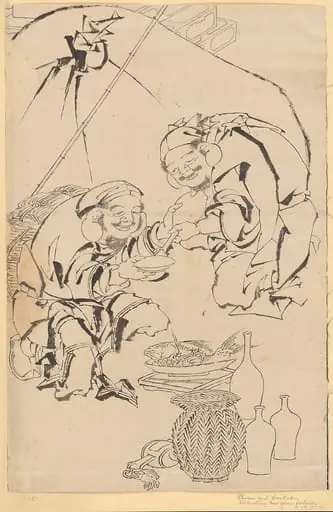
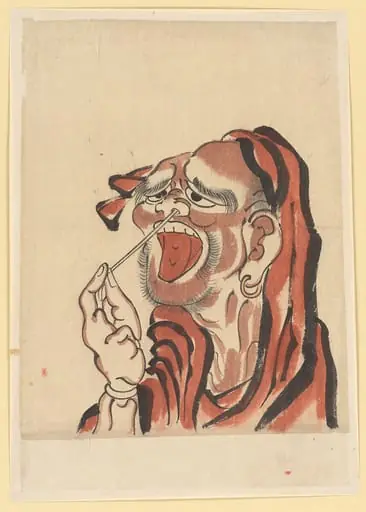
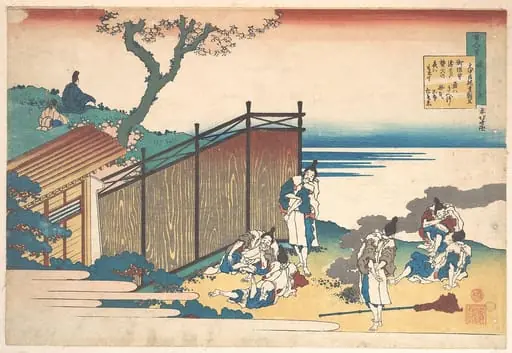
- 百人一首 姥か恵と起 大中臣能宣朝臣|Poem by Ōnakatomi no Yoshinobu Ason, from the series One Hundred Poems Explained by the Nurse (Hyakunin isshu uba ga etoki)
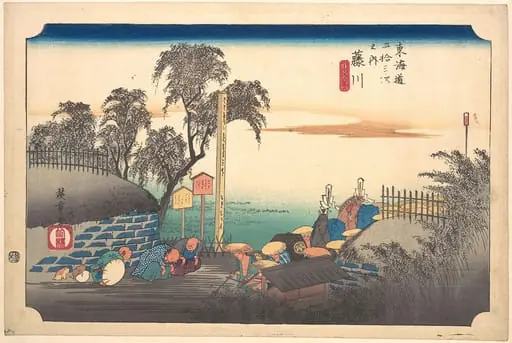 東海道五十三次之内 藤川 棒鼻の図|Station Thirty-Eight: Fujikawa, Scene at the Border, from the Fifty-Three Stations of the Tokaido
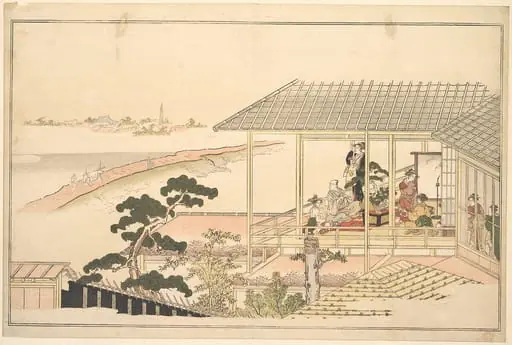 狂月坊|A Party of Merrymakers in a House in the Yoshiwara on a Moonlight Night
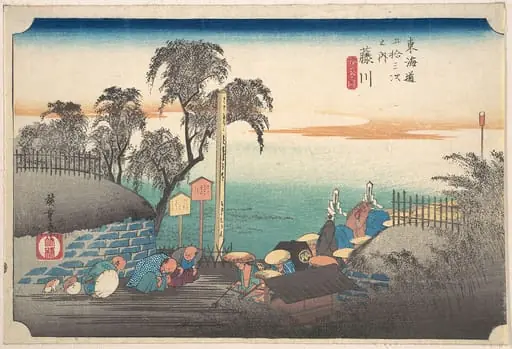 東海道五十三次之内 藤川 棒鼻の図|Fujikawa, Bo Bana
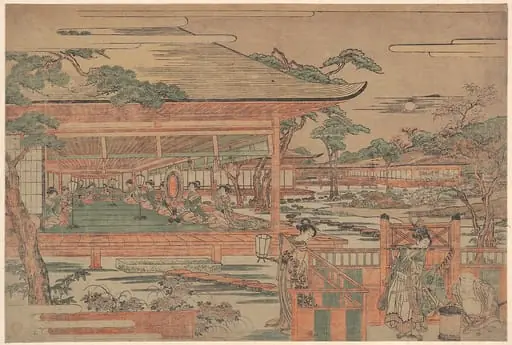 Untitled
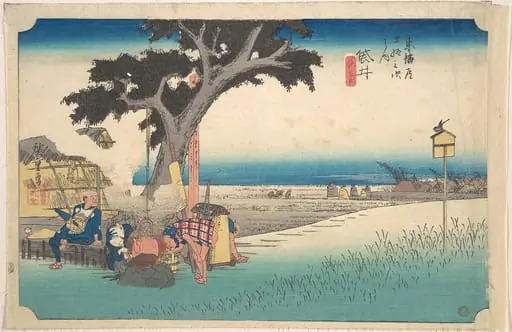 東海道五十三次之内 袋井 出茶屋の図|Fukuroi; De Chaya
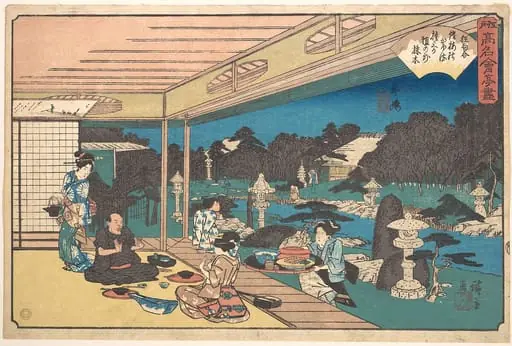 江戸高名会亭尽 牛嶋 武蔵屋|Ushijima (Musashi-ya)
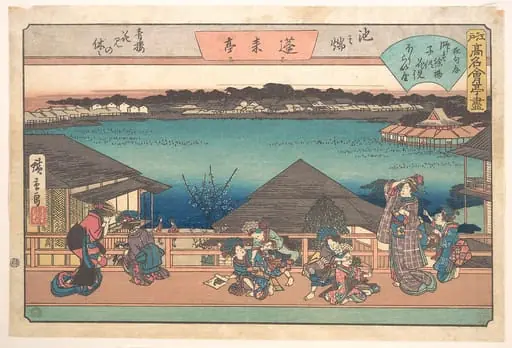 江戸高名会亭尽 池之端 蓬莱亭 青楼花見の休み|Ikeno Mata (Horai-ya)
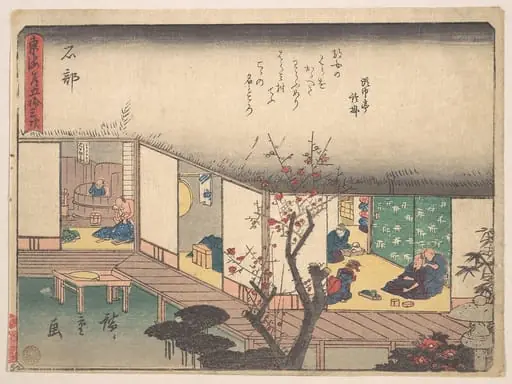 東海道五十三次 石部|Ishibe
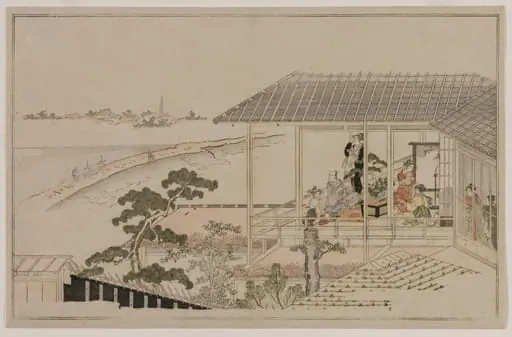 Moonrise Over the Nihon Embankment and the Yoshiwara