Artwork
冨嶽三十六景 甲州三島越|Mishima Pass in Kai Province (Kōshū Mishima goe), from the series Thirty-six Views of Mount Fuji (Fugaku sanjūrokkei
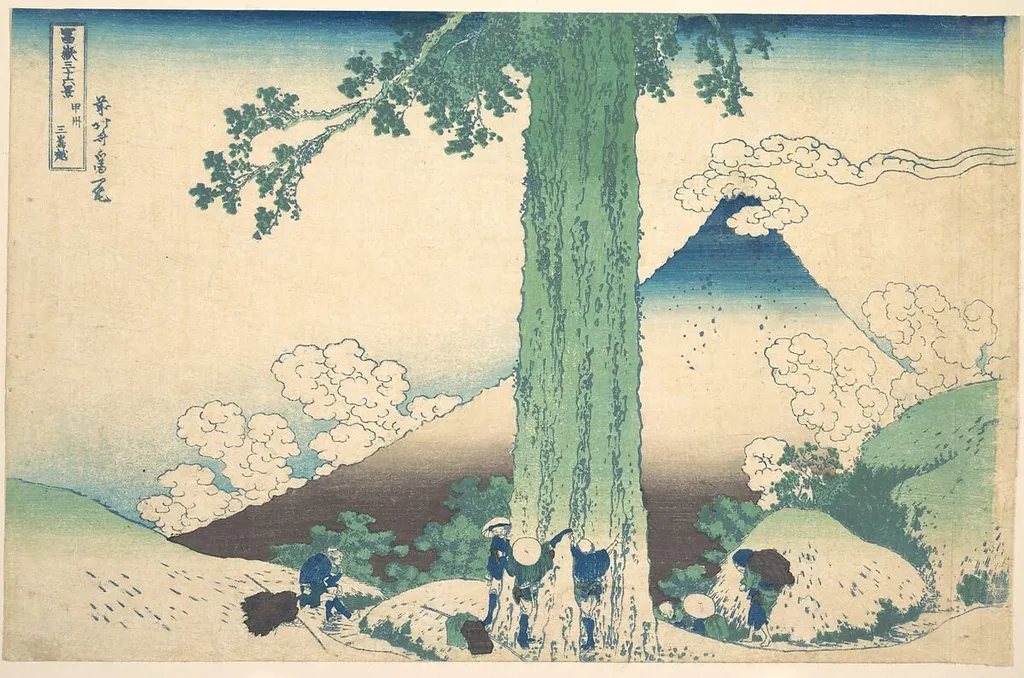
冨嶽三十六景 甲州三島越|Mishima Pass in Kai Province (Kōshū Mishima goe), from the series Thirty-six Views of Mount Fuji (Fugaku sanjūrokkei is an ink print by the Japonisme artist Katsushika Hokusai. It dates from 1831 and is held in the collection of the Metropolitan Museum of Art.
- Accession no.
- JP2970
- Credit line
- Henry L. Phillips Collection, Bequest of Henry L. Phillips, 1939
About this work
Overview
Katsushika Hokusai’s woodblock print titled Mishima Pass in Kai Province belongs to his celebrated series Thirty‑six Views of Mount Fuji, produced around 1831. Executed in ink and color on paper, the image captures a mountain landscape with a distinctive, rounded summit, a solitary tree, and travelers ascending a winding path. The work is part of the Metropolitan Museum of Art’s collection.
Subject & Meaning
The scene depicts the historic Mishima Pass, a mountain route in Kai Province, where figures laden with bundles traverse a steep trail beneath a towering tree. The distant Mount Fuji, rendered with soft clouds, serves as a symbolic backdrop, linking everyday travel to the revered sacred mountain and emphasizing the relationship between human activity and the natural environment.
Technique & Style
Hokusai employed traditional ukiyo‑e woodblock methods, using multiple carved blocks to apply ink and subtle color washes. The composition balances foreground detail, figures and foliage, with atmospheric perspective, achieved through muted greens, browns, and blues that recede into the hazy summit. Fine line work and careful carving convey texture in the tree bark and distant clouds.
History & Provenance
Created circa 1831, the print was issued as part of the Thirty‑six Views of Mount Fuji, a series that circulated widely in Edo‑period Japan. It entered the collection of the Metropolitan Museum of Art in the early twentieth century, where it remains displayed as an example of Hokusai’s mature landscape practice.
Context
The series reflects a period when Mount Fuji became a popular motif for artists and travelers alike, symbolizing both national identity and spiritual significance. Hokusai’s inclusion of a specific mountain pass illustrates his interest in documenting recognizable locales, while also catering to a market eager for images of famous routes and scenic vistas.
Artist & collection

Artist
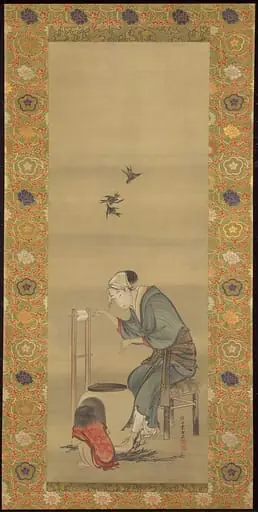
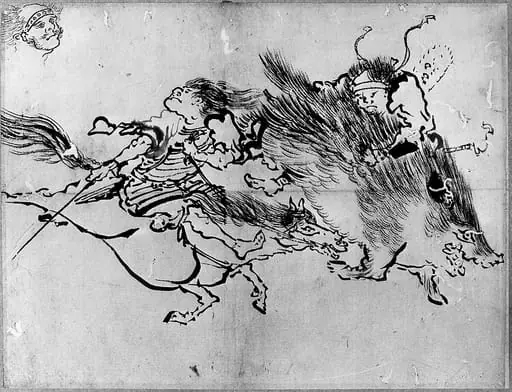
Katsushika Hokusai spent his life in Edo, now Tokyo, where he drew and carved prints for a living.

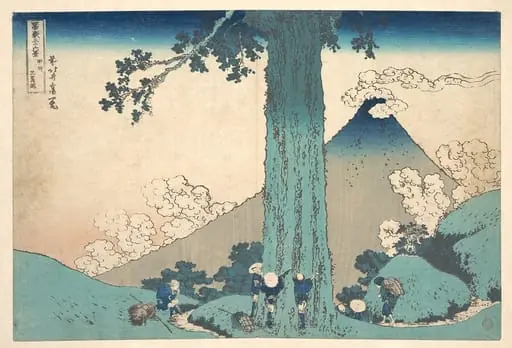
- 冨嶽三十六景 甲州三島越|Mishima Pass in Kai Province (Kōshū Mishima goe), from the series Thirty-six Views of Mount Fuji (Fugaku sanjūrokkei)
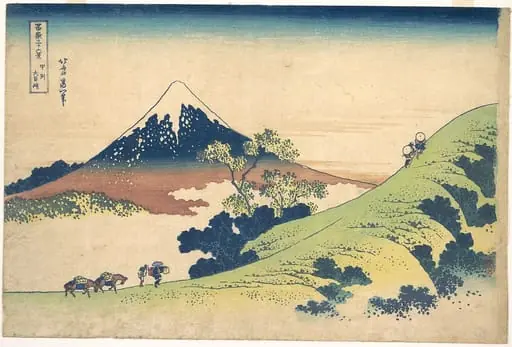 冨嶽三十六景 甲州犬目峠|The Inume Pass in Kai Province (Kōshū Inume tōge), from the series Thirty-six Views of Mount Fuji (Fugaku sanjūrokkei)
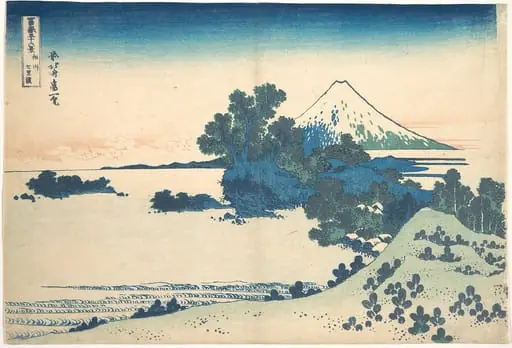 冨嶽三十六景 相州七里浜|Shichirigahama in Sagami Province (Sōshū Shichirigahama), from the series Thirty-six Views of Mount Fuji (Fugaku sanjūrokkei)
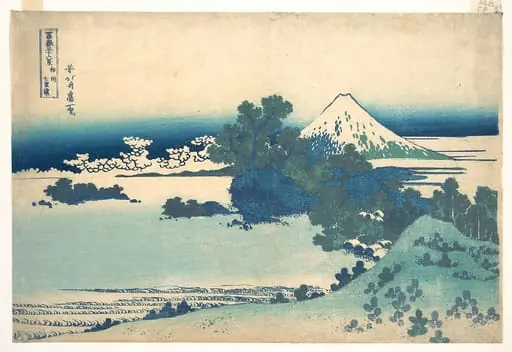 冨嶽三十六景 相州七里浜|Shichirigahama in Sagami Province (Sōshū Shichirigahama), from the series Thirty-six Views of Mount Fuji (Fugaku sanjūrokkei)
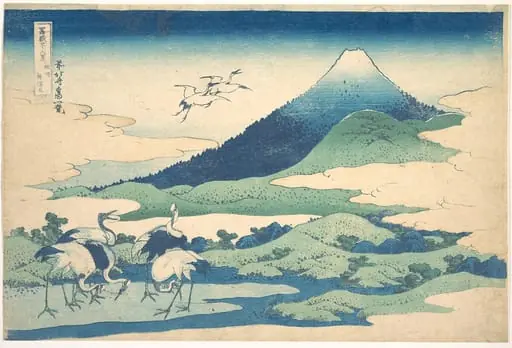 冨嶽三十六景 相州梅沢左|Umezawa Manor in Sagami Province (Sōshū Umezawa zai), from the series Thirty-six Views of Mount Fuji (Fugaku sanjūrokkei)
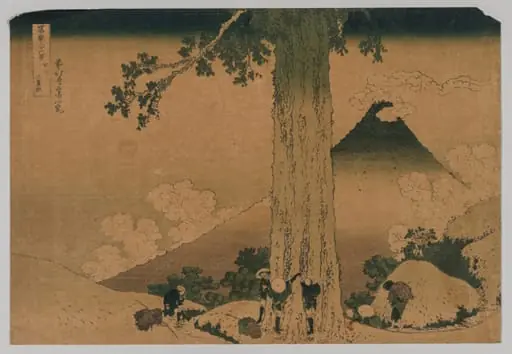 Fuji from the Pass of Mishima, Koshu Province
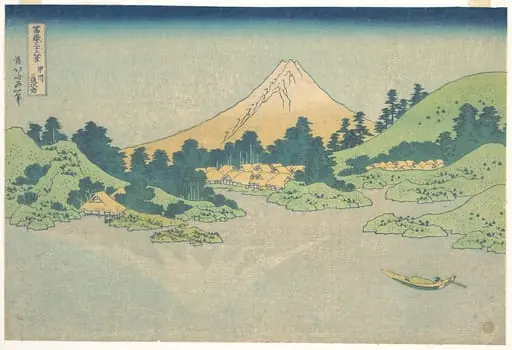 冨嶽三十六景 甲州三坂水面|Reflection in Lake at Misaka in Kai Province (Kōshū Misaka suimen), from the series Thirty-six Views of Mount Fuji (Fugaku sanjūrokkei)
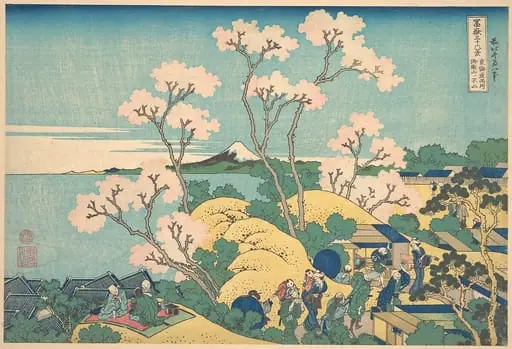 冨嶽三十六景 東海道品川御殿山の不二|Fuji from Gotenyama on the Tōkaidō at Shinagawa (Tōkaidō Shinagawa Gotenyama no Fuji), from the series Thirty-six Views of Mount Fuji (Fugaku sanjūrokkei)
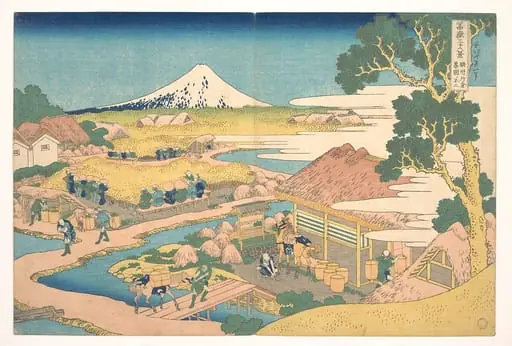 冨嶽三十六景 駿州片倉茶園の不二|Fuji from the Katakura Tea Fields in Suruga (Sunshū Katakura chaen no Fuji), from the series Thirty-six Views of Mount Fuji (Fugaku sanjūrokkei)