Artwork
Haze on a Clear Day at Stone Bridge (From the series Eight Elegant Views of Chanted Accompanimnets for Kabuki Plays)
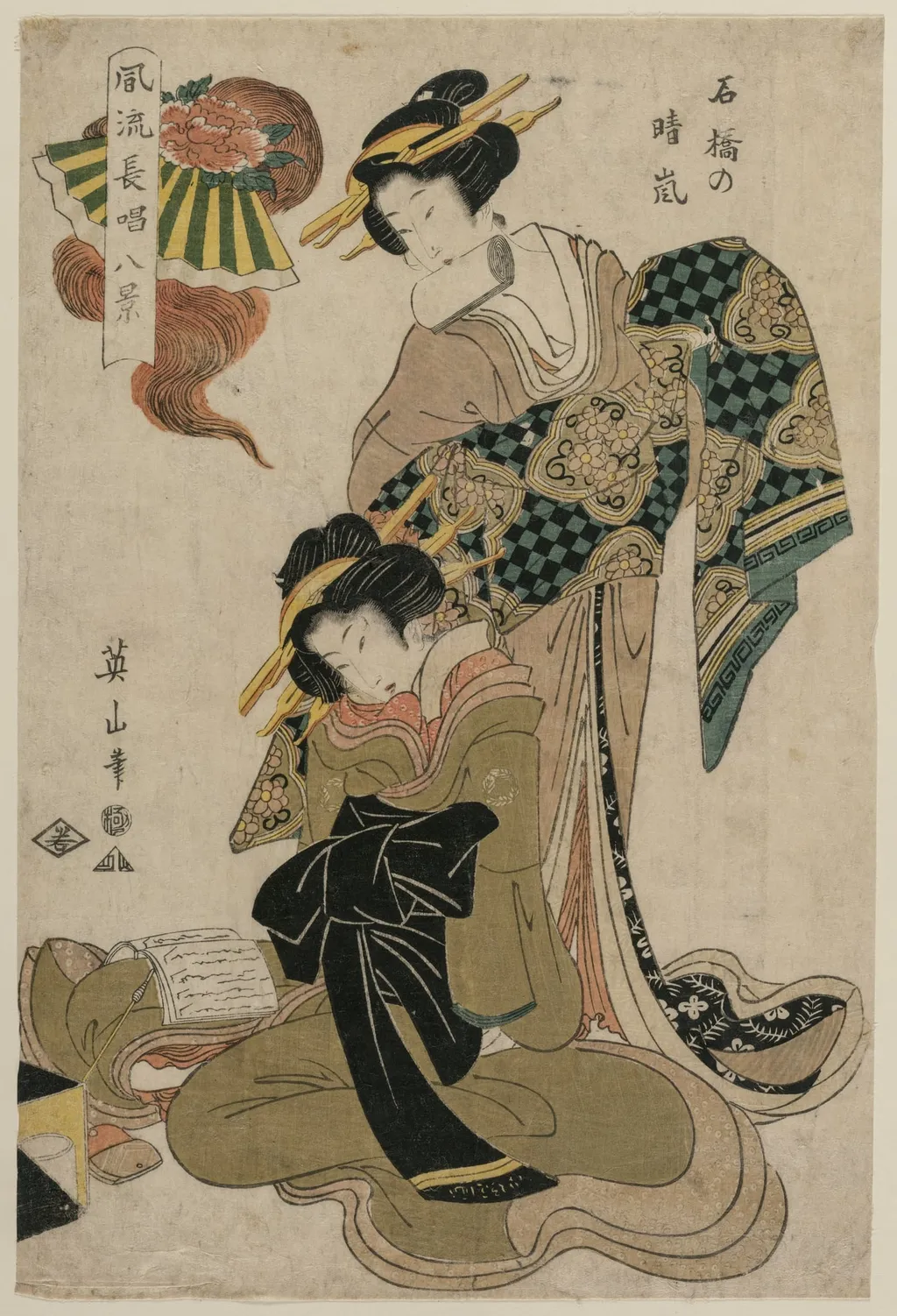
Haze on a Clear Day at Stone Bridge (From the series Eight Elegant Views of Chanted Accompanimnets for Kabuki Plays) is a print by the Romanticist artist Kikukawa Eizan. It dates from 1814 and is held in the collection of the Cleveland Museum of Art.
- Accession no.
- 1940.720
- Credit line
- Bequest of James Parmelee
About this work
Overview
Created around 1814 by the ukiyo‑e artist Kikukawa Eizan, this multicolored woodblock print belongs to the series titled Eight Elegant Views of Chanted Accompaniments for Kabuki Plays. The work depicts a domestic interior scene rendered in vivid black, gold and green pigments, and is part of the Cleveland Museum of Art’s collection.
Subject & Meaning
Two women kneel on a low mat, their backs turned toward the viewer. One holds a folding fan, the other a scroll, while a small tray bearing cups rests nearby. Their hair is styled in the fashionable upswept coiffure of the period, suggesting a refined, possibly ceremonial setting within a private household.
Technique & Style
The image exemplifies early nineteenth‑century Japanese woodblock printing, employing multiple carved blocks to achieve bright, flat areas of color and fine line work. Eizan’s use of a limited palette, dominant black, gold and green, creates contrast against a pale background, while decorative elements such as the patterned robe and blossoming fan demonstrate the era’s attention to detail.
History & Provenance
The print was produced as part of a series intended to accompany kabuki performances, linking visual art with theatrical music. After circulating in Japan, it entered the Western art market in the early twentieth century and was eventually acquired by the Cleveland Museum of Art, where it remains on view as a representative example of Edo‑period ukiyo‑e.
Own this work as a print
Artist & collection

Artist
Kikukawa Eizan was a designer of ukiyo-e style Japanese woodblock prints. He first studied with his father, Eiji, a minor painter of the Kanō school, and subsequently with Suzuki Nanrei (1775–1844), of the Shijō school.…

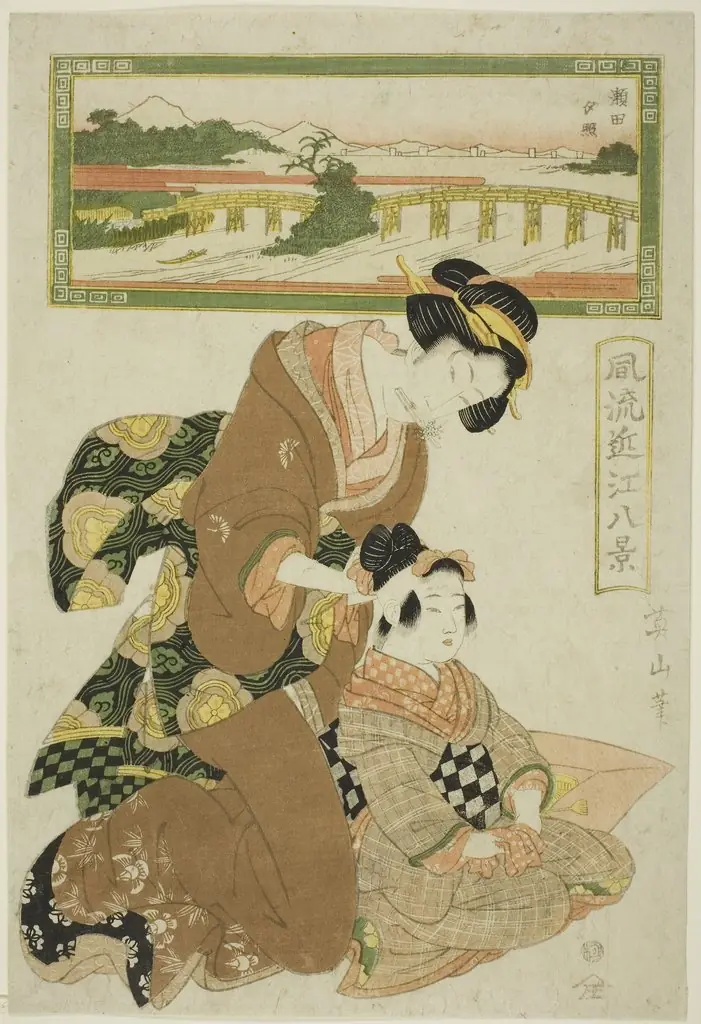 Evening Glow at Seta (Seta sekisho), from the series "Fashionable Eight Views of Omi (Furyu Omi hakkei)"
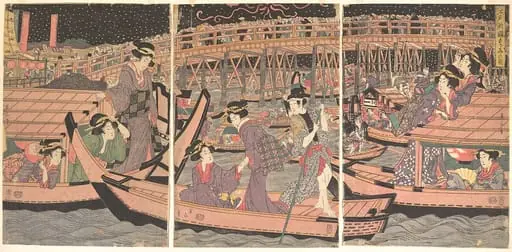 Untitled
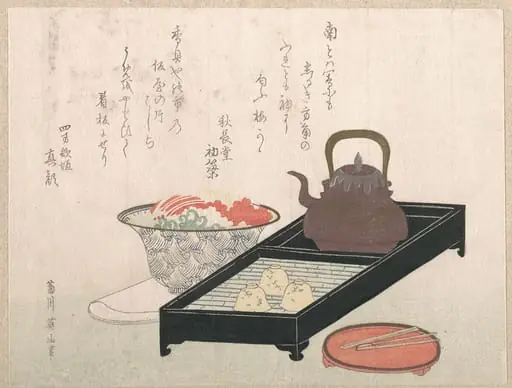 Untitled
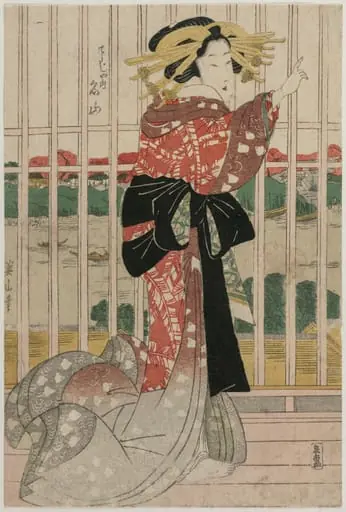 The Courtesan Meizan of the Chojiya on a Balcony Overlooking the Sumida River
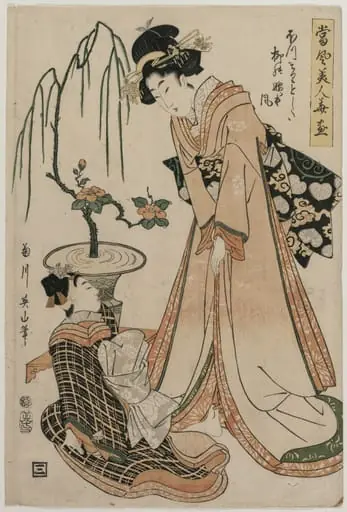 A Lady-in-Waiting with Waist as Slender as a Willow from the series Flowers and Modern Beauties
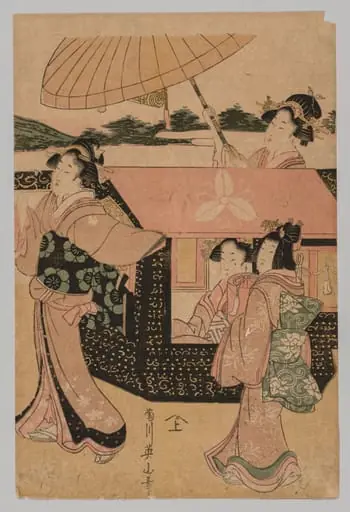 No Title
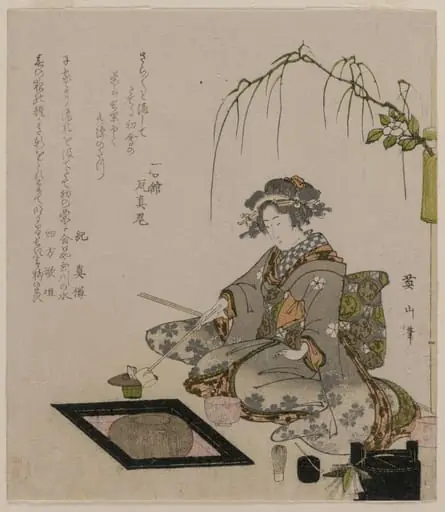 Woman Performing the Tea Ceremony
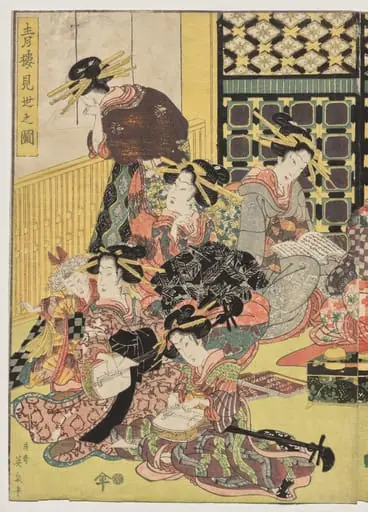 A Picture of the Viewing in the Pleasure Quarters
- The Courtesan Hana-ogi of Ogiya as the Sennin Tekkai (from the series Eight Immortals of Sensuality)
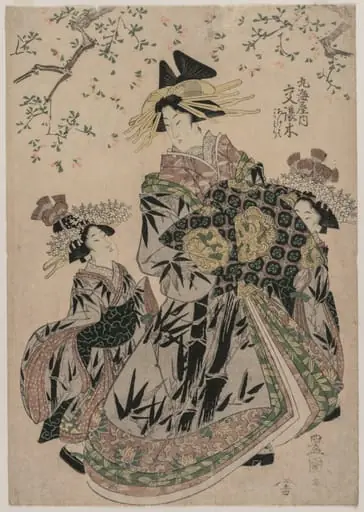 The Courtesan Katakoshigi (?) of Maruebiya with her Kamuro Ageha and Midori
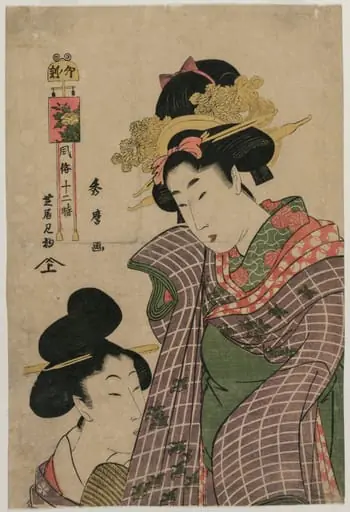 Going to the Kabuki Theater in the Hour of the Hare (From the Series The Twelve Hours with Daily Events)
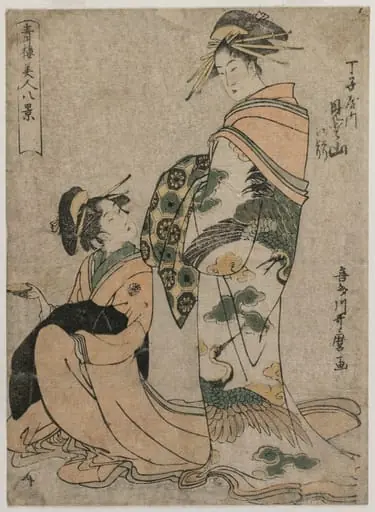 The Courtesan Misyama of Chojiya (from the series Eight Views of Beautiful Women of the Green Houses)
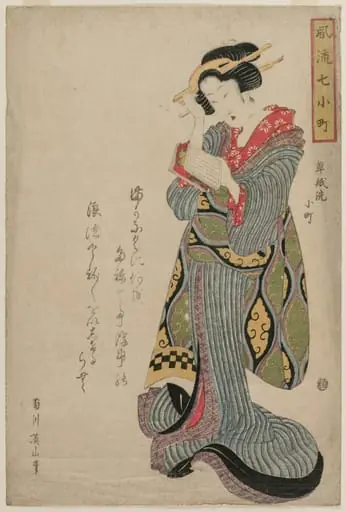 Komachi Washes the Book (from the series Seven Elegant Episodes from the Life of the Poetess Ono no Komachi)
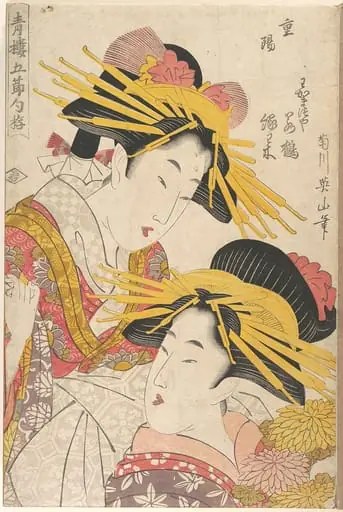 Untitled
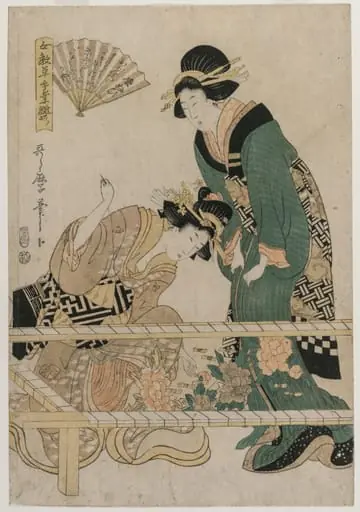 Chinese Embroidery (from the series Instructive Patterns for Women's Handicraft)
 Untitled
 Untitled
 Chōdayu of the Okamotoya from the series ?
 Eyes for Looking at a Courtesan
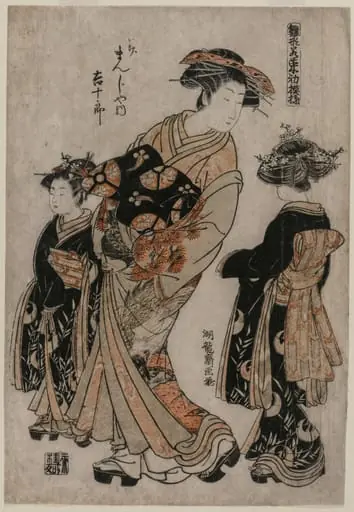 The Courtesan Kichijuro of Kage Manjiya with Two Kamuro (from the series Models for Fashions: New Designs as Fresh as Young Leaves)