Artwork
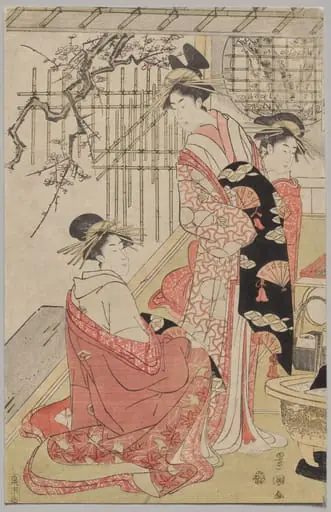
Going to the Kabuki Theater in the Hour of the Hare (From the Series The Twelve Hours with Daily Events)
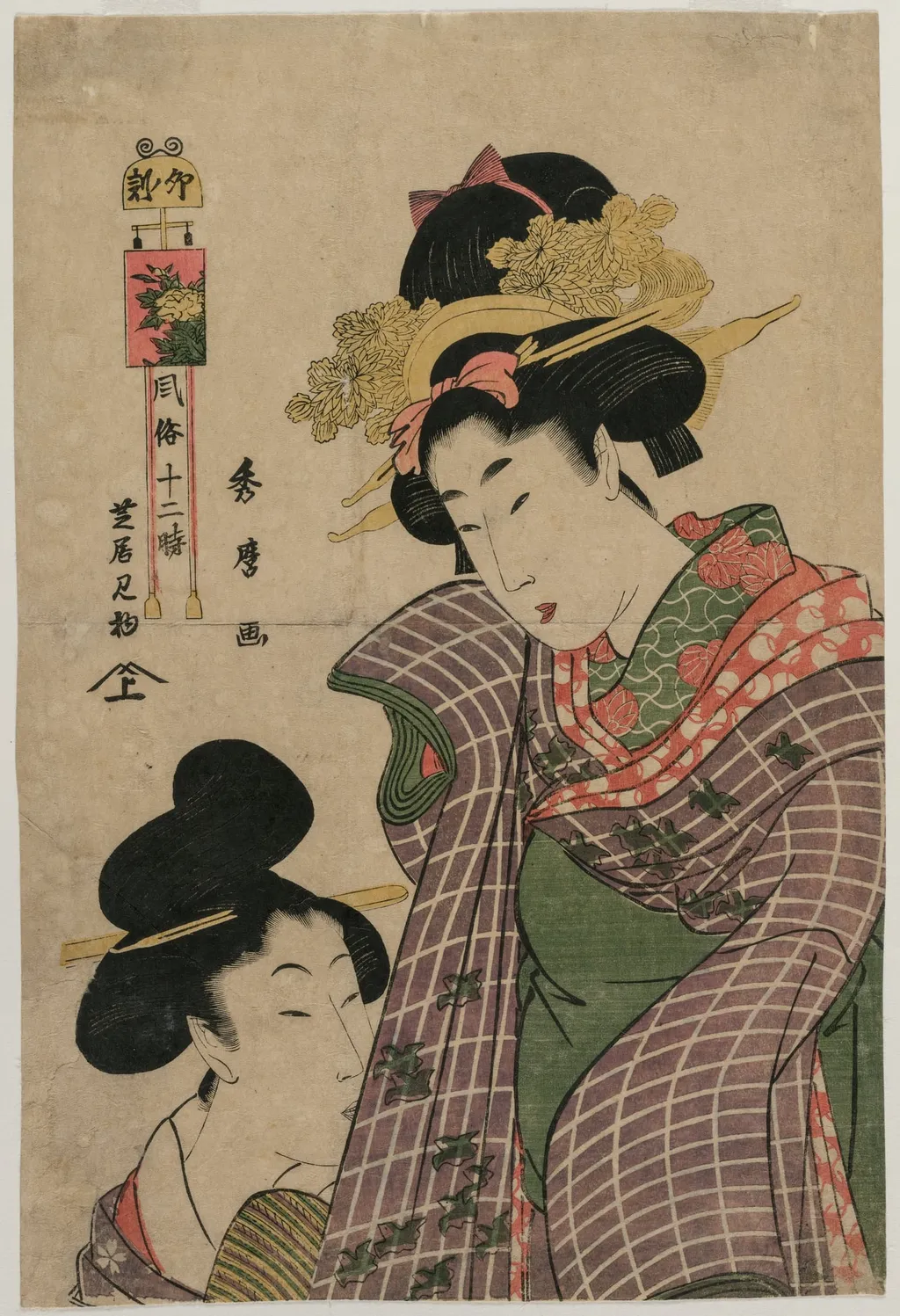
Going to the Kabuki Theater in the Hour of the Hare (From the Series The Twelve Hours with Daily Events) is a print by the Romanticist artist Kitagawa Hidemaro. It dates from 1804 and is held in the collection of the Cleveland Museum of Art.
- Accession no.
- 1943.44
- Credit line
- Gift of Mrs. Ralph King
About this work
Overview
Going to the Kabuki Theater in the Hour of the Hare is a print by Kitagawa Hidemaro, dating to circa 1804, now part of The Cleveland Museum of Art's collection. It is one of twelve works depicting daily events aligned with the twelve-hour clock used in Japan during the Edo period.
Subject & Meaning
The print portrays two women preparing to attend a Kabuki theater performance. Their attire and hairstyles reflect the elegance of Edo-period fashion. The scene's serene ambiance captures a moment of quiet anticipation before a social outing.
Technique & Style
Characterized by delicate lines and a muted color palette, the work showcases Hidemaro's adherence to traditional Japanese ukiyo-e techniques. The composition's simplicity and the use of negative space contribute to its overall elegance, echoing aspects of Japanese Romanticism's focus on everyday life's beauty.
History & Provenance
Created around 1804, this print is part of The Twelve Hours with Daily Events series. Its current location is The Cleveland Museum of Art, though detailed provenance before its acquisition is not provided here.
Context
Produced during the Edo period, the work reflects the growing interest in depicting everyday urban life, particularly the leisure activities of the emerging middle class. The reference to the 'Hour of the Hare' (early morning) highlights the traditional Japanese timekeeping system.
Legacy
While not individually renowned outside its series, the print contributes to the broader legacy of ukiyo-e in capturing Edo-period culture. Its style influences later Japanese art movements and continues to educate about 19th-century Japanese daily life and fashion.
Own this work as a print
Artist & collection

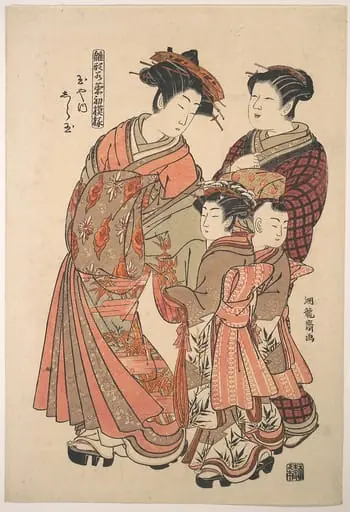
- 『雛形若菜初模様 玉や内 しら玉』|The Courtesan Shiratama of the Tamaya Brothel, from the series “A Pat-tern Book of the Year’s First Designs, Fresh as Spring Herbs” (“Hinagata wakana hatsu moyō”)
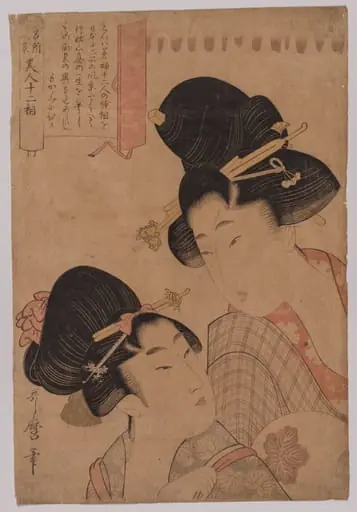
 Untitled
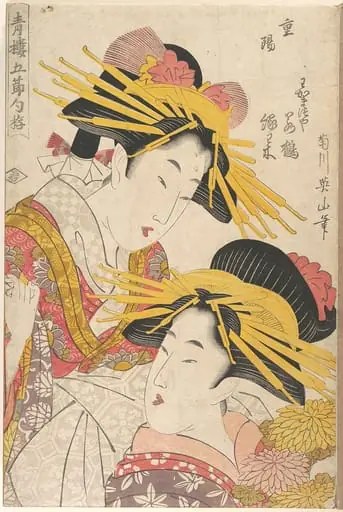
 Two Courtesans
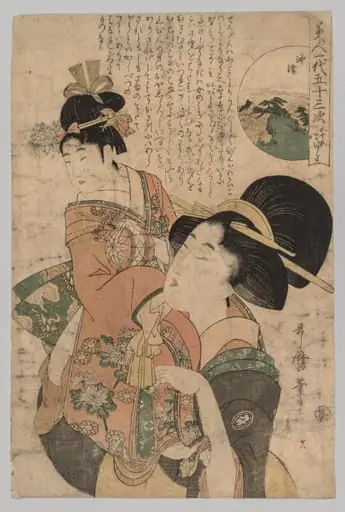 Nakatsu, from the series Fifty-three Stations in the Life of a Beauty
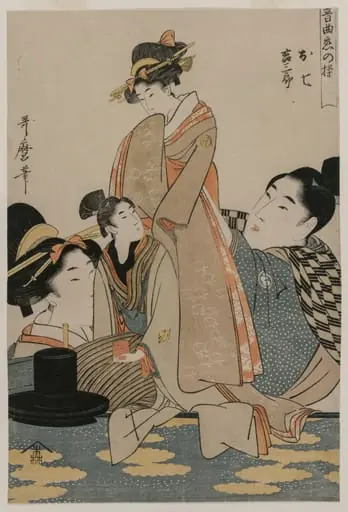 Oshichi and Kichisaburo (from the series Music on the Theme of Constancy in Love)
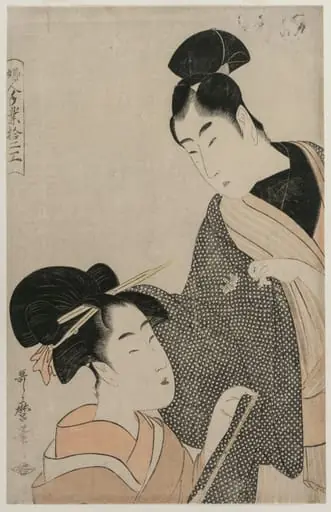 Woman Measuring a Man's Gown (from the series Twelve Occupations of Women)
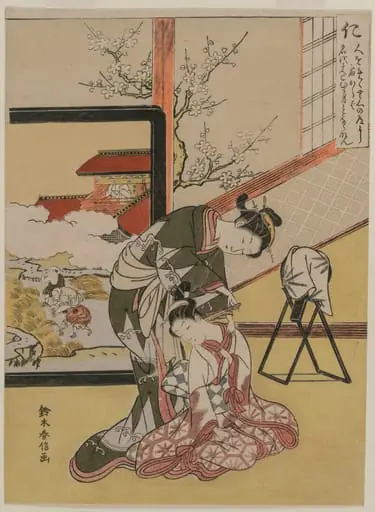 Benevolence, from The Five Virtues
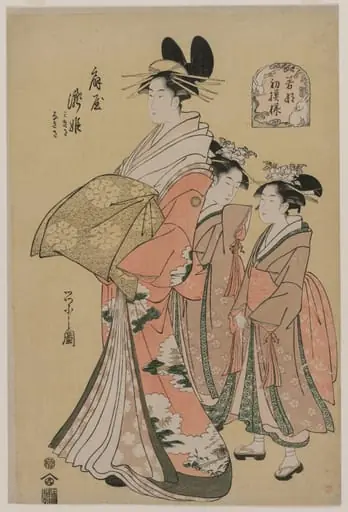 The Courtesan Takihime and Attendants (from the series New Patterns of Young Greens)
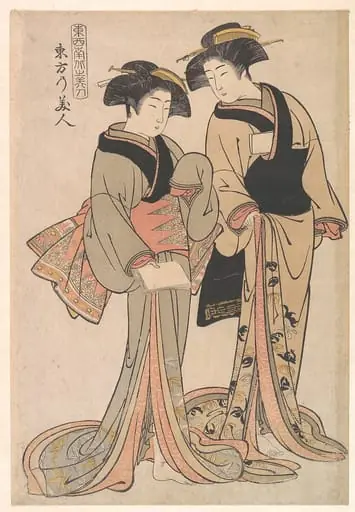 Untitled
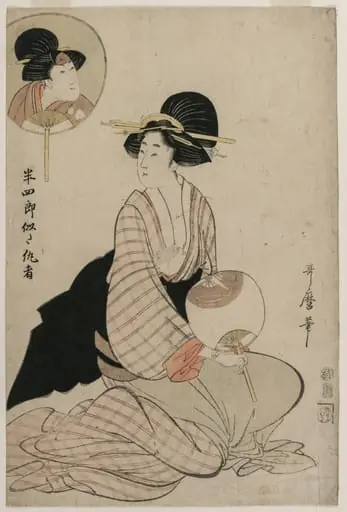 An Attractive Woman Who Looks Like the Actor Iwai Hanshiro V
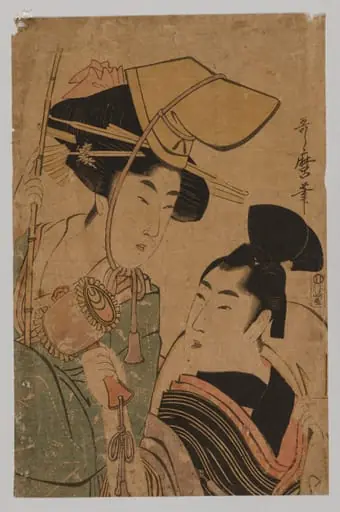 Woman Representing Good Fortune
 Courtesans of the Ōgiya on a Spring Outing