Artwork
Augustus II, Duke of Brunswick
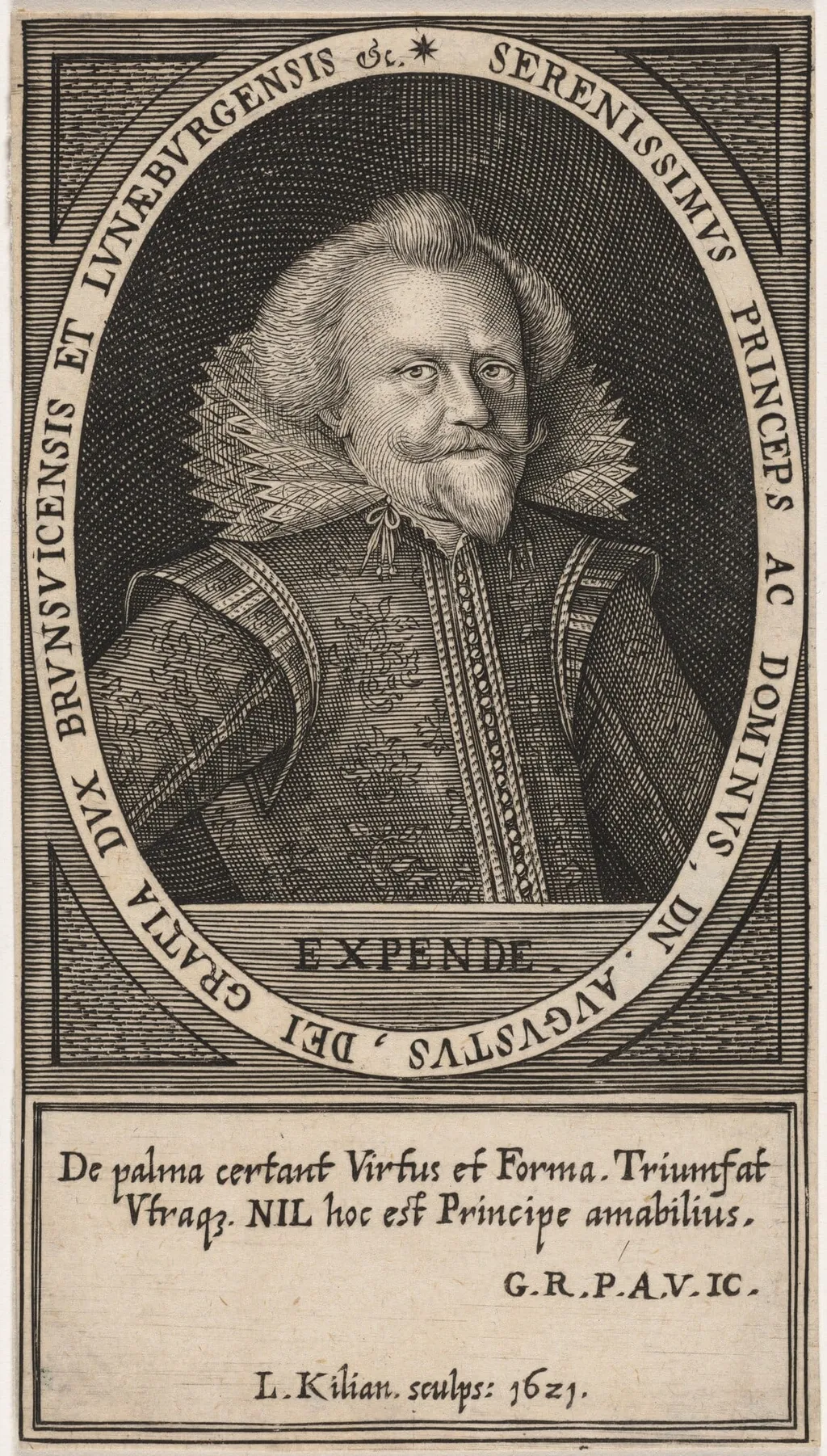
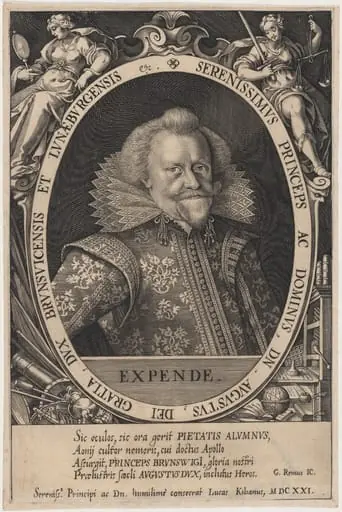
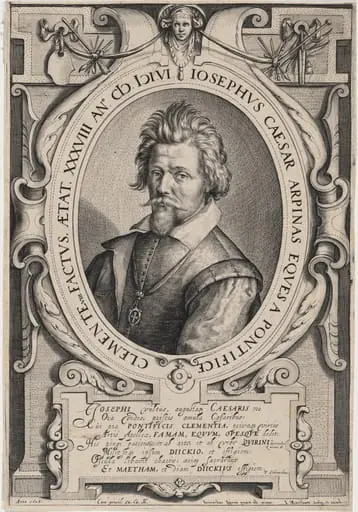
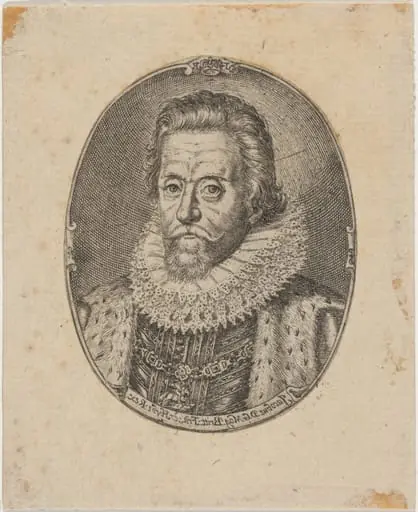
Augustus II, Duke of Brunswick is an ink print by the Baroque artist Lucas Kilian. It dates from 1621 and is held in the collection of the National Gallery of Art.
About this work
Overview
Lucas Kilian created this 1621 engraving of Augustus II, Duke of Brunswick, in Augsburg, a hub for printmaking in early 17th-century Germany.
Lucas Kilian created this 1621 engraving of Augustus II, Duke of Brunswick, in Augsburg, a hub for printmaking in early 17th-century Germany. Working within the workshop founded by his stepfather, Kilian produced detailed portrait prints for elite patrons. The work is a black-and-white impression, rendered with fine linear technique to capture the duke’s likeness with precision and formality, typical of the period’s demand for authoritative portraiture.
Subject & Meaning
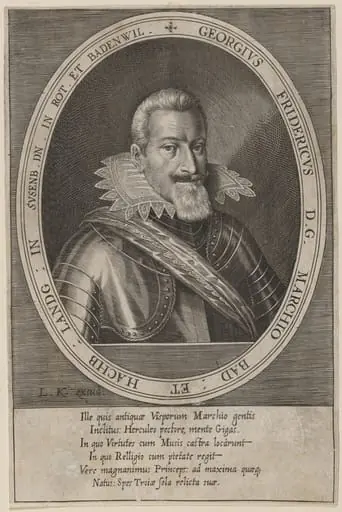
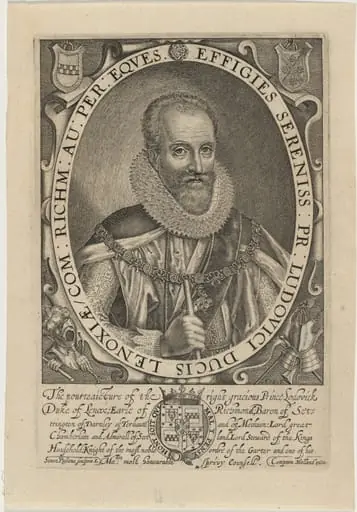
The portrait presents Augustus II in a solemn, dignified pose, emphasizing his status through formal attire and restrained expression. His thick beard, high collar, and ornate ruff reflect contemporary noble dress, while the absence of symbolic objects focuses attention on his personal authority. The Latin inscription encircling the image reinforces his identity and lineage, serving as both identification and a statement of legitimacy within the political culture of the time.
Technique & Style
Kilian employed fine, controlled lines to model form and texture, using cross-hatching to suggest the weight of fabric and the contours of the face. The engraving’s monochrome palette enhances clarity and detail, characteristic of the Augsburg school’s emphasis on precision. The circular frame and decorative border elevate the composition, aligning it with the tradition of engraved portraits meant for dissemination among educated and aristocratic audiences.
History & Provenance
Created in Augsburg, the print emerged from a well-established workshop network specializing in book illustrations and portrait series. Kilian’s association with his stepfather’s studio ensured access to patrons and distribution channels. Though specific early ownership records are sparse, such engravings were commonly collected by nobility and scholars, circulating as visual records of political figures across German-speaking territories.
Context
In the early 1600s, Augsburg was a leading center for print production, rivaling Nuremberg and Frankfurt. Engravings like this served not only as likenesses but as tools of political representation, especially during the volatile years preceding the Thirty Years’ War. The demand for such portraits reflected a growing culture of visual documentation among the ruling classes, where image and lineage were closely intertwined.
Legacy
Kilian’s engraving exemplifies the technical refinement of German printmaking at its peak. While not widely reproduced in later centuries, it remains a representative example of how portraiture functioned as a medium of status and memory. Its survival in institutional collections underscores its role in preserving the visual identity of minor German nobility during a transformative era in European history.
Artist & collection
Artist
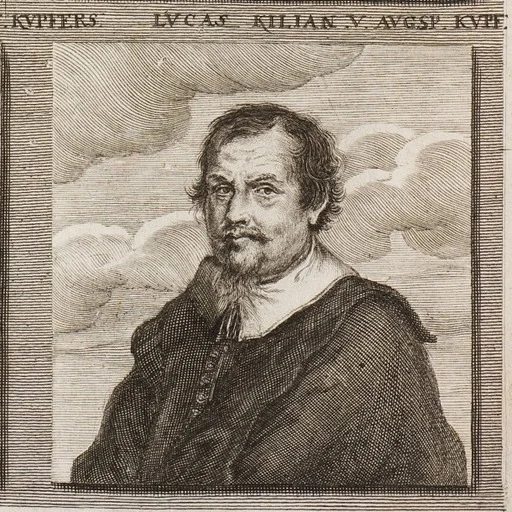
Lucas Kilian (Lucas Kilianus Augustanus; 1579–1637) was a German engraver and etcher from the Kilian family of engravers in Augsburg.