Artwork
활호자 김수규 산수도 조선|活毫子 金壽奎 山水圖 朝鮮|Rainy Landscape
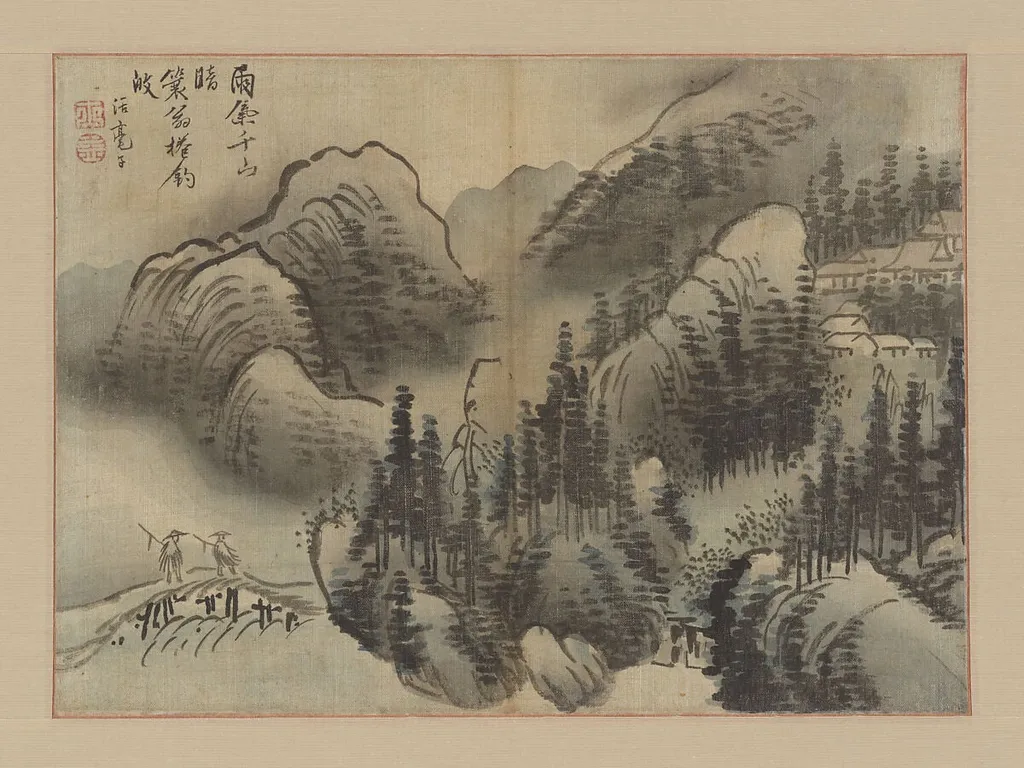
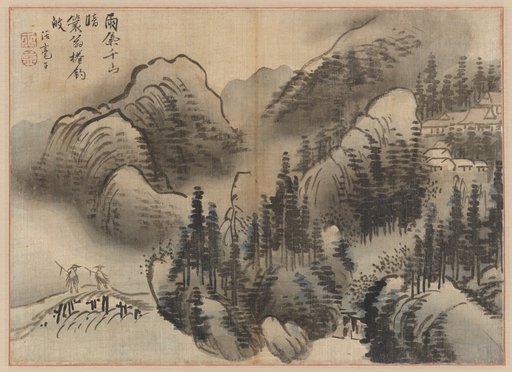
활호자 김수규 산수도 조선|活毫子 金壽奎 山水圖 朝鮮|Rainy Landscape is an ink painting by the Korean Minhwa artist Kim Su-gyu. It dates from 1783 and is held in the collection of the Metropolitan Museum of Art.
About this work
Technique & Style
The painting’s formal qualities include restrained brushwork, subtle gradations of tone, and a composition that emphasizes the verticality of the scroll.
The work titled 'Rainy Landscape' (1783) is an album leaf painted in ink and polychrome on bast‑fiber paper and mounted as a hanging scroll; this support format was typical for Korean scholarly paintings of the period. Executed by Kim Su‑gyu, the piece belongs to the landscape genre and portrays a stylized mountain, reflecting the ink‑wash aesthetic and compositional balance characteristic of 18th‑century Korean art. The painting’s formal qualities include restrained brushwork, subtle gradations of tone, and a composition that emphasizes the verticality of the scroll. It is part of the Metropolitan Museum of Art collection.
History & Provenance
The album leaf titled Rainy Landscape by Kim Su-gyu, dated 1783, is held in the collection of the Metropolitan Museum of Art. The work, classified as a landscape painting depicting mountains, is executed in ink and color on bast fiber and mounted as a hanging scroll. While the sources confirm its current location at the Metropolitan Museum of Art in New York, they do not provide a specific inventory or accession number for the piece.
Furthermore, the available documentation does not list any exhibition history or past display records for this specific artwork, limiting the historical record to its creation date and current institutional custody.
Context
Kim Su-gyu’s 1783 ink and color on bast‑fiber album leaf, titled ‘Rainy Landscape’ (활호자 김수규 산수도 조선·활호자 금수궤 산수도), is classified as a Korean landscape painting and is held in the Metropolitan Museum of Art. The work depicts a mountain, a motif that scholars use to place the piece within the late Joseon literati tradition and to illustrate the artist’s broader engagement with contemporary landscape aesthetics. Its inclusion in major collections underscores its recognized significance in the history of Korean painting.
Legacy
The painting known as 활호자 김수규 산수도 (Rainy Landscape) has come to symbolize the mature phase of Korean monochrome landscape art. After its creation in 1783, the work entered the collection of the Metropolitan Museum of Art, where its status as a landscape painting depicting a mountain has been highlighted in catalogues and exhibitions. This institutional presence has reinforced scholarly recognition of Kim Su‑gyu’s contribution to the genre and has inspired later artists to explore similar atmospheric treatments of nature.
Consequently, the piece is frequently cited in studies of 18th‑century Korean painting as a benchmark for compositional balance and ink technique.
Overview
Kim Su-gyu's Rainy Landscape, created in 1783, is a Korean painting rendered in ink and color on bast fiber. Originally an album leaf, it has since been mounted as a hanging scroll. The work captures a serene, misty mountain vista, characterized by a subdued palette and a sense of quietude. It exemplifies landscape painting from the late Joseon dynasty, reflecting artistic trends of its period.
Subject & Meaning
The painting presents a solitary mountain scene enveloped in mist and rain. Soft gray washes define the atmospheric precipitation, while pale blue-green tones articulate the trees, suggesting a verdant yet damp environment. A small red bridge, positioned at the lower edge, provides the sole vibrant accent within an otherwise muted composition. This element draws the viewer's eye, contrasting with the pervasive quiet and wetness of the landscape.
Artist & collection

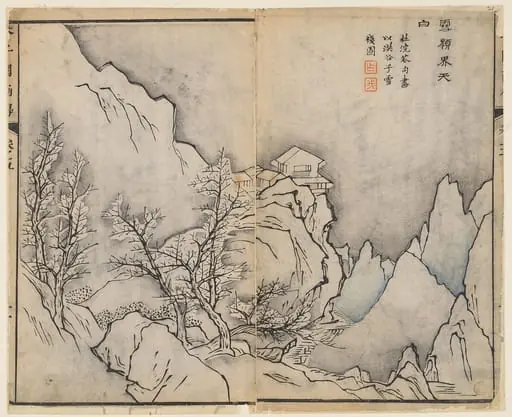
- 清 王槩 設計,李漁出版 芥子園畫傳 版本|Snowy Peaks Touching the Heavens, in the manner of Snow-covered Inn by Jing Hao (active ca. 870–ca. 930), from the Mustard Seed Garden Manual of Painting
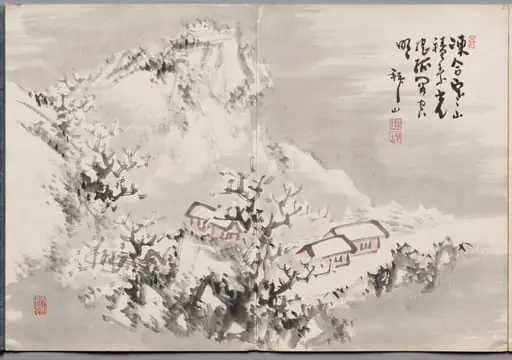
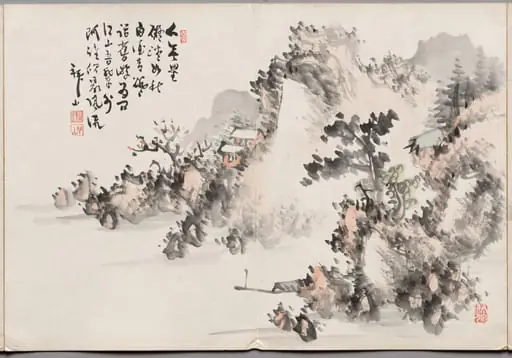 Painting Eight from Album of Paintings by Haizan
 Painting Thirteen from Album of Paintings by Haizan
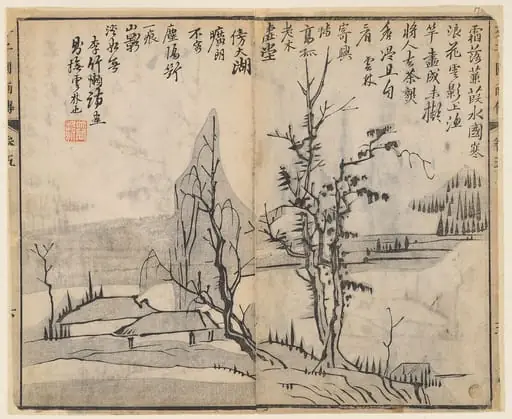 清 王槩 畫圖、李漁出版 《芥子園畫傳》 木版畫|Page from the Mustard Seed Garden Manual of Painting
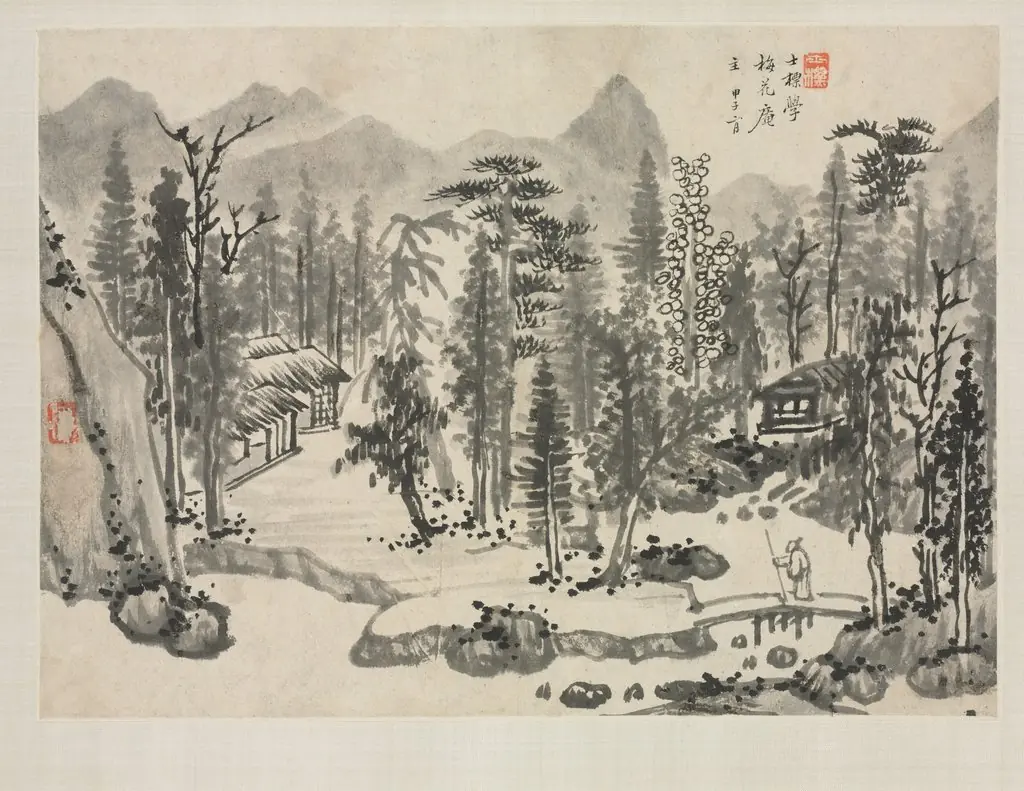 Landscape Album in Various Styles: Landscape after Wu Zhen
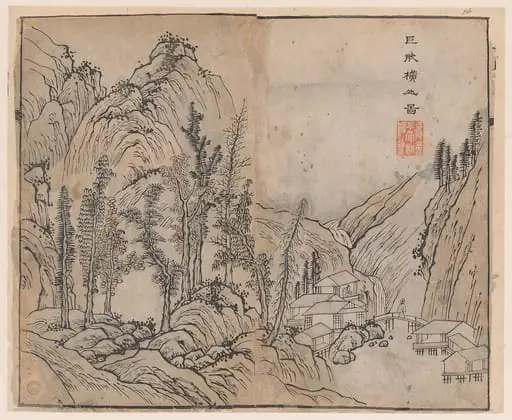 清 王槩 設計,李漁出版 芥子園畫傳 版本|Mt. Heng, after Juran (active ca. 960–965), from the Mustard Seed Garden Manual of Painting
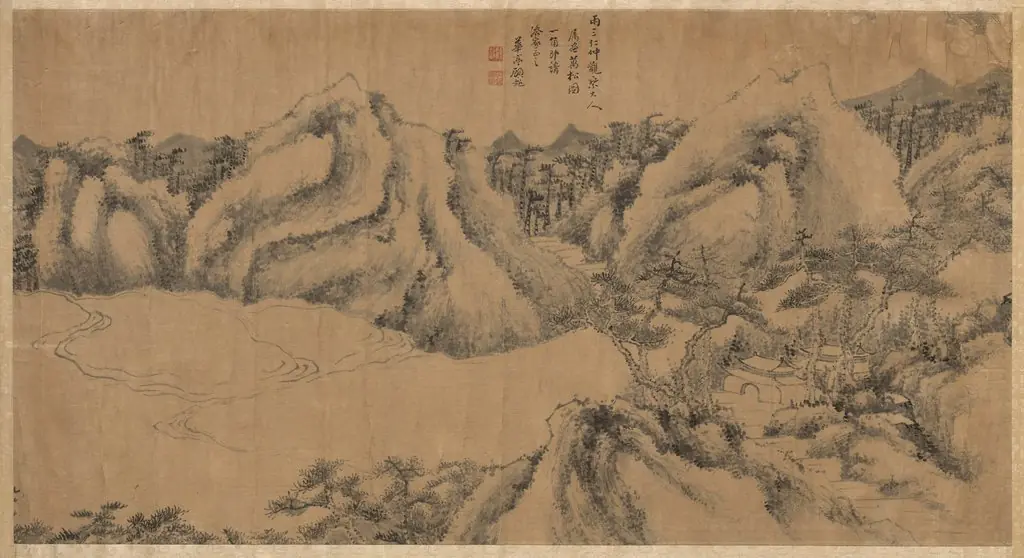 Pine-shaded Monastery on a Cloudy Mountain
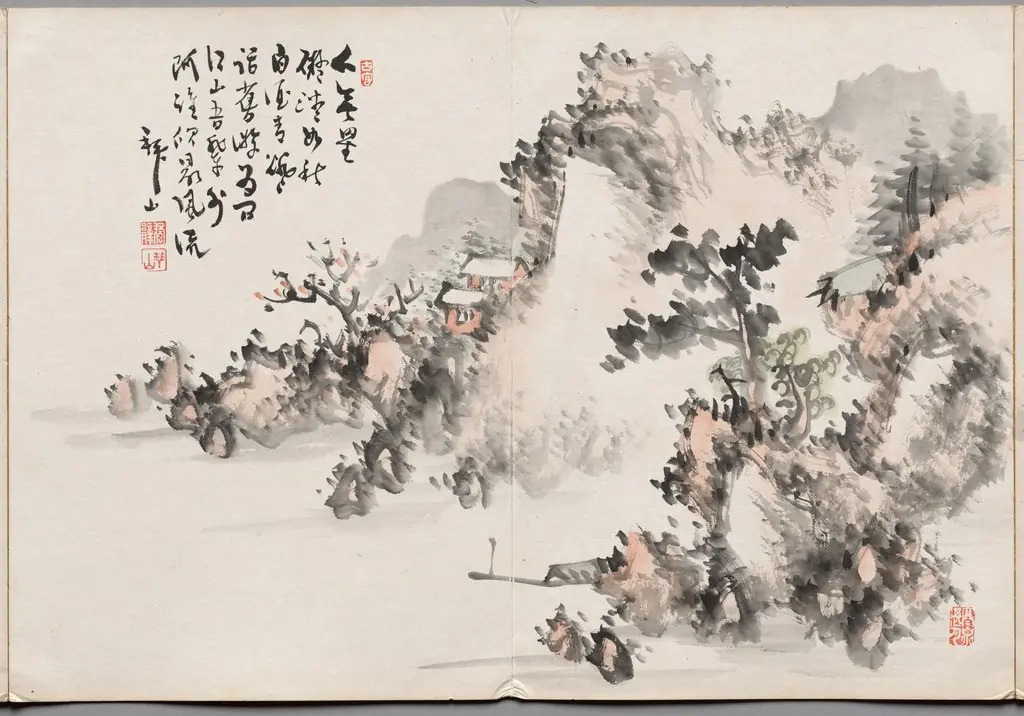 Painting Eight from Album of Paintings by Haizan
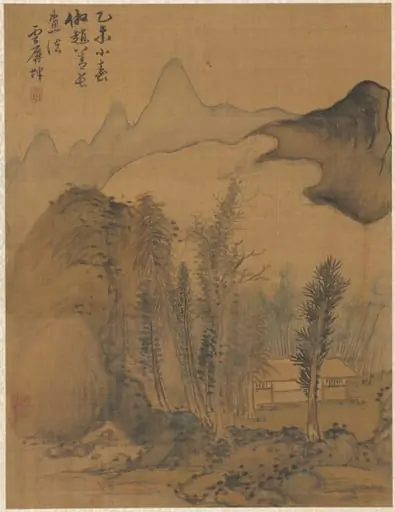 Landscape in the Style of Chao Yuan
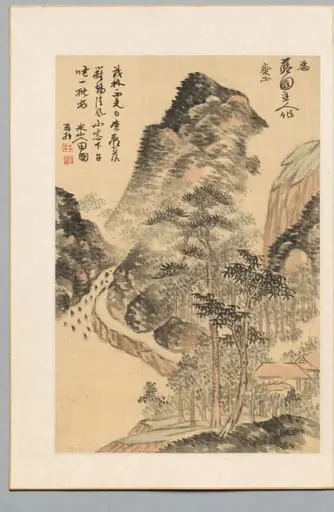 Short Nap on a Long Summer Day
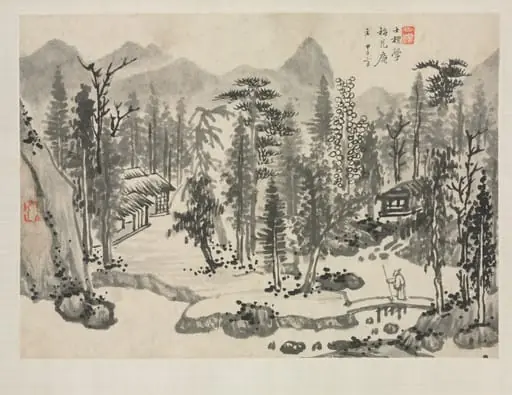 Landscape Album in Various Styles: Landscape after Wu Zhen
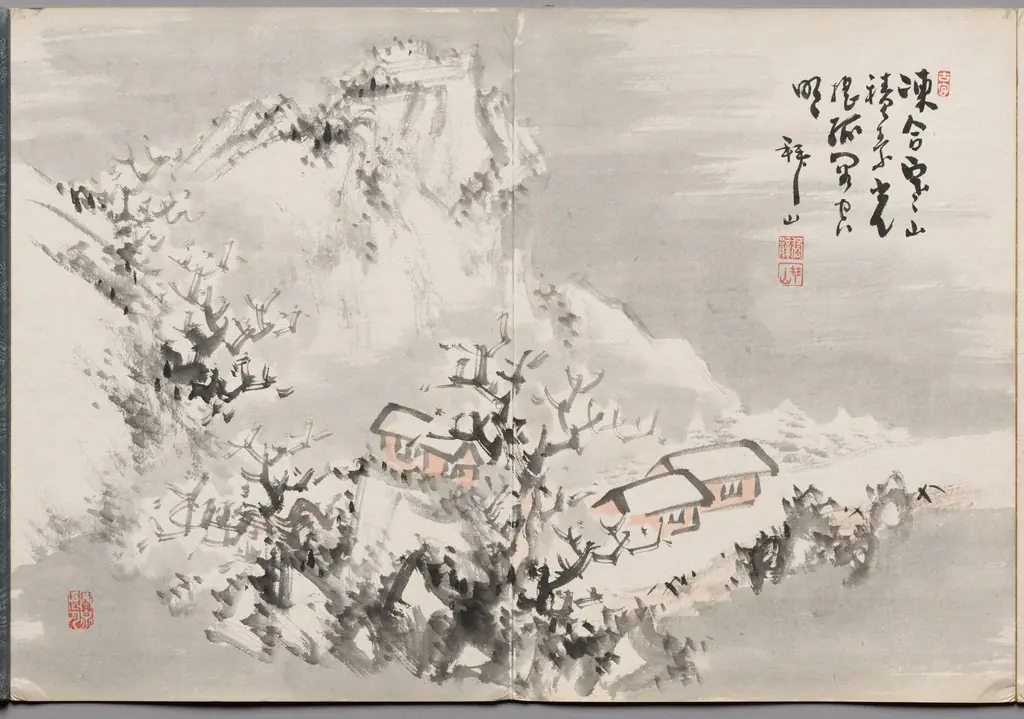 Painting Thirteen from Album of Paintings by Haizan