Artwork
Dancing Couple in the Snow [reverse]
![Dancing Couple in the Snow [reverse], by Ernst Ludwig Kirchner, oil, 1928](https://artifactworldgallery.com/img/ernst-ludwig-kirchner--dancing-couple-in-the-snow-reverse--87ca007d7c05b553-w1024.webp)
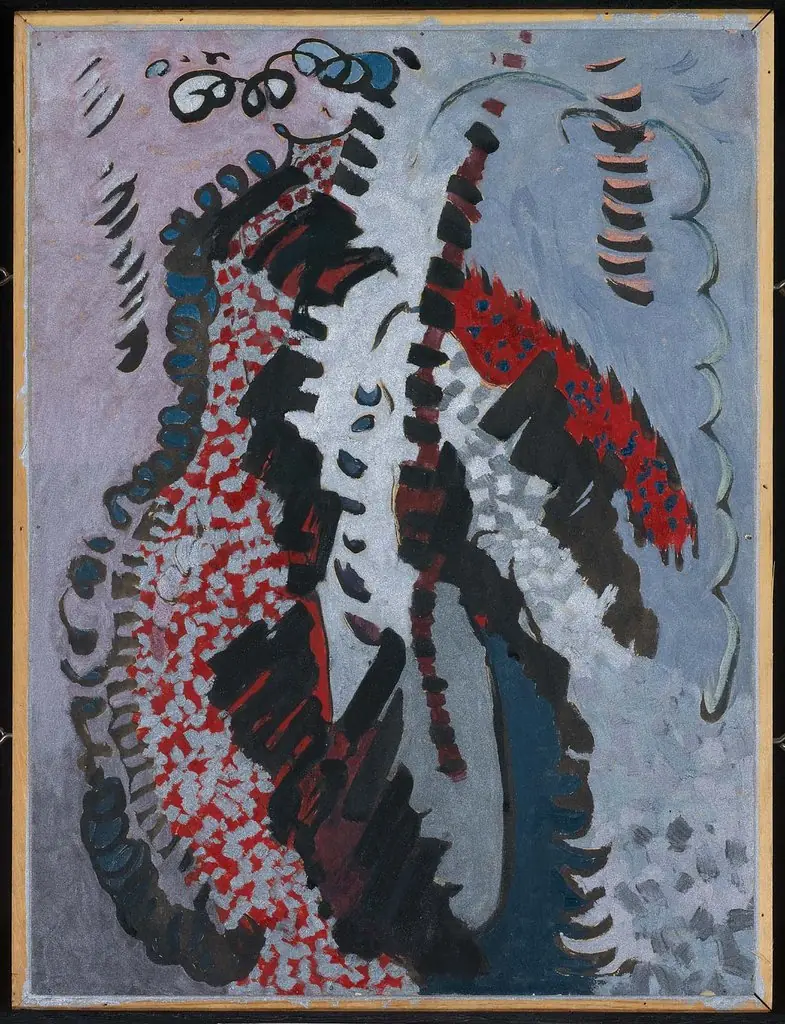
Dancing Couple in the Snow [reverse] is an oil painting by Ernst Ludwig Kirchner. It dates from 1928 and is held in the collection of the National Gallery of Art. Dancing Couple in the Snow is an oil on canvas painting depicting a man and woman in a dynamic, abstracted dance.
About this work
Their bodies are outlined in bold colors, black, maroon, and ice blue.
This painting shows a man and woman dancing in the snow. Their bodies are outlined in bold colors, black, maroon, and ice blue. The background is jagged and sharp, like broken glass.
Kirchner painted this in Germany in 1928-29. The couple’s bodies tilt and twist, making the dance feel alive. Their skin looks pale pink against the cold blue.
Look for the way Kirchner uses color to push the figures forward. Check out a Kirchner, Ernst Ludwig painting next.
Overview
Dancing Couple in the Snow [reverse] is an oil on canvas painting by the German Expressionist artist Ernst Ludwig Kirchner, created in 1928. Measuring 56 x 90 cm (22 1/16 x 35 7/16 in.), the work is held in the collection of the National Gallery of Art in Washington, D.C., where it is displayed in the East Building Mezzanine, Gallery E217. The painting exemplifies Kirchner's mature style, combining the distorted figuration and bold color that defined his contribution to German Expressionism with a lyrical, intimate subject. Its bracketed title, [reverse], indicates that the work was painted on the reverse side of an existing canvas, a practice Kirchner occasionally employed. The painting entered the National Gallery of Art in 1989 as a partial and promised gift from Ruth Cole Kainen and Jacob Kainen of Chevy Chase, Maryland, with the gift completed in 2012; it bears the accession number 1989.60.1.b.
Subject & Meaning
The painting depicts two stylized human figures locked in an embrace that suggests dance or movement. A taller figure with short dark hair holds a smaller figure with light hair; both have pale pink skin, simplified facial features, and closed or downcast eyes with red lips. The taller figure wears a sleeveless blue garment, while the smaller figure wears blue patterned pants. Their limbs intertwine in a vertical composition that conveys physical intimacy and motion. The background is pale with diagonal strokes of blue, purple, and red that suggest falling snow or abstract motion; no ground plane or landscape is visible. The limited palette of pink, blue, and red, with touches of purple and orange, reinforces the wintry atmosphere while maintaining emotional intensity. Scholarly interpretation has suggested that the seemingly carefree scene may carry psychological complexity. The figures' embrace can appear forced, and the angular shapes and disharmonious color choices create tension beneath the surface whimsy. This ambiguity raises questions about whether the dance celebrates newfound freedoms or comments on the superficiality of pleasure masking deeper societal problems, reflecting Kirchner's ongoing interest in the psychological state of modern life.
Technique & Style
Kirchner executed the work in oil on canvas, employing a technique characterized by loose, expressive brushwork with visible strokes throughout the surface. Dark outlines define the forms, while light remains even and diffuse with minimal shadows rendered as darker outlines rather than modeled shading. The palette is deliberately limited, concentrating on pink, blue, and red with touches of purple and orange. The finish is matte, and the surface shows craquelure and cracking consistent with the painting's age. The handling of paint demonstrates Kirchner's departure from academic naturalism toward a more direct, emotionally charged approach. The absence of traditional perspective or a ground plane, combined with the abstracted treatment of the background, places the work firmly within the Expressionist idiom. The wooden strip frame surrounding the canvas includes a paper label at the top bearing handwritten text. When framed, the work measures 83.2 x 113 x 6.3 cm (32 3/4 x 44 1/2 x 2 1/2 in.).
History & Provenance
The painting remained in Kirchner's possession until his death in 1938, passing thereafter to his estate. It was subsequently handled by Galerie Roman Norbert Ketterer in Campione bei Lugano, Switzerland. Ruth Cole Kainen (1922-2009) and Jacob Kainen (1909-2001) of Chevy Chase, Maryland, purchased the work from this gallery. In 1989, they made a partial and promised gift of the painting to the National Gallery of Art, with the gift completed in 2012. The work has been cited in scholarly literature since at least 1968, when Donald E. Gordon included it as number 923 in his catalogue raisonné of Kirchner's work. The painting was exhibited in 2019-2020 at the Neue Galerie New York in the exhibition Ernst Ludwig Kirchner (Neue), where it appeared as an unnumbered catalogue entry.
Context
Ernst Ludwig Kirchner was a founding member of Die Brücke (The Bridge), the seminal German Expressionist group established in Dresden in 1905. Along with Fritz Bleyl, Karl Schmidt-Rottluff, and Erich Heckel, Kirchner sought to forge a new mode of artistic expression that would bridge past traditions and contemporary innovation. His work was branded degenerate by the Nazis in 1933, and in 1937 more than 600 of his works were sold or destroyed. Kirchner's personal history, including his voluntary military service in World War I, subsequent breakdown and discharge, and ongoing struggles with dependency and mental health, profoundly shaped his artistic output. Dancing Couple in the Snow [reverse] belongs to a period following his wartime trauma and sanatorium stays, when he had settled in Switzerland. The work reflects the broader trajectory of German Expressionism as it navigated the post-war Weimar Republic era, an environment of political instability and social transformation. Kirchner's continued use of distorted figuration and jarring color during this period served as a form of social commentary on pre-war, wartime, and post-war German culture, filtered through an introspective lens.
Legacy
The painting's place in Kirchner's oeuvre and in the broader history of German Expressionism has been secured through its inclusion in major institutional collections and scholarly catalogues. Its presence in the National Gallery of Art, one of the premier museums in the United States, ensures ongoing public access and scholarly attention. The work has entered the digital sphere through its availability on Google Arts & Culture and Wikimedia Commons, where it is designated under a Creative Commons CC0 1.0 Universal Public Domain Dedication, facilitating broad dissemination and study. The 2019-2020 exhibition at the Neue Galerie New York, a museum dedicated to German and Austrian art of the early twentieth century, reaffirmed its significance within Kirchner's body of work. The painting continues to serve as a point of reference for understanding the evolution of Kirchner's style from the raw urban energy of his Brücke years to the more contemplative, yet still psychologically complex, works of his Swiss period. Its accessibility in both physical and digital forms supports ongoing critical engagement with the intersections of personal trauma, social commentary, and formal innovation in Kirchner's art.
Own this work as a print
Artist & collection
Artist
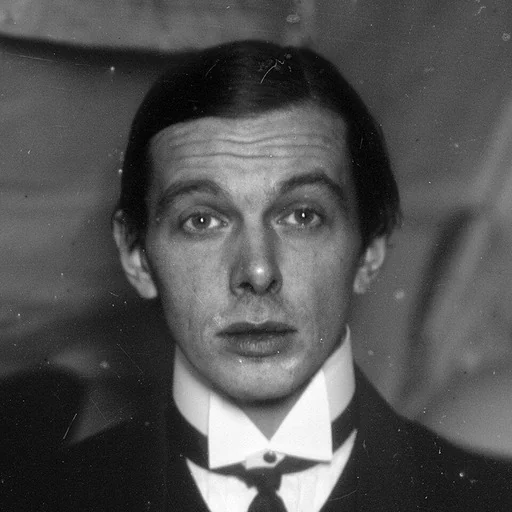
Ernst Ludwig Kirchner (6 May 1880 – 15 June 1938) was a German expressionist painter and printmaker.

![Dance Hall Bellevue [obverse], by Ernst Ludwig Kirchner](https://artifactworldgallery.com/img/ernst-ludwig-kirchner--dance-hall-bellevue-obverse--d1e14aac4297c69e-w320.webp)
![Nude Figure [reverse], by Ernst Ludwig Kirchner](https://artifactworldgallery.com/img/ernst-ludwig-kirchner--nude-figure-reverse--4b135f0364753e98-w320.webp)
![Two Nudes [obverse], by Ernst Ludwig Kirchner](https://artifactworldgallery.com/img/ernst-ludwig-kirchner--two-nudes-obverse--eb3914183f0bc96d-w320.webp)