Artwork
Untitled
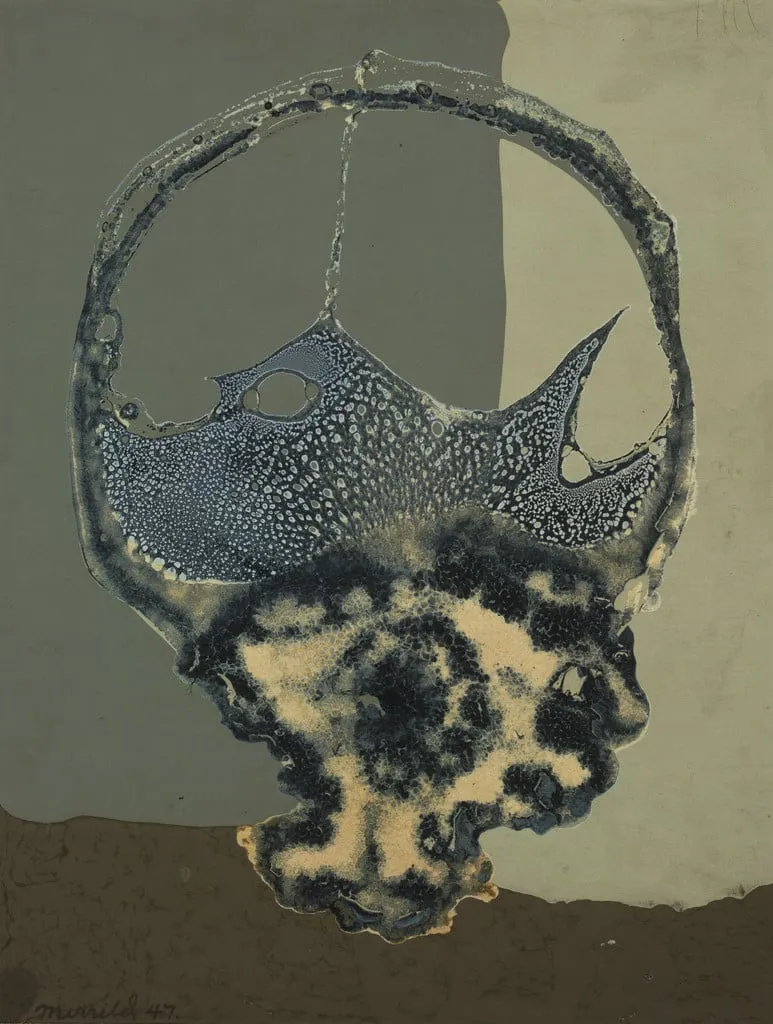
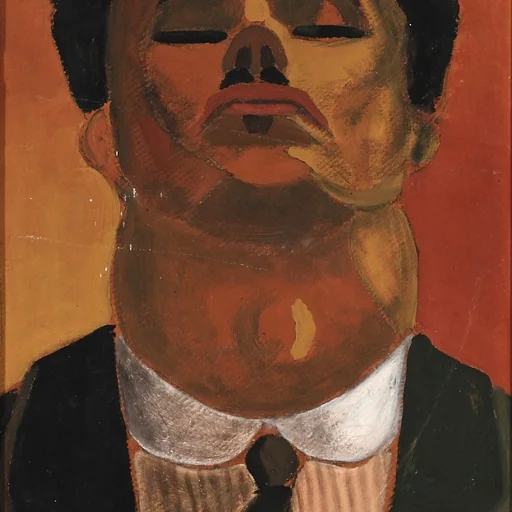
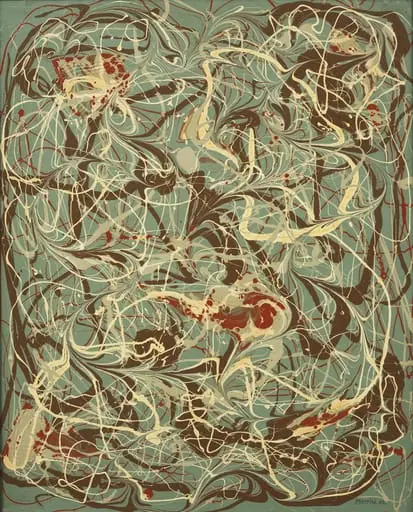
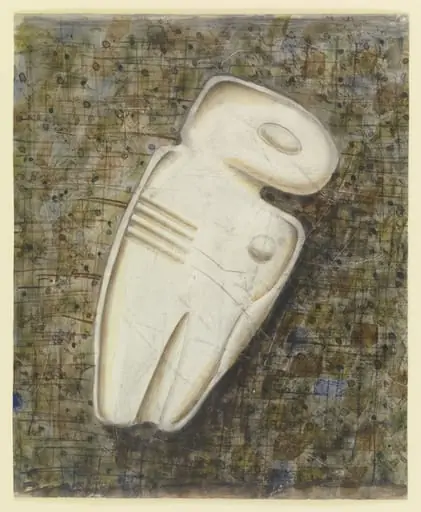
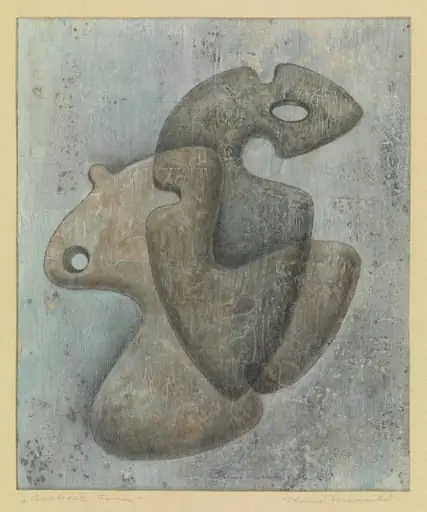
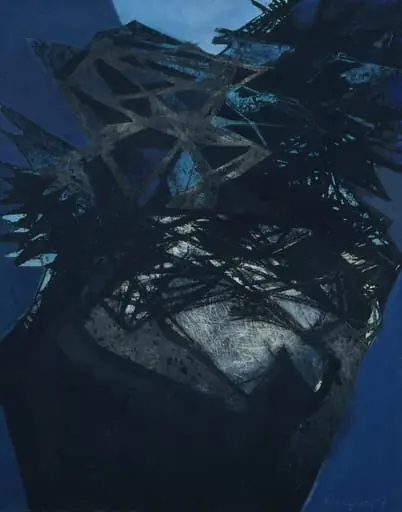
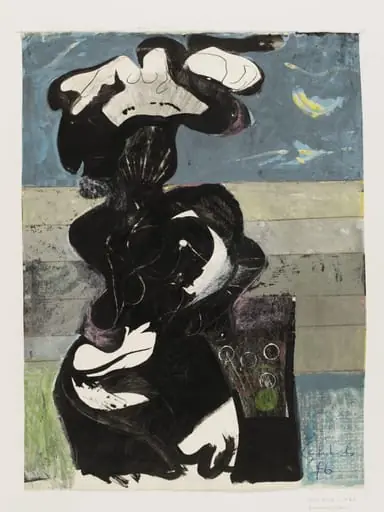
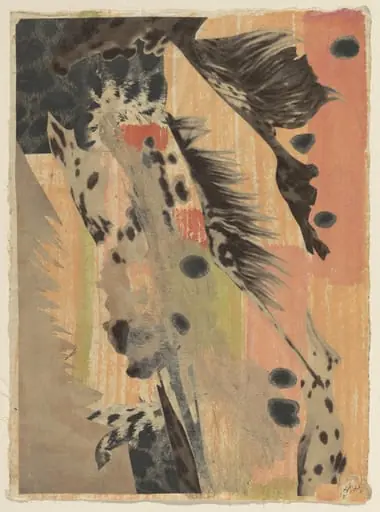
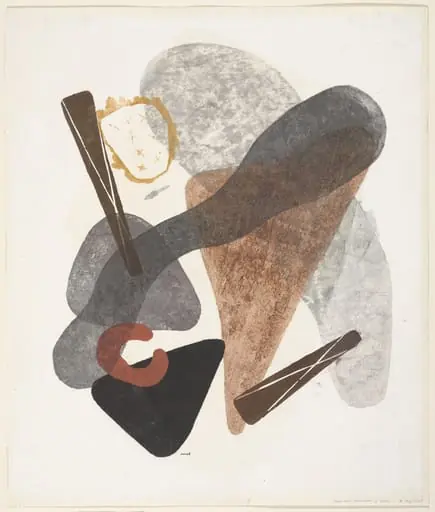
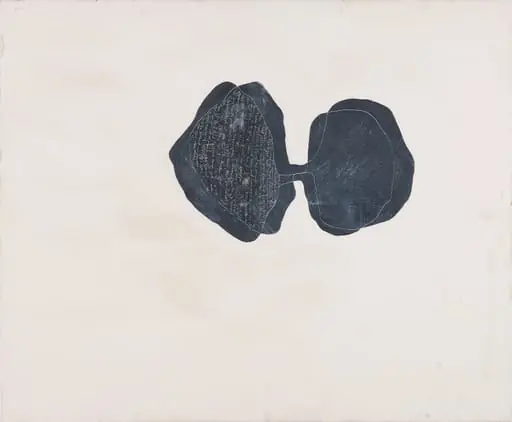
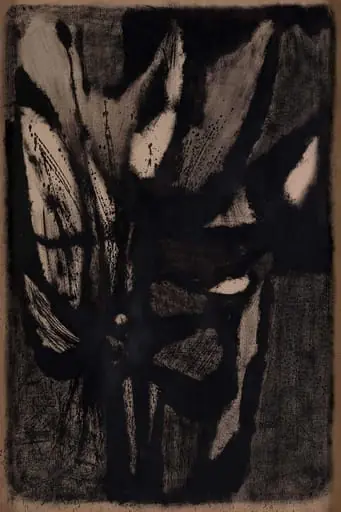
Untitled is an oil painting by the Abstract Expressionist artist Knud Merrild. It dates from 1947 and is held in the collection of the Museum of Modern Art.
About this work
Overview
Created in 1947, this oil painting on canvas over board is attributed to Danish artist Knud Merrild. It resides in the collection of The Museum of Modern Art in New York. The work is abstract in form, eschewing literal representation in favor of a visceral, distorted visage rendered with heavy impasto. Its materiality and unsettling imagery distinguish it within Merrild’s postwar output.
Subject & Meaning
The central form suggests a hybrid countenance, part human, part predatory creature, with a gaping, toothed maw and a hollow, jagged eye socket.
The central form suggests a hybrid countenance, part human, part predatory creature, with a gaping, toothed maw and a hollow, jagged eye socket. The rough, scale-like texture of the skin evokes decay or metamorphosis, blurring boundaries between organic and inorganic. The absence of context or environment amplifies its psychological unease, suggesting internal turmoil rather than external narrative.
Technique & Style
Merrild applied oil paint thickly, building the face through layered impasto that creates a tactile, almost sculptural surface. The texture mimics weathered bark or cracked hide, enhancing the figure’s unnatural presence. Colors are muted, dominated by dull greens and earth tones, with minimal contrast, reinforcing the work’s somber, introspective mood.
History & Provenance
Painted in 1947, the work entered The Museum of Modern Art’s collection shortly after its creation, likely through direct acquisition or donation. Merrild, a Danish expatriate who spent time in the U.S., maintained ties with American modernist circles. The painting’s early acquisition suggests recognition of its emotional intensity within postwar American art discourse.
Context
Emerging in the aftermath of World War II, the piece reflects broader artistic preoccupations with trauma, identity, and the fragmentation of the self. While not overtly political, its grotesque imagery resonates with contemporaneous European existential and surrealist currents, where the human form became a vessel for psychological and moral dislocation.
Legacy
Though not widely exhibited, the painting remains a significant example of Merrild’s late style and the expressive potential of abstraction in mid-century American collections. Its raw materiality and unsettling iconography continue to inform discussions on how postwar artists used the body to convey inner states beyond traditional representation.
Artist & collection