Artwork
明 魏之克(魏克) 四時倣古山水圖 卷|Landscape of the four seasons in the styles of old masters
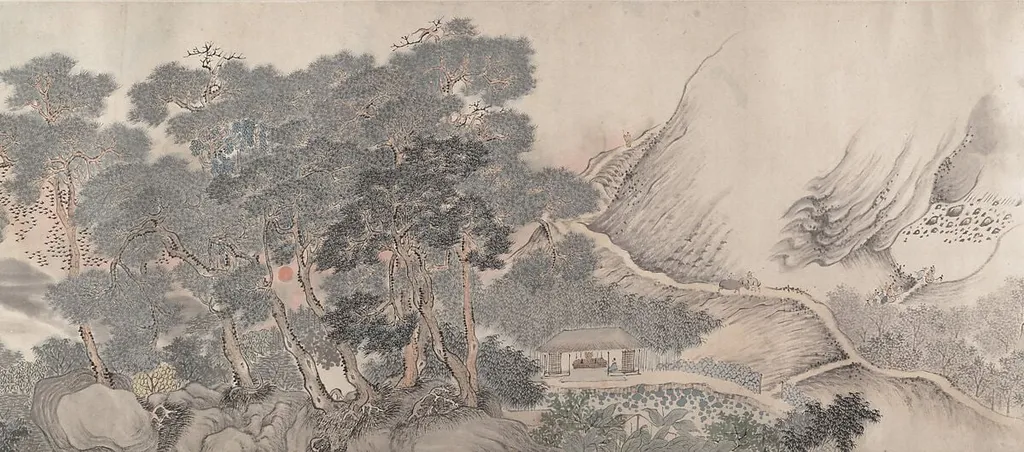
明 魏之克(魏克) 四時倣古山水圖 卷|Landscape of the four seasons in the styles of old masters is an ink painting by the Baroque artist Wei Zhike. It dates from 1635 and is held in the collection of the Metropolitan Museum of Art.
About this work
Subject & Meaning
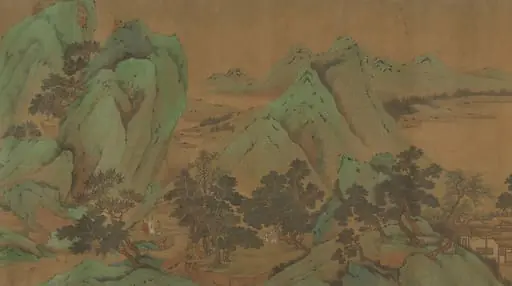
Created in 1635 by Wei Zhike, this handscroll depicts a continuous landscape featuring mountains, rendered in ink and color on paper.
Created in 1635 by Wei Zhike, this handscroll depicts a continuous landscape featuring mountains, rendered in ink and color on paper. As indicated by its title, Landscape of the Four Seasons in the Styles of Old Masters, the work's primary subject is the cyclical progression of the four seasons. The iconography relies on traditional mountain scenery to represent these temporal shifts.
The piece functions as a stylistic homage, explicitly engaging with the artistic traditions of previous masters rather than documenting a specific geographic location. By synthesizing these historical styles within a single scroll, the painting represents a scholarly dialogue with art history, celebrating the enduring conventions of Chinese landscape genre while marking the passage of time through seasonal variation.
Technique & Style
Executed in 1635, this work is a handscroll created with ink and color applied to a paper support. As a landscape painting, the piece depicts mountainous scenery, adhering to the genre conventions of its time. The title indicates the composition is structured around the four seasons, rendered by imitating the styles of earlier masters.
While the specific handling of the brush or the current physical condition of the paper is not detailed in the available records, the formal approach is defined by this deliberate emulation of historical precedents within a continuous scroll format. The combination of ink and pigment on paper allows for the varied tonal ranges required to distinguish the seasonal shifts and stylistic homages inherent in the subject matter.
History & Provenance
The handscroll titled 四時倣古山水圖 (Landscape of the four seasons in the styles of old masters) was painted by Wei Zhike in 1635 in China, employing ink and polychrome on paper. Classified as a landscape painting, it depicts a mountainous scene characteristic of the genre. The work dates to 1635, as recorded in its inception metadata.
It is currently part of the collection of the Metropolitan Museum of Art, which lists the piece in its holdings and records its provenance as originating in China. No documentation of a specific commission survives; the painting’s creation history is documented only through its artist, date, and subsequent inclusion in the museum’s collection.
The handscroll Landscape of the Four Seasons in the Styles of Old Masters by Wei Zhike (Wei Ke), dated 1635, is held in the collection of the Metropolitan Museum of Art, where it is classified as a painting. No specific inventory or accession number is recorded in the available sources. Likewise, no exhibition history is documented in the materials consulted; consequently, any prior loans, displays, or catalog appearances cannot be confirmed from the present evidence.
Legacy
The handscroll titled "Landscape of the Four Seasons in the Styles of Old Masters" (1635) by Wei Zhike is recognized as a significant example of 17th‑century Chinese landscape painting, noted for its synthesis of classical mountain motifs and ink‑color techniques. Its inclusion in the collection of the Metropolitan Museum of Art underscores its scholarly and curatorial importance, reflecting a lasting reputation that extends beyond its original creation. The work continues to inform studies of early Qing visual culture and is frequently referenced in exhibitions and academic discussions of Chinese landscape traditions, cementing its legacy within both Chinese and international art historical narratives.
Overview
Landscape of the Four Seasons in the Styles of Old Masters is a handscroll painting created by Wei Zhike in 1635. Executed with ink and color on paper, this work presents a continuous panoramic view of a mountain landscape. The composition unfolds across the scroll, guiding the viewer through the distinct atmospheric qualities and changing flora associated with each of the four seasons, rendered with reference to historical painting traditions.
Context
The handscroll format is central to the viewing experience of this painting. Unlike wall-mounted works, it is designed to be unrolled gradually by the viewer, fostering a personal and contemplative engagement with the artwork. This interactive mode allows for an unfolding narrative, where the observer's movement dictates the pace of discovery.
Such landscape compositions, often featuring mountains, are a cornerstone of Chinese painting, frequently conveying philosophical or poetic narratives.

Artist & collection

- Autumn Mist in the Countryside
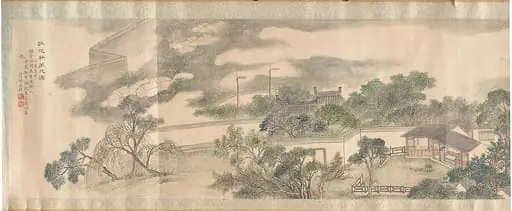 清 楊天壁 敬芝軒第貳圖 卷|Second View of the Studio for Respecting the Fungus of Longevity
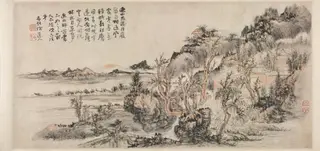 Spring Landscape
 明 佚名 傳文伯仁 山水圖 卷|Landscape
 清 王原祁 輞川圖 卷|Wangchuan Villa
 Untitled
 清 王原祁 江國垂綸圖 卷|Fishing in River Country at Blossom Time
 明/清 佚名 劉松年 偽款 山水人物圖|Garden estate
 Streams and Mountains without End
 明/清 佚名 李遠(僞款) 仿夏珪江山清遠圖 卷|Landscape