Artwork
Untitled
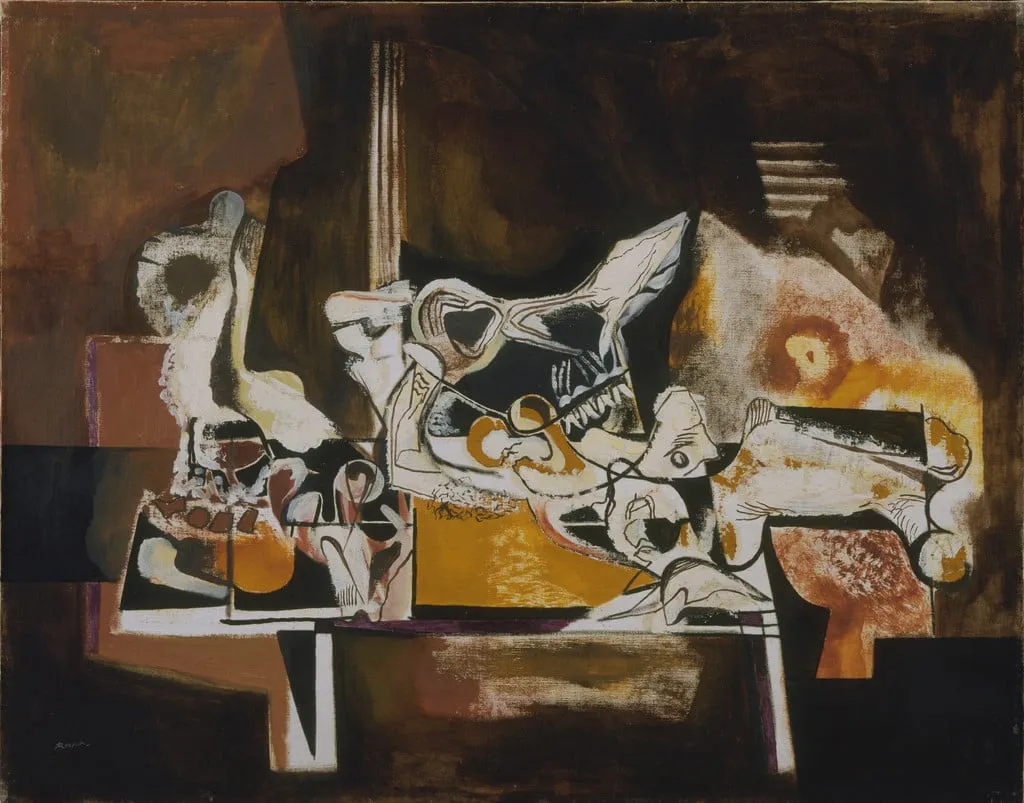
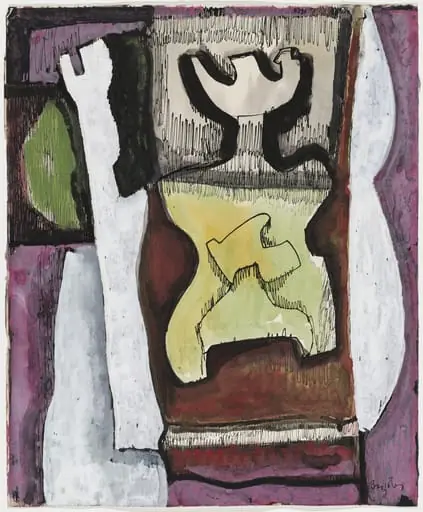
Untitled is an oil painting by the Regionalist artist Kurt Roesch. It dates from 1939 and is held in the collection of the Museum of Modern Art.
About this work
Overview
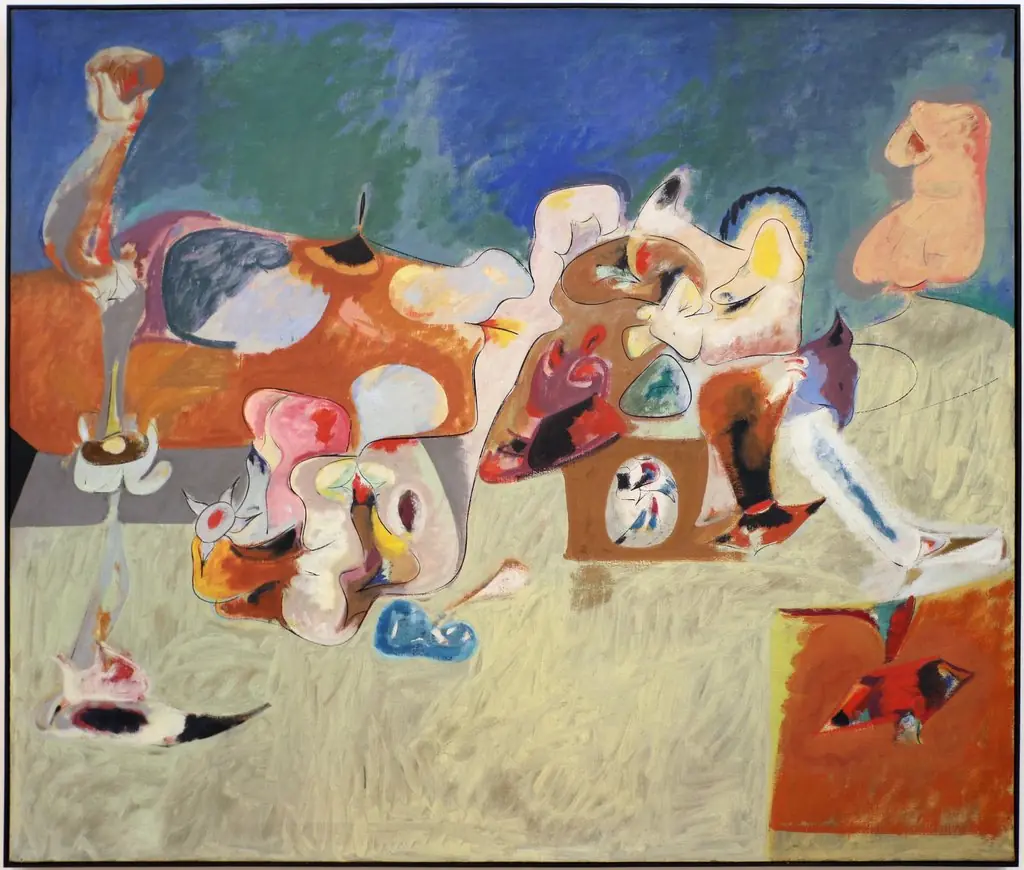
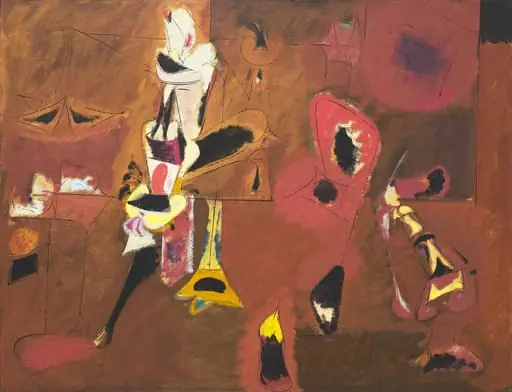
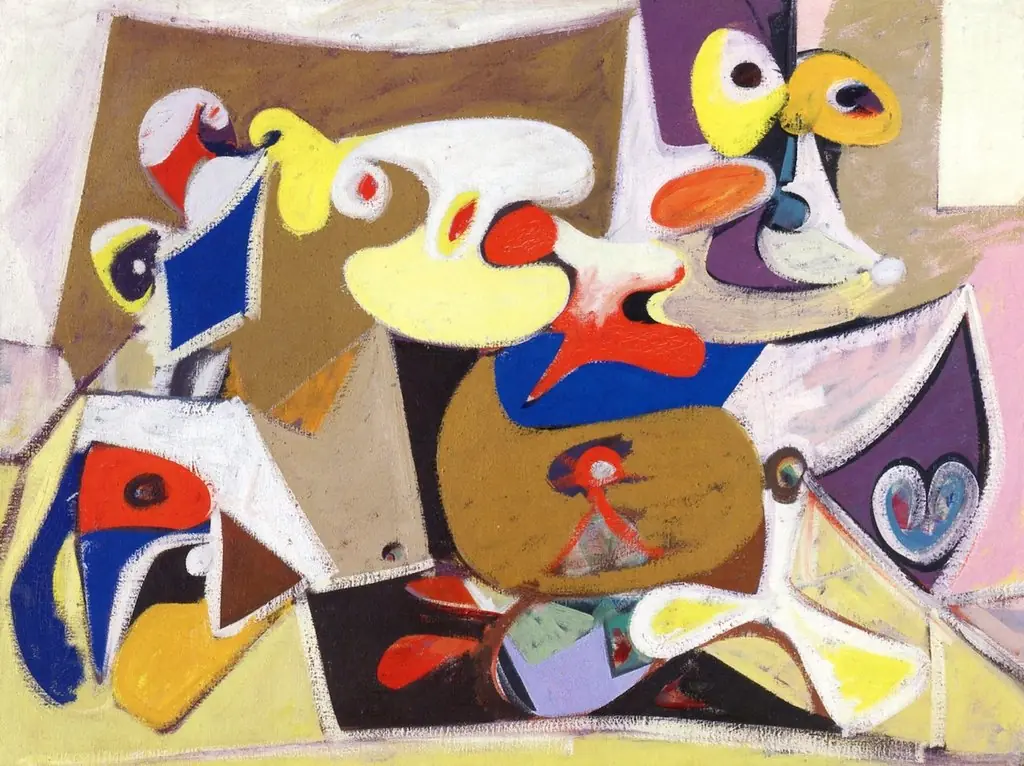
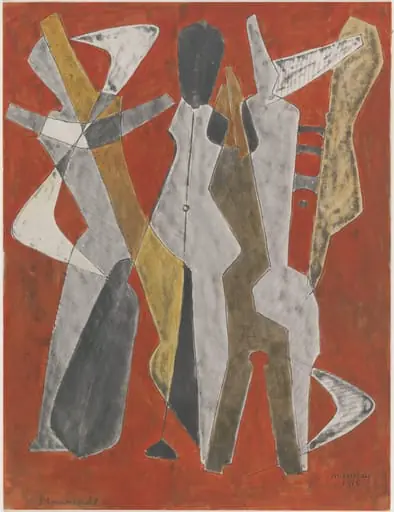
Painted in 1939, this oil on canvas work by Kurt Roesch is a non-representational still life that rejects conventional composition.
Painted in 1939, this oil on canvas work by Kurt Roesch is a non-representational still life that rejects conventional composition. It resides in The Museum of Modern Art’s collection and exemplifies a deliberate departure from realism. The arrangement of objects and figures appears fractured, as if resisting spatial coherence. The painting’s tension arises not from chaos, but from a calculated distortion of form and balance.
Subject & Meaning
The scene suggests a domestic setting, a table with a vase, a bowl, and seated figures, but none are rendered with clarity. The figures seem absorbed or detached, their forms elongated and disjointed. The absence of narrative detail invites interpretation as a meditation on instability, perhaps reflecting the unease of pre-war Europe. Objects and bodies merge into a single, uneasy whole, suggesting psychological rather than literal presence.
Technique & Style
Roesch employs thick, uneven brushwork to build texture and disrupt visual harmony. Colors are muted, ochres, grays, and browns, interrupted by sudden flashes of white and yellow that draw the eye without offering resolution. Forms are distorted through exaggerated angles and compressed space, creating a sense of impending collapse. The impasto technique amplifies the physicality of the paint, reinforcing the painting’s emotional weight.
History & Provenance
Created in 1939, the work entered The Museum of Modern Art’s collection shortly after its completion. Roesch, a German-born artist who emigrated to the United States, produced this piece during a period of personal and political upheaval. While little documentation exists about its early exhibition history, its acquisition by MoMA signals early recognition of its experimental approach within American modernist circles.
Context
Emerging in the late 1930s, the painting reflects broader European modernist tendencies that questioned realism in the face of social fragmentation. Though not aligned with any formal movement, its distortions echo Expressionist and early Surrealist concerns. The work’s unease resonates with the anxieties of its time, rising tensions in Europe, displacement, and the erosion of stable domestic life.
Legacy
Roesch’s Untitled remains a quiet but significant example of American modernist experimentation with form and emotion. It influenced later artists interested in the expressive potential of paint over representational fidelity. While not widely reproduced, its presence in MoMA’s collection ensures its continued study as a case in how abstraction can convey psychological depth without abandoning recognizable subjects.
Artist & collection