Artwork
明 呂紀 鴛鴦芙蓉圖 軸|Mandarin ducks and cotton rose hibiscus
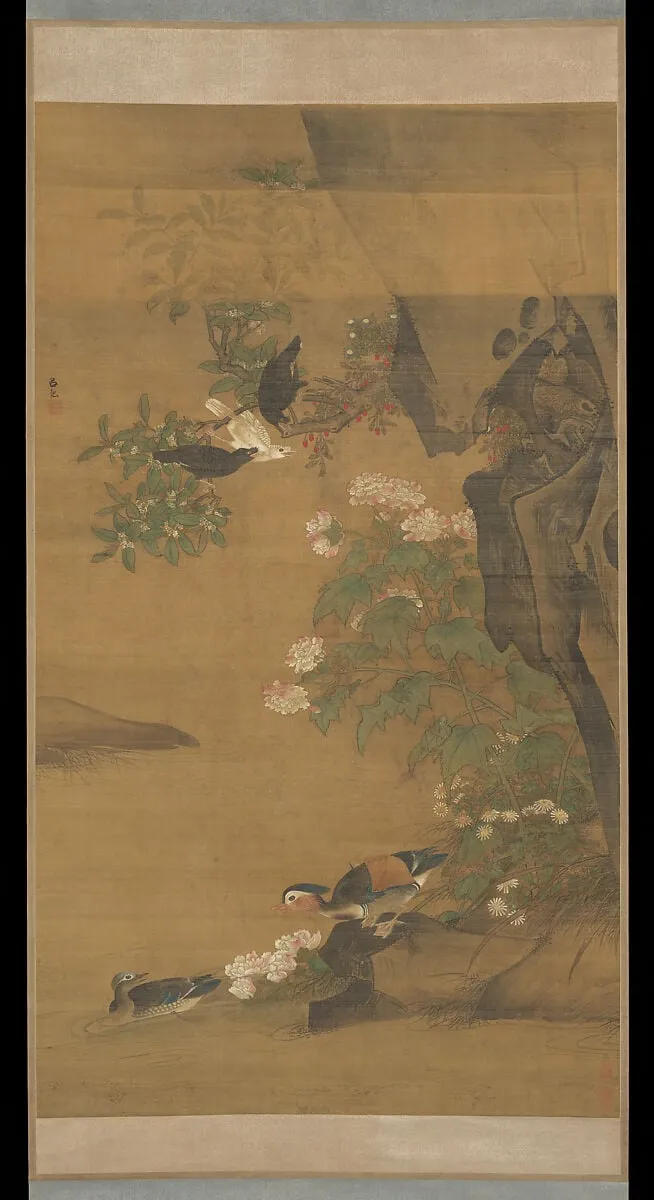
明 呂紀 鴛鴦芙蓉圖 軸|Mandarin ducks and cotton rose hibiscus is an ink painting by the Ming dynasty painting artist Lü Ji. It dates from 1483 and is held in the collection of the Metropolitan Museum of Art.
About this work
Subject & Meaning
The work belongs to the bird-and-flower genre, elevated through symbolic meaning rather than mere naturalistic representation.
The painting depicts mandarin ducks and cotton rose hibiscus (Hibiscus mutabilis), a classic combination in Chinese art. Mandarin ducks symbolize marital fidelity and conjugal bliss, as they mate for life and are inseparable. The cotton rose hibiscus, known as "fúróng" (芙蓉), carries associations with wealth and honor due to its phonetic resemblance to "fúróng" (富榮, prosperity and glory).
Together, these elements form an allegorical composition celebrating harmonious union and auspicious prosperity. The work belongs to the bird-and-flower genre, elevated through symbolic meaning rather than mere naturalistic representation.
Technique & Style
This hanging scroll by Lü Ji is executed in ink and color on silk, a traditional support for Ming-dynasty Chinese court painting. The choice of silk allows for the delicate, layered application of mineral and vegetable pigments that characterize the artist's refined technique. Lü Ji, active in the late 15th century, was renowned for his meticulous bird-and-flower compositions that blend precise observation with symbolic resonance.
The work exemplifies the 'gongbi' (meticulous brush) style: fine, controlled outlines define the forms of the mandarin ducks and cotton rose hibiscus, while subtle color gradations model volume and texture. The balanced composition and naturalistic detail serve an allegorical program, typical of the artist's genre.
History & Provenance
Created in 1483, the hanging scroll "Mandarin Ducks and Cotton Rose Hibiscus" is an allegorical work by the Ming dynasty artist Lü Ji. Executed in ink and color on silk, the piece originates from China and depicts birds, specifically ducks, alongside floral elements. The work is currently held in the collection of the Metropolitan Museum of Art.
While the specific commission details and the chain of ownership prior to its arrival at the museum are not detailed in the available records, the inception date is firmly established as 1483. The painting remains a significant example of Lü Ji's bird-and-flower genre, characterized by its silk medium and hanging scroll format.
Context
The work titled 明 呂紀 鴛鴦芙蓉圖 軸, also known as Mandarin ducks and cotton rose hibiscus, is a 1483 hanging scroll painted in ink and color on silk by Lü Ji. Classified as a painting within the allegory genre, it depicts duck, bird, and flower motifs that were traditionally associated with marital harmony in Chinese visual culture. As part of the Metropolitan Museum of Art’s collection, the scroll illustrates the stylistic conventions of Ming‑dynasty court art and provides insight into the artist’s engagement with contemporary symbolic themes. Its provenance in a major Western museum underscores its significance in the trans‑regional transmission of Chinese painting.
Overview
Mandarin Ducks and Cotton Rose Hibiscus is a hanging scroll executed in 1483 by the Ming dynasty court painter Lü Ji. The work depicts a pair of mandarin ducks floating on a pond beneath a blooming cotton rose hibiscus. Lü Ji employs the meticulous 'boneless' technique combined with fine outline brushwork, characteristic of the Imperial Academy style, to render the plumage and petals with precise detail and vibrant coloration on silk.
The composition balances the fluid movement of the water and birds against the static elegance of the flowering branch. Created during the reign of the Chenghua Emperor, this piece functions as an allegory; in Chinese iconography, mandarin ducks symbolize marital fidelity and conjugal love, while the cotton rose represents the fleeting nature of beauty or seasonal change. As a leading figure of the Zhe School who served in the Imperial Painting Academy, Lü Ji is renowned for his ability to merge the decorative richness of court art with observational accuracy.
This work exemplifies his mastery in bird-and-flower painting, serving both as a decorative object for the palace and a moralizing statement on loyalty and harmony within the imperial context.
Artist & collection