Artwork
明 佚名 舊傳刁光 叢簧集羽 卷|River Scene with Birds and Bamboo
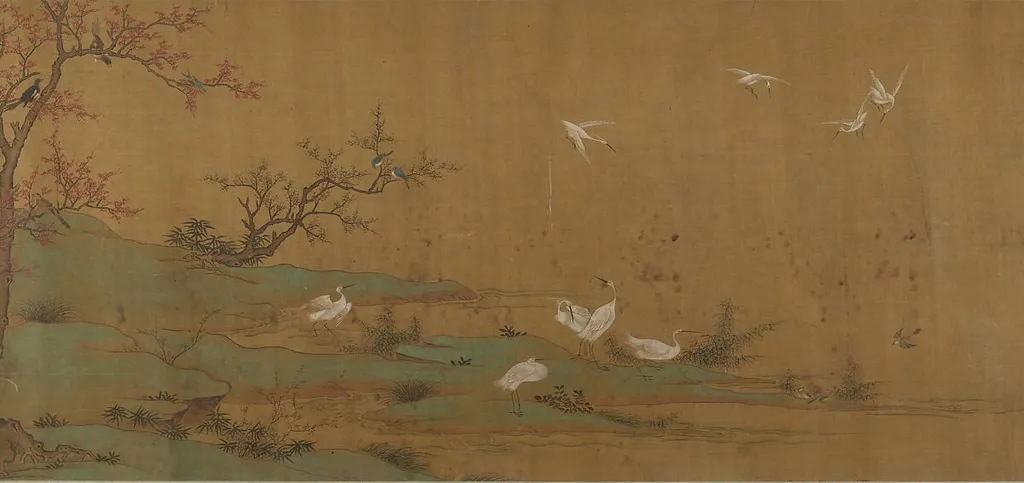
明 佚名 舊傳刁光 叢簧集羽 卷|River Scene with Birds and Bamboo is an ink painting by the Ming dynasty painting artist Diao Guang. It dates from 1639 and is held in the collection of the Metropolitan Museum of Art.
About this work
Technique & Style
This work is executed as a handscroll in ink and mineral color on silk, a traditional Chinese painting format that combines fluid linear handling with layered chromatic washes. The silk support, paired with mineral pigments, allowed for both precise brushwork in the depiction of bamboo foliage and birds, and broader tonal modulation in the river setting. The composition reflects the conventions of the bird-and-flower genre integrated with landscape, organizing bamboo clusters and avian subjects within a riverside environment.
Attributed traditionally to Diao Guang but now regarded as the work of an anonymous artist, the scroll bears a date of 1639, situating it within late Ming painting practice, though the formal qualities align with established literati and professional workshop traditions of ink-and-color on silk.
History & Provenance
The handscroll titled River Scene with Birds and Bamboo was created in 1639 in China by an unidentified painter working in ink and mineral pigments on silk.
The handscroll titled River Scene with Birds and Bamboo was created in 1639 in China by an unidentified painter working in ink and mineral pigments on silk. It belongs to the landscape genre and depicts bamboo, a bird and a river. The work was recorded in the Metropolitan Museum of Art collection, where it remains on display in New York.
Its date of inception is listed as 1639‑01‑01, and the piece is classified as a painting within the Chinese school of the early‑Ming period.
The handscroll River Scene with Birds and Bamboo, dated to 1639 and attributed to an unidentified artist formerly linked to Diao Guang, is held in the collection of the Metropolitan Museum of Art in New York. While the work originates from China, its current institutional home is the Metropolitan Museum of Art, where it is cataloged under the classification of paintings. The provided sources confirm the museum as the sole repository for this specific artifact but do not list a specific accession or inventory number, nor do they document any history of public exhibitions for the piece.
Legacy
The handscroll attributed to an unidentified Ming artist, dated 1639, is part of the Metropolitan Museum of Art's holdings, where it is catalogued as an anonymous landscape work featuring bamboo, birds and a river. Its status as a representative example of anonymous painting has made it a frequent point of reference in studies of anonymous Ming art, influencing subsequent attributions and scholarly discussions of the period. The work's provenance, medium and iconography are documented in both its museum record and academic catalogues, underscoring its enduring significance within the history of Chinese painting.
Overview
This handscroll, titled River Scene with Birds and Bamboo, is an anonymous Chinese painting from the Ming Dynasty, crafted over six centuries ago. Executed in ink and mineral colors on silk, it unfolds a tranquil landscape depicting a riverbank. The work invites viewers to experience a serene natural environment, characterized by its delicate brushwork and enduring visual freshness, despite its considerable age.
Subject & Meaning
The scroll presents a quiet riverside vista, where slender bamboo stalks sway gently, rendered with expressive ink lines. Various birds populate the scene, some resting on branches while others are captured in flight, adding dynamic elements to the stillness. Subtle strokes in the distance suggest rolling hills, completing a harmonious natural setting. The composition evokes a sense of peace and natural balance.
Context
As a handscroll, this painting is designed to be unrolled gradually, revealing its narrative or landscape progressively to the viewer. This format transforms the act of viewing into a temporal journey, allowing for an intimate engagement with the artwork over time. Chinese painters often utilized this sequential presentation to guide the eye through expansive or unfolding scenes, creating a contemplative experience.
Artist & collection

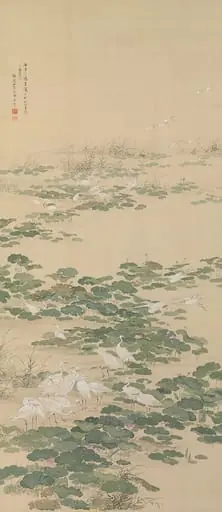 山本梅逸筆 蓮池白鷺図|Egrets in a Lotus Pond
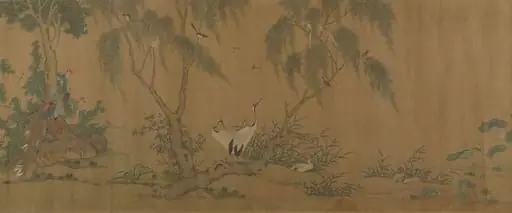 明/清 佚名 林椿(僞款) 百鳥圖 卷|The Hundred Birds
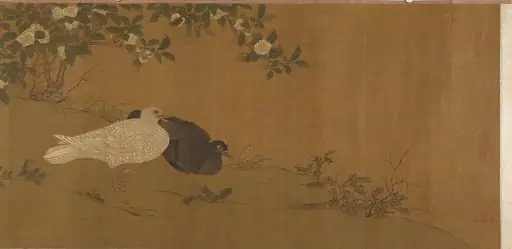 明/清 佚名 舊傳艾宣 鵪鶉 卷|Quail
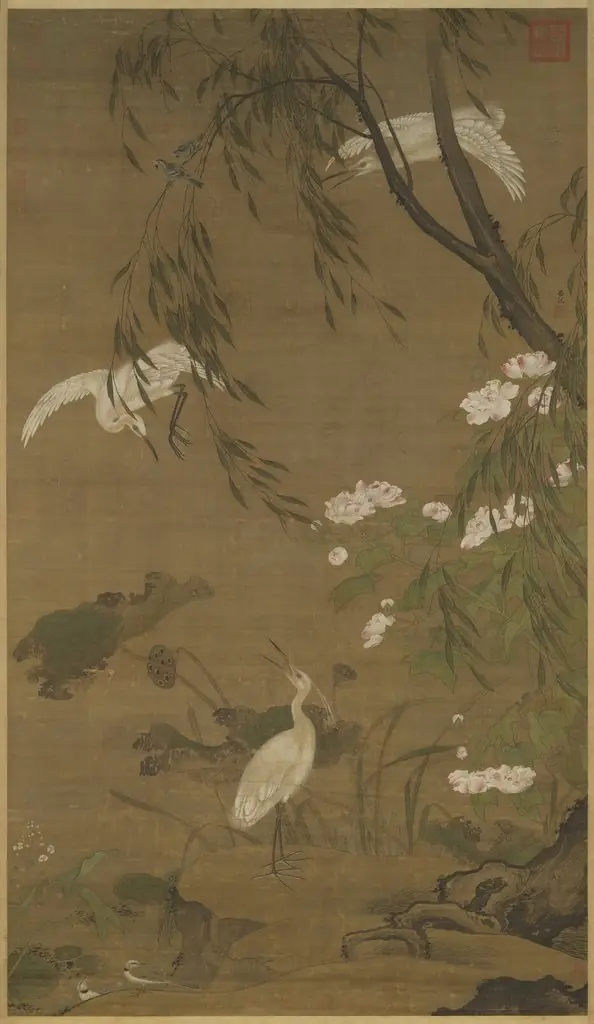 明呂紀秋鷺芙蓉圖 軸
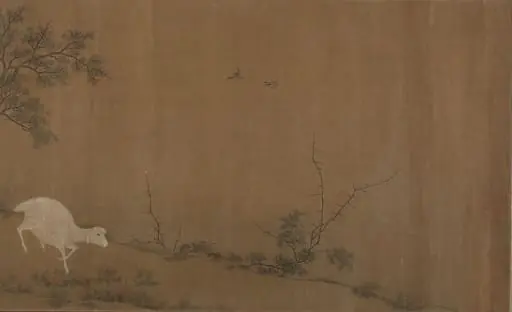 清 佚名 群羊圖卷絹本設色|Landscape with goats
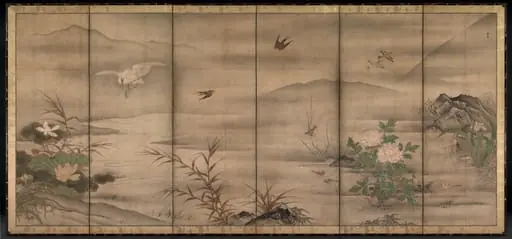 Birds and Flowers in a Landscape of the Four Seasons
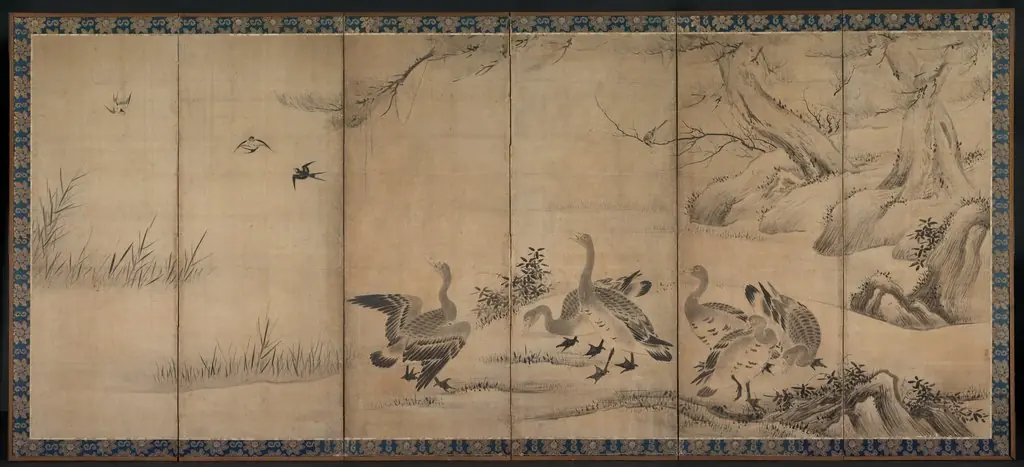 Wild Geese
 Wild Geese
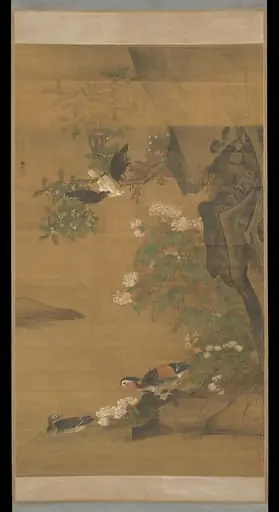 明 呂紀 鴛鴦芙蓉圖 軸|Mandarin ducks and cotton rose hibiscus
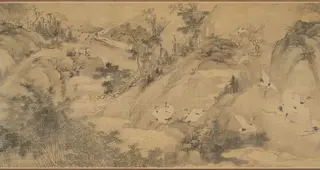 One Hundred Cranes
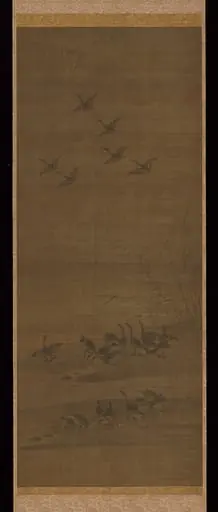 芦雁図|Reeds and Geese
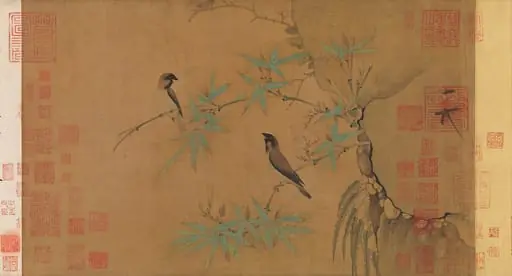
- 北宋 徽宗 竹禽圖 卷|Finches and bamboo