Artwork
梅雀図|Sparrows in a Plum Tree
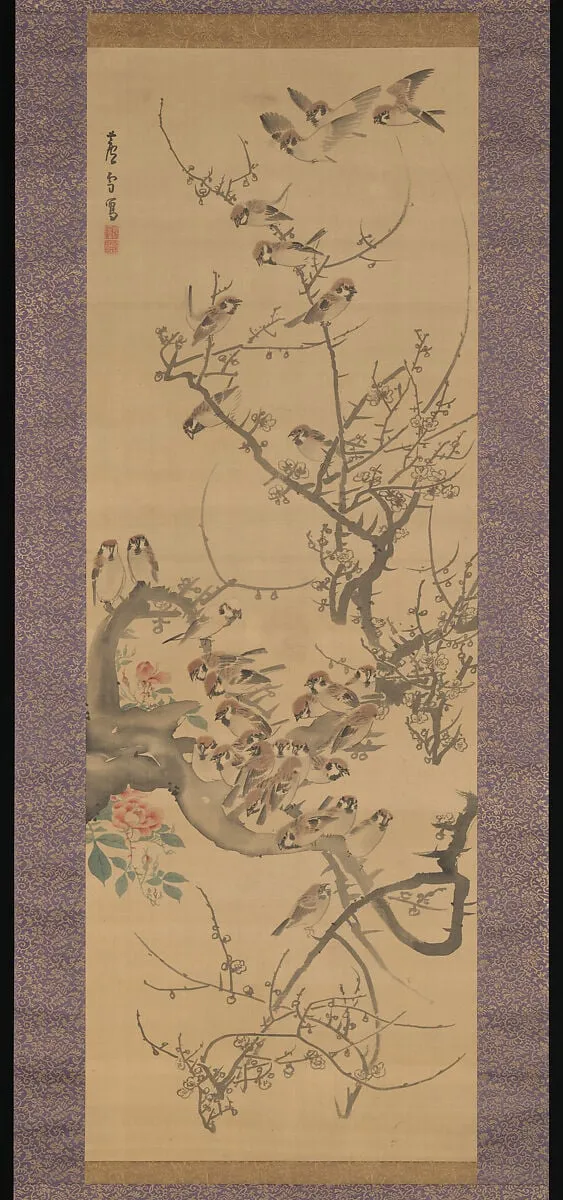
梅雀図|Sparrows in a Plum Tree is an ink painting by the Nihonga artist Nagasawa Rosetsu. It dates from 1794 and is held in the collection of the Metropolitan Museum of Art.
About this work
History & Provenance
Created in 1794 by the Japanese artist Nagasawa Rosetsu, this hanging scroll depicts birds perched within a plum tree.
Created in 1794 by the Japanese artist Nagasawa Rosetsu, this hanging scroll depicts birds perched within a plum tree. The work was executed in Japan using ink and color on silk. While the specific circumstances of its commission and the detailed chain of ownership prior to its current location are not recorded in the available sources, the painting is presently held in the collection of the Metropolitan Museum of Art.
Context
Nagasawa Rosetsu (1754–1799) created Sparrows in a Plum Tree in 1794 as a hanging scroll executed in ink and color on silk. The work depicts birds perched among plum branches and is classified within the Japanese bird-and-flower painting tradition. The scroll is part of the Metropolitan Museum of Art's collection, where it is studied as an exemplar of late-Edo bird-and-flower painting and reflects the artist's synthesis of Chinese literary themes with indigenous Japanese aesthetics.
Its depiction of avian subjects within a seasonal setting contributes to scholarly discussions of Rosetsu's role in late-Edo narrative motifs.
Overview
Created in 1794, 'Sparrows in a Plum Tree' (Baikakuchōzu) is a hanging scroll by the Japanese Edo-period painter Nagasawa Rosetsu. Executed in ink and light color on silk, the work depicts two sparrows perched upon the gnarled, twisting branches of a plum tree. Rosetsu employs a dynamic, calligraphic brushwork style characteristic of the Nanga and Maruyama-Shijō schools, where the dark, energetic lines of the branches contrast sharply with the soft, minimal rendering of the birds.
The composition relies heavily on the technique of 'ma' (negative space), leaving the majority of the silk background unpainted to create a sense of atmospheric depth and to isolate the subjects. This approach emphasizes the vitality of the sparrows and the structural rhythm of the plum boughs against a muted gray wash. Painted late in Rosetsu's career, shortly before his death, the piece exemplifies his mature synthesis of natural observation and expressive abstraction.
It stands as a significant example of late 18th-century Japanese bird-and-flower painting, showcasing the artist's ability to convey movement and life through sparse, confident strokes.
Subject & Meaning
The composition centers on two sparrows resting on the gnarled, bare branches of a plum tree. In East Asian art, plum blossoms often symbolize resilience and renewal, as they are among the first flowers to bloom in late winter, enduring cold temperatures. The quiet interaction of the birds with their environment evokes a sense of serene observation, highlighting the subtle beauty found in nature's cycles.
Technique & Style
Rosetsu executed this work using ink and delicate washes of color on silk. A significant portion of the silk remains unpainted, functioning as negative space that allows the viewer's eye to rest and enhances the vitality of the depicted birds. The plum branches are rendered with dynamic, calligraphic brushstrokes, suggesting movement and an almost dance-like quality within the composition.
Artist & collection

Artist
Nagasawa Rosetsu (長沢芦雪; 1754–1799) was a Japanese painter during the Edo period. A disciple of the Maruyama School, he was known for his versatile artistic style. He was born to the family of a low-ranking samurai. He…

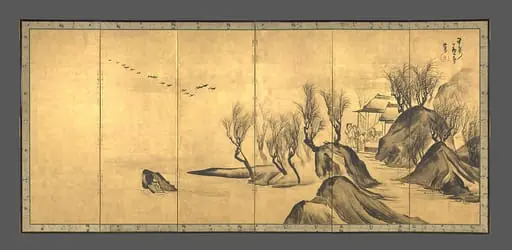
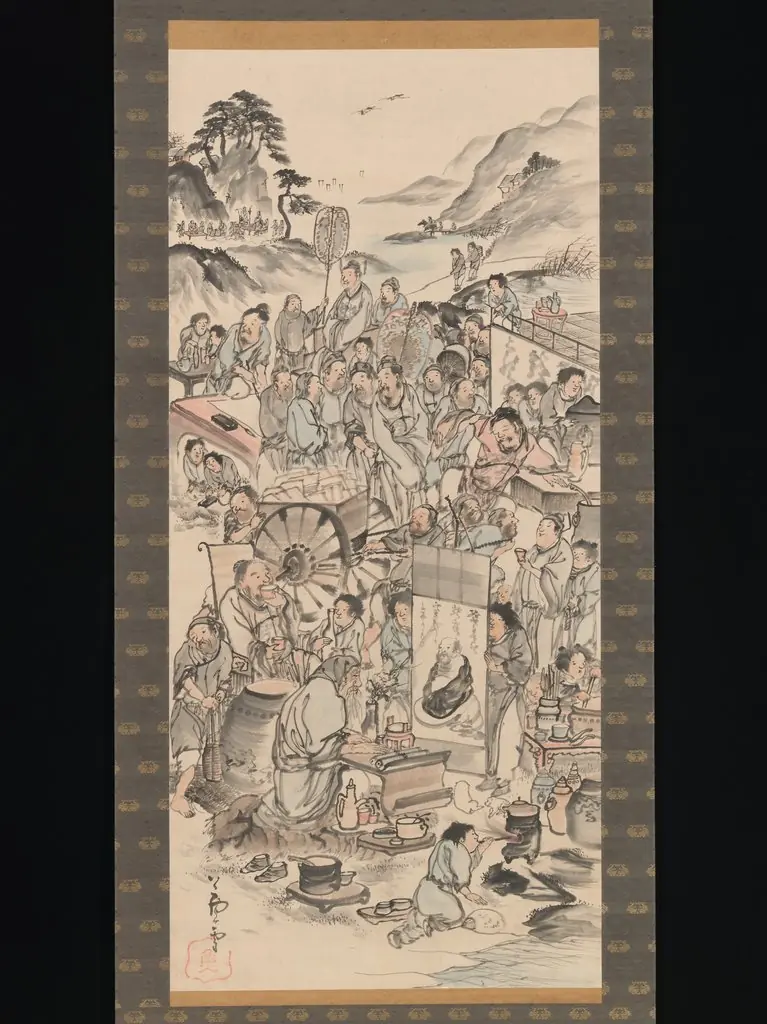

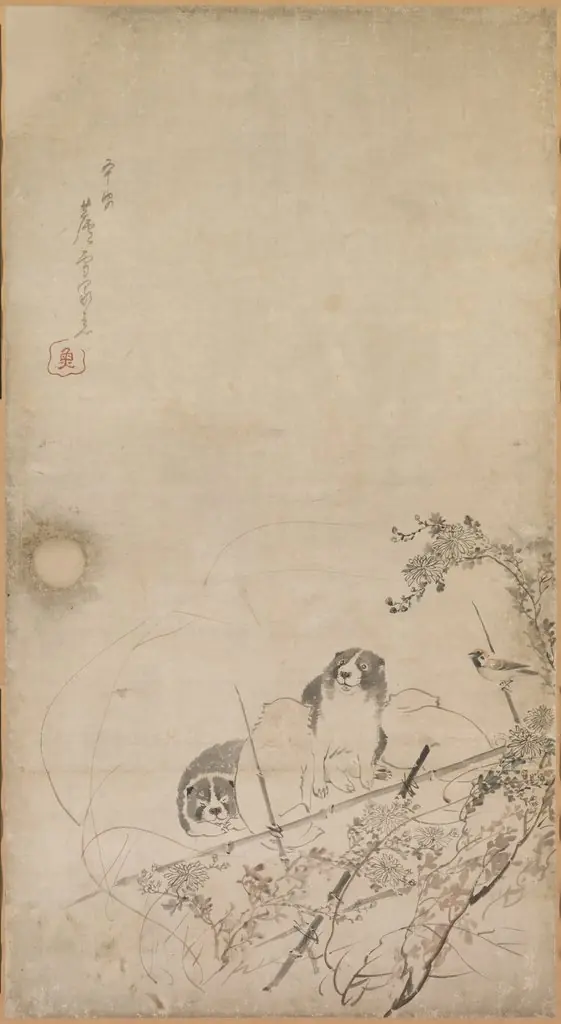
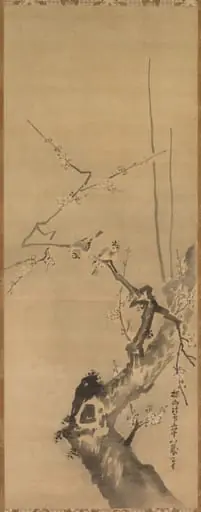
- Sparrows on Blossoming Plum
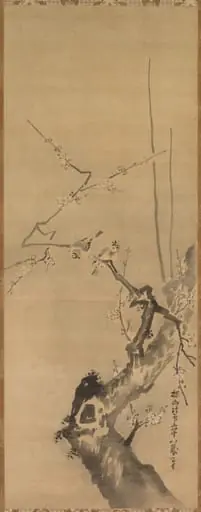 Sparrows on Blossoming Plum; A Sage with Tiger; Chinese Bird on Snow-Laden Branch
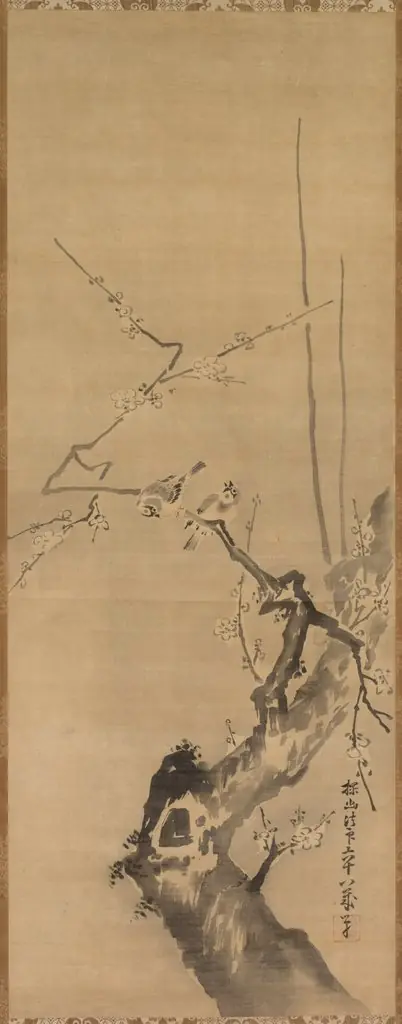 Sparrows on Blossoming Plum
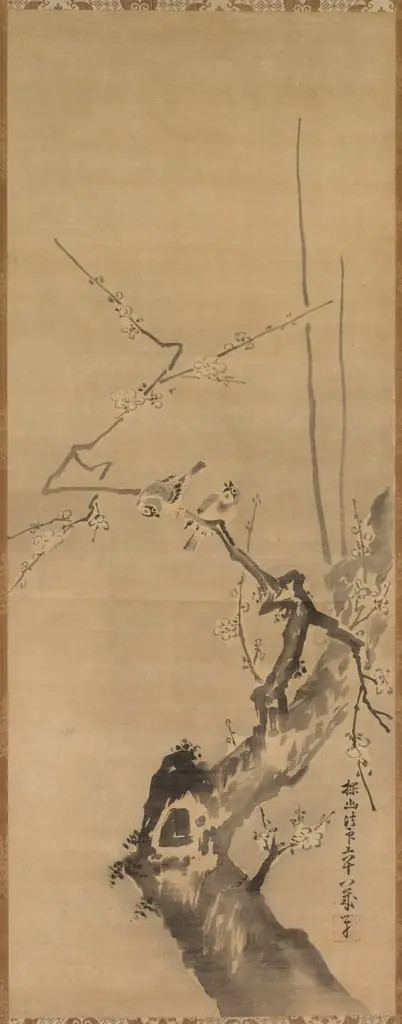 Sparrows on Blossoming Plum; A Sage with Tiger; Chinese Bird on Snow-Laden Branch
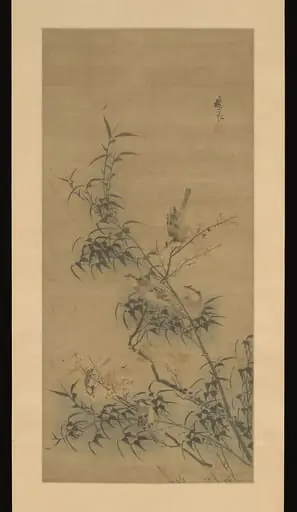 明 佚名 仿林良 喜上梅梢圖 軸|Birds Amidst Blossoming Plum and Bamboo
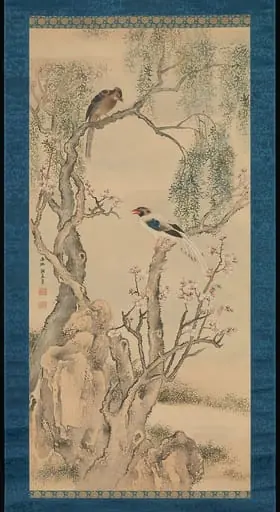 与謝蕪村筆 柳緑桃紅図|Birds in Willows and Blossoming Peach Tree
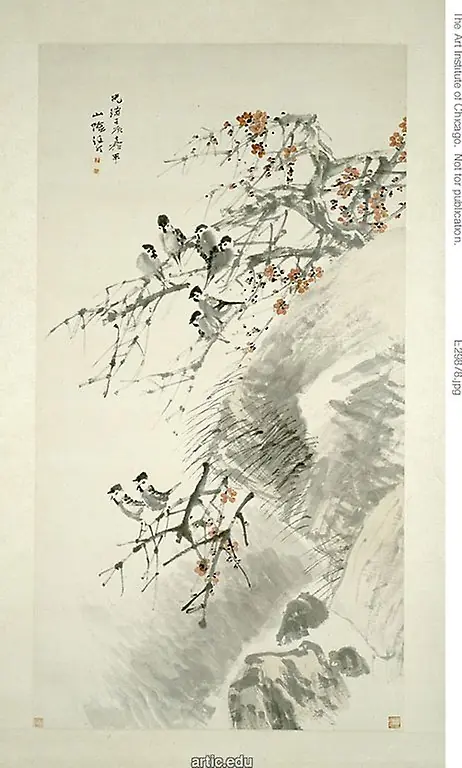 Birds on Red Plum