Artwork
Mme Ida Rubinstein
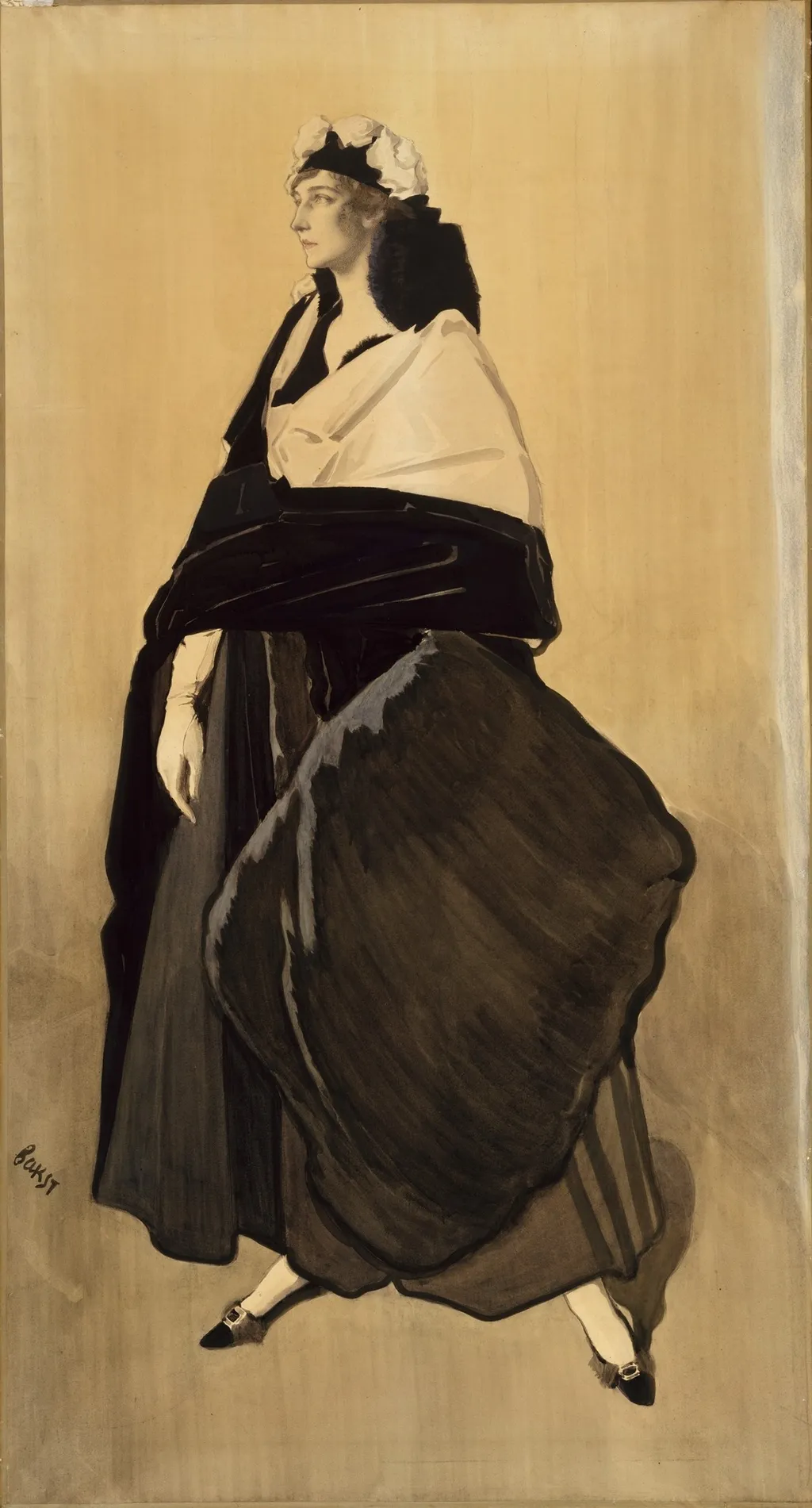
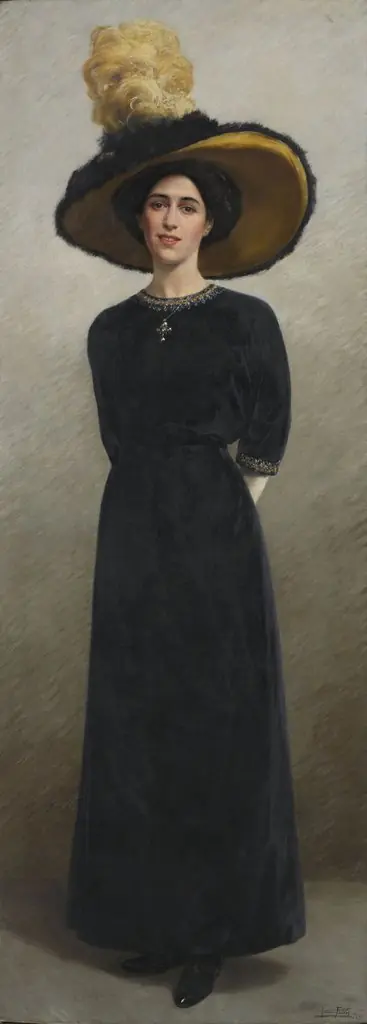
Mme Ida Rubinstein is an unspecified painting by the Art Nouveau artist Léon Bakst. It dates from 1910 and is held in the collection of the Metropolitan Museum of Art.
About this work
Subject & Meaning
The portrait depicts the dancer and patron Ida Rubinstein, who became a celebrated figure in the Ballets Russes milieu.
The portrait depicts the dancer and patron Ida Rubinstein, who became a celebrated figure in the Ballets Russes milieu. Bakst's representation emphasizes her commanding presence, rendered with elongated proportions and rich, stylized ornamentation that aligns with the artist's contributions to the company's visual language. The composition's decorative intensity and vivid palette foreground Rubinstein's status as both performer and cultural icon, reflecting her role in modernist Parisian artistic circles during the early twentieth century.
Technique & Style
Léon Bakst created Mme Ida Rubinstein in 1910 as a painting depicting a woman. The work is executed on a vertical support measuring 128.3 cm in height and 69.2 cm in width. Held by the Metropolitan Museum of Art, the piece exemplifies Bakst's portraiture from this period, focusing on the figure of the dancer Ida Rubinstein.
The medium is classified as a painting, with no additional details regarding specific pigments, brushwork handling, or current conservation condition provided in the available records.
History & Provenance
The portrait Mme Ida Rubinstein, dated 1910, depicts the Russian dancer and actress Ida Rubinstein, who was closely associated with the Ballets Russes, for which Léon Bakst designed sets and costumes. It is held in the collection of the Metropolitan Museum of Art in New York. The specific accession number is not detailed in the available records, and no documented exhibition history is provided in the sources.
Overview
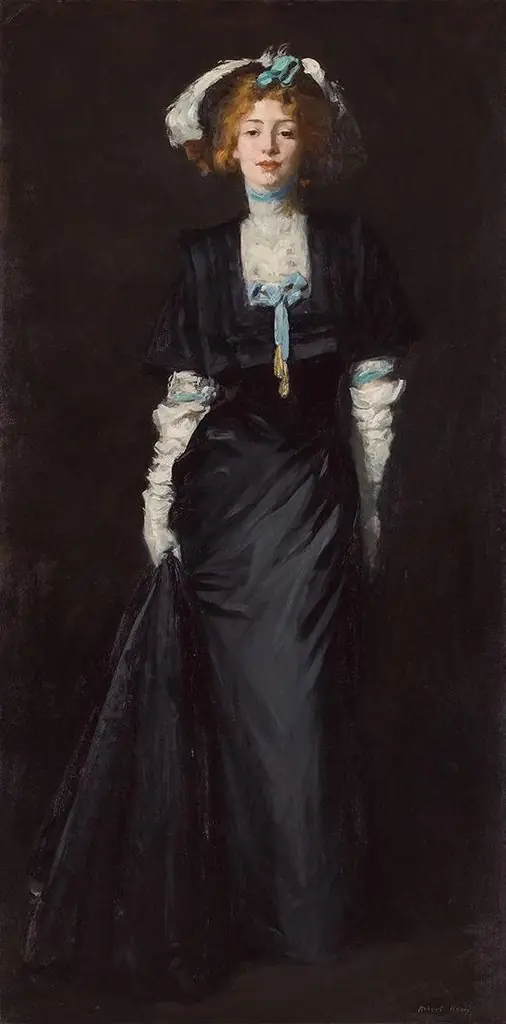
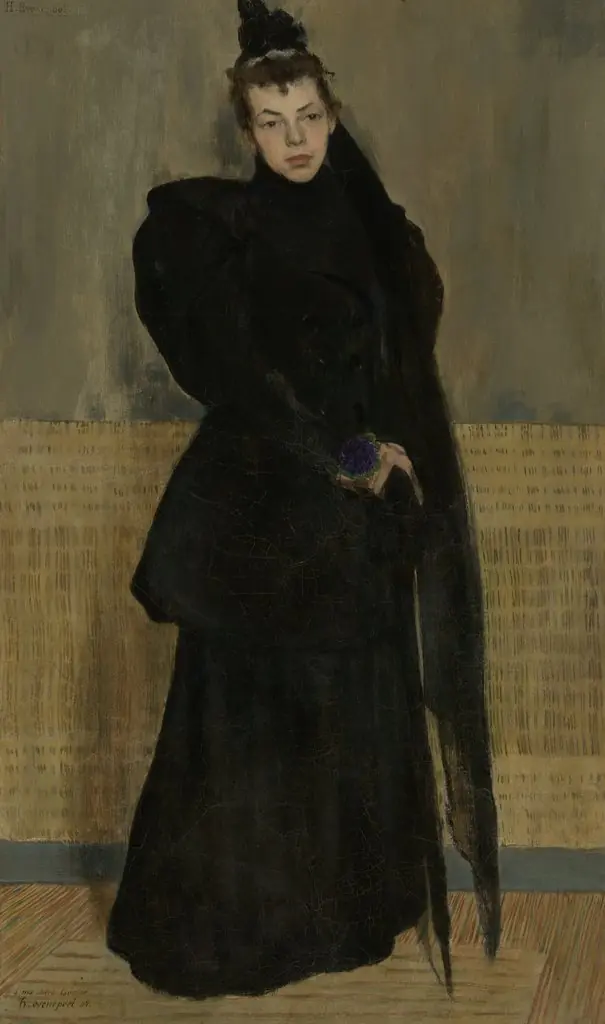
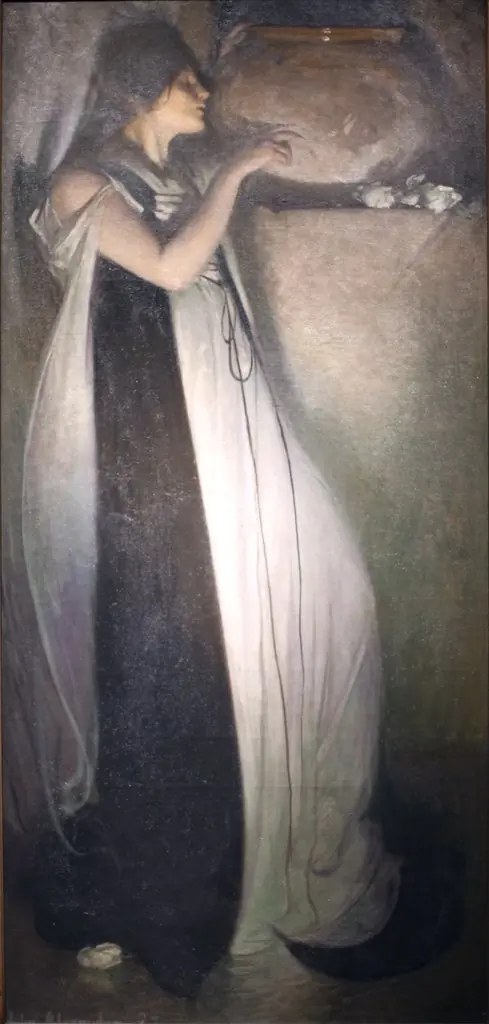
Léon Bakst’s 1910 oil portrait, titled Mme Ida Rubinstein, presents a solitary figure in a dark, flowing gown accented by a white shawl. The composition is anchored by a plain background, allowing the sitter’s calm, sideways gaze and the subtle play of light across her attire to dominate the visual field. The painting resides in the collection of The Metropolitan Museum of Art.
Context
At the time of its execution, Bakst was renowned for designing vivid sets and costumes for productions such as Carnaval (1910) and Spectre de la rose (1911). The portrait thus reflects the intersection of his theatrical work and fine‑art practice, embodying the decorative richness that characterized the Diaghilev circle’s visual culture.
Artist & collection
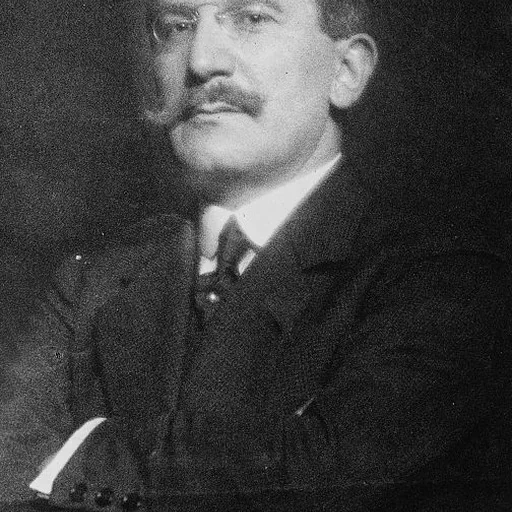
Artist
Léon (Lev) Samoylovich Bakst (Russian: Леон (Лев) Самойлович Бакст), born Leyb-Khaim Izrailevich Rosenberg (8 February 1866 – 27 December 1924), was a Russian painter and scene and costume designer of Jewish origin.