Artwork
Palmer River
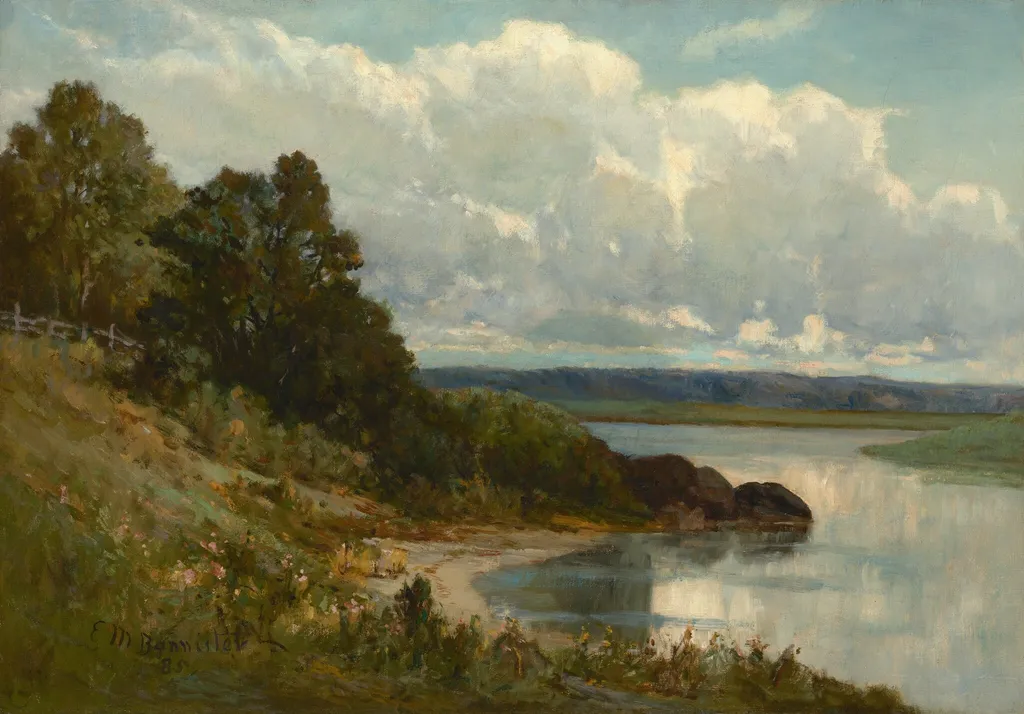
Palmer River is an oil painting by the Impressionist artist Edward Mitchell Bannister. It dates from 1885 and is held in the collection of the National Gallery of Art.
- Inscription
- Inscribed:lower left: E M Bannister 85
About this work
Overview
6 centimeters, the work depicts the Palmer River, a waterway that flows from Massachusetts into Rhode Island.
Palmer River is an 1885 oil on canvas landscape painting by Edward Mitchell Bannister. Measuring 61.6 by 86.6 centimeters, the work depicts the Palmer River, a waterway that flows from Massachusetts into Rhode Island. The painting is signed and dated in the lower left corner. It is currently held in the collection of the National Gallery of Art in Washington, D.C., accessioned as 2021.11.1, where it is displayed in the West Building, Gallery M68.
Subject & Meaning
The composition captures a serene river landscape beneath a wide sky filled with billowing white and gray clouds. A grassy slope on the left descends toward the water, covered in green and brown vegetation and sprinkled with wildflowers, while dark green trees cluster along the riverbank. The calm, reflective river occupies the right half, mirroring the sky and low lying clouds that hang heavy with moisture over the water. Beyond its topographical specificity, the painting functions as a study of weather and atmosphere, reflecting Bannister's admiration for French landscape traditions.
Technique & Style
Bannister employed oil on canvas to construct the scene, utilizing a palette of muted greens, browns, soft blues, and warm whites. Light enters from the upper left, illuminating the clouds and casting subtle shadows on the hillside. His brushwork varies across the composition, featuring textured, visible strokes in the foliage and foreground, contrasted by smoother, more blended handling in the sky and the reflective water. This stylistic approach aligns with the Barbizon school's influence, prioritizing atmospheric effect and naturalistic observation over strict topographical detail.
History & Provenance
Created in 1885, the painting was owned by Scott A. Smith by 1901 and descended through his family. Around the 1960s, it was acquired by Joseph K. and Anne Ott of Providence, and in 1985 it passed to Daniel R. Mechnig, also of Providence. On May 19, 2021, the work was sold at Sotheby's in New York as lot 46, and subsequently purchased by the National Gallery of Art. Its extensive exhibition history began with the Bannister Memorial Exhibition at the Providence Art Club in January 1901. It later appeared in significant exhibitions including Hidden Heritage: The Art of Black America 1800-1950 (1985-1990), Edward Mitchell Bannister 1828-1901 at Kenkeleba House (1992-1993), Mapping Realism at the McMullen Museum of Art (2013), and Edward Mitchell Bannister at the Gilbert Stuart Museum (2018).
Context
Edward Mitchell Bannister was a prominent African American painter who was denied access to formal artistic training because of his race, leading him to initially make his living as a barber. Early portrait commissions from prominent members of the Black community in Boston launched his career. Deeply involved in antislavery activities during the Civil War, Bannister subsequently moved to Providence, Rhode Island, where he turned his attention to landscape painting. Palmer River emerges from this mature period of his practice, demonstrating his engagement with contemporary French landscape aesthetics while grounding his work in the specific geography of New England.
Legacy
The acquisition of Palmer River by the National Gallery of Art in 2021 marks a significant institutional recognition of Bannister's contribution to American landscape painting. The purchase was notably featured in Nancy K. Anderson's Gifts & Acquisitions in Art for the Nation the same year. The painting's inclusion in the 2013 exhibition Mapping Realism, which placed American works alongside paintings from the Royal Museum of Fine Arts of Belgium, underscores its role in broader art historical dialogues. Its continued availability as a print further attests to its enduring presence in the public visual culture.
Own this work as a print
Artist & collection

Artist
Edward Mitchell Bannister (November 2, 1828 – January 9, 1901) was a Canadian–American oil painter of the American Barbizon school.

- River Landscape
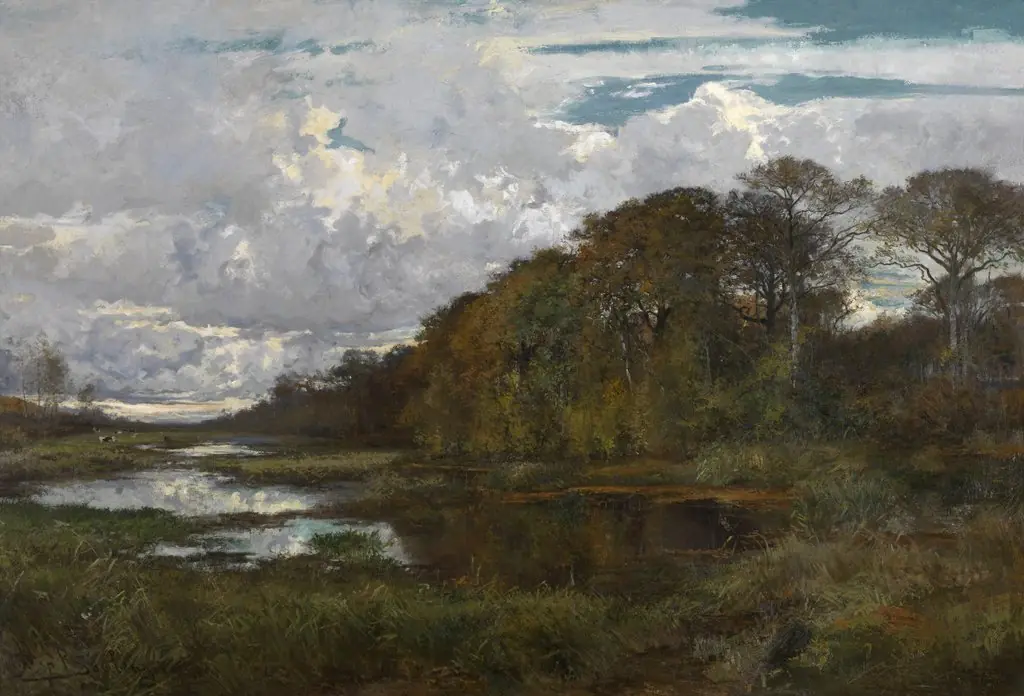 The Ponds of the "Grijze Molen" in Terhulpen
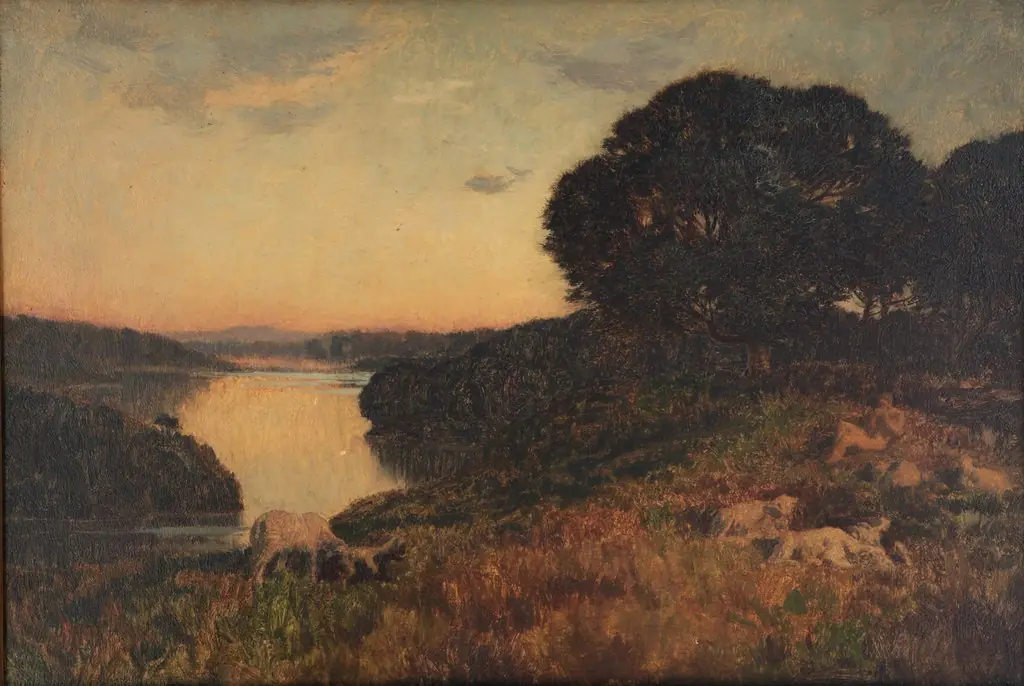 Paisaje
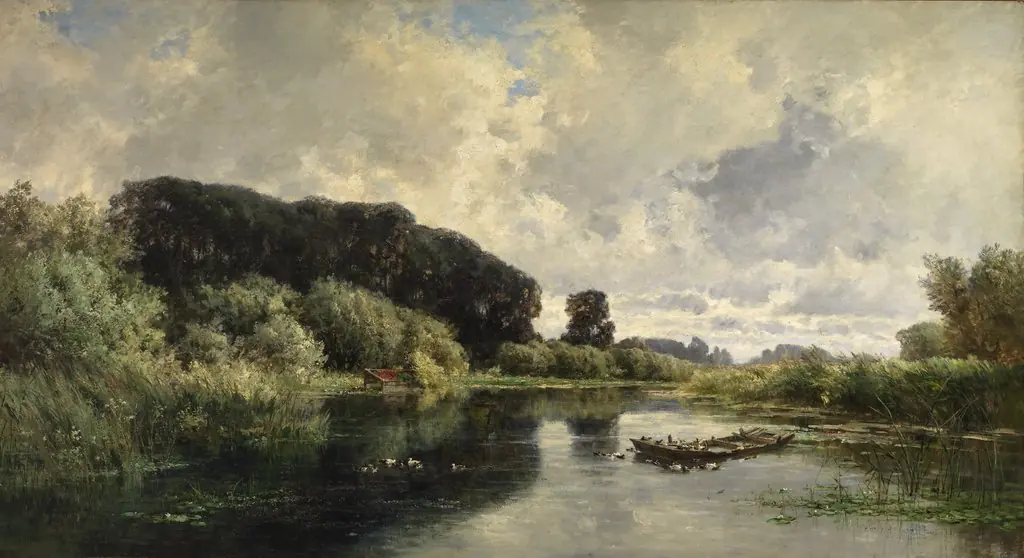 Cercanías de Vriesland (Holanda)
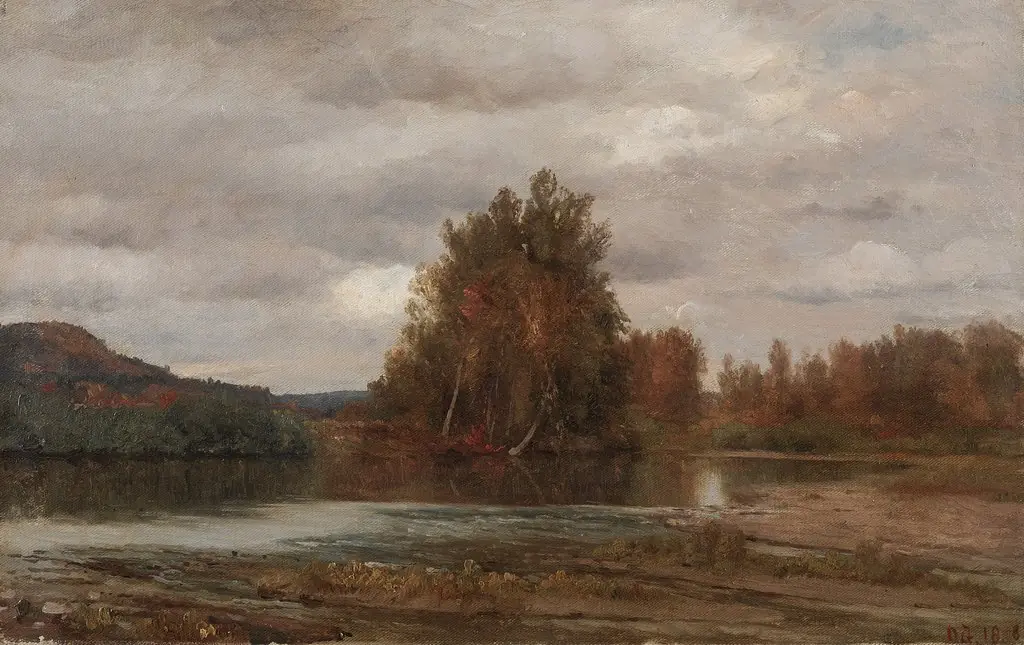 Gray Day on the Esopus
 A View of Lake Vejl near Silkeborg, Jutland
 Landscape on the River Oise
 Gray Day on the Esopus
 The River Loire at Nevers
 The Dunajec River at Szaflary
 Am Zürichhorn (Studie)
 Landscape with a bunch of trees