Artwork
Reclining Venus
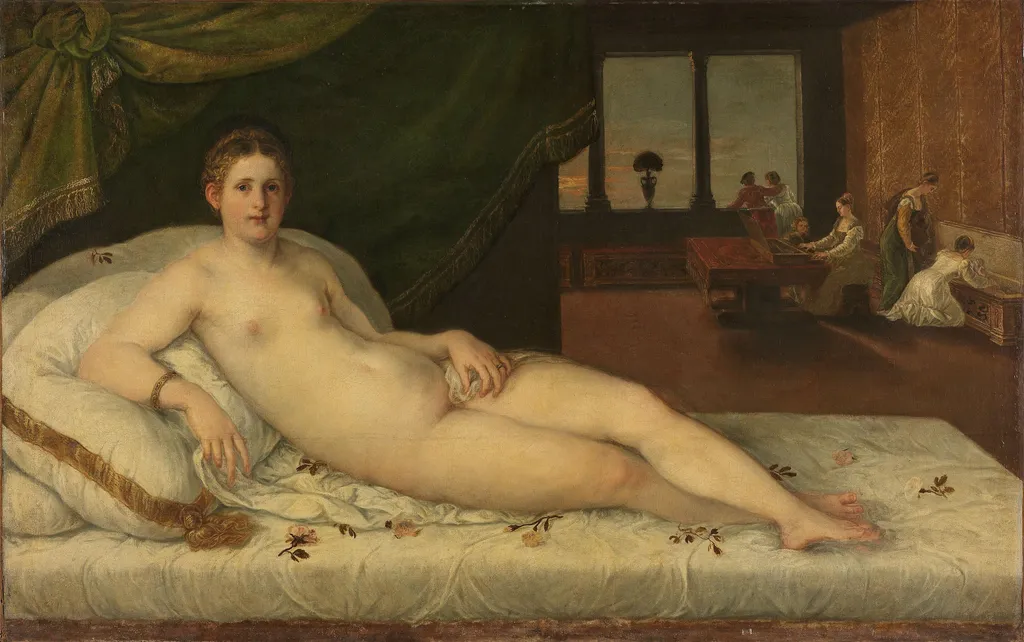
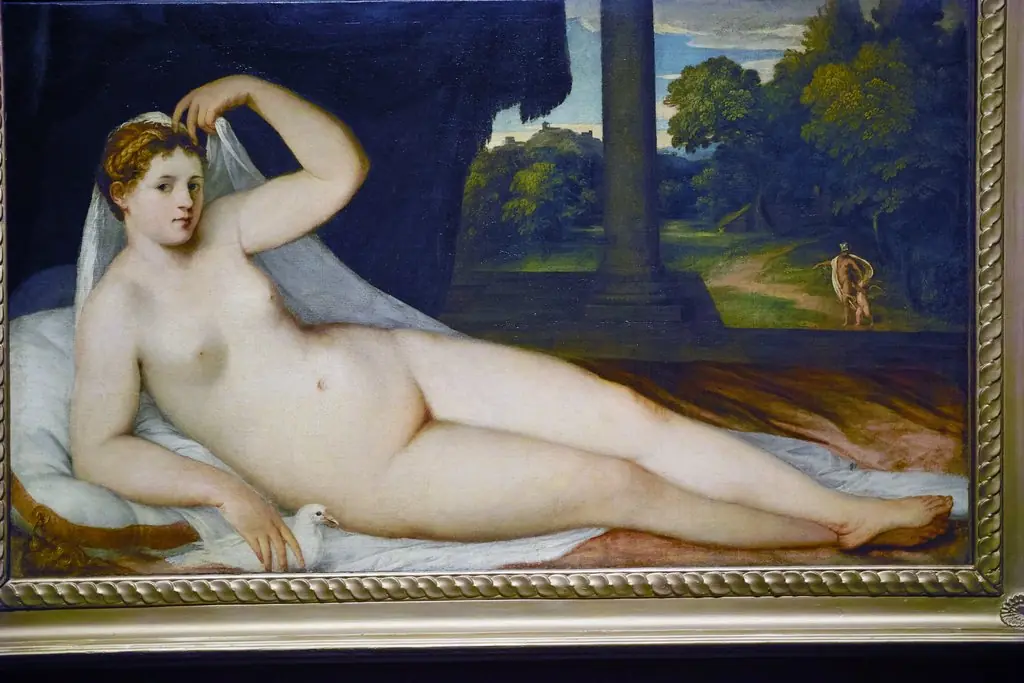
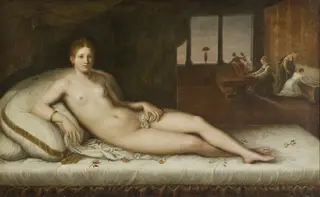
Reclining Venus is an oil painting by the Renaissance artist Lambert Sustris. It dates from 1100 and is held in the collection of the Rijksmuseum.
About this work
Subject & Meaning
Her blond hair and the blue tonal elements, along with the pillow and mattress, establish an intimate, domestic context.
The painting's subject is the goddess Venus, shown as a nude woman reclining on a bed in a bedroom setting. Iconography includes a bracelet, ring, drapery, and a flower; her gaze directly addresses the viewer. Her blond hair and the blue tonal elements, along with the pillow and mattress, establish an intimate, domestic context.
The work functions as a mythological painting, representing Venus as an emblem of love and beauty, blending classical allusion with sensual immediacy in the Venetian tradition.
Technique & Style
The work is executed in oil on canvas, measuring 116 × 186 cm, and was created in Venice. The composition depicts a reclining Venus on a bed, with pillows, drapery, and a blue backdrop, typical of mythological nude paintings. Details such as jewelry, flowers, and the direct gaze of the figure indicate a refined handling of anatomy and texture, characteristic of the Venetian coloristic tradition. No information on the painting's condition or specific brushwork analysis is provided in the available sources.
Overview
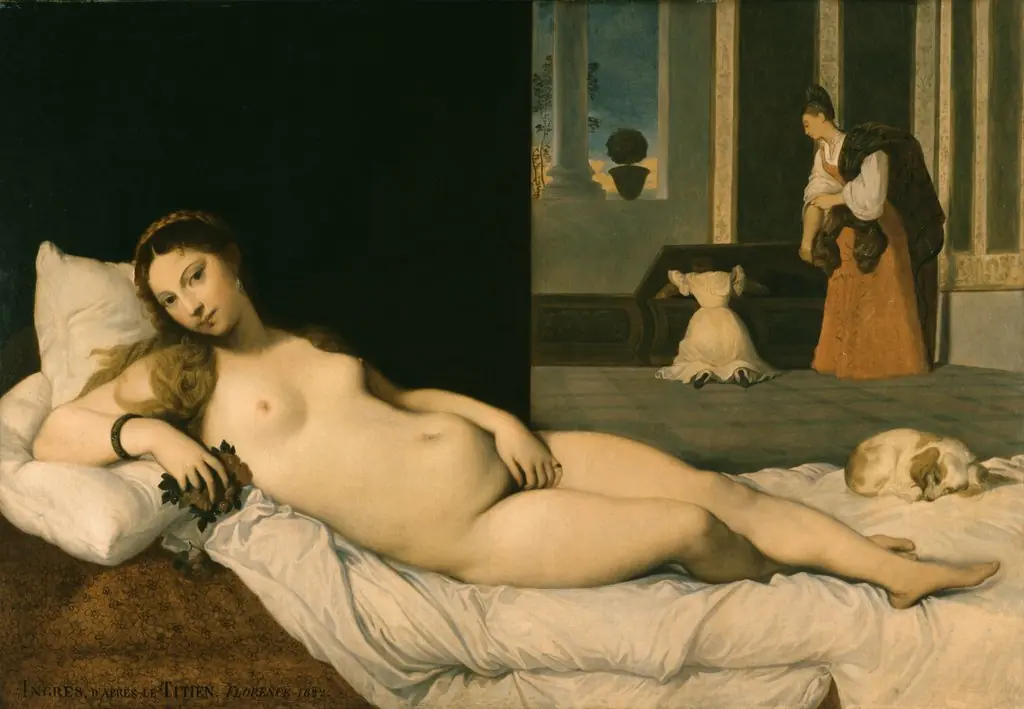
The painting known as Reclining Venus, attributed to Lambert Sustris, is an oil-on-canvas work created between approximately 1540 and 1560. Measuring 116 by 186 centimeters, it resides in the Rijksmuseum, Amsterdam. This composition depicts the goddess Venus in a domestic setting, a direct reimagining of Titian's renowned Venus of Urbino. Sustris, a Dutch artist active in Venice, adapted the prototype with a distinctive stylistic approach.
History & Provenance
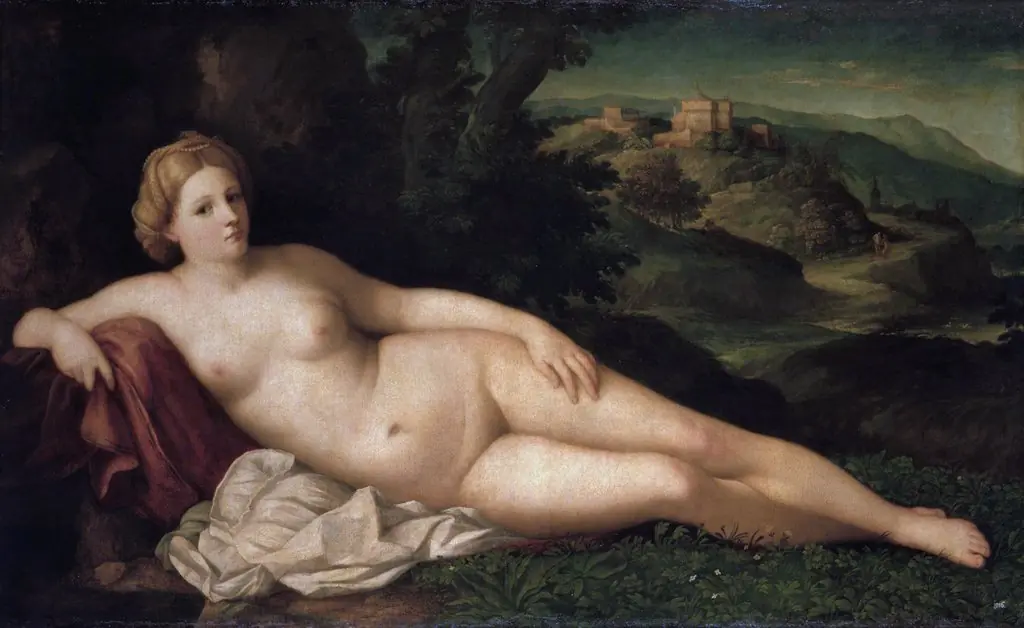
The attribution of this Reclining Venus has evolved considerably over time. Initially published under Titian's name, it was later exhibited as a work by Paris Bordone before modern scholarship assigned it to Lambert Sustris or his immediate circle. A closely related canvas, featuring minor differences in drapery and facial details, exists in the Galleria Borghese in Rome, prompting ongoing scholarly debate about their sequence. The Rijksmuseum acquired its version on December 1, 1946.
Context
Lambert Sustris, though born in Amsterdam, spent the majority of his artistic career in Italy, where he was closely associated with Titian's influential Venetian workshop. This proximity allowed him to absorb and reinterpret the leading artistic trends of the time. His Reclining Venus exemplifies how artists within Titian's orbit adapted established compositions, infusing them with their own stylistic nuances and narrative interests, thus providing valuable insight into the broader Venetian artistic landscape of the mid-16th century.
Own this work as a print
Artist & collection
Artist
Lambert Sustris (c. 1515/1520 – c. 1584) was a Dutch painter active mainly in Venice. The works Sustris completed in Italy exhibit either a Mannerist style or qualities that may be deemed proto-Baroque. He is also…