Artwork
Resting Venus
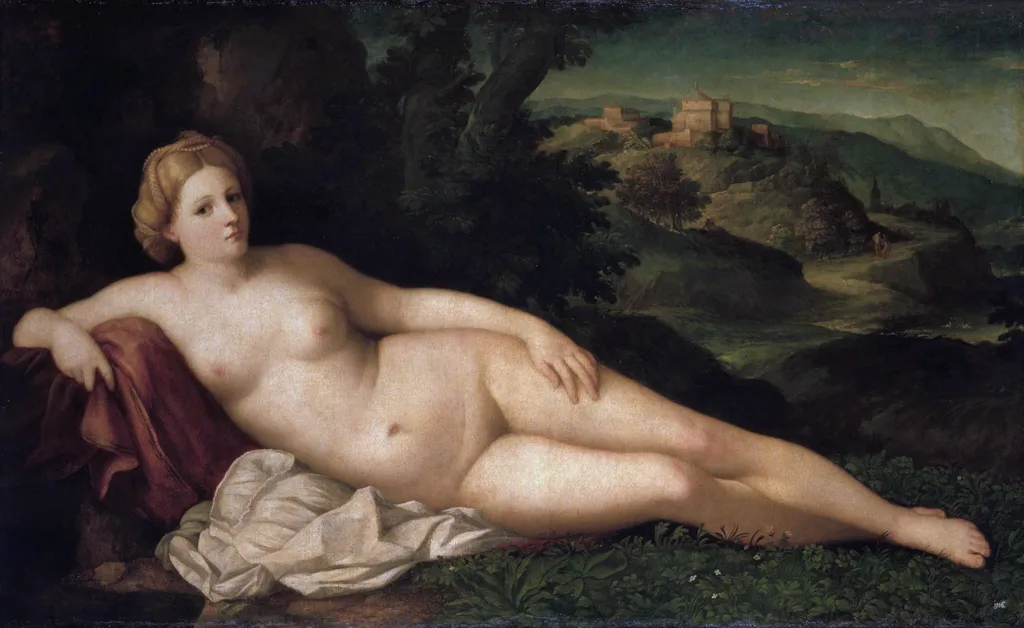
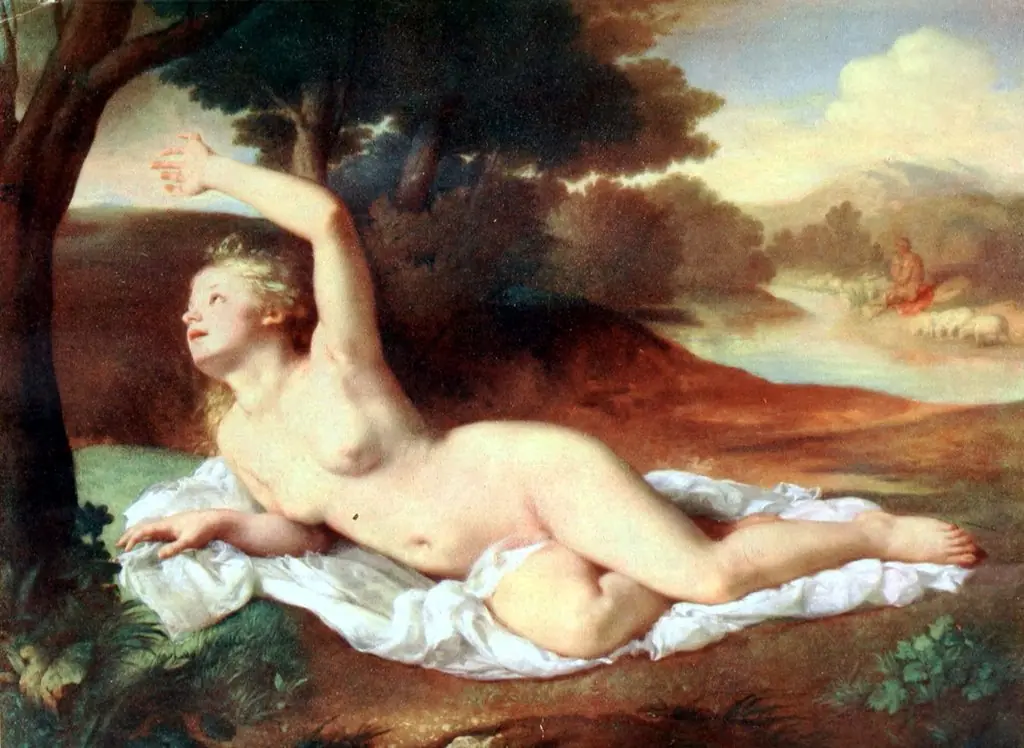
Resting Venus is an oil painting by the High Renaissance artist Palma Vecchio. It dates from 1519 and is held in the collection of the Staatliche Kunstsammlungen Dresden.
About this work
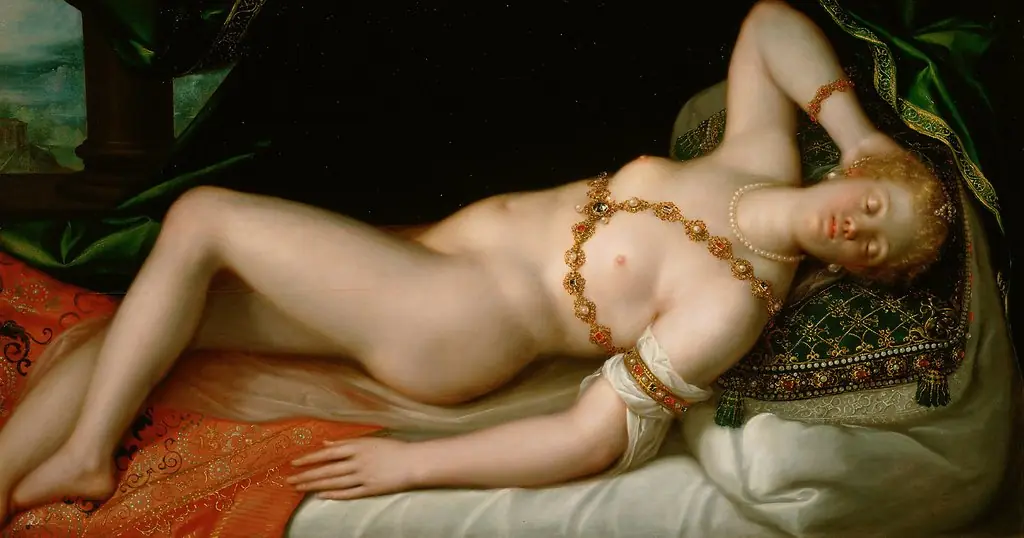
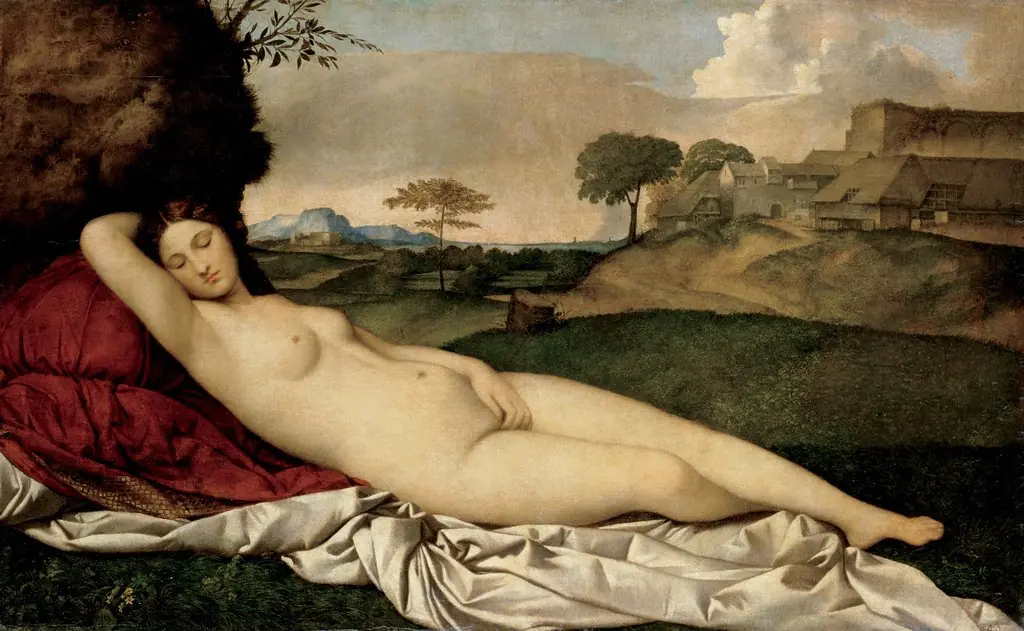
Resting Venus is a 1518 oil painting by Palma Vecchio. It shows a nymph asleep in a peaceful setting. The artist likely borrowed ideas from Giorgione’s Sleeping Venus.
Palma Vecchio worked in Venice. His soft light and delicate colors fit the mood of stillness. This painting used oil on canvas, a common choice at the time.
Check out Palma Vecchio next.
Subject & Meaning
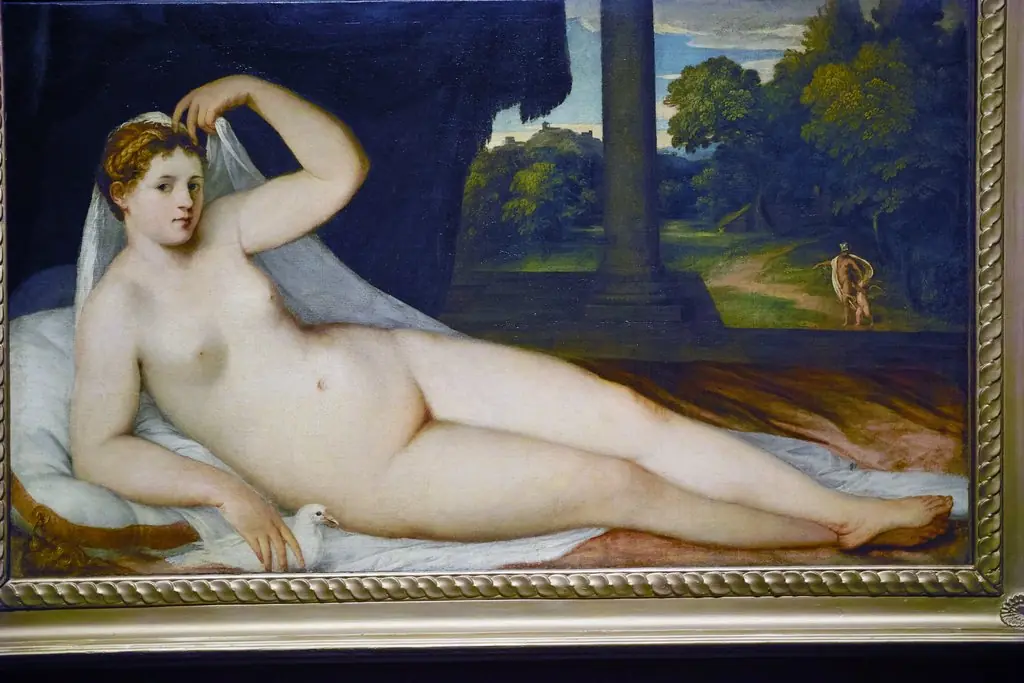
The figure is depicted completely nude and awake, displaying a languid, sensual body without any gesture of modesty.
Although the composition derives iconographically from Giorgione's Sleeping Venus, leading some to identify the figure as the goddess, the work is more accurately interpreted as a wood nymph inspired by the moralizing literature of Pietro Bembo's Gli Asolani. In this context, the woman represents an ancient enchantress capable of captivating men with a single glance, drawing them into a realm of both joy and the pains of love.
The figure is depicted completely nude and awake, displaying a languid, sensual body without any gesture of modesty. Her placement serves as a deliberate obstacle to the winding path visible in the background landscape, which functions as a symbol of moral elevation, contrasting earthly temptation with spiritual ascent.
Technique & Style
Resting Venus is an oil on canvas painting measuring 113 × 186 cm. The work depicts a fully nude, awake female figure reclining in a landscape setting, her body rendered with languid, sensual softness. Unlike the modest gesture seen in Titian's Venus of Urbino, the figure displays no pretense of modesty. The composition integrates the nude with a winding path and distant château within a wooded, hilly terrain.
Stylistically, the painting derives iconographically from Giorgione's Sleeping Venus, though its inspiration also draws upon early 16th-century literary sources, particularly the moralizing messages of Pietro Bembo's Gli Asolani. The figure's placement before the sinuous landscape path serves as a symbolic obstacle to moral elevation.
History & Provenance
Resting Venus (Nymph in a Landscape) by Palma Vecchio is dated to about 1518–1520, with a canonical date of 1518 recorded in internal documentation and repeated across reference sources.
The painting’s iconography traces to Giorgione’s Sleeping Venus in the same Dresden collection, but its literary inspiration is traced to Pietro Bembo’s Gli Asolani, which describes nymphs as seductive yet morally charged figures. Palma Vecchio’s reclining, fully nude woman, awake and without modest gesture, contrasts with the winding path in the landscape, read as an emblem of moral ascent.
Palma Vecchio's Resting Venus (also known as Nymph in a Landscape) is held by the Staatliche Kunstsammlungen Dresden. The painting resides in the Gemäldegalerie Alte Meister, which is part of the city's state art collections. While the provided sources confirm the museum's location and the gallery name, they do not list a specific inventory or accession number for the work.
The sources also do not contain any record of the painting's exhibition history, such as past loaned exhibitions or display dates within the gallery.
Context
Palma Vecchio's Resting Venus, also titled Nymph in a Landscape, occupies a notable place within the Venetian tradition of mythological nudes that emerged in the early sixteenth century. Its iconography derives directly from Giorgione's Sleeping Venus, also held in the Gemäldegalerie Alte Meister in Dresden, prompting some scholars to identify the figure as a reclining Venus. However, the work is more closely tied to early-Cinquecento literary sources, particularly the moralizing passages in Pietro Bembo's Gli Asolani, which liken women to woodland nymphs capable of enchanting men with a single glance and drawing them into both the joys and pains of love.
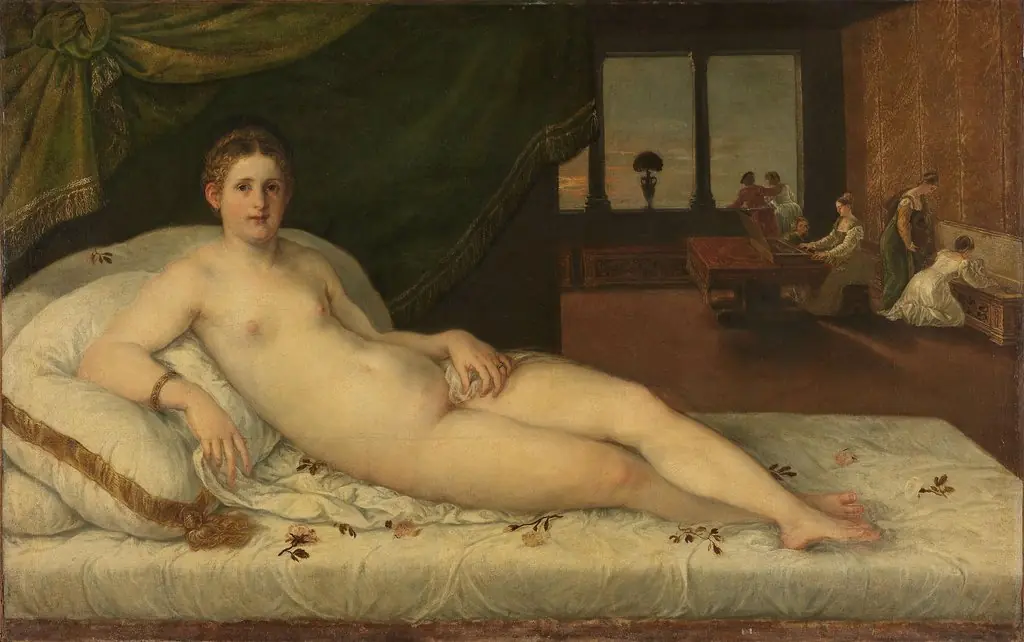
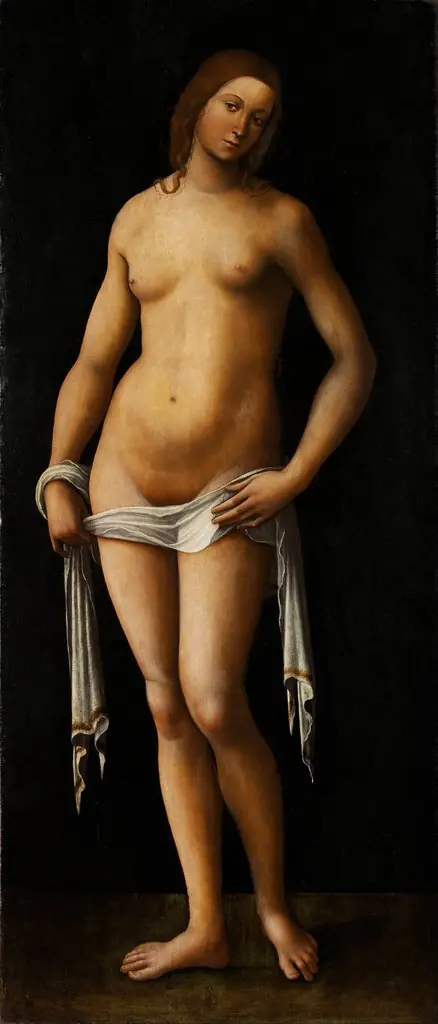
The languid, fully nude and unmodest body of the figure, contrasted with Titian's Venus of Urbino, has been read as an obstacle placed before the winding path in the landscape, a symbol of moral elevation. Scholarship situates the painting within the broader Venetian dialogue on the female nude, alongside works such as Lorenzo Lotto's Venus and Cupid.
Overview
Palma Vecchio's Resting Venus, painted around 1518, is an oil on canvas artwork currently housed in the Gemäldegalerie, Dresden. The painting depicts a sleeping female figure, often identified as a nymph or Venus, set within a serene landscape. Its compositional approach and thematic elements demonstrate a clear lineage from Giorgione's earlier Sleeping Venus, a significant work also located in Dresden.
Artist & collection

Artist
Palma Vecchio (c. 1480 – 30 July 1528), born Jacopo Palma, also known as Jacopo Negretti, was a Venetian painter of the Italian High Renaissance. He is called Palma Vecchio in English and Palma il Vecchio in Italian…