Artwork
Nessus and Deianira
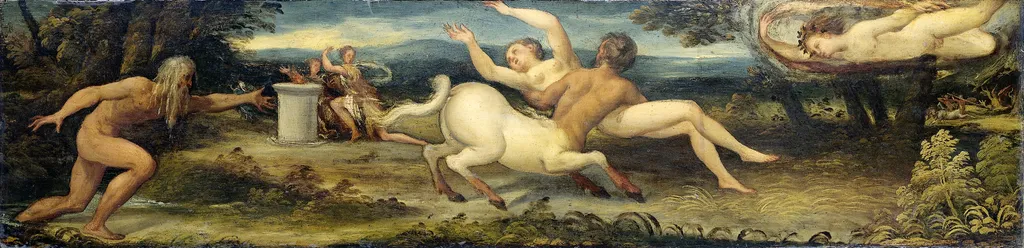
Nessus and Deianira is an oil painting by the Mannerist artist Lambert Sustris. It dates from 1550 and is held in the collection of the Rijksmuseum.
About this work
Subject & Meaning
The painting portrays the mythological couple Nessus and Deianira, a scene drawn from classical legend in which the centaur Nessus attempts to abduct Deianira.
The painting portrays the mythological couple Nessus and Deianira, a scene drawn from classical legend in which the centaur Nessus attempts to abduct Deianira. The work functions as a mythological narrative emphasizing themes of danger and the precariousness of trust, reflecting Renaissance interest in heroic and tragic episodes. The composition underscores the symbolic tension between mortal vulnerability and supernatural force, a recurrent motif in 16th‑century mythological painting.
The depiction aligns with contemporary interpretations of the story as a cautionary allegory, where the centaur's violent overture foreshadows the tragic fate of its victim. This symbolic reading is reinforced by the work's formal qualities, such as the dramatic interaction between the figures and the emphasis on narrative clarity.
The painting is housed in the Rijksmuseum and was acquired by Otto Lanz, underscoring its significance within Dutch collections of mythological subjects.
Technique & Style
Lambert Sustris executed Nessus and Deianira in 1550 using oil paint applied to a panel support. The work is classified as a mythological painting, depicting the centaur Nessus carrying Deianira. The composition is characterized by its elongated horizontal format, measuring 24 cm in height and 95 cm in width.
While Lambert Sustris is the primary creator, Andrea Schiavone is also associated with the work's creation in some records.
History & Provenance
Nessus and Deianira is dated to 1550 and is attributed to Lambert Sustris, with Andrea Schiavone also credited as a creator. The work was executed in oil paint on panel and entered the collection of Otto Lanz. It is now held by the Rijksmuseum, where it is classified as a mythological painting depicting Deianira and Nessus.
The painting Nessus and Deianira by Lambert Sustris is housed at the Rijksmuseum under inventory number SK-A-1550. It entered the collection through the bequest of Otto Lanz and has been part of the museum’s display of mythological paintings since its acquisition. The work was created in 1550 and is executed in oil on panel, measuring 24 cm in height and 95 cm in width.
Overview
Created circa 1550, Nessus and Deianira is an oil painting by the Dutch artist Lambert Sustris, who spent much of his career working in Venice. Executed in a Mannerist idiom, the work presents a dramatic mythological encounter set against a rugged landscape. The canvas is part of the Rijksmuseum’s collection, where it is displayed among other works of Northern European painters active in Italy.
Context
The work reflects Sustris’s exposure to both Venetian colorism and the elegant elongation favored by Parmigianino, merging Northern precision with Italian sensuality. By choosing a classical myth, the artist aligns himself with the humanist interests of his patrons, while the turbulent setting mirrors the Mannerist fascination with complex compositions and emotional intensity.
Artist & collection
Artist
Lambert Sustris (c. 1515/1520 – c. 1584) was a Dutch painter active mainly in Venice. The works Sustris completed in Italy exhibit either a Mannerist style or qualities that may be deemed proto-Baroque. He is also…

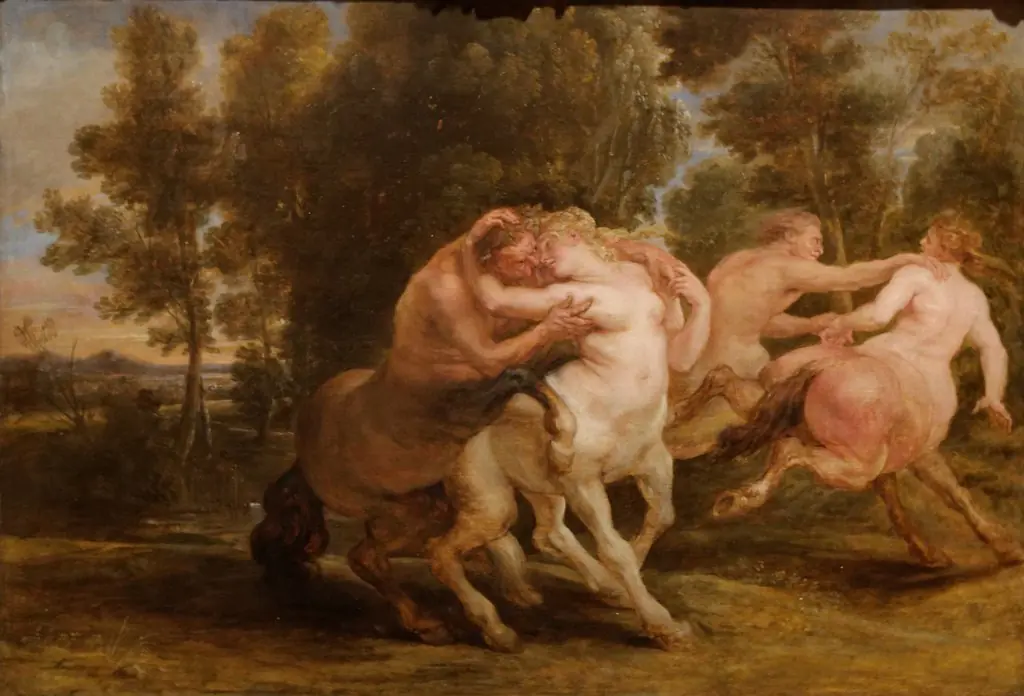 The Loves of the Centaurs
 Portrait of centaur family against landscape
 Herkules, Dejanira und der Kentaur Eurytion
 Jupiter und Antiope
 Venus and Adonis
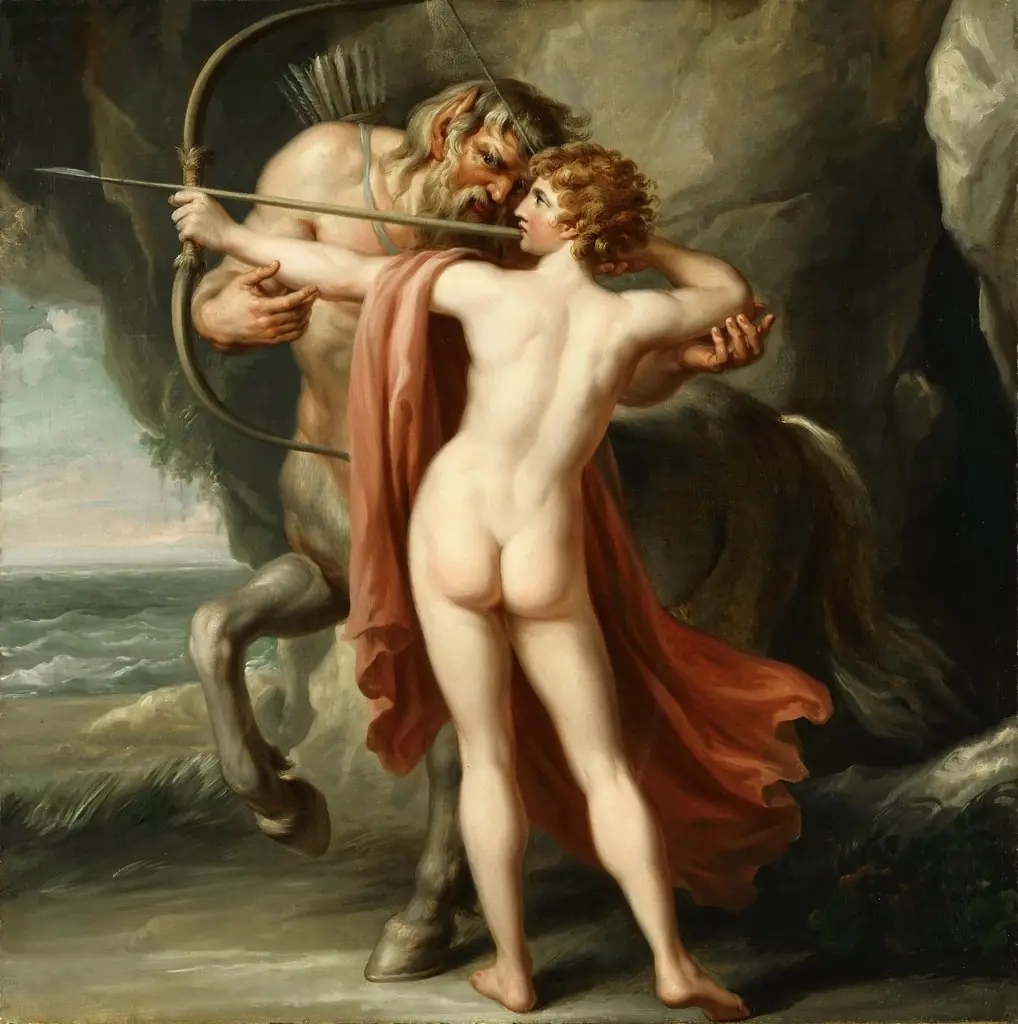 Chiron Instructing Achilles in the Bow
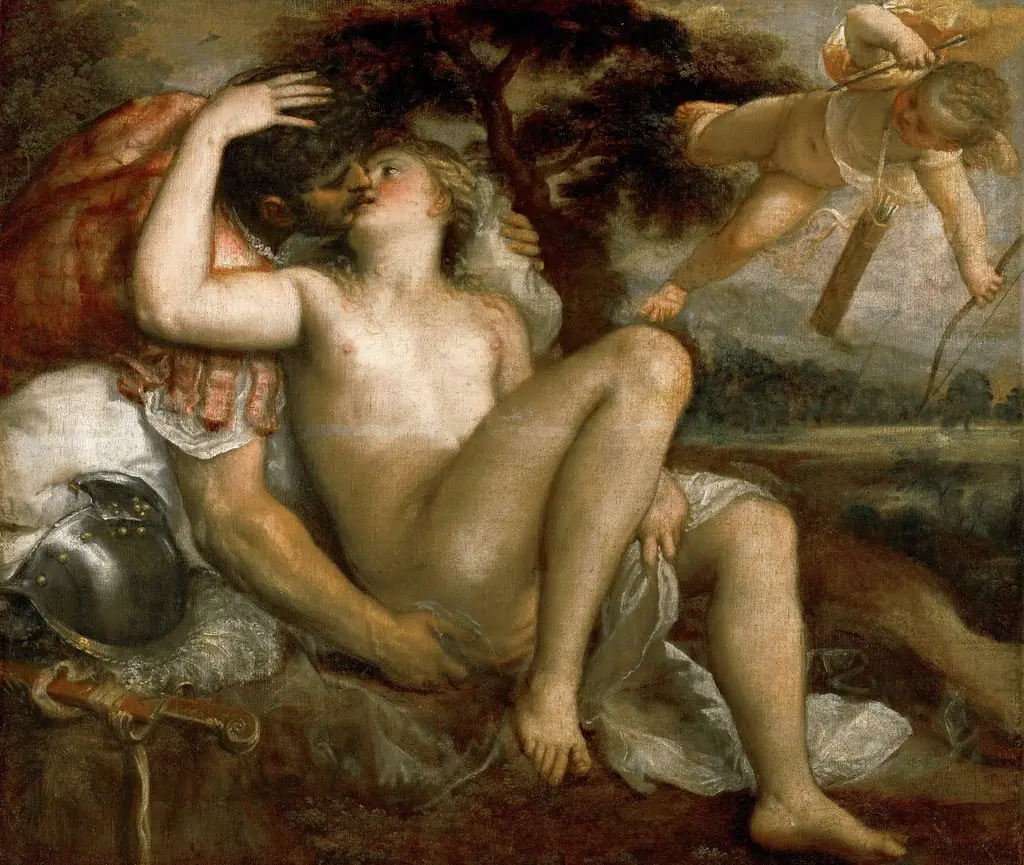 Mars, Venus and Amor
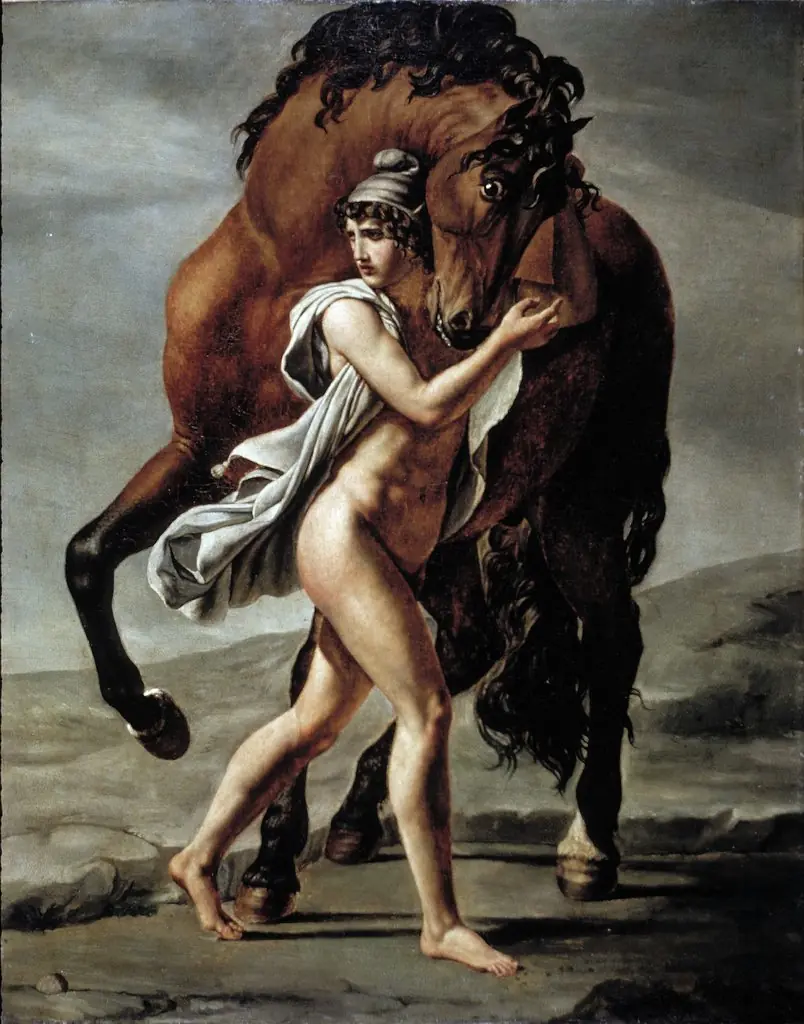 Roman Youth with Horse
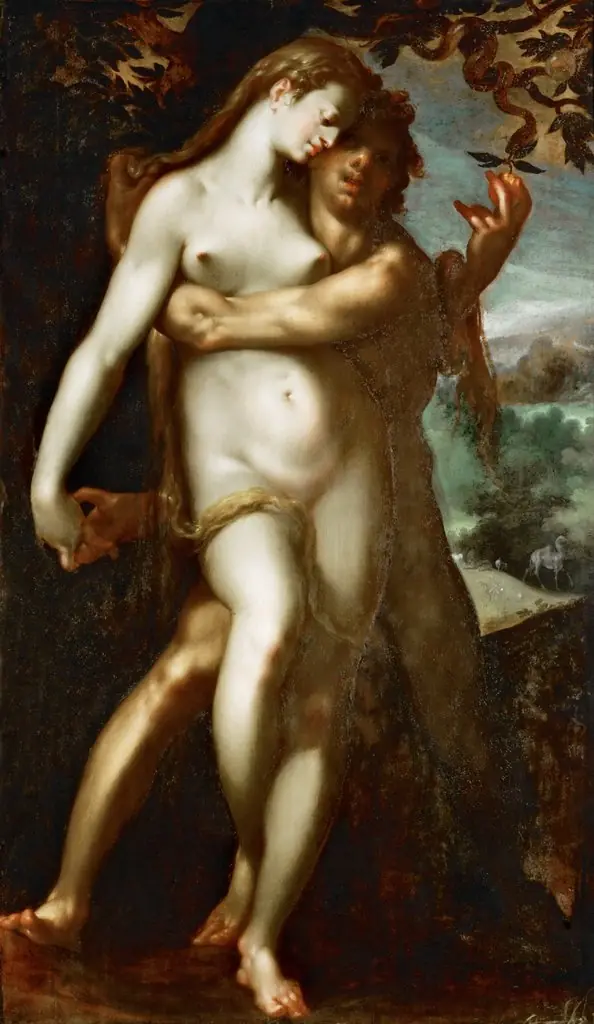 Fall of Man
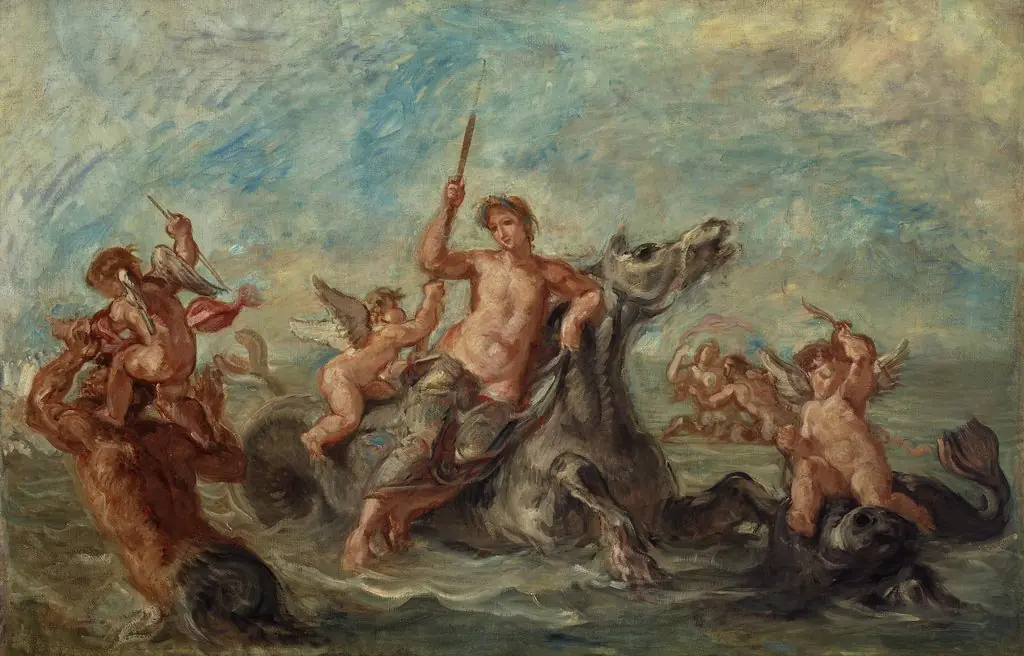 The Triumph of Amphitrite
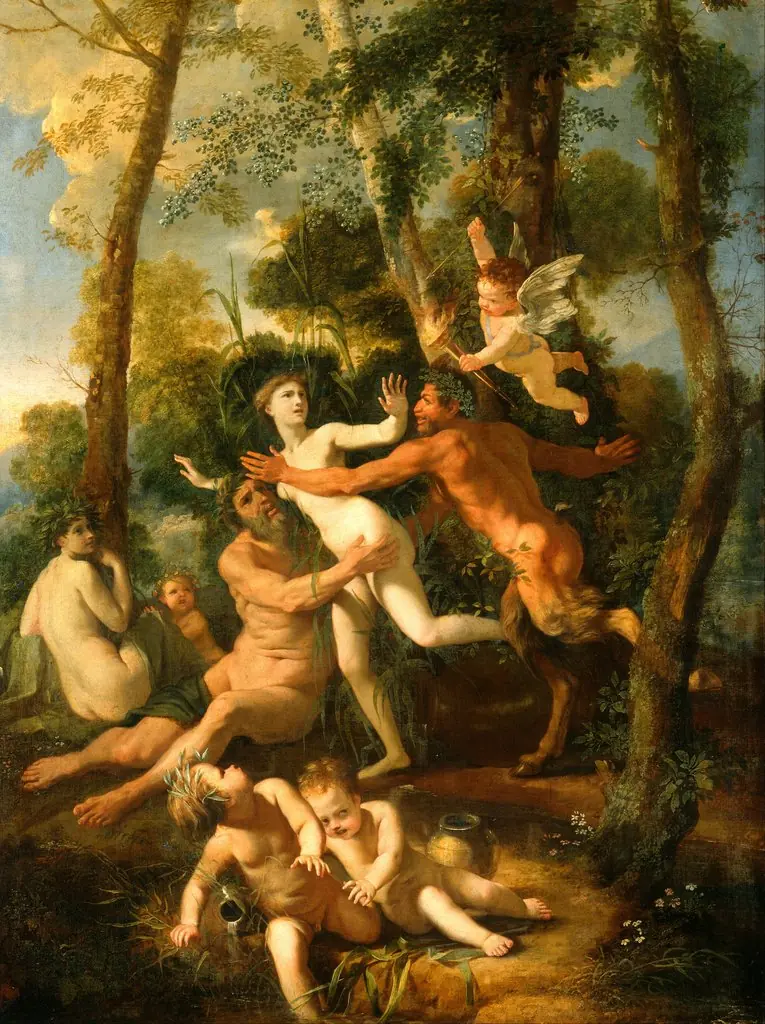 Pan and Syrinx
- Hercules, Deianira, and Nessus