Artwork
Sleeping Venus
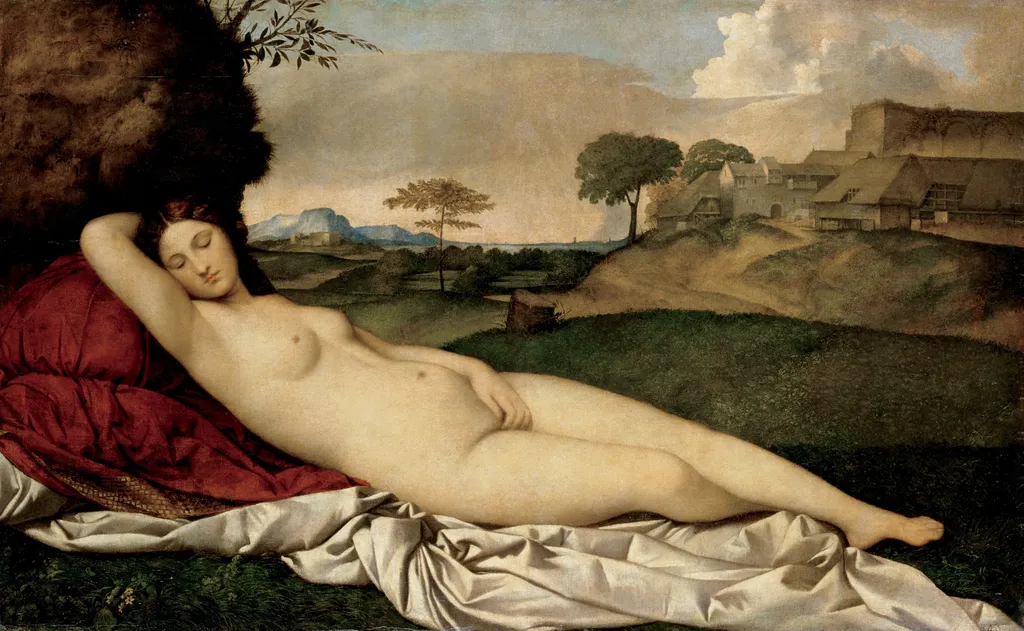
Sleeping Venus is an oil painting by the High Renaissance artist Giorgione. It dates from 1509 and is held in the collection of the Staatliche Kunstsammlungen Dresden.
About this work
Subject & Meaning
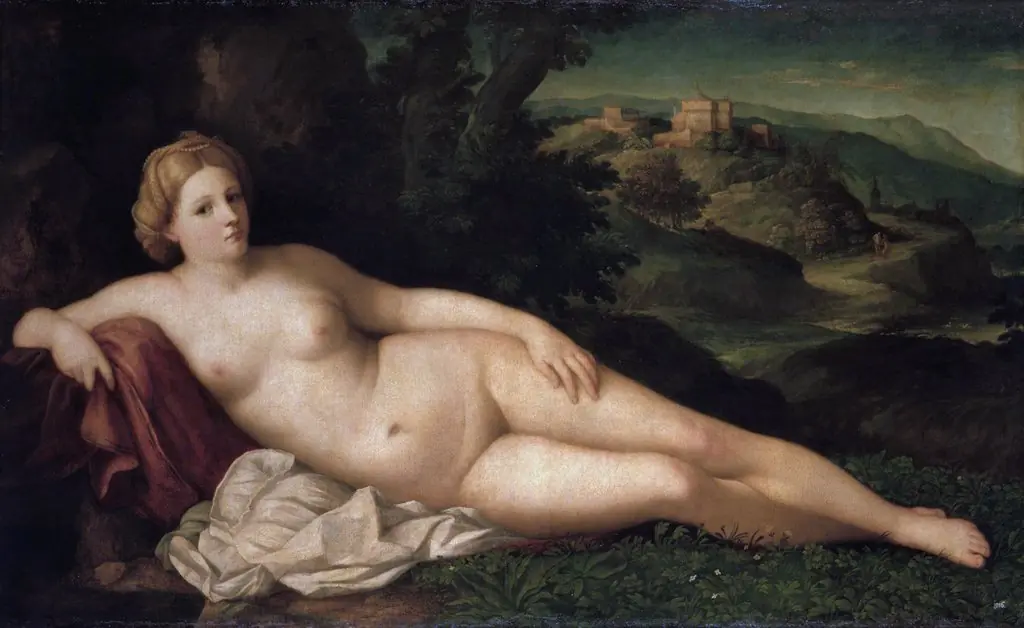
The painting depicts a nude, sleeping Venus reclining on a white sheet, her profile echoing the rolling hills behind her.
The painting depicts a nude, sleeping Venus reclining on a white sheet, her profile echoing the rolling hills behind her. Her raised arm and the hand placed on her groin signal erotic iconography; originally a Cupid stood at her feet, later overpainted, and the drapery is rendered in a cold, silver tone. The landscape, mirroring the figure's curves, together with the large-scale solitary nude, inaugurated the genre of erotic mythological pastoral and conveys an idealised, harmonious state of being, occasionally read as an allegory of Cyprus.
Technique & Style
Executed in oil on canvas, this work measures 108.5 by 175 centimeters. The painting's creation was interrupted by Giorgione's death in 1510, leading to its completion by Titian, who is credited with the landscape, sky, and silver-toned drapery. Modern scholarship, supported by X-ray analysis, suggests Titian may have also painted the nude figure itself, which originally featured a profile head later altered.
Technical examinations reveal significant compositional changes, including a modified landscape and an overpainted Cupid figure at the goddess's feet that was removed in 1837 due to damage from handling. The transfer of the paint layer to a new canvas support, likely occurring in the early nineteenth century, resulted in the loss of any original underdrawing. Stylistically, the work establishes the genre of the reclining nude, with the figure's contours echoing the rolling hills of the background to create an organic unity between body and nature.
History & Provenance
The Sleeping Venus is dated to around 1509–1510 and is traditionally attributed to Giorgione, who left the canvas unfinished at his death in 1510; Titian is generally credited with completing the landscape and sky, and in the 21st century some scholars have argued Titian also painted the nude figure itself. The work is usually identified with a painting recorded in 1525 by Marcantonio Michiel in the Venetian collection of Girolamo Marcello, who married in 1507 and may have commissioned the picture to mark that event, though Michiel's notes leave the attribution and identity not entirely certain. The painting was acquired by Augustus II the Strong of Saxony through the French dealer C. Le Roy in 1695 (some accounts give 1699), entering the collection that became the Gemäldegalerie Alte Meister in Dresden, where it was catalogued under shifting attributions before Giovanni Morelli in the 19th century linked it to Michiel's description. After World War II it was briefly held by the Soviet Union before returning to Dresden.
The Sleeping Venus is held in the Gemäldegalerie Alte Meister, part of the Staatliche Kunstsammlungen Dresden. Inventory records fluctuated over subsequent centuries; a 1722 catalogue attributed the landscape to Titian, while an 1856 inventory misidentified it as a copy by Giovanni Battista Salvi. The painting was correctly linked to the work described by Marcantonio Michiel in 1525 only after Giovanni Morelli's analysis in the late 19th century.
Technical examinations, including X-rays conducted in the 20th century, revealed significant alterations, such as the overpainting of a Cupid figure in 1837 due to damage from handling.
Context
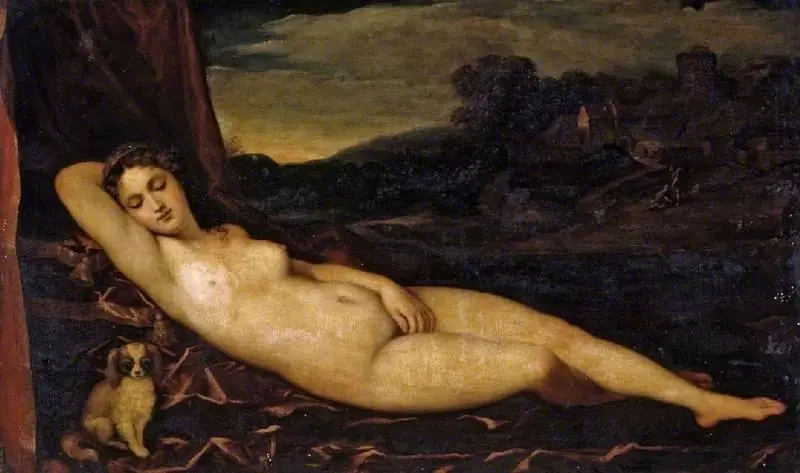
The Sleeping Venus is celebrated as the first large-scale reclining nude in Western painting, inaugurating the erotic mythological pastoral genre that later influenced Venetian and post-Renaissance art. Critics have noted its subtle eroticism, from the raised arm and hand on the groin to the cold, silver drapery that distinguishes it from contemporary treatments. Scholarly debate over its authorship reflects a shifting consensus: while traditionally attributed to Giorgione with Titian completing the landscape, recent analyses suggest Titian may have painted the figure itself, leaving Giorgione's contribution uncertain.
The work situates Giorgione within the High Renaissance Venetian school and demonstrates how his innovative fusion of figure and landscape reshaped mythological nude imagery.
Legacy
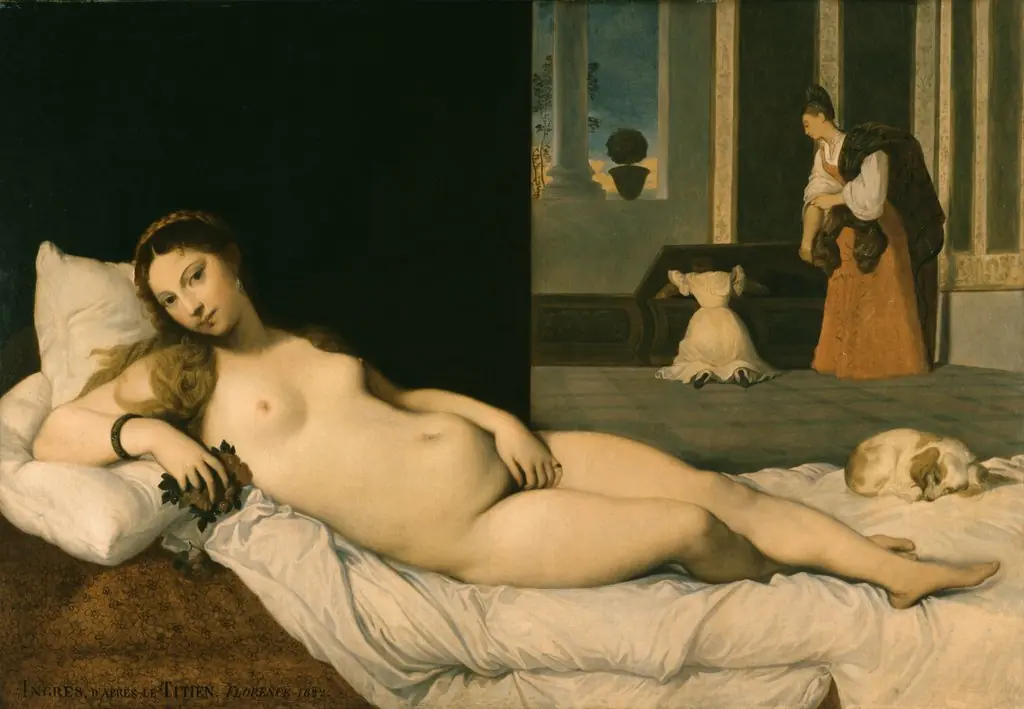
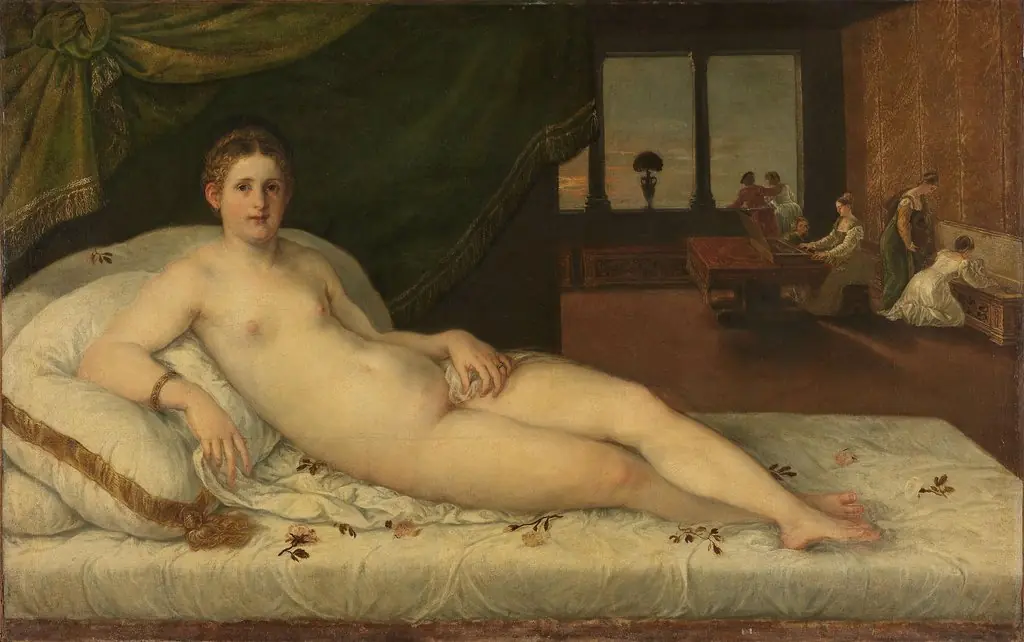
Sleeping Venus created the archetype of the reclining nude in a landscape, inaugurating the erotic mythological pastoral genre that later defined Venetian painting. The composition's seamless integration of figure and terrain, together with its subtle sensuality, informed subsequent works such as Titian's Venus of Urbino and later depictions by Velázquez, Goya and Manet. Its tangled attribution to Giorgione and Titian, and the shifting ownership records from the 17th-century Saxon court to 19th-century catalogues, have sustained scholarly fascination and cemented its status as a touchstone for studies of artistic collaboration and Renaissance reception.
Overview
The painting known as Sleeping Venus depicts a nude female figure in repose within a natural setting. This early 16th-century oil painting, also referred to as the Dresden Venus, has a complex history of attribution, traditionally given to Giorgione but with substantial contributions by Titian. It is currently housed in the Gemäldegalerie in Dresden, Germany, where it remains a subject of art historical discussion regarding its precise authorship.
Own this work as a print
Artist & collection