Artwork
Venus
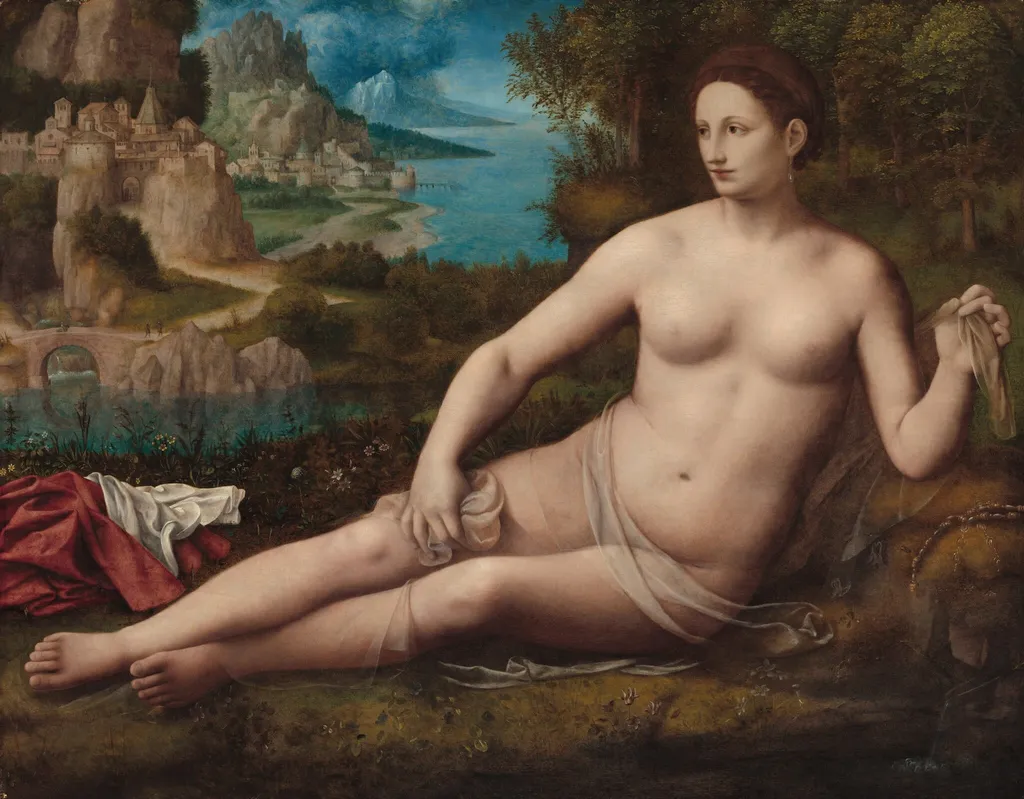
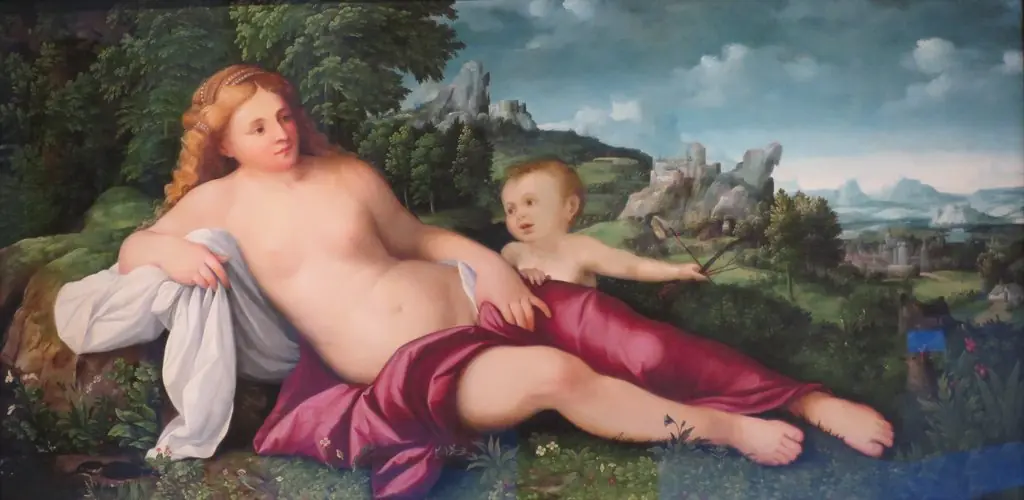
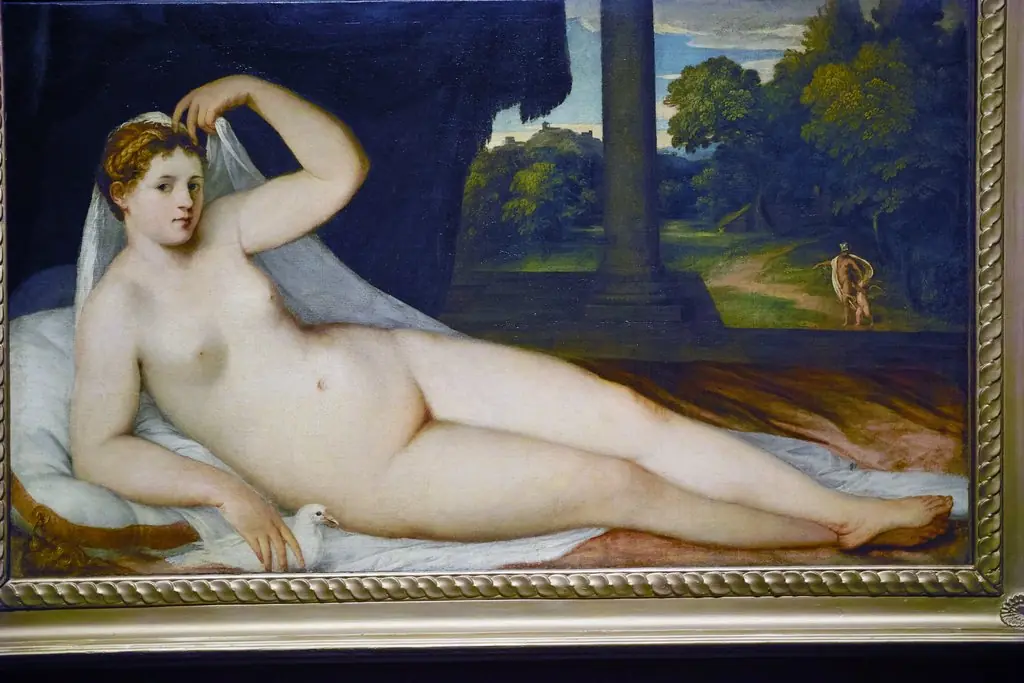
Venus is an oil painting by the Mannerist artist Luini Bernardino. It dates from 1530 and is held in the collection of the National Gallery of Art.
About this work
Subject & Meaning
Classified as a mythological work, the piece focuses entirely on this central figure, who serves as the primary subject.
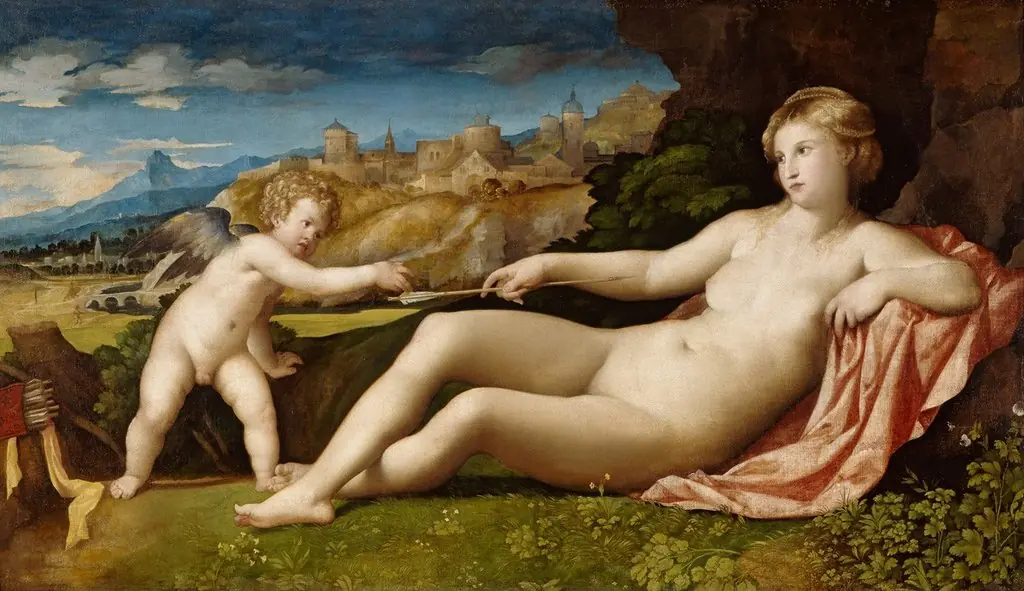
Created circa 1530 by Bernardino Luini, this oil painting on panel depicts Venus, the Roman goddess of love and beauty. Classified as a mythological work, the piece focuses entirely on this central figure, who serves as the primary subject. While the specific iconographic details of her pose or accompanying attributes are not elaborated upon in the available records, the work's genre firmly establishes its narrative context within classical mythology.
The painting represents the enduring artistic tradition of portraying Venus, a subject frequently explored during the Renaissance to embody ideals of femininity and divine grace. As part of the Samuel H. Kress Collection at the National Gallery of Art, the work stands as an example of Luini's engagement with mythological themes, though the provided documentation emphasizes its provenance and physical characteristics over a detailed analysis of its specific symbolic program or allegorical meaning.
Technique & Style
Bernardino Luini’s Venus (1530) is executed in oil on a wooden panel, a common support for Italian Renaissance paintings, measuring 106.7 by 135.9 centimeters. The medium’s slow drying time allowed Luini to achieve smooth, blended transitions between tones, evident in the figure’s delicate flesh tones and the soft modeling of drapery. Stylistically, the work reflects the Leonardesque influence prevalent in Lombard painting, characterized by sfumato-like atmospheric effects and a refined, almost idealized naturalism.
The handling is precise yet fluid, with subtle gradations of light and shadow enhancing the three-dimensionality of Venus’s form. Condition reports note the painting’s stable state, though minor craquelure is consistent with age and the materials used.
History & Provenance
The Venus by Bernardino Luini is dated to circa 1530. Its early provenance traces to England, where it was likely held by Lord Kingsdale before passing through Sir John Charles Robinson in London. The painting appeared at the 1925 London sale organized by Fisher and Harding, lot 5, after which it entered the collection of Ing.
Gianfranceschi in Bergamo. By 1926 it was owned by Anna Barbato of Naples, via dealers Gino Longhi. Count Alessandro Contini Bonacossi acquired it by June 1933 and sold it that same month to the Samuel H. Kress Foundation in New York, which donated the work to the National Gallery of Art, Washington, D.C., in 1939.
The painting is currently held by the National Gallery of Art in Washington, D.C., as part of the Samuel H. Kress Collection. Its acquisition history traces to a gift from the Kress Foundation in 1939, following a sale by Count Alessandro Contini Bonacossi in June 1933. Prior to this, the work passed through several European collections, including those of Ing.
Gianfranceschi in Bergamo and Anna Barbato in Naples by 1926. Earlier attributions suggest possible ownership by Sir John Charles Robinson and Lord Kingsdale in England, though the latter identification remains tentative due to discrepancies in peerage records. The National Gallery of Art lists the work as an oil on panel depicting Venus, created by Bernardino Luini around 1530.
Legacy
The acquisition of Luini's "Venus" by the Samuel H. Kress Foundation in 1933 and its subsequent donation to the National Gallery of Art placed the work within a major public collection, fostering scholarly attention to the artist’s contribution to High Renaissance mythology. Documentation of its provenance, from Lord Kingsdale through Count Contini Bonacossi, highlights a documented chain of ownership that underscores its recognized importance in European art markets. The painting’s inclusion in the Kress Collection, extensively studied and reproduced, has contributed to ongoing assessments of Luini’s role in the development of mythological imagery, reinforcing its reputation as a key example of northern Italian Renaissance art.
Overview
Bernardino Luini's painting, titled Venus, was created around 1530 using oil on panel. This artwork portrays the mythological goddess Venus, a subject frequently explored in art history. The composition features the nude figure of Venus, rendered with the soft lines and gentle colors typical of the period. It exemplifies the artistic conventions and material choices prevalent during the early 16th century.
Own this work as a print
Artist & collection

Artist
Bernardino Luini (c. 1480/82 – June 1532) was a north Italian painter from Leonardo's circle during the High Renaissance. Both Luini and Giovanni Antonio Boltraffio were said to have worked with Leonardo directly; he…