Artwork
The Wane of the Honeymoon
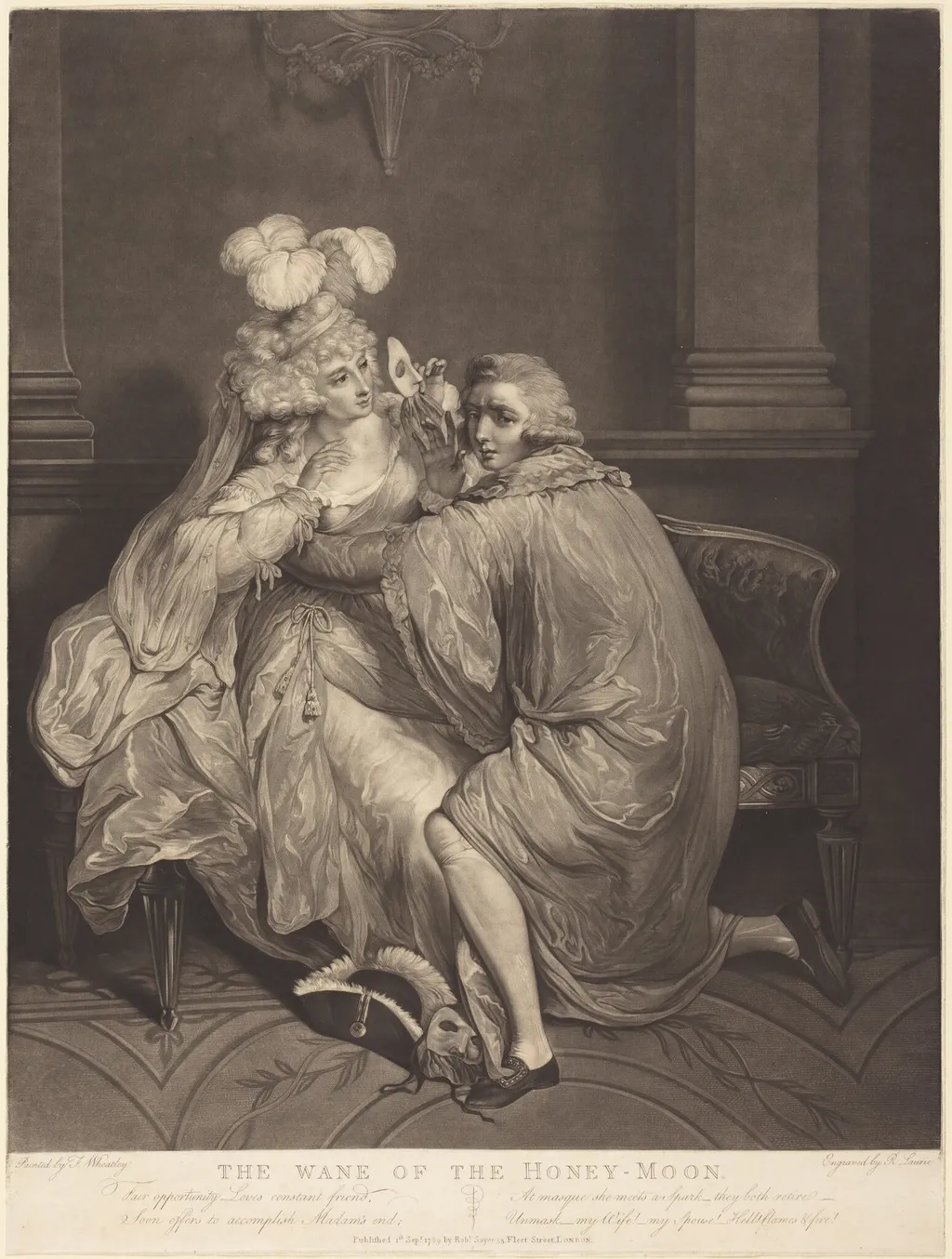
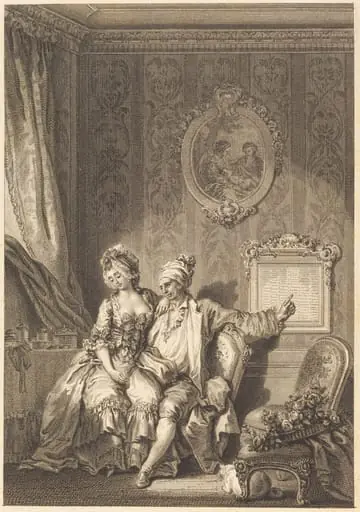
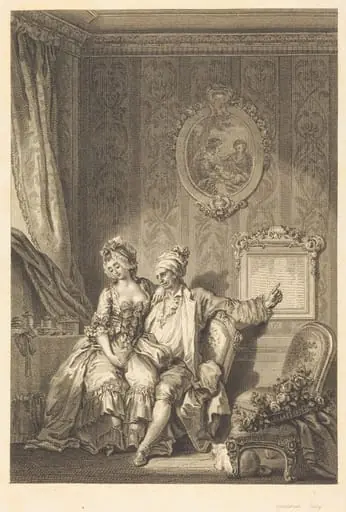
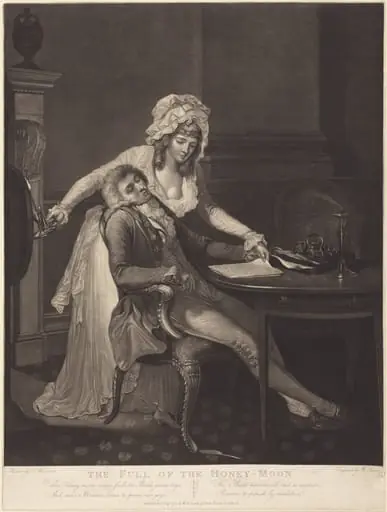
The Wane of the Honeymoon is an ink print by the Romanticist artist Robert Laurie. It dates from 1789 and is held in the collection of the National Gallery of Art.
- Inscription
- Inscribed:lower left in plate: F. Wheatley; lower right in plate: Engraved by R. Laurie; lower center in plate: THE WANE OF THE HONEY-MOON / Fair opportunity Loves constant friend, Soon offers to accomplish Madam's end... / Published 1st Sepr. 1789 by Robt. Sayer 53, Fleet Street, LONDON …
About this work
Overview
Created in 1789 by Robert Laurie, this mezzotint on laid paper depicts a quiet, intimate moment between two figures. The work belongs to the printmaking tradition of late 18th-century Britain, where mezzotint was valued for its capacity to render subtle gradations of light and shadow. Its title suggests a thematic shift from domestic harmony to something more ambiguous, possibly disillusionment.
Subject & Meaning
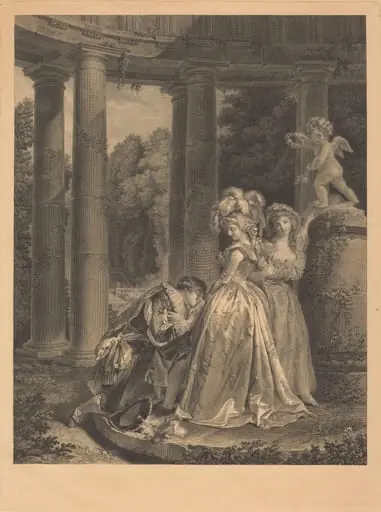
A man kneels before a seated woman, offering a white mask with hollow eye openings. She gazes at him, her elaborate attire and posture conveying formality or distance. The mask, neither worn nor discarded, hovers as a symbol of concealment or identity.
The scene evokes tension within a private space, hinting at the erosion of intimacy rather than its celebration, despite the romantic lighting.
Technique & Style
Laurie employed mezzotint, a technique that scrapes and textures copper plates to produce rich tonal ranges.
Laurie employed mezzotint, a technique that scrapes and textures copper plates to produce rich tonal ranges. The print’s deep shadows contrast with selective illumination, drawing focus to the figures and the mask. The woman’s voluminous dress and the room’s furnishings are rendered with delicate detail, while the background recedes into near darkness, enhancing the psychological weight of the moment.
History & Provenance
The print was produced in London during a period when mezzotint was widely used for reproductive and original works. Robert Laurie, active as an engraver and publisher, often collaborated with artists to translate paintings into prints for middle-class collectors. This piece likely circulated as a standalone image, reflecting contemporary interest in domestic narratives and emotional nuance.
Context
Emerging in the wake of the Enlightenment and on the cusp of Romanticism, the image engages with shifting ideas about marriage and emotion. While not overtly political, its subdued drama aligns with broader cultural anxieties about authenticity and performance in personal relationships. The mask, a recurring motif in 18th-century visual culture, signals the tension between outward propriety and inner feeling.
Legacy
Though not widely reproduced or studied today, the print exemplifies the capacity of mezzotint to convey psychological depth in domestic scenes. It stands as a quiet artifact of its time, illustrating how printmakers translated nuanced human interactions into accessible imagery, contributing to the visual language of emotional realism in British art.
Own this work as a print
Artist & collection