Artwork
Gadekæret i Ring
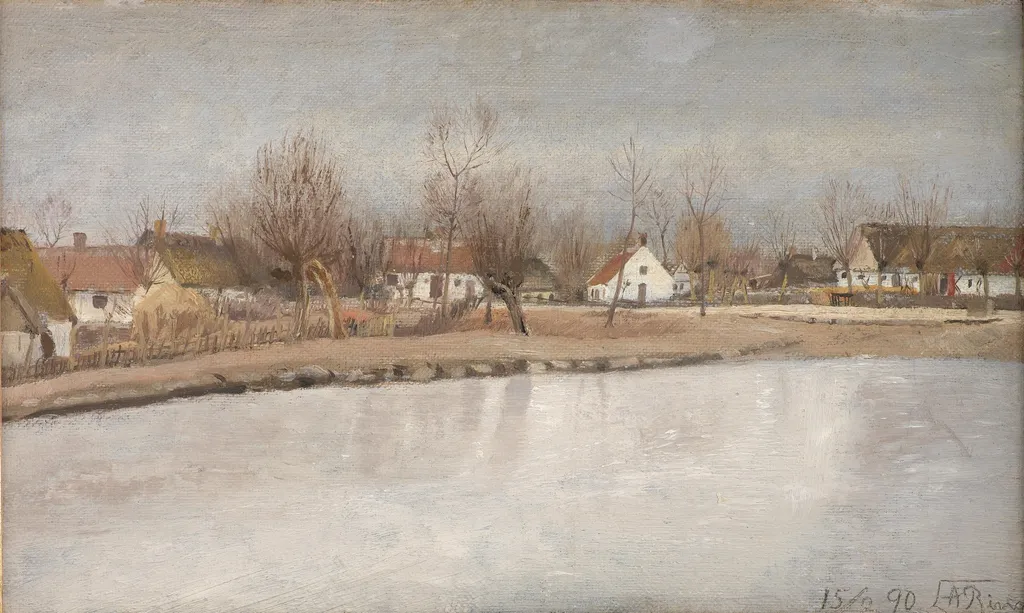
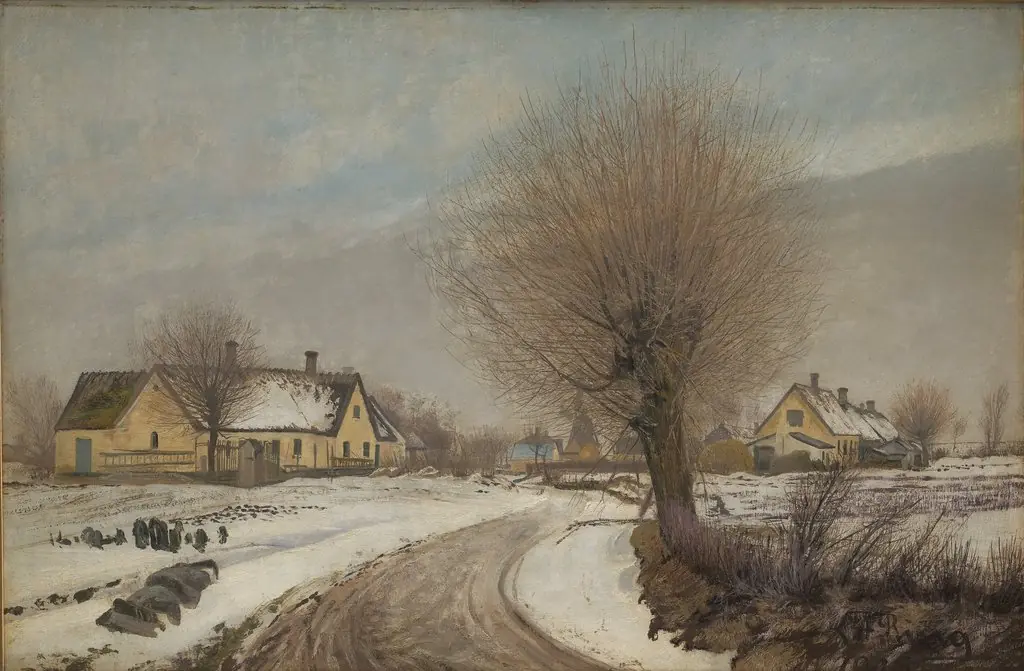
Gadekæret i Ring is an oil painting by the Impressionist artist Laurits Andersen Ring. It dates from 1896 and is held in the collection of the Statens Museum for Kunst.
About this work
Subject & Meaning
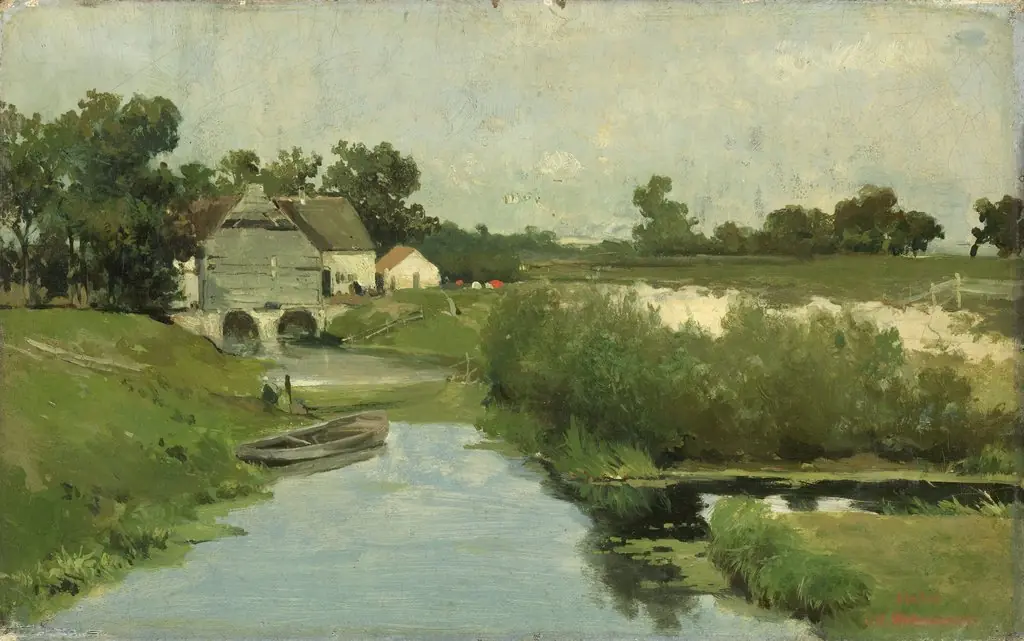
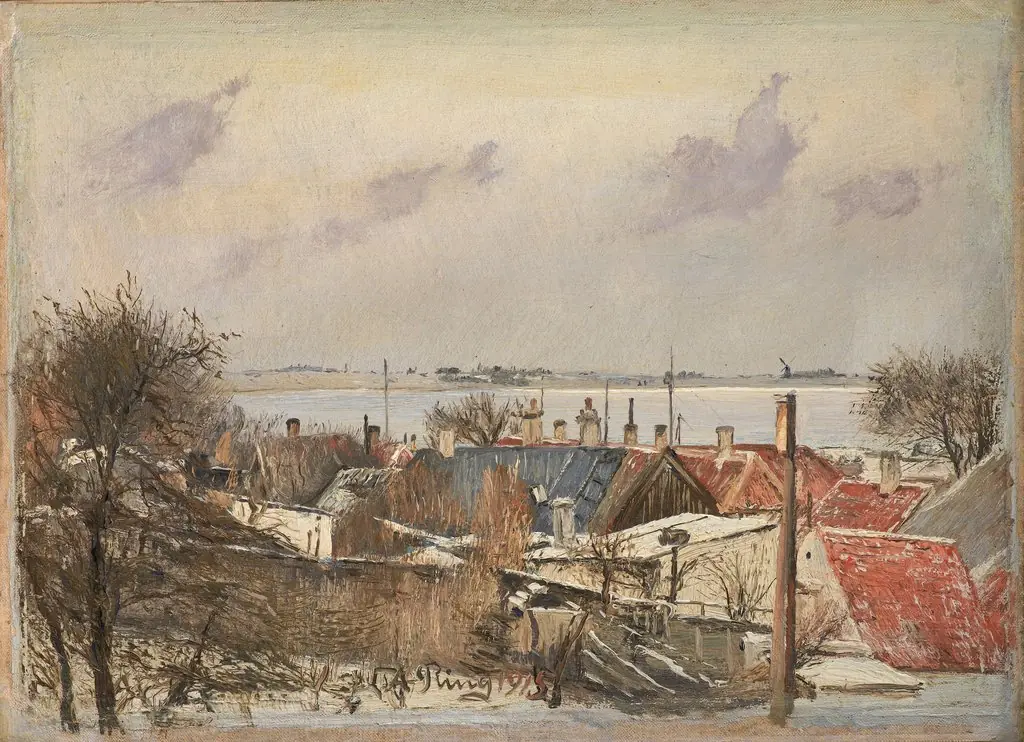
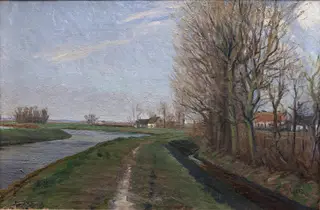
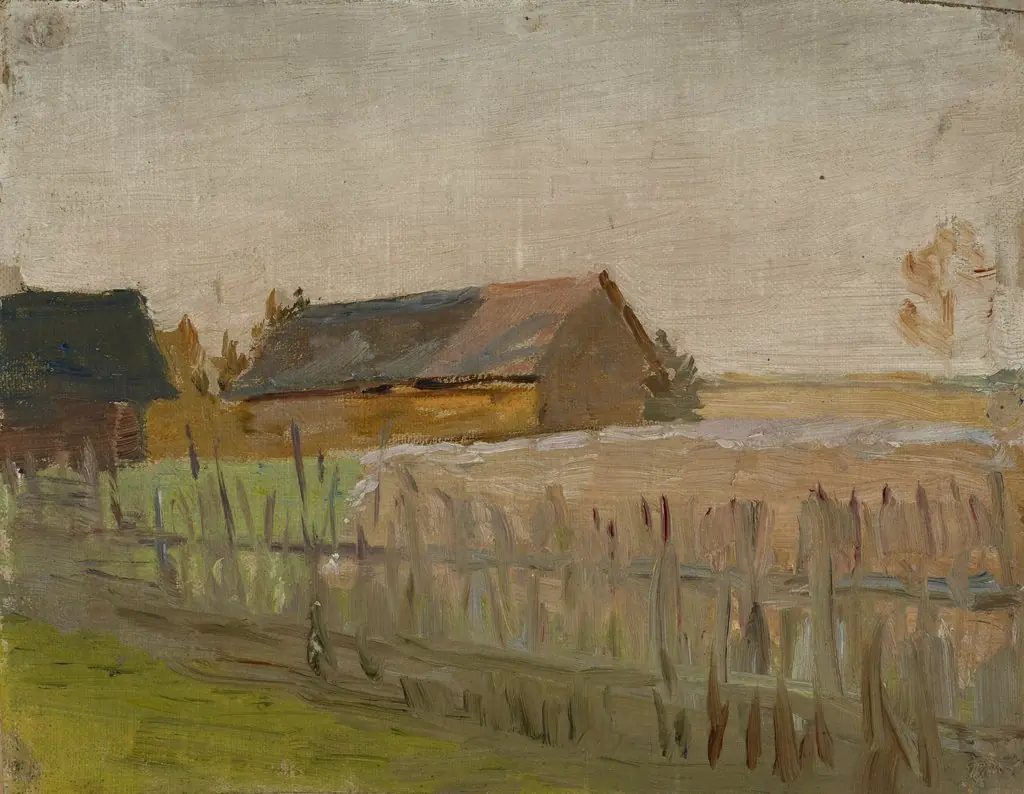
The composition features a house and a tree situated near the water, capturing a specific moment of everyday life in the Danish countryside.
Painted in 1890, this landscape depicts a quiet rural scene centered on a village pond located in Ring. The composition features a house and a tree situated near the water, capturing a specific moment of everyday life in the Danish countryside. As a work by Laurits Andersen Ring, the painting focuses on the natural environment and local architecture without incorporating complex allegorical symbols or religious iconography.
The subject matter represents a straightforward observation of the artist's surroundings, emphasizing the serene atmosphere of the village setting rather than conveying a hidden narrative or metaphorical meaning.
Technique & Style
An oil painting on canvas depicting a village pond, house, and tree, rendered in a naturalistic landscape style characteristic of Laurits Andersen Ring's work. The piece measures 20 cm in height and 34 cm in width and was created in 1890. It is part of the collection at Statens Museum for Kunst, where it remains on display.
History & Provenance
Laurits Andersen Ring painted Gadekæret i Ring in 1890, an oil on canvas landscape depicting a village pond, house, and tree. The work entered the collection of the Statens Museum for Kunst, where it remains on display.
The painting was created during Ring's mature period, reflecting his focus on naturalistic landscapes with precise detail. Its dimensions measure 20 centimeters in height by 34 centimeters in width.
Gadekæret i Ring is held in the collection of Statens Museum for Kunst, with the inventory number not specified in the provided sources. The work was created in 1890 by Laurits Andersen Ring and is classified as a landscape painting executed in oil on canvas. It has been exhibited as part of the museum's permanent display of Danish art, reflecting its significance within the national artistic heritage.
Context
The work's reception is anchored in Ring's role within Danish Symbolism, though specific contemporary critiques are not detailed in the sources. Scholarship situates it firmly within his mature landscape period, characterized by symbolic use of nature to convey psychological depth, as evidenced by its inclusion in the Statens Museum for Kunst collection. Its placement in art history reflects a transition from Romanticism toward modernist introspection in Nordic painting, aligning with broader Scandinavian artistic movements of the late 19th century.
Overview
Laurits Andersen Ring’s 1896 oil painting Gadekæret i Ring presents a tranquil village scene in the Danish town of Ring. The composition centers on a modest house, a solitary tree, and a broad, placid pond that reflects the muted sky. Executed in a restrained palette, the work captures a moment of everyday stillness characteristic of Ring’s late‑19th‑century output.
Own this work as a print
Artist & collection
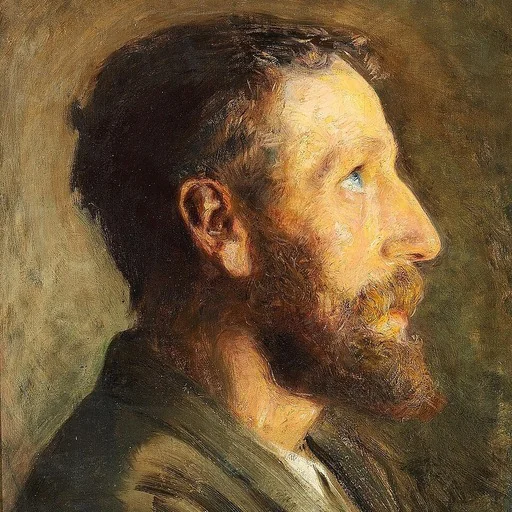
Artist
Laurits Andersen Ring (Danish pronunciation:; 15 August 1854 – 10 September 1933) was one of the foremost Danish painters of the turn of the 20th century, who pioneered both symbolism and social realism in Denmark.