Artwork
Mary Magdalene
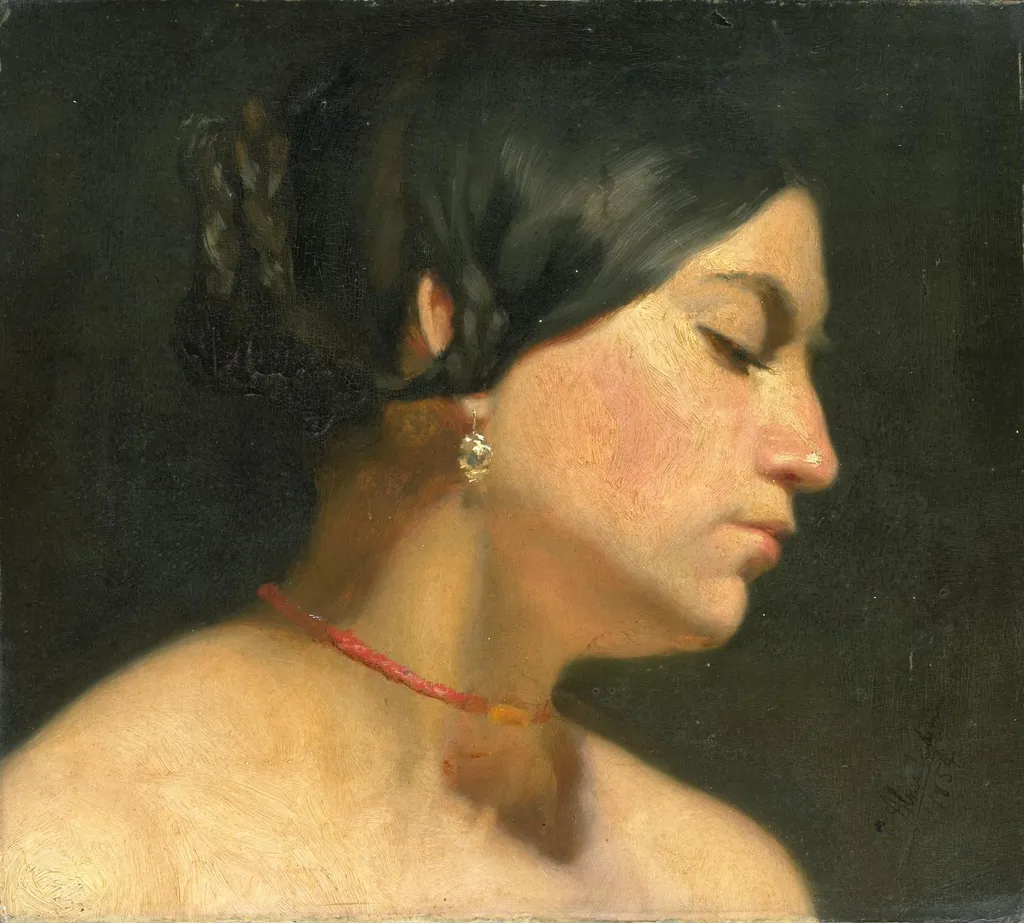
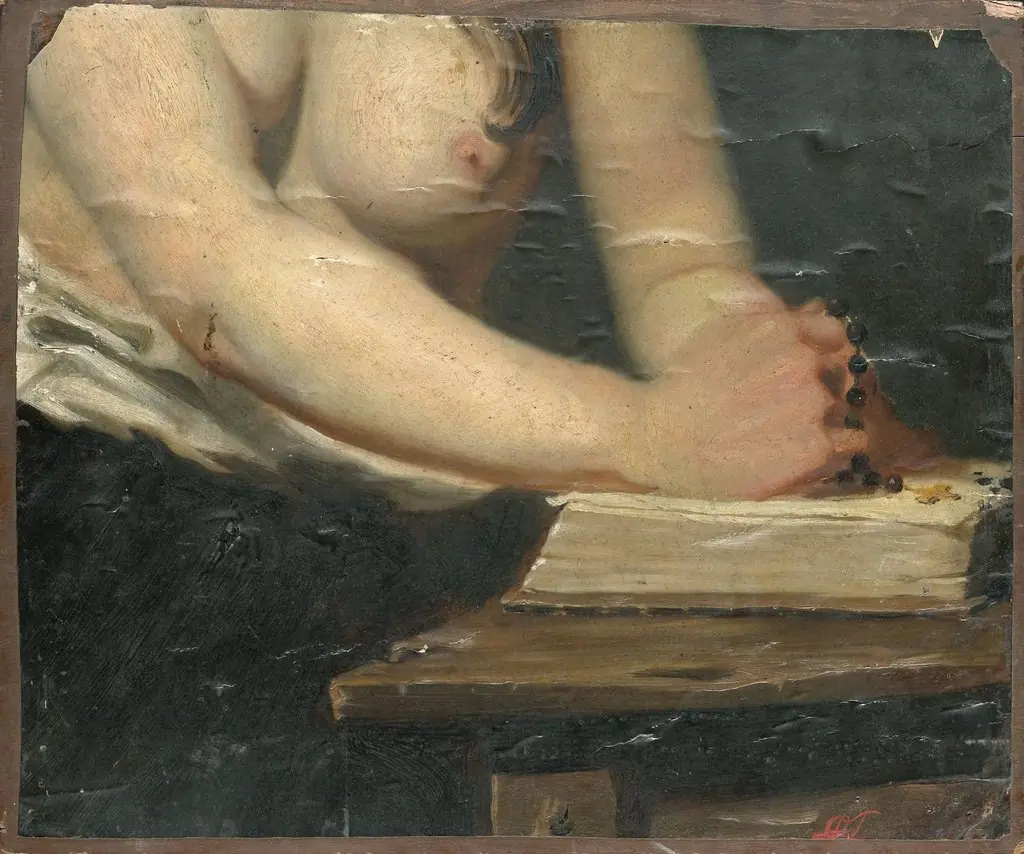
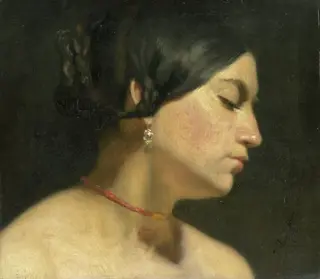
Mary Magdalene is an oil painting by the Academic Art artist Lawrence Alma-Tadema. It dates from 1854 and is held in the collection of the Rijksmuseum.
About this work
Subject & Meaning
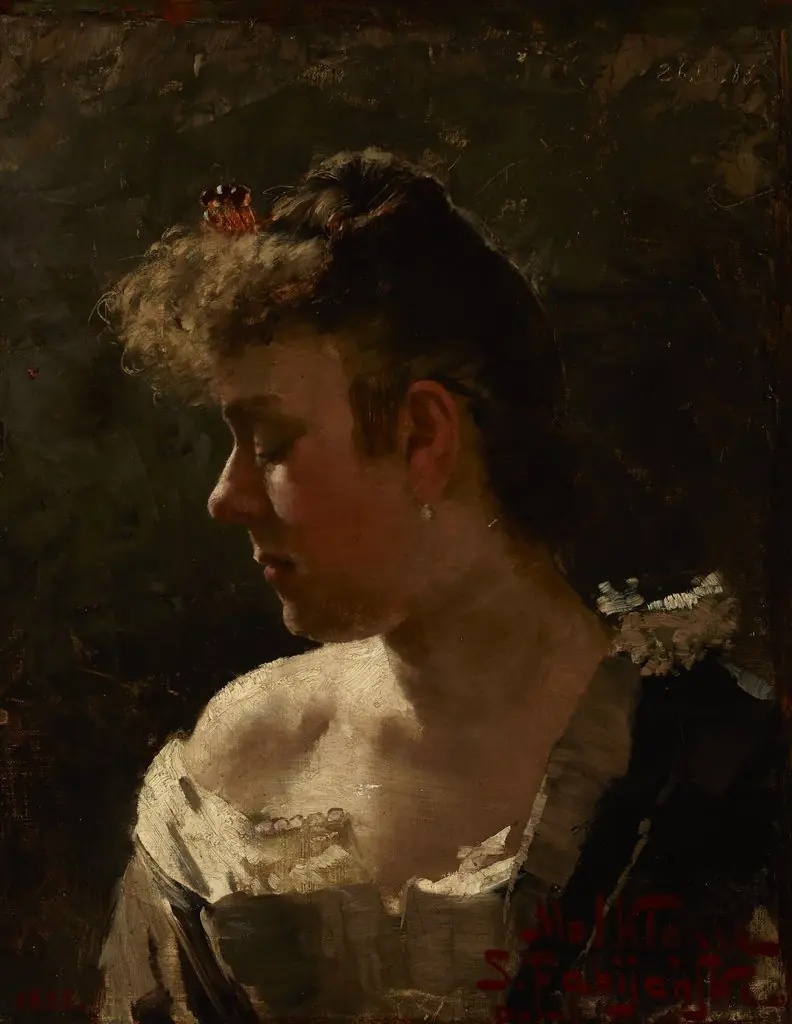
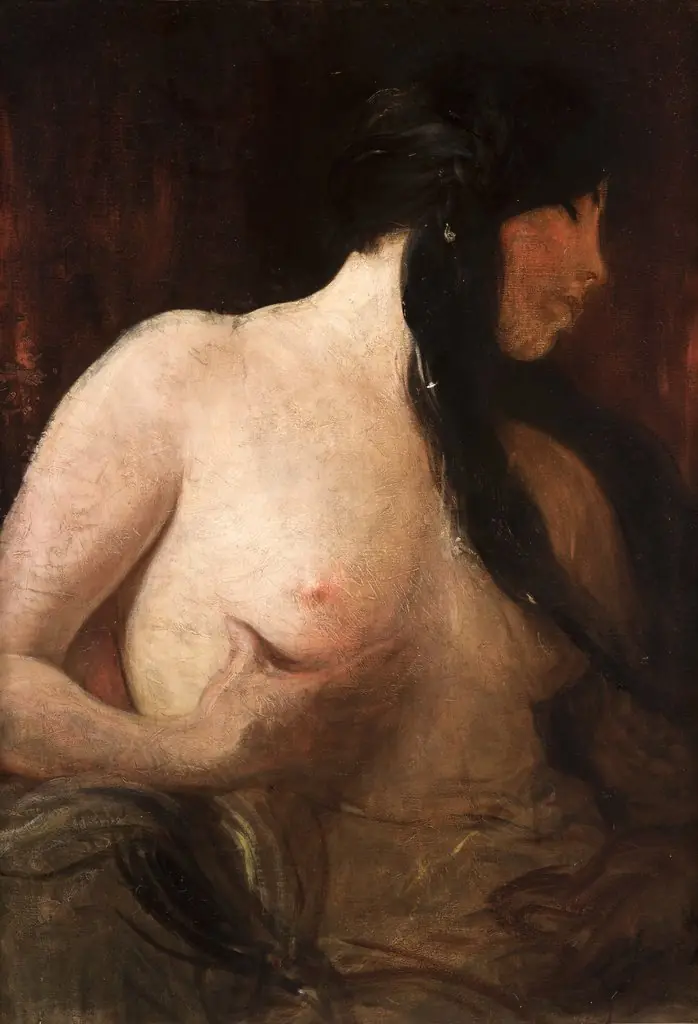
Lawrence Alma-Tadema’s 1854 painting depicts Mary Magdalene as a penitent figure, emphasizing her spiritual transformation through physical mortification.
Lawrence Alma-Tadema’s 1854 painting depicts Mary Magdalene as a penitent figure, emphasizing her spiritual transformation through physical mortification. The subject is rendered as a half-length woman with long black hair bound in a chignon and a loose pigtail, wearing a choker and earring. The iconography aligns with traditional representations of the Penitent Magdalene, a motif emphasizing repentance and ascetic devotion.
Alma-Tadema’s approach situates the religious narrative within the academic genre, focusing on the figure’s inward piety rather than external action. The work’s restrained composition and subdued palette reinforce the contemplative mood associated with Magdalene’s penitential state.
Technique & Style
Executed in 1854, this academic religious painting by Lawrence Alma-Tadema utilizes oil paint applied to a panel support. The work measures 31 by 35 units. Stylistically, the composition focuses on the Penitent Magdalene, depicting a woman with waist-length black hair arranged in a chignon with a pigtail.
The figure is adorned with specific jewelry, including a choker and an earring. The visual narrative addresses the theme of the mortification of the flesh, characteristic of the subject matter. As an early work within the artist's career, the piece demonstrates the material choices and figurative handling typical of the academic art movement of the period.
History & Provenance
Lawrence Alma-Tadema executed the oil painting Mary Magdalene in 1854, applying the medium to a wooden panel. The work, which depicts the Penitent Magdalene, measures 31 by 35 centimeters. Historical records indicate that the piece was owned by Joannes Barnardus Antonius Maria Westerwoudt.
The painting is currently held in the collection of the Rijksmuseum, where it is cataloged under the inventory number SK-A-2289. While the specific circumstances of its original commission are not detailed in the available records, the work's inception is firmly dated to the beginning of 1854, marking it as an early example of the artist's engagement with religious subjects within the academic art movement.
Lawrence Alma‑Tadema’s Mary Magdalene (1854) is housed in the Rijksmuseum, where it is recorded under inventory number SK‑A‑2289. The 31 cm × 35 cm oil‑on‑panel painting portrays a penitent Magdalene wearing a black choker, earring and a chignon, reflecting the work’s religious genre. Its early ownership by Joannes Barnardus Antonius Maria Westerwoudt is noted before the museum acquired the piece.
The painting has remained in the Rijksmuseum’s permanent displays; no temporary or traveling exhibitions are documented in the sources consulted.
Overview
Lawrence Alma-Tadema, a Dutch-born artist who later established his career in Britain, completed Mary Magdalene in 1854. This oil painting depicts the biblical figure in a religious genre, showcasing the artist's early work. The artwork is characterized by its focused portrayal of the subject, emphasizing her features through a distinct use of light and shadow. It is presently housed in the collection of the Rijksmuseum.
Context
Lawrence Alma-Tadema received his formal artistic training at the Royal Academy of Antwerp, a significant influence on his early technique. Although Dutch by birth, he would later become a prominent figure in the British art scene after relocating to London in 1870. This painting, created in 1854, illustrates his initial exploration of religious subjects and aligns with the broader aesthetic sensibilities of British Romanticism prevalent at the time.
Own this work as a print
Artist & collection
Artist
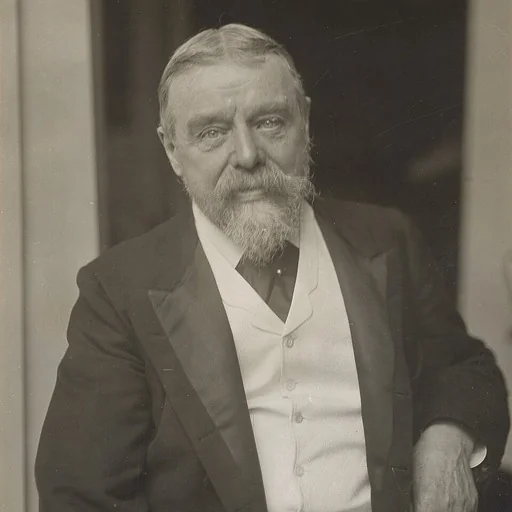
Sir Lawrence Alma-Tadema ( AL-mə TAD-ay-mə; born Lourens Alma Tadema, Dutch:; 8 January 1836 – 25 June 1912) was a Dutch painter who later settled in the United Kingdom, becoming the last officially recognised denizen in 1873.