Artwork
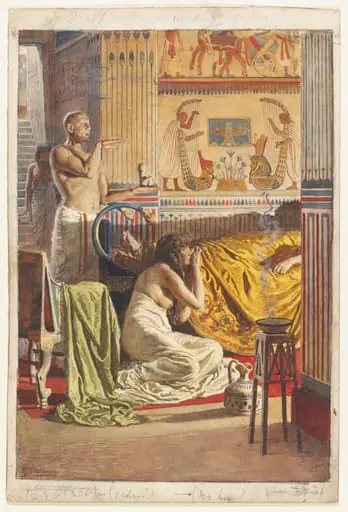
De Egyptische weduwe
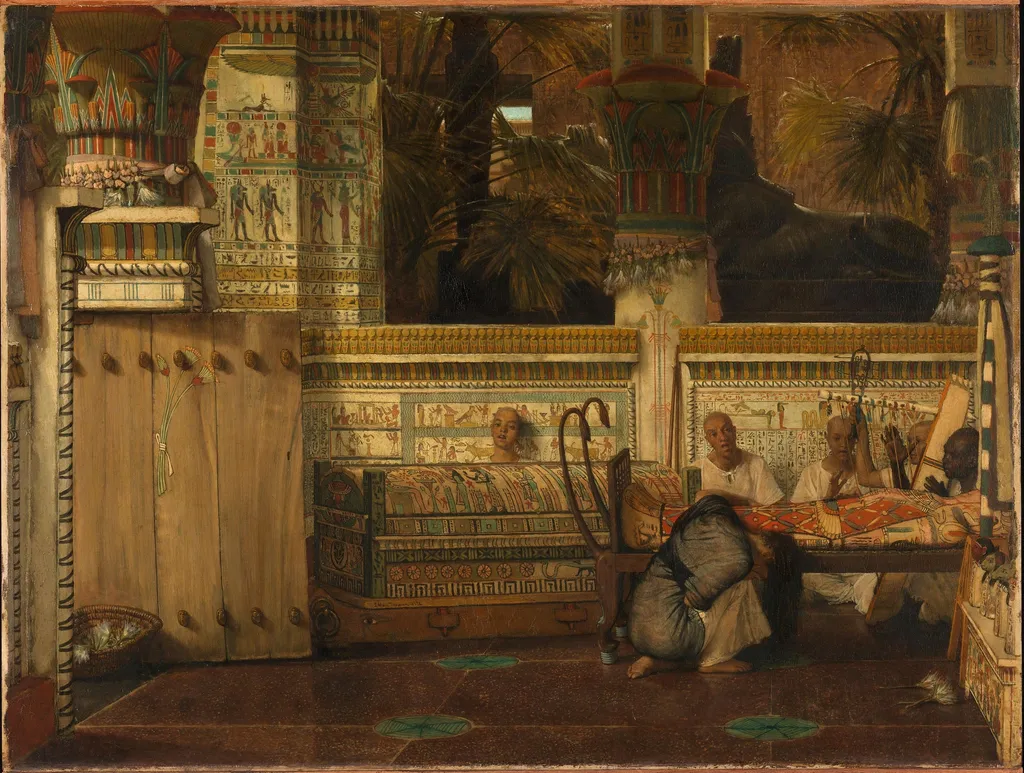
De Egyptische weduwe is an unspecified painting by the Neo Pompeian artist Lawrence Alma-Tadema. It dates from 1872 and is held in the collection of the Rijksmuseum.
About this work
Subject & Meaning
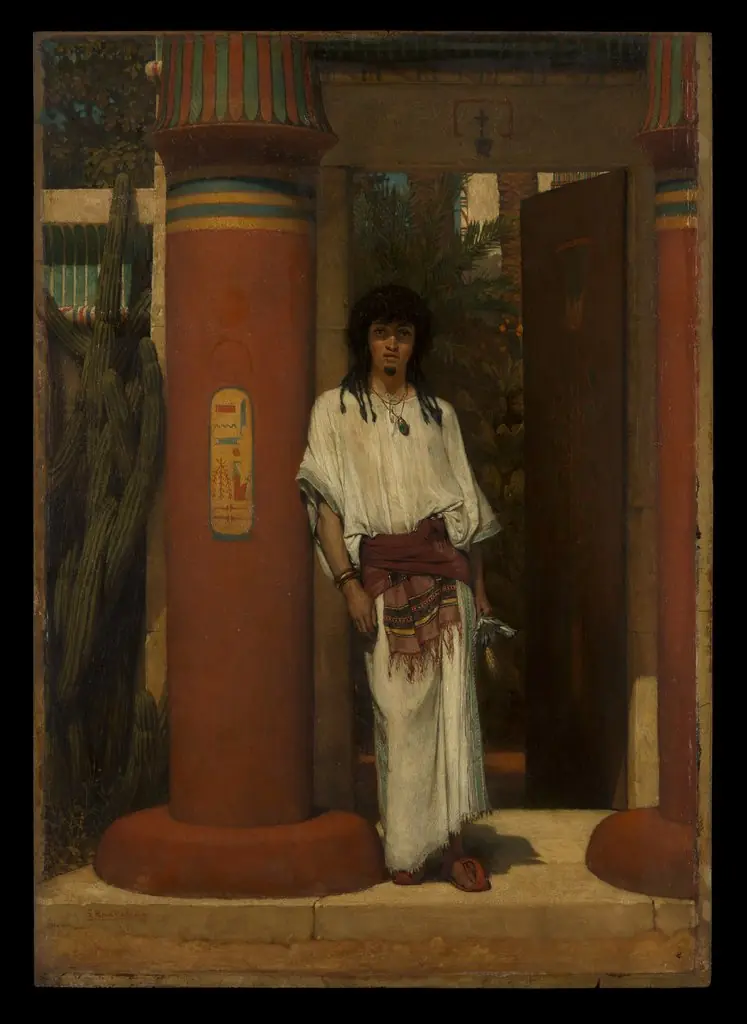
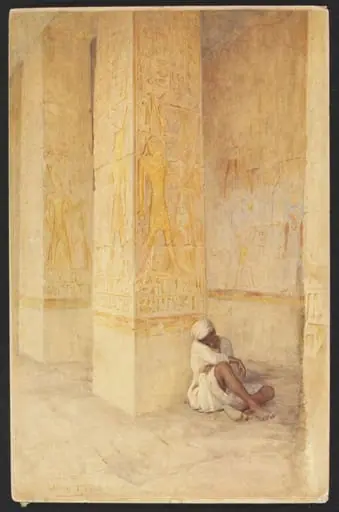
Painted in 1872, De Egyptische weduwe (An Egyptian Widow) is a history painting by Lawrence Alma-Tadema that depicts a solitary female figure within an ancient Egyptian setting. The work reflects the artist's deep engagement with Egyptian antiquity, a theme he explored extensively following his early studies of John Gardner Wilkinson's The Manners and Customs of Ancient Egyptians. Alma-Tadema, known for his meticulous attention to historical detail and accurate depictions of classical life, utilized this subject to showcase his mastery of archaeological reconstruction and material texture.
The painting exemplifies his broader interest in portraying the specific customs and daily realities of ancient civilizations, moving beyond generic romanticism to present a scene grounded in scholarly research. As part of his series of Egyptian-themed works, the piece represents the artist's commitment to visualizing the past with precision, a trait that defined his career alongside his famous depictions of Roman luxury.
Technique & Style
The painting technique of Lawrence Alma-Tadema is marked by meticulous draftsmanship and a focus on historical accuracy in depicting classical antiquity.
The painting technique of Lawrence Alma-Tadema is marked by meticulous draftsmanship and a focus on historical accuracy in depicting classical antiquity. He worked primarily in oil on canvas, employing smooth, polished brushwork to render textures such as marble, fabric, and skin with a luminous clarity. His compositions often feature languid figures within architecturally precise interiors, using cool, bright palettes and crisp linear perspective to evoke the luxury and decadence of ancient Rome and Egypt.
This formal approach combined academic realism with neo-Pompeian stylistic elements, emphasizing clarity of line and detail over emotive brushstroke.
Alma-Tadema’s handling of materials was precise; he prepared his canvases to support fine detail and used glazing techniques to achieve depth in skin tones and reflective surfaces. The support is typically a stretched linen canvas, and the finished works exhibit a high degree of finish, with surfaces that appear almost photographic in their realism. His stylistic qualities include a restrained, almost theatrical staging of subjects, a focus on decorative motifs drawn from archaeological study, and a consistent use of symbolic props that reinforce narrative context.
History & Provenance
De Egyptische weduwe was completed in 1872 by the Dutch-born artist Lourens Alma Tadema. This work emerged during a period when the painter, having settled in London in 1870, was deeply engaged in depicting scenes from classical antiquity with rigorous historical accuracy. The creation of the painting followed years of specialized study into ancient Egyptian customs and architecture, a fascination initially sparked by his mentor Louis de Taeye and informed by reference texts such as Sir John Gardner Wilkinson's writings on ancient Egypt.
While the specific commission details and subsequent ownership chain for this particular canvas are not recorded in the available sources, the work is documented as part of the collection held by the Rijksmuseum in Amsterdam.
Context
Lawrence Alma-Tadema emerged as a leading figure in Victorian art through his mastery of classical antiquity themes, particularly Roman and Egyptian settings rendered with archaeological precision. His work, exemplified by De Egyptische weduwe (1872), epitomized the neo-Pompeian style, blending academic rigor with sensual narratives that resonated with contemporary audiences. Trained initially in Antwerp under Louis de Taeye, he developed an obsessive methodology for historical accuracy, drawing from sources like Wilkinson's Manners and Customs of Ancient Egyptians.
Though initially overshadowed by modernist movements, his reputation was revived post-1960s, securing his legacy as a pivotal interpreter of antiquity in 19th-century European art.
His influence extended beyond aesthetics; he shaped Victorian perceptions of antiquity through curated displays of luxury and decadence, securing patronage from figures like Queen Victoria, who granted him permanent residency in 1873. Honors including knighthood and memberships in European academies underscored his institutional recognition. Contemporary scholarship, as noted in Barrow's 2003 study, emphasizes his technical innovations in depicting marble and fabric, which redefined academic painting's standards.
Today, works like An Egyptian Widow reside in major collections such as the Rijksmuseum, cementing his status as a cornerstone of Victorian art history.
Legacy
Although admired during his lifetime for his draftsmanship and accurate depictions of Classical antiquity, Alma-Tadema's work fell out of fashion following his death in 1912. His reputation suffered significantly after the First World War, leading to a period of neglect lasting approximately forty years that coincided with the rise of modernism. It was not until the 1960s that critical appreciation for his contributions to Victorian painting began to resurface.
Since the end of the twentieth century, this renewed interest has been reflected in the art market, where astronomical prices are increasingly paid for his paintings.
Overview
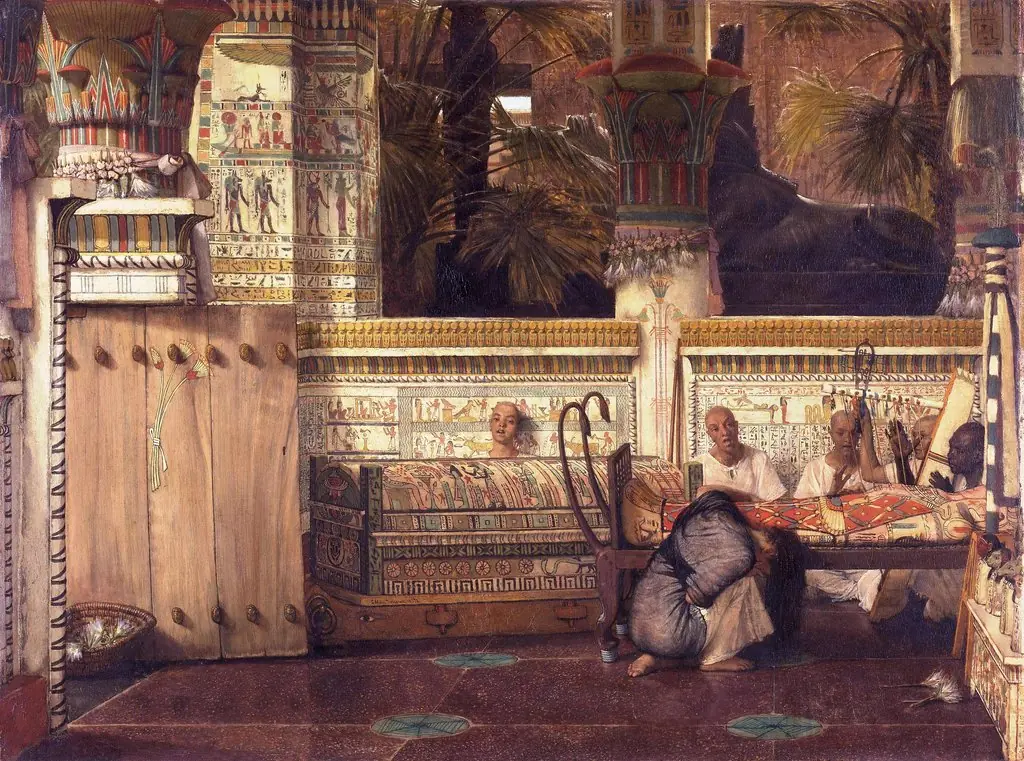
Lawrence Alma‑Tadema’s canvas titled De Egyptische weduwe presents a solemn Egyptian funeral scene. A widowed figure in dark garments kneels beside a gilded mummy case, while a stone sarcophagus occupies the left foreground. Around them, priests and mourners chant, creating a tableau that evokes the ritualized grief of ancient burial practices.
Own this work as a print
Artist & collection
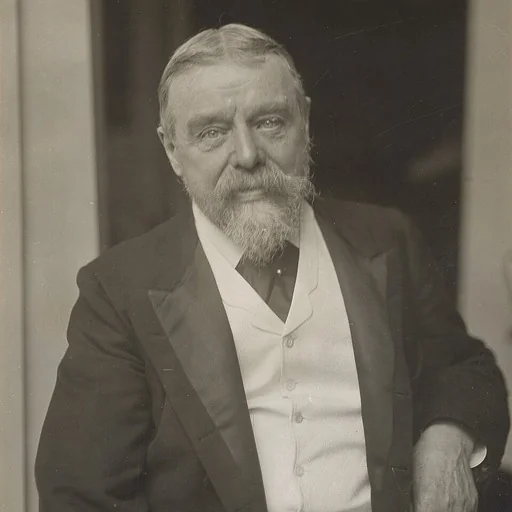
Artist
Sir Lawrence Alma-Tadema ( AL-mə TAD-ay-mə; born Lourens Alma Tadema, Dutch:; 8 January 1836 – 25 June 1912) was a Dutch painter who later settled in the United Kingdom, becoming the last officially recognised denizen in 1873.