Artwork
An Egyptian in a Doorway
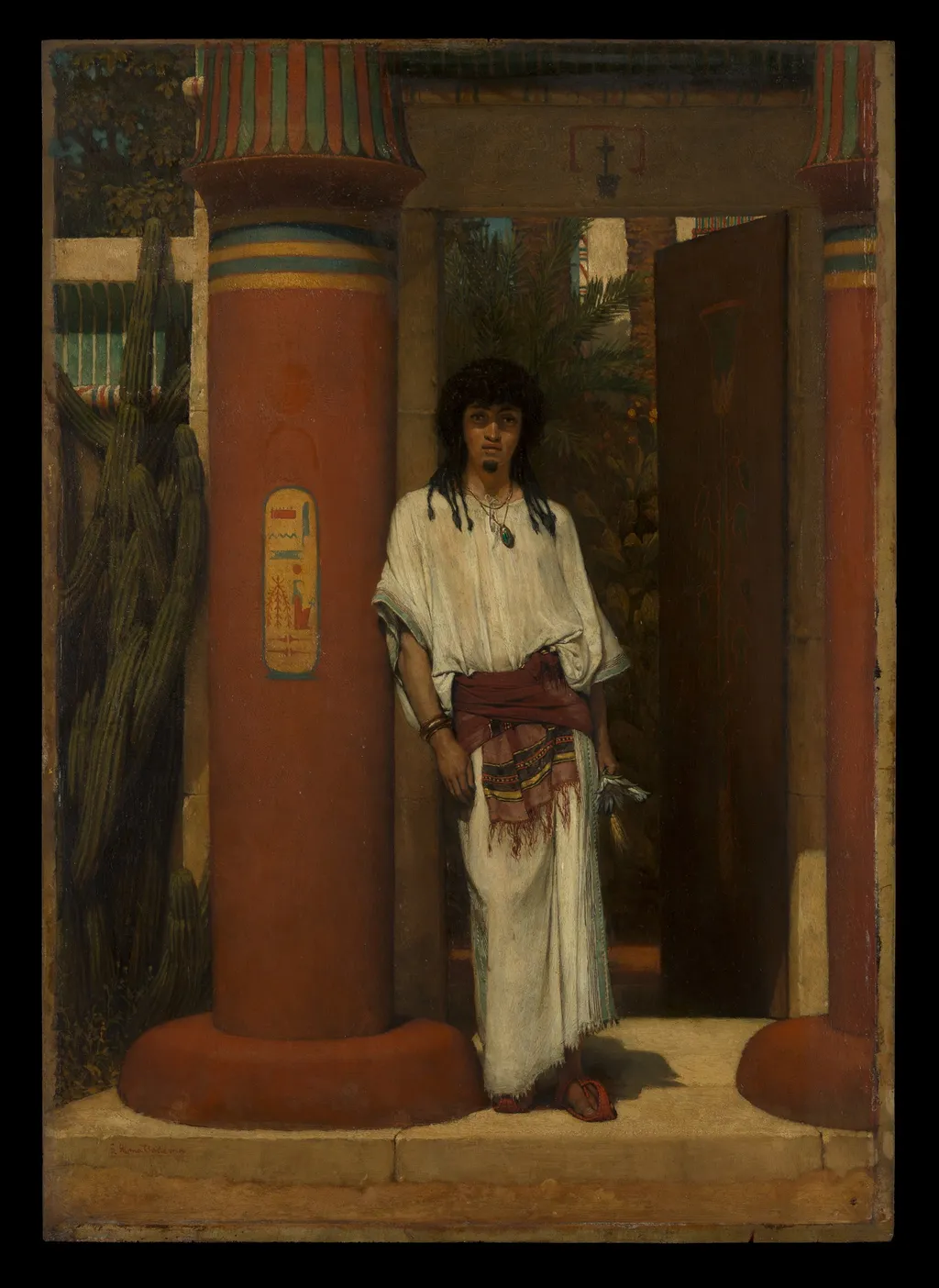
An Egyptian in a Doorway is an unspecified painting by the Orientalist artist Lawrence Alma-Tadema. It dates from 1865 and is held in the collection of the Metropolitan Museum of Art.
About this work
Subject & Meaning
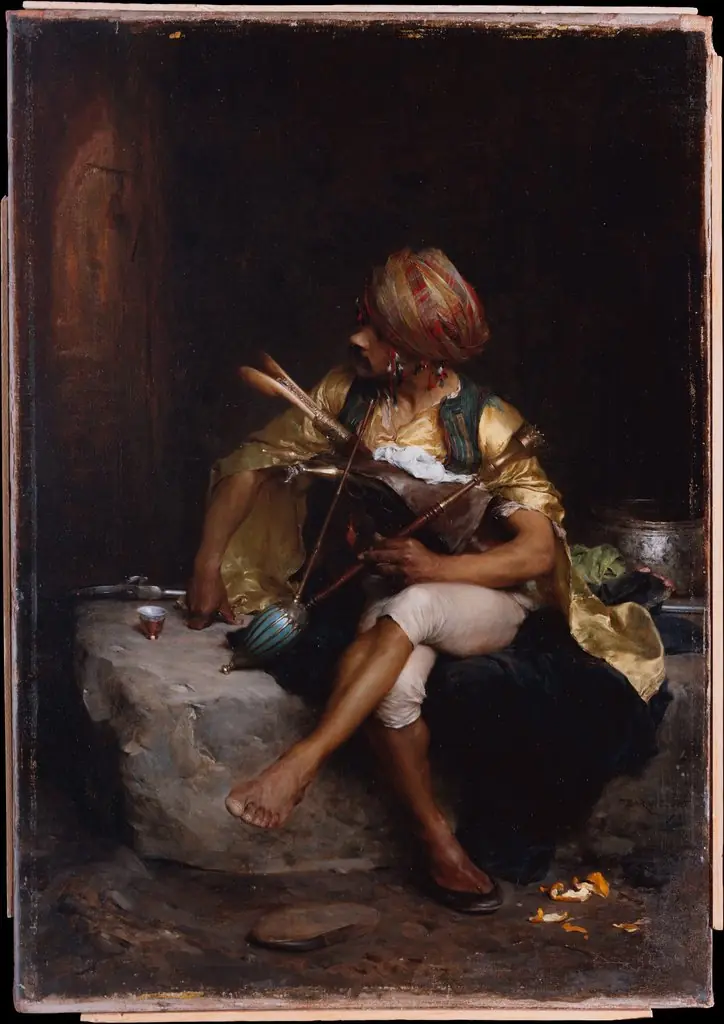
The work depicts a male figure standing within an architectural setting featuring a doorway and a column.
Lawrence Alma-Tadema's 1865 painting An Egyptian in a Doorway represents a scene rooted in Orientalism, reflecting the 19th-century European fascination with North African and Middle Eastern cultures. The work depicts a male figure standing within an architectural setting featuring a doorway and a column. The man is adorned with jewelry, emphasizing his identity within this exoticized, historical context.
By combining architectural elements with the bejeweled figure, the composition constructs an idealized, picturesque vision of ancient Egypt typical of the Orientalist movement, prioritizing decorative exoticism over strict historical accuracy.
History & Provenance
Lawrence Alma-Tadema completed An Egyptian in a Doorway in 1865, an oil measuring 55.9 by 39.4 cm that reflects his interest in Egyptian antiquity and Orientalist subjects. It is now in the collection of the Metropolitan Museum of Art. The painting depicts a man wearing jewelry standing in an architectural setting with a doorway and a column, typical of Alma-Tadema's detailed Orientalist compositions.
No accession number or detailed earlier provenance is recorded in the available sources, and no exhibition history is documented.
Overview
Sir Lawrence Alma-Tadema's painting, An Egyptian in a Doorway, dates from 1865 and exemplifies the Orientalist movement. It depicts a solitary figure positioned within an ancient-style architectural setting. The artist, a Dutch-born painter who later settled in London, created this work, which is now held in the collection of The Metropolitan Museum of Art.
Technique & Style
Alma-Tadema's meticulous attention to detail is evident in the rendering of various textures, from the cool stone floor to the delicate feathers of the fan. The artist skillfully employs light and shadow to define forms, particularly on the figure's face and the prominent architectural elements. This precision reflects his broader reputation for depicting historically inspired and luxurious settings with great accuracy.
Context
Created in 1865, An Egyptian in a Doorway aligns with the Orientalist movement, which frequently portrayed idealized or imagined scenes from the Middle East and North Africa. Alma-Tadema, who received his training at the Royal Academy of Antwerp, produced this painting prior to his relocation to London in 1870. His academic background influenced his detailed approach to historical and genre subjects.
Own this work as a print
Artist & collection

Artist
Sir Lawrence Alma-Tadema ( AL-mə TAD-ay-mə; born Lourens Alma Tadema, Dutch:; 8 January 1836 – 25 June 1912) was a Dutch painter who later settled in the United Kingdom, becoming the last officially recognised denizen in 1873.


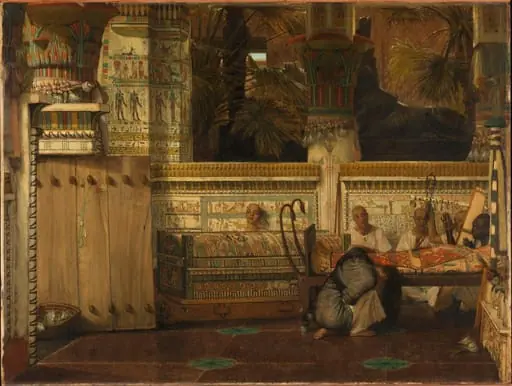
- An Egyptian Pot Seller at Gizeh
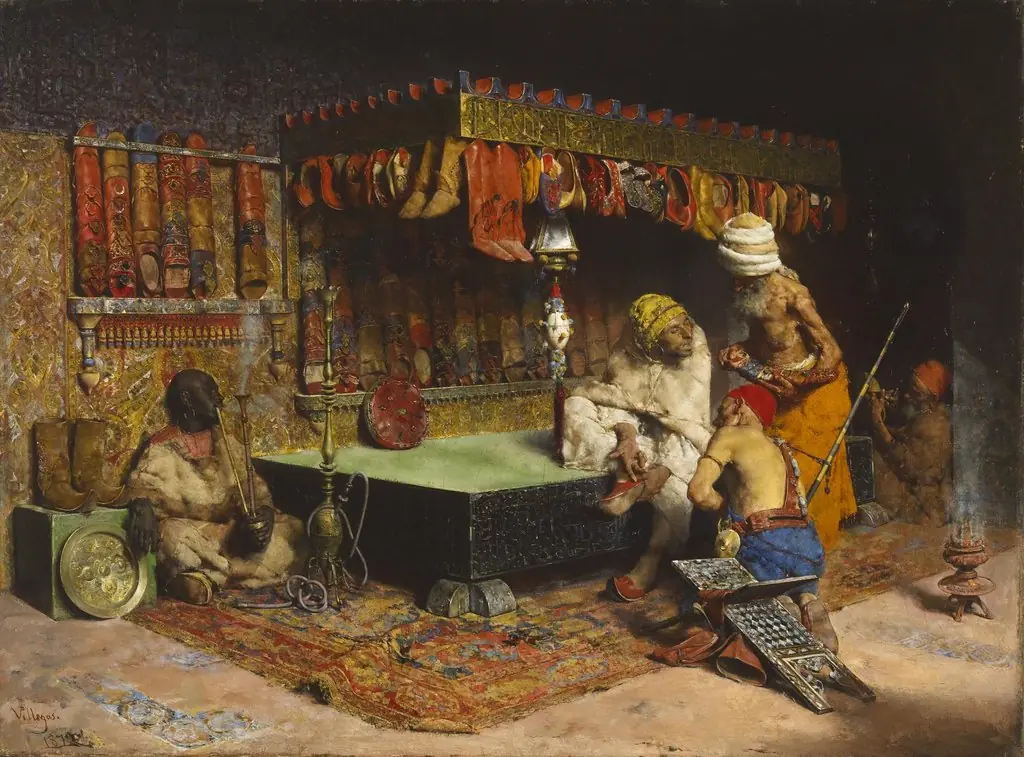 The Slipper Merchant in Morocco
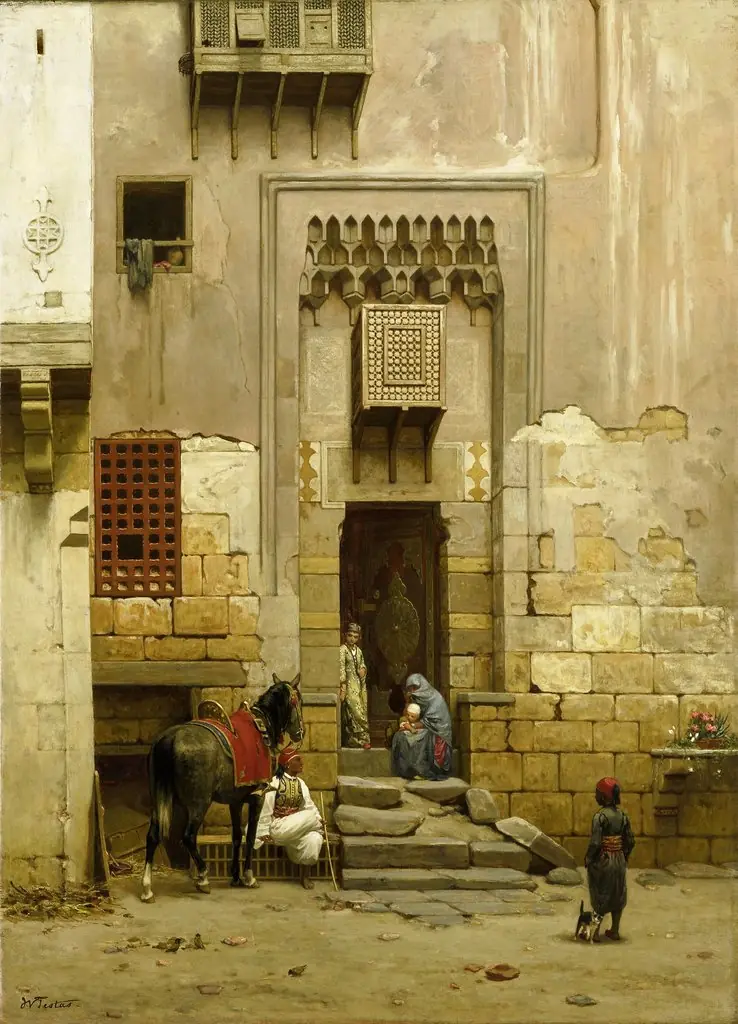 The Courtyard of a house in Cairo
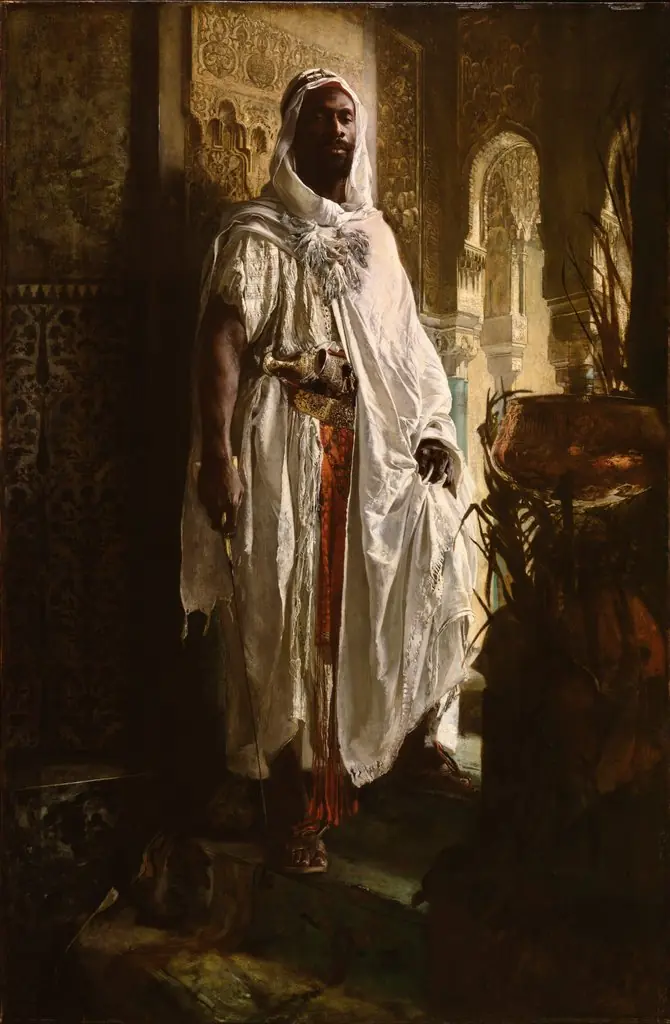 The Moorish Chief
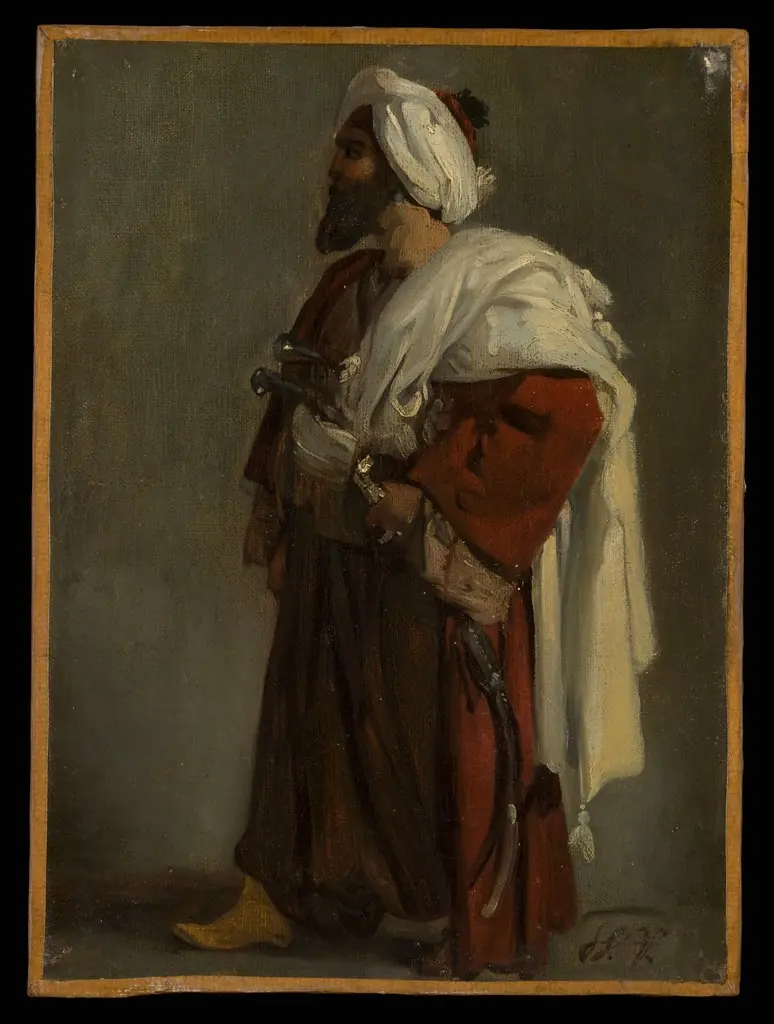 Arab Warrior
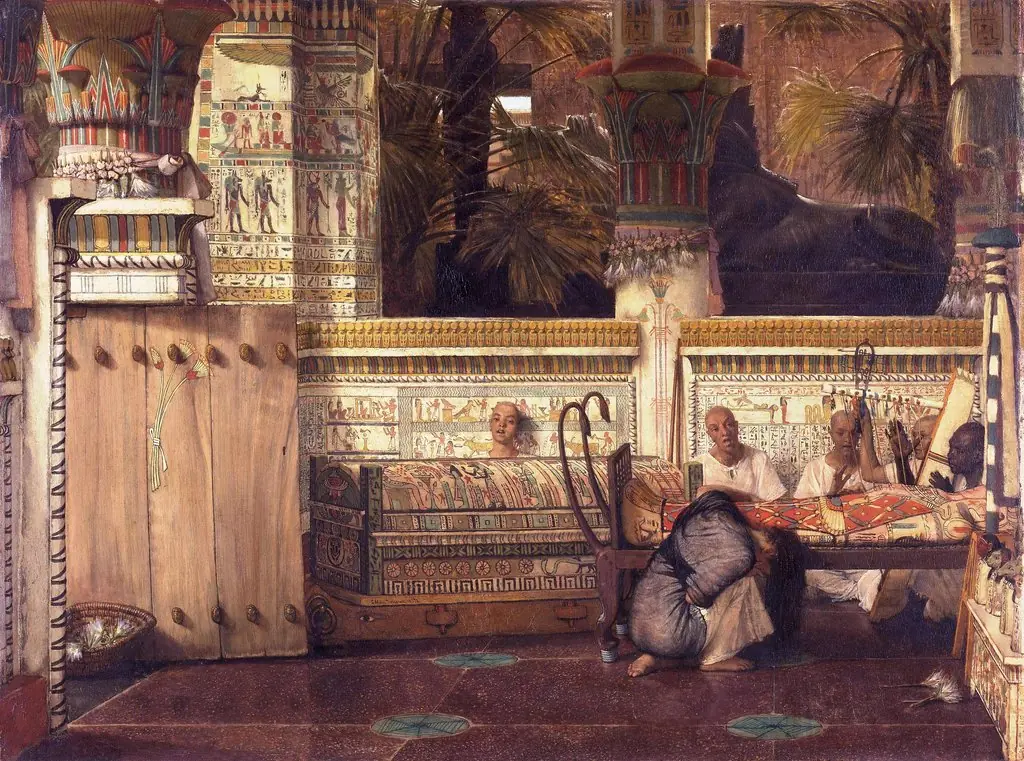 The Egyptian Widow
 An Egyptian Pot Seller at Gizeh
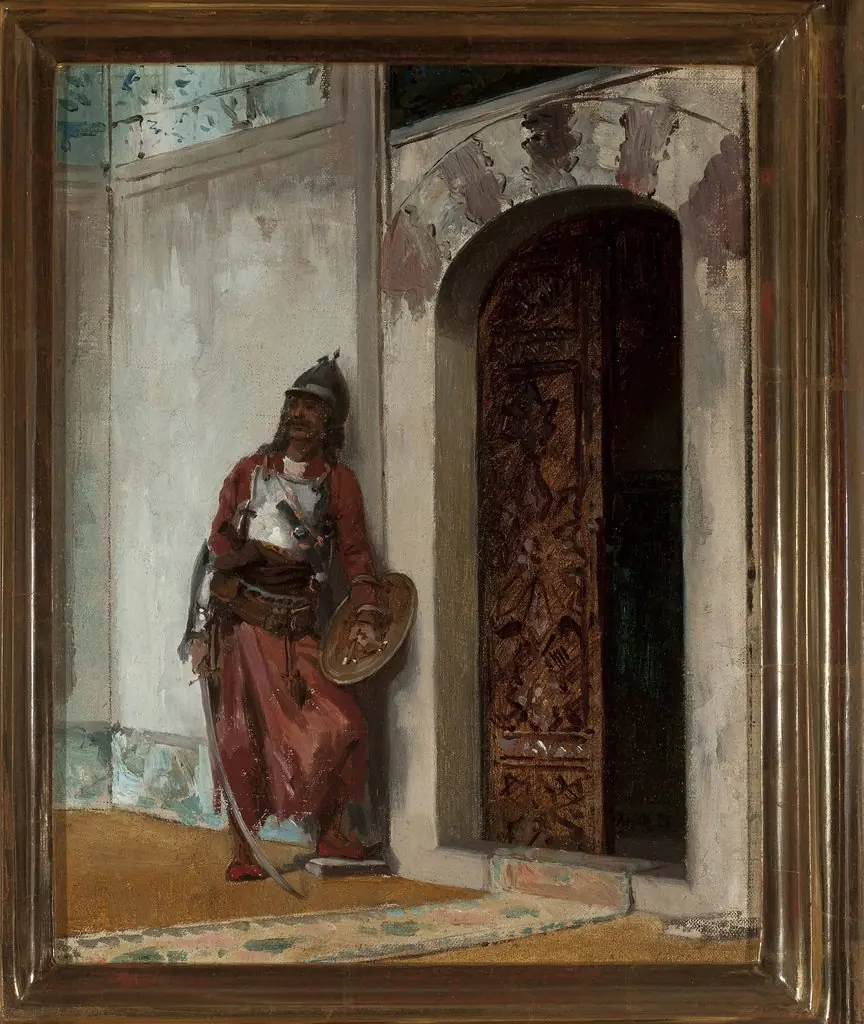 Guard at the entrance to the seraglio
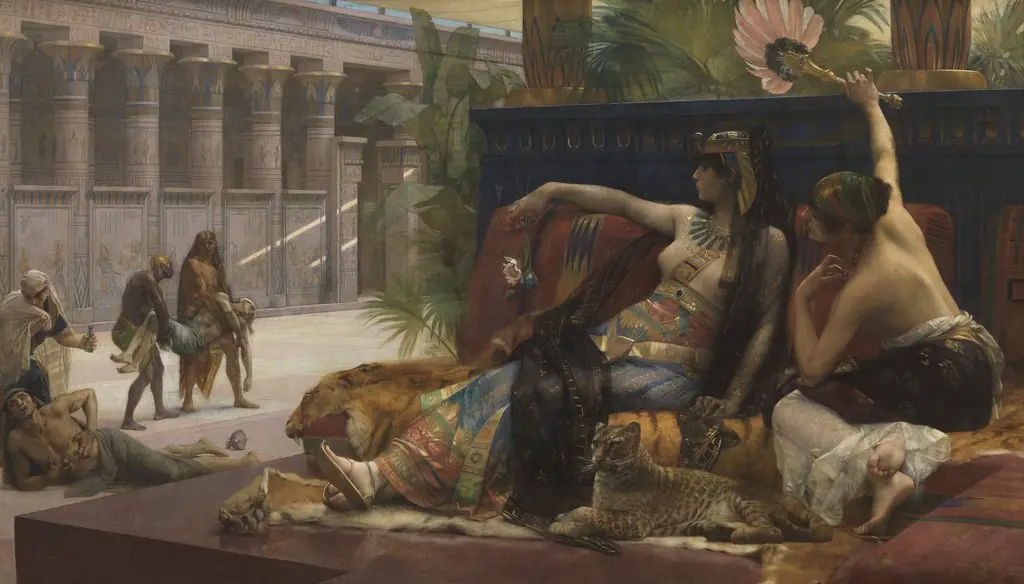 Cleopatra Testing Poisons on Condemned Prisoners
 A Bashi-Bazouk
 Evening on Terraces (Morocco)