Artwork
Jerusalem
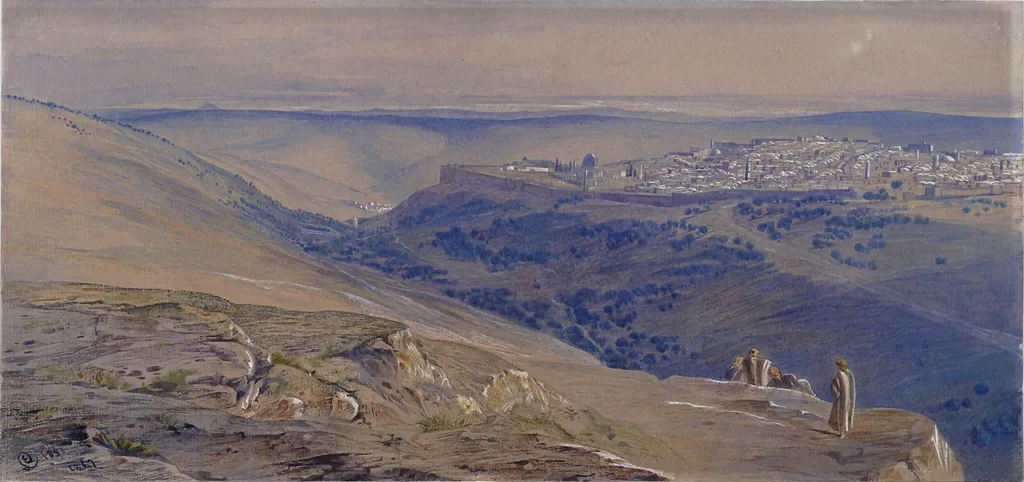
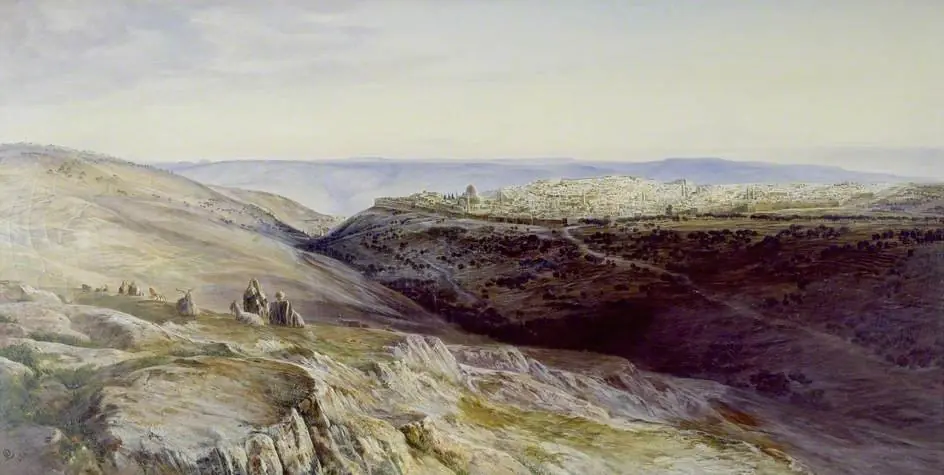
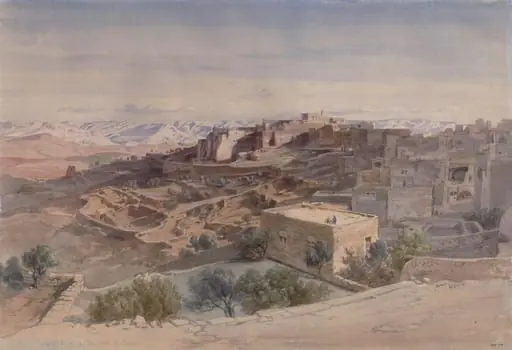
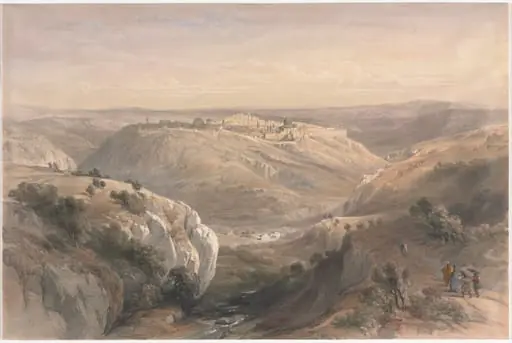
Jerusalem is a watercolor work on paper by the Impressionist artist Edward Lear. It dates from 1860 and is held in the collection of the Victoria and Albert Museum.
About this work
Overview
Jerusalem is a watercolour painting created by Edward Lear in 1858, though it was signed and dated 1862. The work depicts a landscape view of the city.
Subject & Meaning
The painting shows Jerusalem in the distance, nestled among rolling hills. Two figures stand on a rocky outcrop, gazing out at the scene. The soft colors and hazy atmosphere evoke a sense of serenity.
Technique & Style
Lear employed light brushstrokes and blended colors to achieve an airy, expansive feel. The distant city is rendered with surprising detail, despite its small scale.
History & Provenance
The painting is dated 1858, but Lear signed it in 1862, adding his monogram and the later date.
Artist & collection
Artist
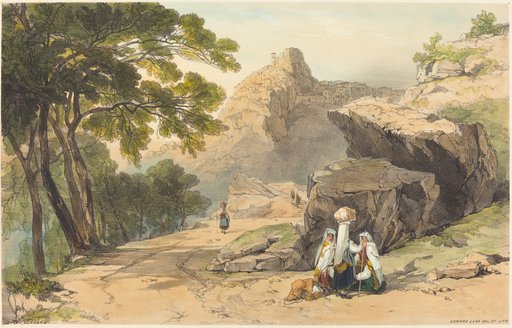
Edward Lear (12 May 1812 – 29 January 1888) was an English artist, illustrator, musician, author and poet, who is known mostly for his literary nonsense in poetry and prose and especially his limericks, a form he popularised but which term…