Artwork
St. Jerome
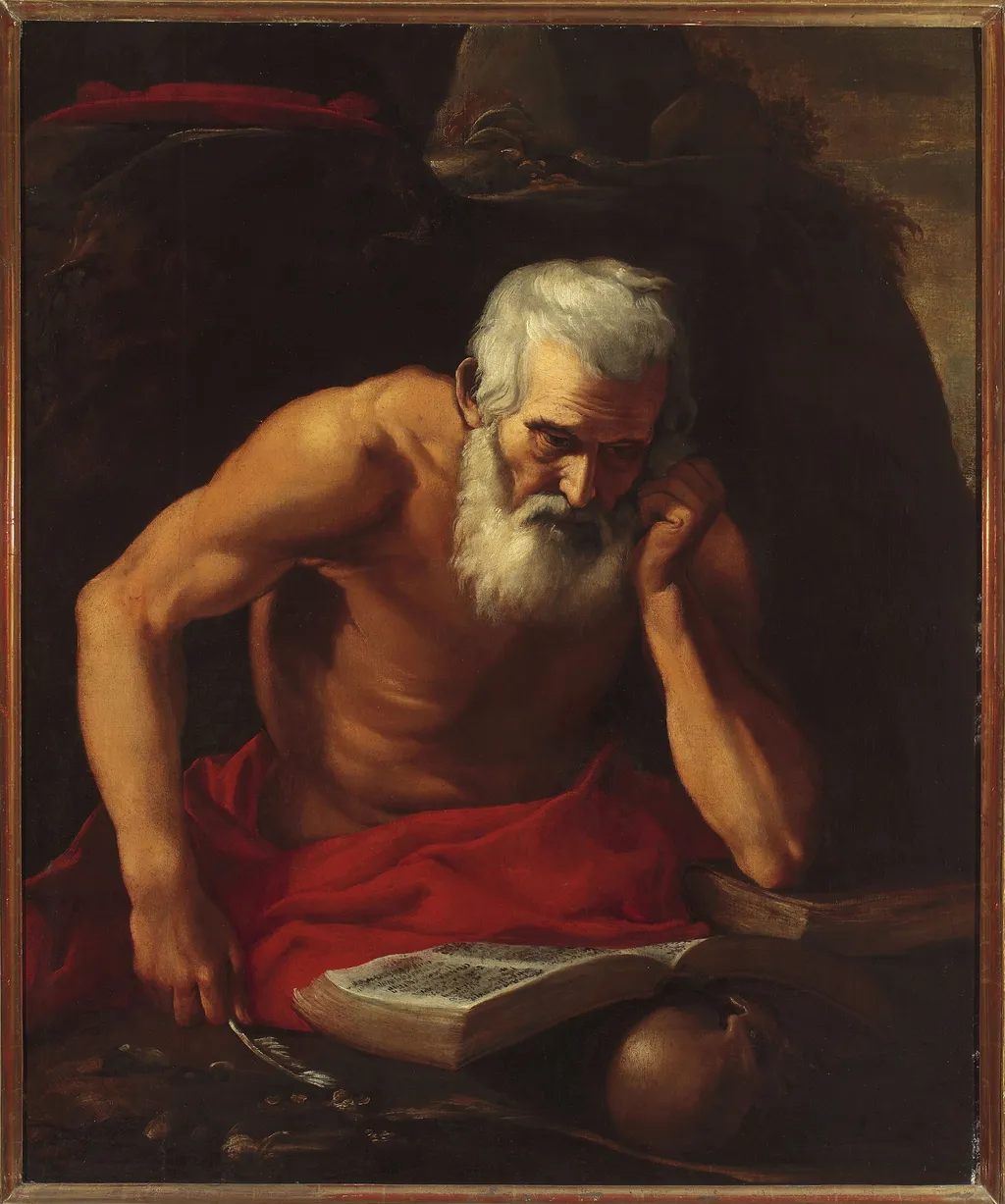
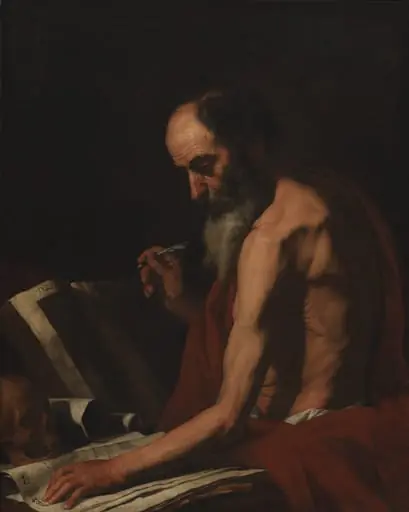
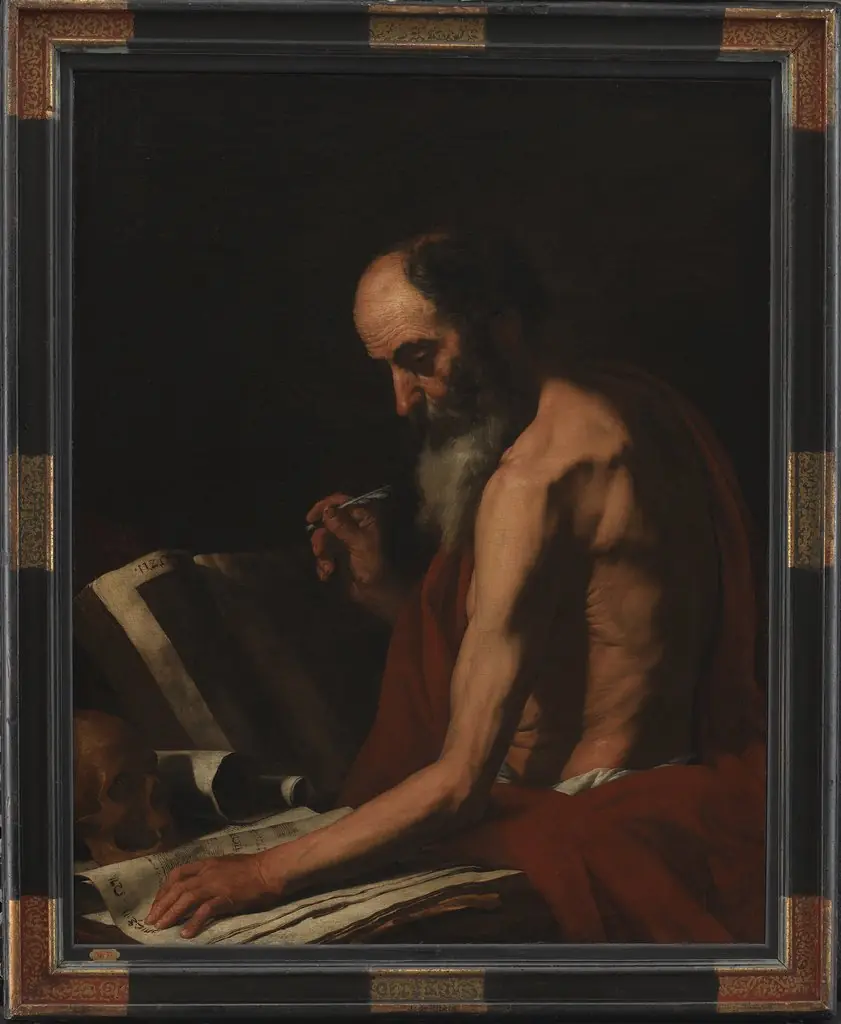
St. Jerome is an oil painting by the Caravaggisti artist Leonello Spada. It dates from 1609 and is held in the collection of the National Museum in Warsaw.
About this work
Overview
Leonello Spada, an early‑17th‑century Italian painter active in Rome and Bologna, produced an oil painting of Saint Jerome around 1609. Executed within the Caravaggisti tradition, the work exemplifies the dramatic lighting and naturalism that followed Caravaggio’s influence. It is currently part of the collection of the National Museum in Warsaw.
Subject & Meaning
The composition presents an aged Saint Jerome, recognizable by his long white hair, full beard, and scholarly demeanor. He is seated, partially unclothed, with a red cloth draped over his lap and one hand resting on an open book, alluding to his role as a translator of the Bible and a contemplative hermit. The painting reflects the Counter‑Reformation emphasis on saintly exemplars.
Technique & Style
Spada employs a stark chiaroscuro, using deep shadows to isolate the figure against a nearly black background while a focused light source models the skin, flesh, and red fabric. This contrast creates a three‑dimensional presence and heightens the emotional intensity typical of the Caravaggisti approach.
History & Provenance
Created circa 1609, the painting entered the holdings of Warsaw’s National Museum at an undetermined date, where it remains on display. Its provenance prior to acquisition is not extensively documented, but its presence in a major European museum underscores its recognized artistic value.
Context
Saint Jerome was a frequent subject in Counter‑Reformation art, serving as a model of scholarly devotion. Spada’s rendition aligns with contemporary efforts to render holy figures in a realistic, humanized manner, moving away from idealized medieval depictions toward a more immediate visual experience.
Own this work as a print
Artist & collection
Artist
Leonello Spada (also called Lionello Spada) (1576 – 17 May 1622) was an Italian painter of the Baroque period, active in Rome and his native city of Bologna, where he became known as one of the followers of Caravaggio.