Artwork
Self-Portrait
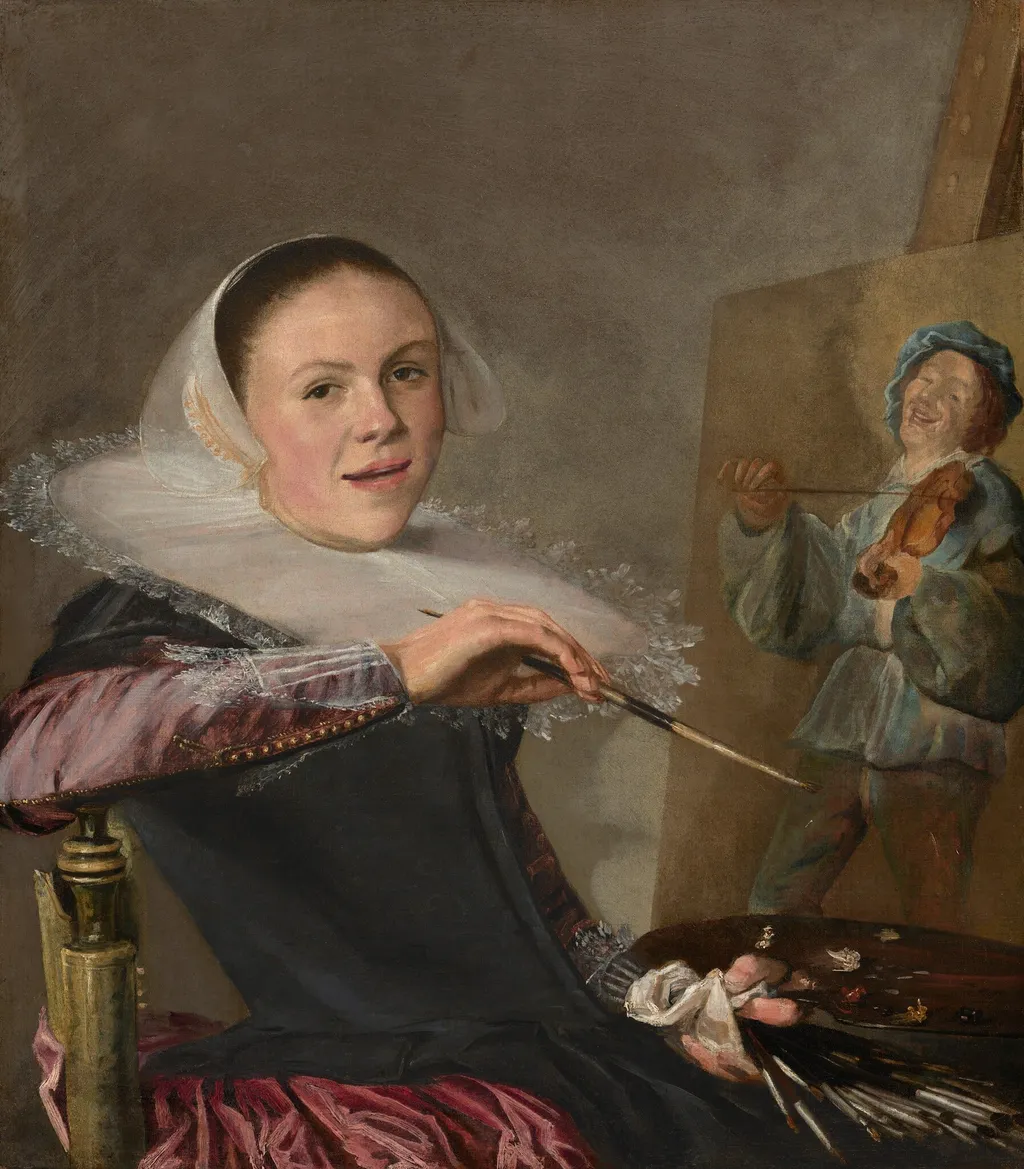
Self-Portrait is an oil painting by the Baroque artist Judith Leyster. It dates from 1630 and is held in the collection of the National Gallery of Art.
About this work
Subject & Meaning
Judith Leyster's 1630 self-portrait functions as a calculated declaration of professional status rather than a literal snapshot of studio practice.
Judith Leyster's 1630 self-portrait functions as a calculated declaration of professional status rather than a literal snapshot of studio practice. Depicting herself in expensive lace and silk attire unsuitable for actual painting, she elevates her image from craftsperson to successful master, distinguishing herself from lower-status artisans. The composition features an artificial confection: she holds eighteen brushes without a mahlstick to demonstrate technical prowess, while the figure on her easel, a laughing fiddler borrowed from her genre work The Merry Trio, advertises her versatility in both portraiture and genre scenes.
Her relaxed, diagonal pose and parted lips create a sense of "Baroque closeness," inviting the viewer into her space with confident informality. Originally submitted as her masterpiece to the Haarlem Guild of St. Luke in 1633, the work symbolizes her rare achievement as a female independent master in a male-dominated institution, asserting her identity as a "leading star" through both her signature monogram and her commanding self-representation.
Technique & Style
The work is executed in oil on canvas, a standard support for Dutch Golden Age easel paintings. Infrared examination reveals an initial portrait of a young girl beneath the laughing fiddler, indicating compositional alteration. The paint is applied with loose, vigorous brushstrokes and broad, thick impasto highlights on the lace collar and cuffs, creating stark light‑dark contrast reminiscent of Caravaggesque illumination.
The composition features a three‑quarter view, an upturned smile, and a profusion of eighteen brushes held in the sitter’s hands, emphasizing technical virtuosity. The background is a flat, smoothly rendered gray‑brown wall that isolates the figure, while the handling of foreshortened brushes and the arm rests on the chair convey an informal, Baroque‑close spatial interaction.
History & Provenance
Judith Leyster’s Self-Portrait was created in 1630 in Haarlem, likely as a masterpiece submission to the Haarlem Guild of St. Luke upon her admission as an independent master in 1633. Long misattributed to Frans Hals, the painting appeared in four London sales (1810–1812) as a Hals work, purportedly depicting his daughter. It resurfaced in 1926 at Christie’s, London, purchased by E. Smith, likely for a dealer, before entering a New York private collection in 1928.
The Ehrich Galleries sold it on 9 May 1929 to Robert and Mildred Bliss for $250,000, who donated it to the National Gallery of Art in 1949. Only then was its attribution to Leyster firmly established, following scholarly debate and technical analysis, including infrared imaging in 1992.
Context
Judith Leyster's Self-Portrait (1630) occupies a pivotal place in art history as a rare example of female self-promotion during the Dutch Golden Age. Originally created to secure her admission as a master to the Haarlem Guild of St. Luke in 1633, the work demonstrates her technical prowess through the depiction of rich textiles and a laughing fiddler borrowed from her genre painting The Merry Trio. For centuries, the painting was misattributed to Frans Hals due to stylistic similarities in loose brushwork and light, appearing in early 19th-century London sales as a portrait of Hals' daughter.
Although Wilhelm Valentiner identified the sitter as Leyster in 1928, the work was sold as a Hals in 1929. Scholarly consensus only shifted after its 1949 donation to the National Gallery of Art, with definitive attribution confirmed following a 1992 restoration. Critics note the composition's 'Baroque closeness,' utilizing foreshortening to engage the viewer directly, while the artist's relaxed pose and exposed teeth challenge contemporary norms of female modesty.
Legacy
The Self-Portrait (c.1630) became a key reference for discussions of women artists in the Dutch Golden Age. After centuries of misattribution to Frans Hals, the painting was identified as Leyster’s work when the National Gallery of Art acquired it in 1949. Its rediscovery in the 19th century by scholars such as Hofstede de Groot and later infrared studies confirmed Leyster’s authorship and highlighted her role as the first female master of the Haarlem Guild.
The work’s composition, with the artist confronting the viewer and displaying numerous brushes, has been cited in studies of Baroque spatial intimacy and the visual language of female artistic self‑promotion;. Its inclusion in major exhibitions and academic curricula underscores its lasting influence on the narrative of women’s contribution to art history.
Overview
Judith Leyster's "Self-Portrait" is an oil on canvas painting from the Dutch Golden Age, now housed at the National Gallery of Art in Washington D.C. This work presents the artist in her professional capacity, a notable depiction given the limited opportunities for women painters during this historical period. It serves as a significant example of her skill and presence within the Haarlem art scene of the 17th century.
Own this work as a print
Artist & collection

Artist
Judith Jans Leyster (also Leijster; baptised July 28, 1609 – February 10, 1660) was a Dutch Golden Age painter of genre works, portraits, and still lifes.

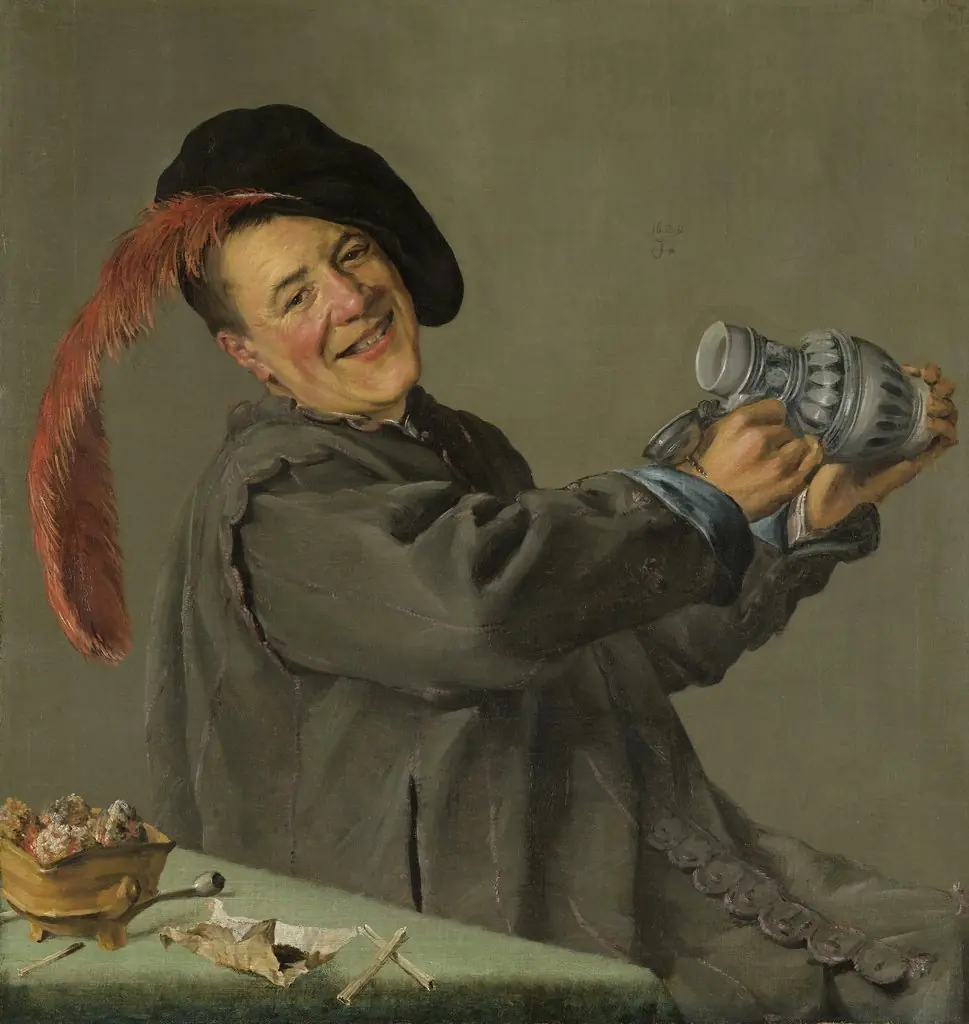
- The Artist's Studio
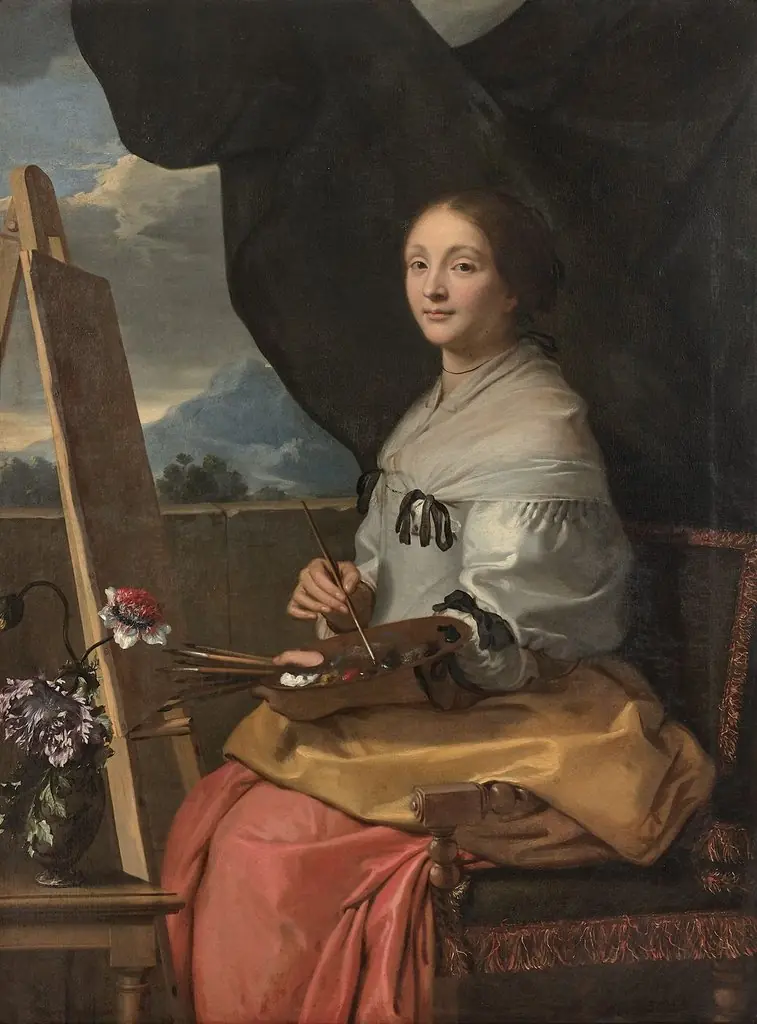 Portrait of Catherine Duchemin
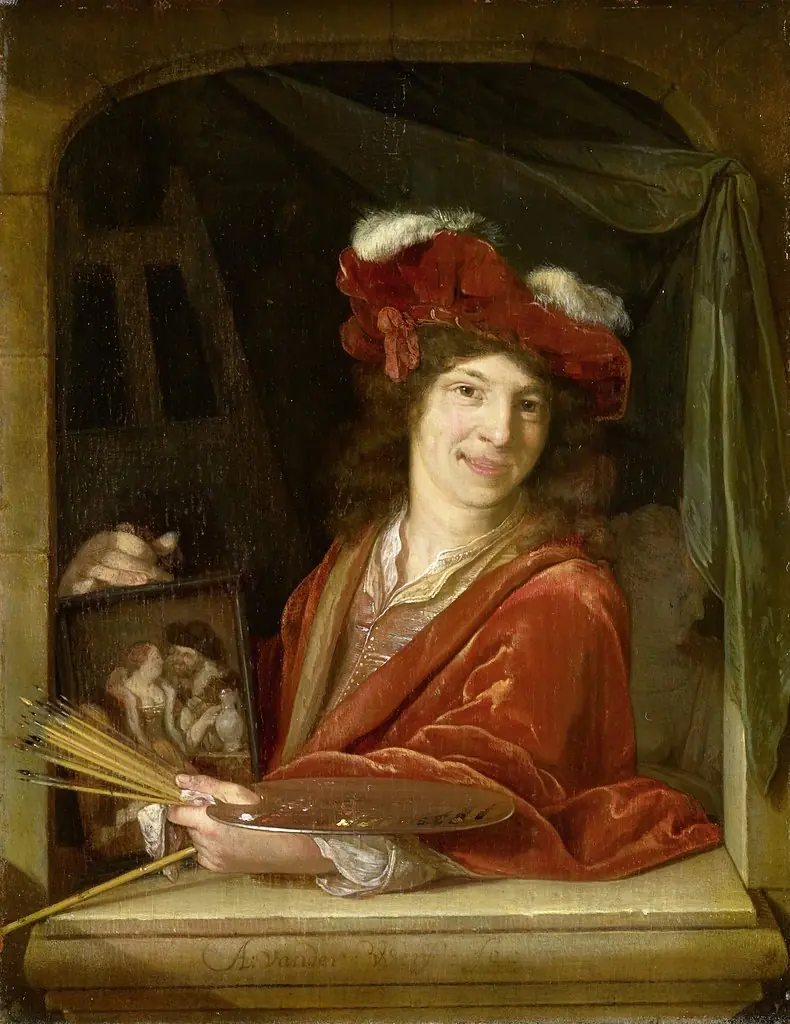 A young Painter
 Maler und Modell (Umkreis)
 Untitled
 Een schilder aan het werk
 Self-Portrait at Her Easel
 An Artist in Front of the Easel
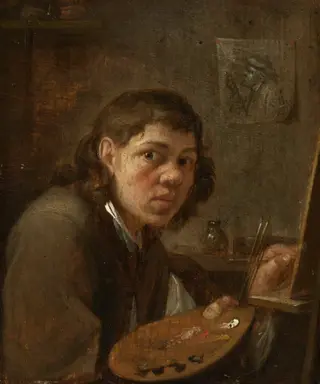 Self-Portrait in the Studio
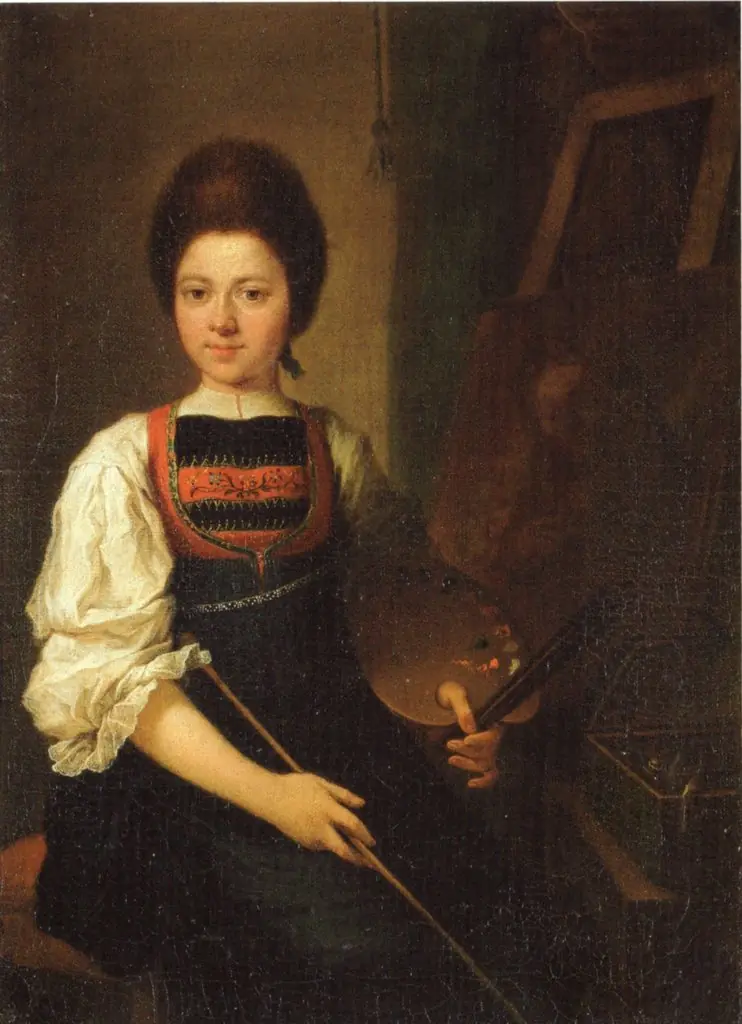 Self-Portrait in the Traditional Costume of the Bregenz Forest, Seated at her Easel
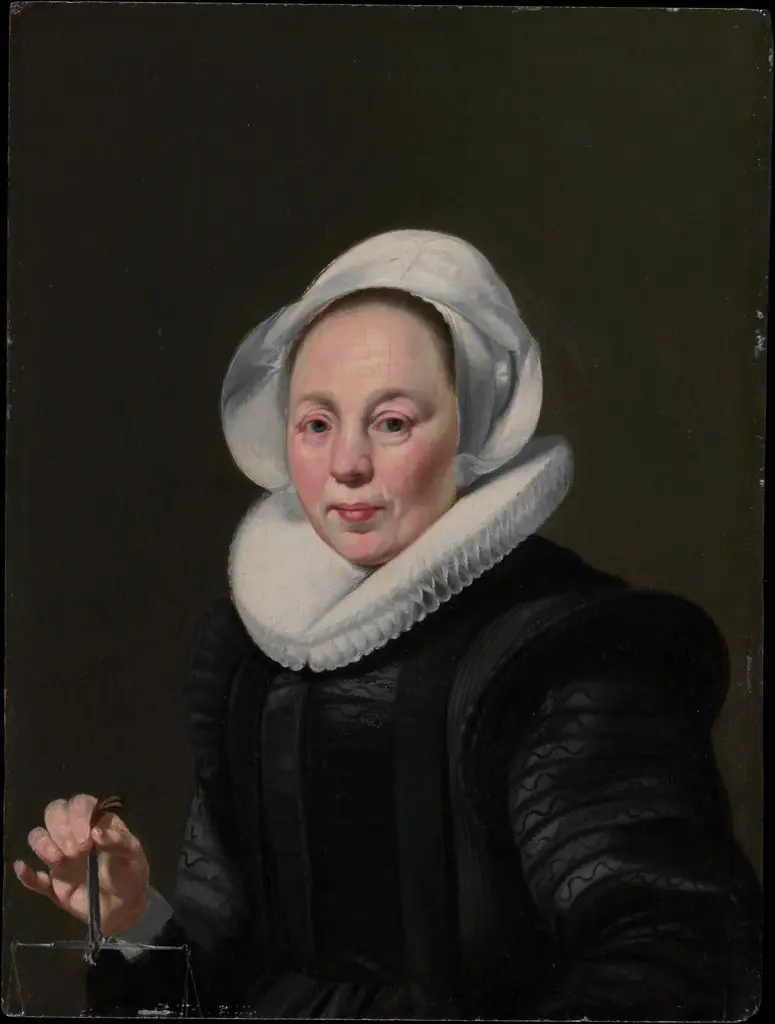 Portrait of a Woman with a Balance
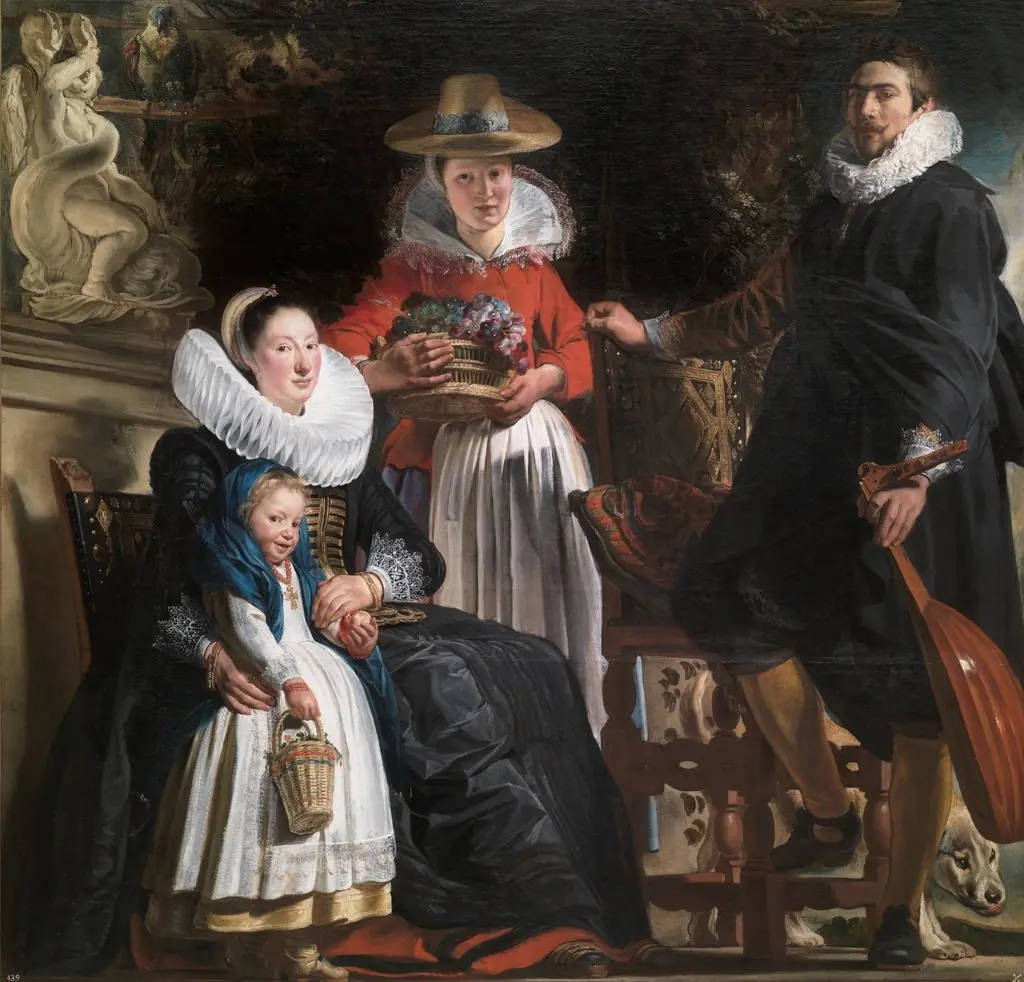 Portrait of the artist with his family