Artwork
The Jolly Toper
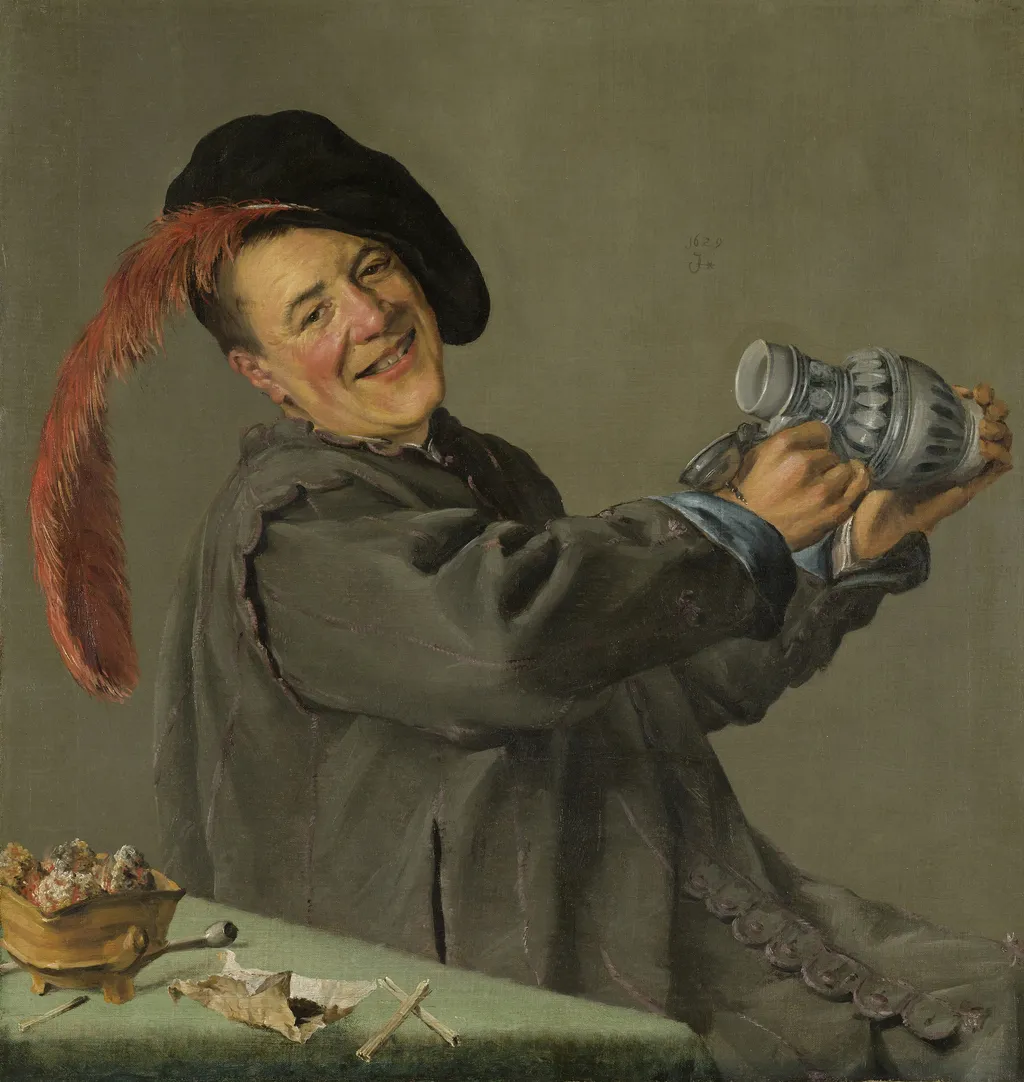
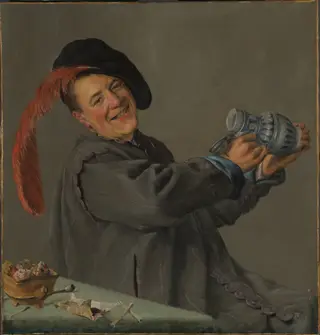
The Jolly Toper is an oil painting by the Dutch Golden Age artist Judith Leyster. It dates from 1629 and is held in the collection of the Rijksmuseum.
About this work
The picture has been in the Rijksmuseum’s collection for a long time, but it’s been on long‑term loan to the Frans Hals Museum since 1959.
The Jolly Toper is an oil painting made in 1629 by Dutch artist Judith Leyster. It’s a work that shows Leyster’s skill with the medium.
The picture has been in the Rijksmuseum’s collection for a long time, but it’s been on long‑term loan to the Frans Hals Museum since 1959. The museum originally thought it was by Frans Hals until researcher Juliane Harms correctly re‑attributed it to Leyster in 1927.
If you’re curious for more, check out the museum: Rijksmuseum.
Subject & Meaning
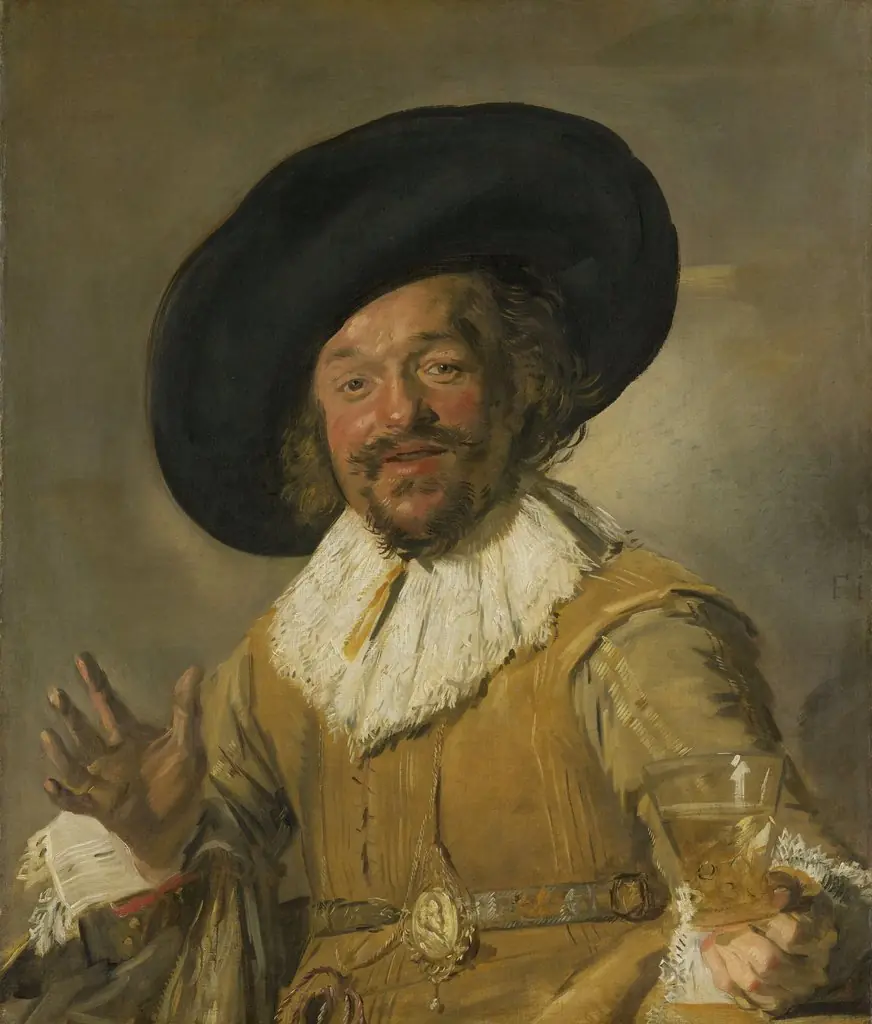
The painting depicts a jovial drinker identified as the comic character Peeckelhaering, a stock figure in 17th-century Haarlem farces who signals the end of a performance by appearing to check an empty jug. The figure holds a jug, a pipe and wears a loose fool's costume, attributes that recur in other portrayals of the character and link him to contemporary theatrical satire. Scholars suggest Leyster adapted the role from stage actors, endowing the portrait with expressive detail that elevates it beyond mere genre comedy.
The work thus embodies the humor and social commentary typical of Dutch Golden Age genre scenes, reflecting both the popularity of farcical entertainment and the painter’s interest in capturing fleeting, character-driven moments.
Technique & Style
The painting is executed in oil on canvas, measuring 87 cm by 81.5 cm, and depicts a figure identified as Peeckelhaering, a stock character from 17th-century Haarlemese farces known as a kannenkijker who signals the end of a performance by appearing to look into an empty jug. The work shows a smiling man holding a jug at arm's length beside smoking accessories, including a small brazier and pipe, and is rendered with expressive detail that suggests a portrait-like rendering of a performer in the role. The composition reflects the loose, gestural handling characteristic of Dutch Golden Age genre scenes, with attention to the actor's costume and symbolic attributes such as the jug, pipe, and festive attire, which align with depictions of Peeckelhaering in other works by contemporaries like Frans Hals and Willem Buytewech.
History & Provenance
The Jolly Toper is an oil painting on canvas created in 1629 in Haarlem by Judith Leyster. It was initially sold at Hôtel Drouot in Paris in 1890 as a work attributed to Frans Hals or his son, then acquired by the Rijksmuseum in 1897 from dealer F. Kleinberger of Paris. The painting was later placed on long-term loan to the Frans Hals Museum in 1959 and has remained part of its collection since 1960.
The attribution to Leyster was confirmed in 1927 by researcher Juliane Harms, correcting its earlier misattribution to Hals. The work depicts the comic character Peeckelhaeringh, a figure associated with 17th-century Haarlem farces, often identified as a 'kannenkijker' or jug-looker, and is signed and dated on the back wall above the tankard.
The painting is held by the Rijksmuseum, Amsterdam, with inventory number SK-C-1273.
It entered the collection in 1897 after purchase from F. Kleinberger, Paris, who had acquired it at the Hôtel Drouot sale in Paris in 1890. It was long attributed to Frans Hals before being correctly given to Judith Leyster in 1927 by Juliane Harms.
Since 1959/1960 the work has been on long-term loan to the Frans Hals Museum (Haarlem), where it remains exhibited.
Context
For nearly three centuries, The Jolly Toper was misattributed to Frans Hals until researcher Juliane Harms correctly identified it as a work by Judith Leyster in 1927. This reattribution highlights the painting's significance within the Dutch Golden Age genre tradition, where it serves as a portrait of an actor portraying the popular Haarlem folk-theater character Peeckelhaering. Scholars interpret the figure as a "kannenkijker," or jug-looker, signaling an empty mug and the conclusion of a performance, while the detailed expression suggests a specific theatrical portrayal rather than a generic type.
The work connects Leyster to her contemporaries, including Frans Hals, Hendrick Pot, and Willem Buytewech, who also depicted this recurring comic archetype with varying costumes and attributes. Art historical analysis positions the painting as a continuation of 16th-century motifs involving jesters, linking Leyster's output to earlier depictions by Lucas van Leyden and Cornelis Massys.
Legacy
The Jolly Toper has played a significant role in shaping scholarly understanding of Judith Leyster's authorship and of the Haarlem Peeckelhaering tradition. Acquired by the Rijksmuseum in 1897 as a work by Frans Hals, it was reattributed to Leyster by researcher Juliane Harms in 1927, an identification that helped establish Leyster's standing as an independent master of the Dutch Golden Age.
The painting also informed discussion of how the Peeckelhaering character circulated among Haarlem artists. Hendrick Pot drew on Leyster's and Frans Hals's interpretations when creating his own Merry Company, while scholars have used the work to argue that Hals's two related Peeckelhaering figures, the figure once known as "the mulatto" and an older bearded man also depicted by Willem Buytewech, may likewise portray Haarlem stage actors. Earlier sixteenth-century brothel and fool scenes by Lucas van Leyden and Cornelis Massys are cited as precursors to these Haarlem treatments.
On long-term loan to the Frans Hals Museum since 1959, the canvas remains a touchstone in catalogues of Leyster's oeuvre and in studies of Haarlem popular theatre.
Overview
Created in 1629, The Jolly Toper is an oil painting by Dutch artist Judith Leyster. Executed in the early Dutch Golden Age, the work exemplifies Leyster’s command of oil on canvas, displaying the lively genre scenes for which she is known. The composition features a solitary figure engaged in merriment, rendered with the nuanced lighting and brushwork characteristic of the period.
Own this work as a print
Artist & collection

Artist
Judith Jans Leyster (also Leijster; baptised July 28, 1609 – February 10, 1660) was a Dutch Golden Age painter of genre works, portraits, and still lifes.