Artwork
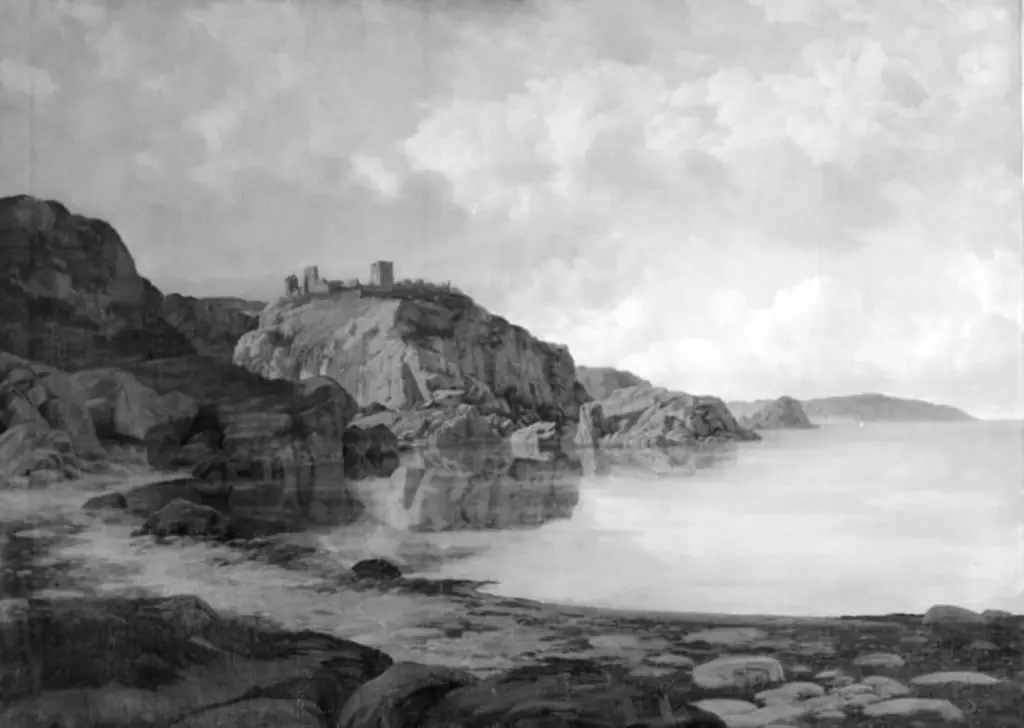
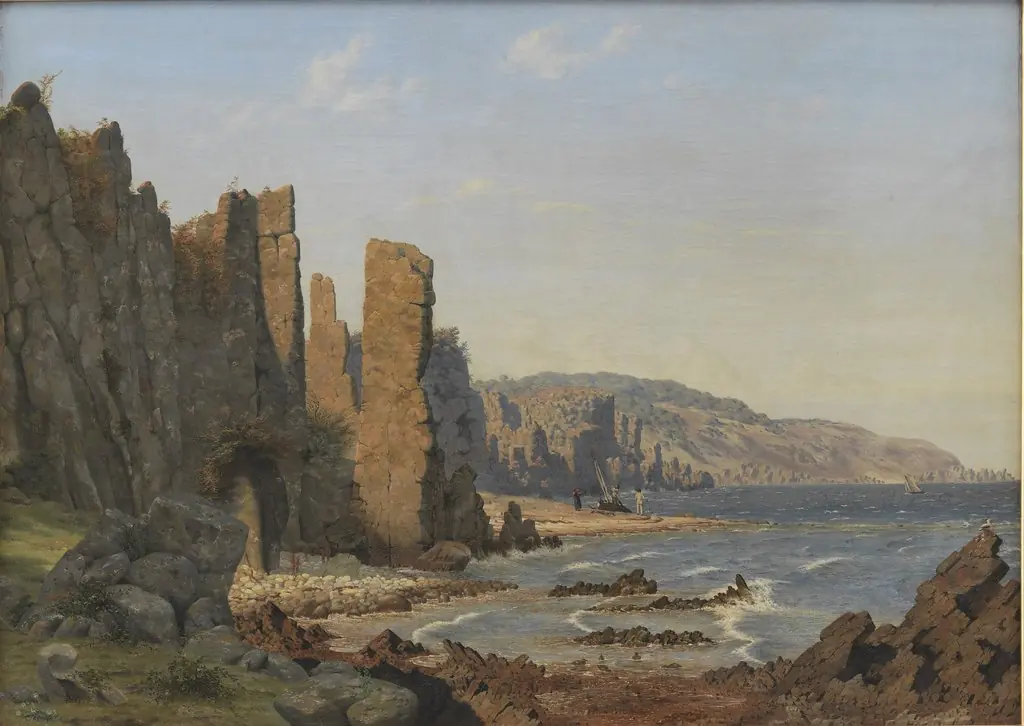
View of Sommerspiret, the Cliffs of Møn
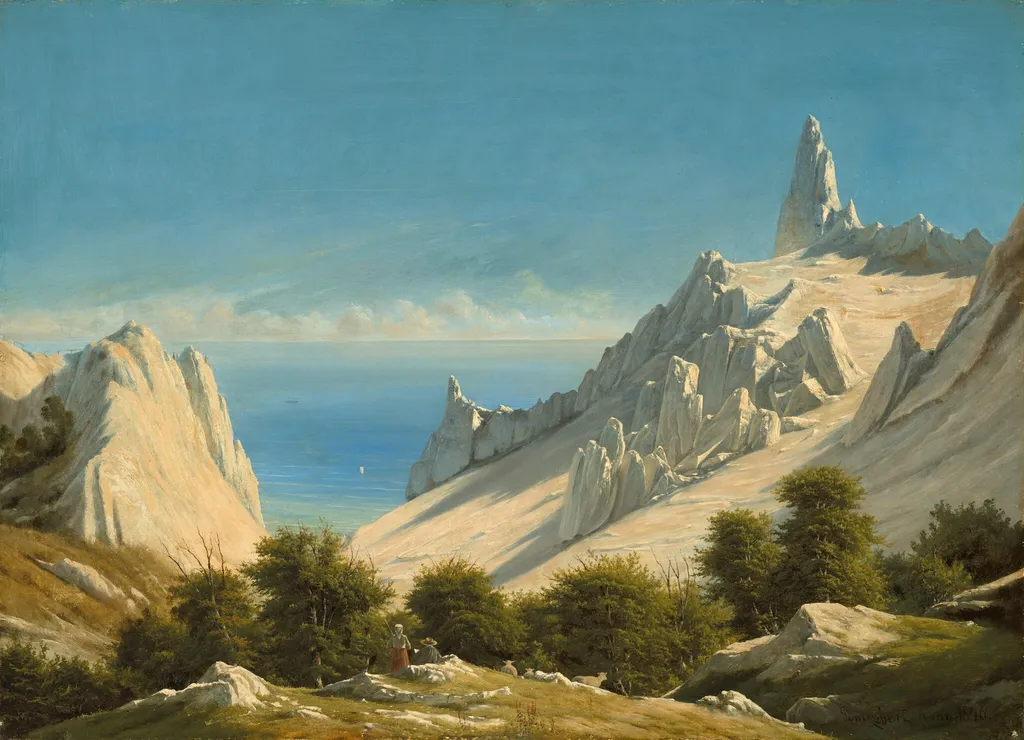
View of Sommerspiret, the Cliffs of Møn is an oil painting by the Romanticist artist Georg Emil Libert. It dates from 1846 and is held in the collection of the National Gallery of Art.
- Inscription
- Inscribed:lower right: G. Emil Libert Kbhn. 1846
About this work
Overview
It depicts the bright chalk cliffs of the island of Møn in the Baltic Sea, focusing on the towering Sommerspiret formation.
View of Sommerspiret, the Cliffs of Møn is an 1846 landscape painting by the Danish artist Georg Emil Libert. Executed in oil on canvas mounted on board, the work measures 50 by 68 centimeters. It depicts the bright chalk cliffs of the island of Møn in the Baltic Sea, focusing on the towering Sommerspiret formation. The painting is signed and dated lower right as G. Emil Libert Kbhn. 1846. It is currently held by the National Gallery of Art in Washington, D.C., where it is accessioned under number 2015.21.1 and displayed in the West Building, Main Floor, Gallery M91.
Subject & Meaning
The painting portrays the Sommerspiret, or summer spire, a prominent 120-meter chalk formation on the eastern coast of Møn. Jagged white cliffs rise steeply on both sides of the composition, framing a distant view of the calm Baltic Sea, while the needle-like spire dominates the upper right. In the foreground, a grassy slope with scattered boulders and clusters of green trees anchors the scene. Two small figures, one standing and one seated, appear near the center bottom, gazing toward the cliffs. This inclusion of tiny figures serves as a scale device to emphasize the vastness and grandeur of the natural world, creating a mood that is simultaneously peaceful and humbling. The cliffs themselves held national resonance as a distinctly Danish geological feature, reflecting a search for national identity in the native landscape.
Technique & Style
Libert employed a smooth and controlled brushwork, achieving a high degree of finish characteristic of the Danish Golden Age of painting. Fine detail defines the rock strata of the cliffs, while the handling becomes looser in the rendering of the sky and foliage. The palette relies on pale blues, creamy whites, warm ochres, and deep greens. Light falls evenly from the left, casting soft shadows across the cliff faces and illuminating the bleach-white earth against the bright blue sky. The clear, harmonious tones and the meticulous detail combined with small, beholding figures are hallmarks of this period of landscape painting, showing the influence of German romantic nationalism on Danish artists.
History & Provenance
Created in 1846, the painting was initially held in a private collection in Copenhagen. It later passed through the London art dealer Derek Johns Ltd. The National Gallery of Art in Washington, D.C. purchased the work on 19 June 2015 using the Pepita Milmore Memorial Fund. Following its acquisition, the painting was the subject of a scholarly entry by Mary Morton in the National Gallery of Art Bulletin in the spring of 2016. It remains on view in the museum's West Building as part of the permanent collection.
Context
View of Sommerspiret, the Cliffs of Møn emerged during the first half of the nineteenth century, a period recognized as the Danish Golden Age. Following the Napoleonic Wars, which brought English naval aggression, the dissolution of the partnership with Norway, and increasing hostility with Germany, artists sought a unifying identity for the emerging constitutional monarchy. Inspired by German romantic nationalism and the landscape meditations of Caspar David Friedrich, who had previously painted the nearby chalk cliffs of Rügen, Danish artists turned to their own countryside. Libert, a graduate of the Royal Academy of Fine Arts in Copenhagen where he studied under Johan Ludwig Lund, embraced this focus. The Sommerspiret was a popular tourist destination painted by several Golden Age artists, including Christoffer Wilhelm Eckersberg and Louis Gurlitt. At the National Gallery of Art, Libert's painting adds to the institution's presentation of northern landscapes, alongside works by Friedrich, Alexandre Calame, Johan Christian Dahl, and Eckersberg.
Legacy
The painting serves as a vital visual record of a geological formation that no longer exists in its depicted form, as the Sommerspiret naturally eroded into the sea in 1988. While the specific cultural afterlife of this canvas is rooted in its preservation within a major international museum, the broader legacy of Libert's landscape work is evident in Denmark itself. Libert is best known for his paintings of the Baltic island of Bornholm, where his frequent depiction of the Helligdomsklipperne cliffs led to one formation being named Libert's Rock (Libertsklippen) in his honor. Today, his works are highly sought after by buyers and are held in institutions such as the Danish National Gallery and Thorvaldsens Museum.
Own this work as a print
Artist & collection
Artist
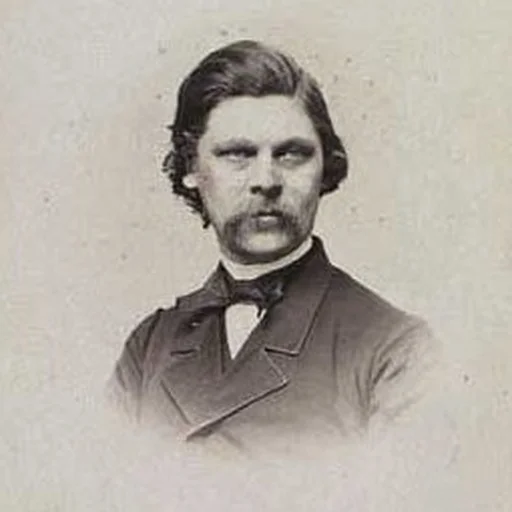
Georg Emil Libert (2 August 1820 – 19 May 1908) was a Danish landscape painter. His specialties included scenes featuring Danish, German, and Norwegian landscapes.